Film
fromVulture
12 hours agoThe Twist in The Drama Is Not the Problem
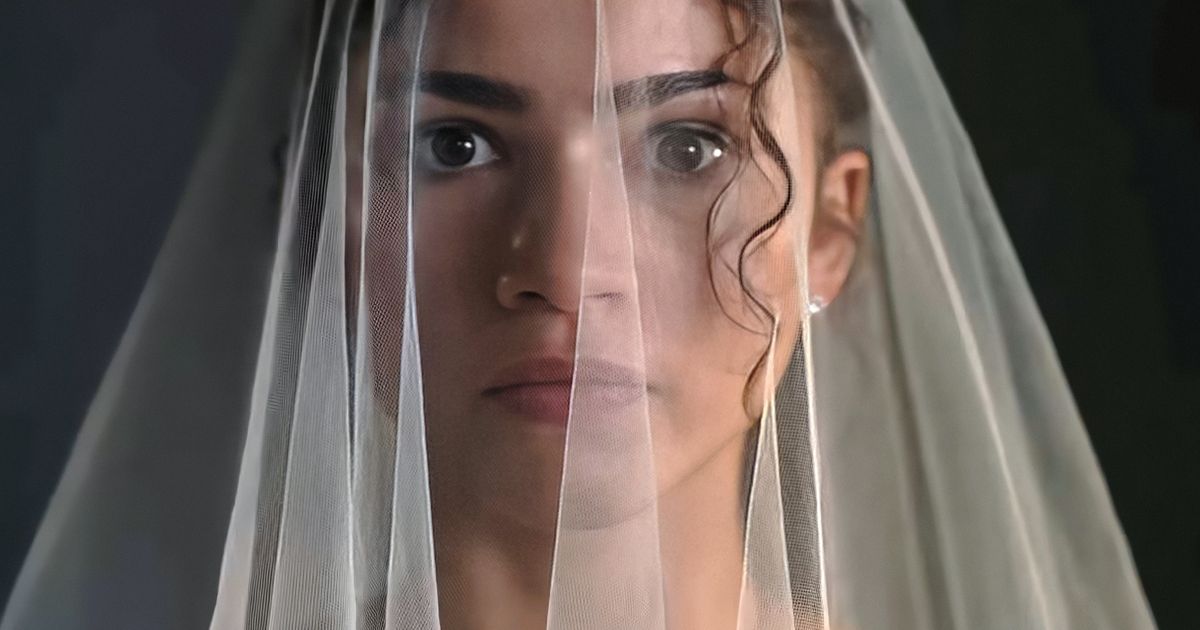
The film features a controversial plot twist involving a character's past plan for a school shooting, sparking significant online speculation and backlash.
Under the ABS challenge system, a team begins each game with two challenges. If a player gets an umpire's call overturned, their team retains the challenge. In effect, this means a team has unlimited challenges until they get two wrong.
In its infamous finale, a woman is tricked into eating her children. The multiple limb hackings in Titus Andronicus are part of a smorgasbord of grotesque recrimination that also includes adultery, murder, rape and mutilation.
Wallace Shawn's new play, What We Did Before Our Moth Days, opens with a provocative monologue about a 25-year-old's relationship with a 13-year-old girl, challenging societal norms.
A vision lay before him: Fleet Street blanketed with snow, silent, empty, pure white, and, at the end of it, the huge and majestic form of Saint Paul's Cathedral. It was a spellbinding moment: the great thoroughfare temporarily devoid of carts and carriages, the cathedral looming blurrily out of the still-falling snowflakes a real-life snow globe.
Founded in 2014 as a tongue-in-cheek alternative to the esteemed Whitney Biennial, the Every Woman Biennial has evolved into an intergenerational showcase that mixes emerging talent with established feminist art stars while maintaining the scrappy, activist energy that inspired it in the first place.
Playwright Mikki Gillette—described once as 'the Joan of Arc of the trans community in Portland theatre' by actor and critic Bobby Burmea—sets the work in the lead-up to and immediate aftermath of the 1966 Compton's Cafeteria Riot. We're dropped into the lives of four trans people practically begging the world to care about their pain, but with very different ways of approaching a brighter future.
This is an all-hands-on-deck moment for women across the world, referring to a coordinated, deliberate effort to dismantle the progress toward women's equality. The effects of this growing inequality in the U.S. are magnified for women from marginalized communities, who already face barriers to financial and educational opportunities.
What began as a passion for collecting became a responsibility. She not only believes in the artistic genius of women, but she wants society in general to hold men and women artists in equal esteem-and to place the same monetary value on their work.
"Heated Rivalry," a low-budget Canadian series that began streaming on HBO Max late last year, quickly made the leap from unexpected word-of-mouth success to full-blown cultural phenomenon. The show, which follows a pair of professional hockey players who fall for each other, has been name-checked by everyone from the N.H.L. commissioner to Zohran Mamdani; its two young leads, Hudson Williams and Connor Storrie, just served as Olympic torch-bearers.
On a cool winter night in Los Angeles, dozens gathered to protest the Trump administration's attacks on the arts and the recent federal immigration raids in southern California. But these protestors didn't carry signs or chant in front of a government building they recited poems such as Antifa Tea Party and Love in Times of Fascism. They performed anti-fascist improv to a small but lively crowd at The Glendale Room, a library-themed theater, as part of the monthly show Unquiet: A Night of Creative Resistance.
So why did people flock to the Pinter to catch it before we all vanished? A clue might be that many of the reviews were written by men who really didn't understand what it is to be a working mother or a child-free actress. She said one male critic had described a female character's lament about her vagina as unrealistic. We need women to write that, she said.
In the case of his latest film, Gail Daughtry and the Celebrity Sex Pass, there's a scene in which a character tries in vain to close a door on Gail (Zoey Deutch) and her ragtag group of friends over and over and over again. At the movie's Sundance Film Festival premiere at the Eccles, laughter rippled across the room. It was funny, but then it kept going, and then it got funnier and funnier, the enthusiasm contagious.
Many editors languish in the margins of history, their contributions largely invisible despite how much they shape whom and how we read. But in recent years, amid a wave of books unearthing overlooked figures, biographers have turned their sights to pioneering book and magazine editors-including Malcolm Cowley of Viking, Judith Jones of Knopf, Bennett Cerf of Random House, and Katharine S. White of The New Yorker -anointing them as the unsung architects of the American literary canon.
It locates the play's beginning in the imagined anguish of Shakespeare and his wife Agnes (or Anne) Hathaway at the death of their son Hamnet at the age of 11 in 1596, a few years before the play's first performance. The nearness of the names is not supposed to be some monumental Freudian slip; there is linguistic evidence that the two could be used interchangeably.
Art, at its very best, reminds me that there is a world out there that I not only belong to but trust - perhaps even love. Sandra Vázquez de la Horra's beeswax-dipped drawings of erupting women, mystical landscapes, and hallucinatory flora in The Awake Volcanoes at the Institute of Contemporary Art, Los Angeles, did just that. Oh, that old mystery of finding oneself reflected in the material fragments of someone else's private imaginary.
Spalding Gray used to perform a show called Interviewing the Audience. The celebrated monologist would invite a stranger he had met in the lobby to join him on stage. Through a sequence of innocuous questions, he would get them to open up about their lives. At one performance, a guest broke the audience's hearts by talking about her daughter's murder. At benefit nights, people living with HIV shared their tales. Other times, the anecdotes would be eccentric or amusing.
If you want to paint, put your clothes back on! That was how Carolee Schneemann summarised the critical response to her 1975 performance piece Interior Scroll, which she had performed nude standing on a gallery table. After making a series of life model poses, she removed a scroll from her vagina and began to read her manifesto. In doing so, Schneemann asked an important question: What does it mean for a female artist to be both the artist and the life model?