#fiber-network-financing
#fiber-network-financing
[ follow ]
#telecommunications #fiber-internet #broadband-infrastructure #att #broadband #infrastructure #data-centers #ai #5g
Science
fromSilicon Canals
1 day agoSpaceX, Amazon, and Google want orbital data centers - four engineering barriers reveal who really benefits - Silicon Canals
Orbital data centers will concentrate AI infrastructure power among a few dominant companies, limiting access for smaller competitors and national regulators.


Photography
fromLondon Business News | Londonlovesbusiness.com
4 days agoCapturing connection: How to document your next London networking event - London Business News | Londonlovesbusiness.com
Collaborating with a professional event photographer is essential for capturing meaningful moments and enhancing brand storytelling through high-quality images.
fromElectronic Frontier Foundation
1 week agoDigital Hopes, Real Power: From Revolution to Regulation
66% of internet users live where political or social sites are blocked, and 78% are in countries where people have been arrested for online posts. New social media regulations have emerged in dozens of countries in the past year alone.
World politics


European startups
fromFortune
5 days agoEmerald AI and Nvidia aim to offer the fast pass for data center grid connects, partnering with power producers and raising new funds | Fortune
Emerald AI aims to enhance grid flexibility for data centers, reducing peak power consumption while maintaining high reliability.

SF politics
fromFortune
6 days agoHyperscalers often lack the "aptitude" on power as the political push picks up to expedite grid connections and pipelines | Fortune
Federal efforts to expedite power grid interconnections face challenges due to hyperscalers' communication issues and lack of understanding of processes.

Business intelligence
fromComputerWeekly.com
3 days agoWilson Connectivity, Autonomous Systems team for in-building wireless service | Computer Weekly
Wilson Connectivity and Autonomous Systems partner to automate in-building wireless infrastructure management, enhancing deployment and ongoing optimization.



fromTelecompetitor
1 week agoRecord fiber spending during next five years: Study
The firm's study, 'North American Fiber Broadband Report: FTTH Review and Forecast 2026-2030,' indicates that nearly $200 billion will be spent on fiber over the next five years, highlighting a significant investment in fiber-to-the-home services.
Roam Research
Real estate
fromInc
2 weeks agoWhy Connectivity Is the New 'Location' in Commercial Real Estate
Digital infrastructure and connectivity now rival or surpass traditional location as the primary factor determining real estate value for business properties, with 96% of U.S. business leaders willing to pay premium prices for reliable connectivity.
Marketing tech
fromTelecompetitor
2 weeks agoVendors introduce tools for the AI + broadband world: Roundup
Major vendors announce AI-integrated networking solutions for broadband service providers, including Wi-Fi 8 access points, unified platforms, and enhanced cloud services designed for enterprise edge optimization and agentic AI deployment.
fromArs Technica
3 weeks agoGoogle Fiber will be sold to private equity firm and merge with cable company
Put together, the two companies pass ~7.1 [million] locations in 26 states. The two companies overlap in only three counties in Texas (109k locations). Texas and Illinois will have the largest footprint for the combined entity. Cable and Fiber will cover an almost equal share of locations for the combined company.
Boston real estate
Higher education
fromTelecompetitor
3 weeks agoBEAD is important, but separate state initiatives are also vital: Pew study
State legislatures passed over 160 broadband-related bills in 2025, addressing regulatory changes, affordability, and workforce development alongside the $42.45 billion federal BEAD program.
UK news
fromComputerWeekly.com
3 weeks agoAltnets 'force to be reckoned with' in UK broadband | Computer Weekly
UK independent broadband providers (altnets) are matching established brands' full-fibre growth rates, gaining market share through superior customer service and competitive pricing despite sector consolidation pressures.
Business intelligence
fromComputerWeekly.com
6 days agoStarlink reshapes satellite communications as industry enters terabit era | Computer Weekly
The satellite communications market is rapidly expanding, driven by demand for high-performance connectivity and the influence of non-geostationary orbit constellations like Starlink.
US news
fromTelecompetitor
3 weeks agoNew analysis compares BEAD awards to existing provider footprints
Small providers receiving tens of millions in BEAD funding face expansion projects larger than their existing networks, risking management challenges and potential withdrawal similar to RDOF failures.
European startups
fromComputerWeekly.com
3 weeks agoCityFibre, AllPoints Fibre introduce multi-gigabit FTTP | Computer Weekly
AllPoints Fibre Networks launched multi-gigabit FTTP services on its Aquila platform through CityFibre partnership, enabling ISPs and resellers to target high-value customers with enhanced connectivity speeds.


Artificial intelligence
fromTechzine Global
1 month agoMaking sense of 6G: what will the 'agentic telco' look like?
6G networks will integrate AI across all layers to enable autonomous, physical AI applications like self-driving cars and robotic systems, with multiple industry players collaborating on open standards by 2030.
fromTelecompetitor
3 weeks agoTime to sunset rules mandating copper maintenance: USTelecom
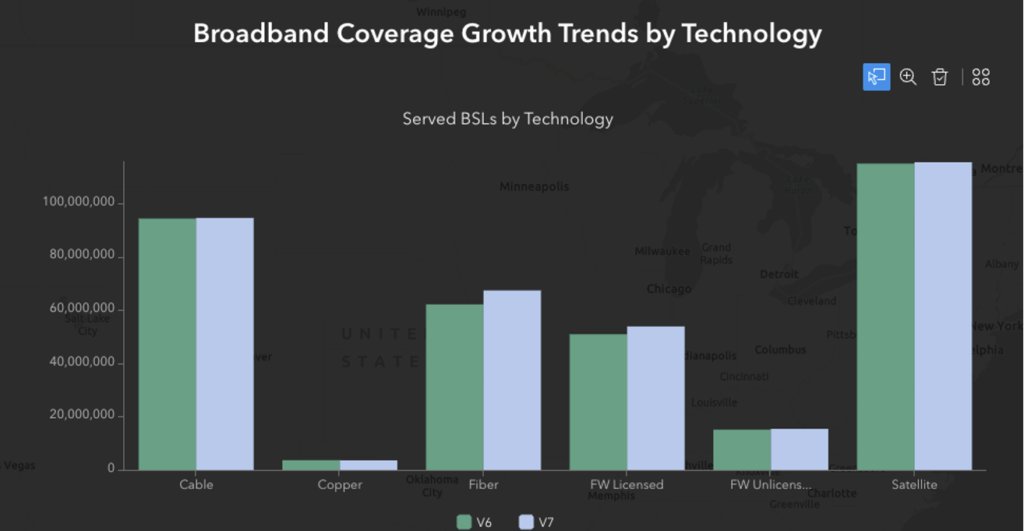
The goal of the new USTelecom program is to show consumers, businesses, civic leaders, and policymakers why maintaining legacy copper for the small portion of end users is not an efficient approach. A key part of this is explaining why modern technology is better.
Digital life
fromTheregister
3 weeks agoGoogle's fiber biz and Stonepeak's Astound Broadband merge
Google Fiber, now just GFiber, will merge with Stonepeak's Astound Broadband to create a new network provider. Stonepeak will hold a majority ownership stake, while the existing GFiber executive team will run the company. According to the pair, the move gives GFiber the external capital and necessary focus to drive its next phase of expansion, allowing it to buildout its fiber footprint across the US.
Tech industry
Business
from24/7 Wall St.
3 weeks agoCogent Communications Carries the Internet but Its Stock Has Been Crushed
Cogent Communications operates a critical internet backbone infrastructure across 57 countries while its legacy Sprint business declines, but high-capacity wavelength services are surging 73.7% year-over-year, positioning the company for significant growth.
fromTelecompetitor
2 weeks agoHow municipal networks compare with provider competitors: Ookla report
Eight of the municipal networks studied beat their local provider competitors in median upload speed. Sherwood Broadband - in the town of the same name in Oregon - was the only one to beat its local competitor in median download speed.
Online Community Development
London startup
fromComputerWeekly.com
2 weeks agoOfcom sets out regulation to push UK gigabit broadband to 'final phase' | Computer Weekly
Ofcom's regulatory framework aims to deliver full-fibre gigabit broadband to nearly all UK properties by 2027, with competition and investment driving productivity gains across the economy.
London startup
fromTheregister
2 weeks agoOfcom sees no need for change in next phase of fiber rollout
Ofcom's updated telecom regulations maintain existing framework while acknowledging BT's continued market dominance, requiring Openreach to share infrastructure and setting price controls for basic broadband services across most UK premises.
fromTelecompetitor
1 month agoBroadband Forum announces Wholesale Access project
Wholesale access has been inherently supported by the Broadband Forum's network architecture over the past 20 years, and this project takes the best practices from copper‑based broadband to reshape and evolve them for fiber and cloud networks.
Online Community Development

fromComputerWeekly.com
2 months agoEurope's fibre roll-out failing to deliver returns in key markets | Computer Weekly
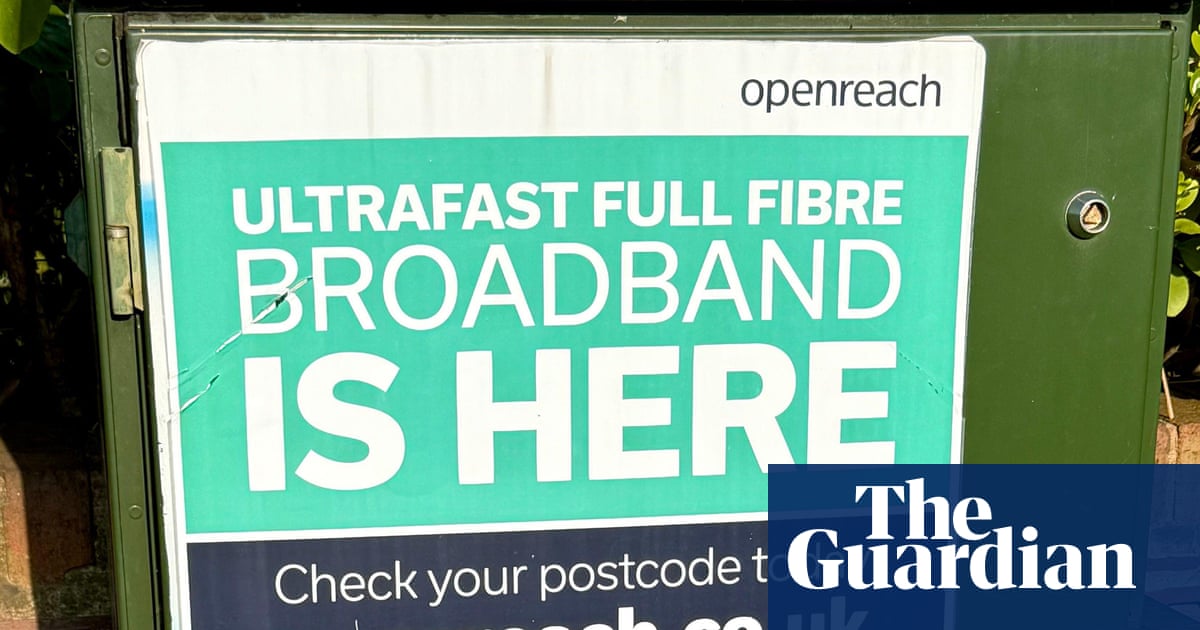
The mass roll-out of fibre networks is seen as the key to the expansion of digital services across major economies, but research from Kearney is warning that a €174bn funding shortfall facing Europe's telecoms sector is putting 2030 gigabit and 5G connectivity targets at risk, meaning around 45 million Europeans could remain without adequate high-speed connectivity by the end of the decade.
Miscellaneous

fromMedium
2 months agoHow Fiber Networks Support Edge Computing
Edge computing is a type of IT infrastructure in which data is collected, stored, and processed near the "edge" or on the device itself instead of being transmitted to a centralized processor. Edge computing systems usually involve a network of devices, sensors, or machinery capable of data processing and interconnection. A main benefit of edge computing is its low latency. Since each endpoint processes information near the source, it can be easier to process data, respond to requests, and produce detailed analytics.
Tech industry
fromTelecompetitor
1 month agoEzee Fiber announces expansion to Salem, Oregon
The company said the expansion will create regional employment opportunities, including construction workers, installation technicians, sales and marketing staff, and community engagement personnel. Ezee Fiber also plans to establish a regional office in Salem. "I'm proud to bring Ezee Fiber's multi-gig internet service to homes and businesses in Oregon," said Matt Marino, Chief Executive Officer of Ezee Fiber. Marino said customer support has contributed to the company's growth over the past two years. The company reports a 4.9-star Google rating and thousands of five-star reviews.
Digital life
fromTelecompetitor
2 months agoGFiber announces automatic speed increases while maintaining prices
The upgraded speeds for GFiber include: The previous Core 1 Gig is now Core 3 Gig, priced at $70 per month. Core 3 is 3x the symmetrical speed of GFiber's initial internet offering and is still the same price it was in 2012. Home 3 Gig is now Home 5 Gig, for $100/month. Customers at this tier are seeing about a 67% increase in speeds and will receive the GFiber Multi-Gig Wi-Fi 7 router.
Digital life
[ Load more ]