#first-time-watch-buyers
#first-time-watch-buyers
[ follow ]
#luxury-watches #watches #omega #watch-collecting #horology #affordable-watches #watchmaking #master-chronometer
#watches

Wearables
fromFortune
41 minutes agoWatches like this $455,000 timepiece can't be made by a machine-and that's exactly why they're the ultimate flex amid the analog revival | Fortune
Complications in watches signify craftsmanship and storytelling, enhancing the wearer's narrative and appreciation for horology.
fromYanko Design - Modern Industrial Design News
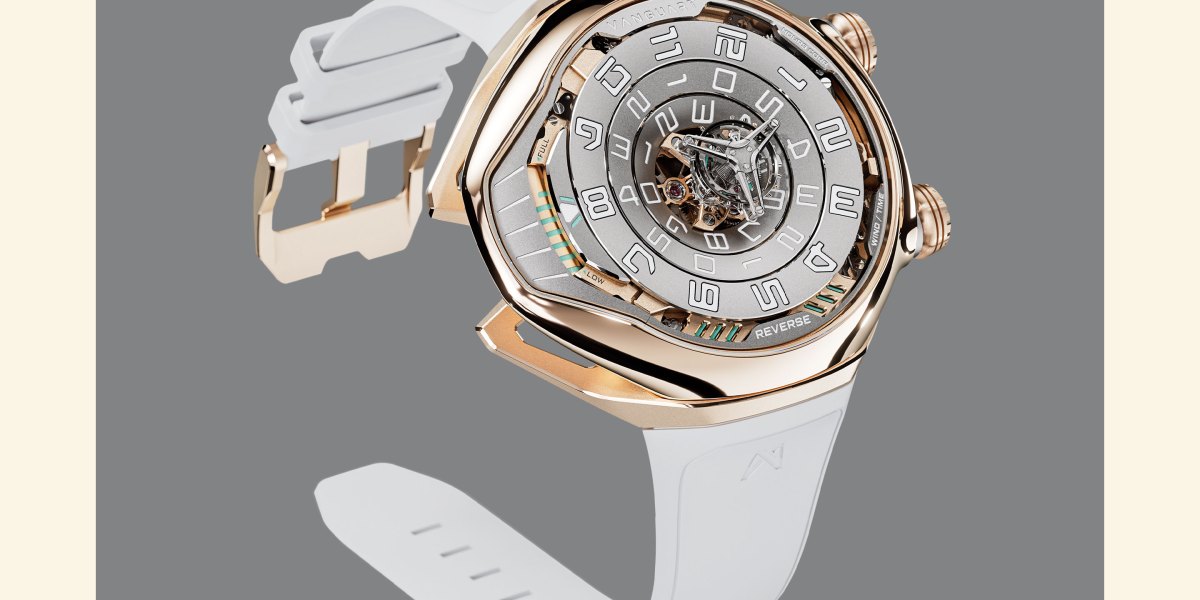
3 days agoThis $4,500 NASA Watch Reads Time Through a Prism and Only 100 Exist - Yanko Design
The new, special edition timepiece is called the Amida Digitrend NASA Tribute and is designed to capture the spirit of the era of the Space Shuttle, 'when humanity dared to reach for the stars.'
Apple



Paris food
fromInsideHook
2 weeks agoGirard-Perregaux's Latest Watch Looks Like a Work of Art. It Sounds Like One, Too.
Girard-Perregaux introduces its first in-house minute repeater complication, the Minute Repeater Flying Bridges, establishing the brand among elite watchmakers with a 500-component automatic movement.
fromInsideHook
3 weeks agoWatchword: Tropical Dials
Until roughly the late aughts, much of the vintage watch-collecting community focused on stock that remained in the best physical condition possible, rejecting patination while polishing cases and generally restoring old watches in the manner of old cars. As the watch-collecting hobby proliferated in this century, however, collectors' tastes shifted dramatically.
Fashion & style
fromYanko Design - Modern Industrial Design News
1 week agoBeams Just Turned the $120 Timex Camper Into a Ring Watch - Yanko Design
The Beams Boy x Timex Original Camper Ring Watch draws its lineage from two points in history: the 1920s tradition of converting women's timepieces into jewelry, and the 1990s ring watch trend that briefly made a cult appearance before fading out again.
Wearables
Careers
fromFortune
1 month agoThere are less than 2,000 watchmakers in the U.S., so Rolex has opened a trade school in Texas to tackle the shortage-it's already rivaling Harvard | Fortune
Rolex launched a tuition-free Watchmaking Training Center in Dallas to address the critical shortage of professional watchmakers in the U.S., attracting over 560 applicants for 27 spots in 2024.
Gadgets
fromYanko Design - Modern Industrial Design News
1 month agoCitizen x Honda Revive Ana-Digi Temp in Prelude style and its easily the coolest car watch of the year - Yanko Design
Citizen and Honda collaborate on a limited-edition Ana-Digi Temp watch celebrating the 2026 Honda Prelude's return, featuring automotive dashboard-inspired design with temperature display and dual subdials.
Soccer (FIFA)
fromYanko Design - Modern Industrial Design News
1 month agoRichard Mille RM 41-01 Tourbillon Soccer brings the passion and precision of football to your wrist - Yanko Design
Richard Mille's RM 41-01 Tourbillon Soccer mechanically maps a football match with a tourbillon, double-column-wheel flyback chronograph, match-phase indicator, and dual goal counters.
fromInsideHook
1 month agoAudemars Piguet's Best New Release Isn't a Royal Oak
Art Deco, which began to proliferate more broadly following the Paris International Exhibition of Modern Decorative and Industrial Arts, from which it derived its name, called upon ancient Egyptian motifs and futurism in a modality that emphasized geometric shapes, broad use of color and a streamlined (if maximalist) aesthetic. During the 1930s, a lesser-known but decidedly compelling offshoot of Art
Design
Gadgets
fromYanko Design - Modern Industrial Design News
1 month agoThis Titan Grandmaster Watch Hides a Chessboard Inside It, and Only 500 People Can Own One - Yanko Design
Titan's Grandmaster X Gukesh Dommaraju Special Edition wristwatch translates chess's geometry and intensity into a 500-piece, hand-crafted, stone-marquetry limited edition timepiece.
fromInsideHook
2 months agoOmega Finally Unveils Its Secret Speedmaster: A Reverse Panda
On Tuesday, Omega released two new versions of the Speedmaster Moonwatch Professional in Black and White - or, as the watch world is inevitably going to call it, the "Reverse Panda." (A "panda" is a white-dialed chronograph with black subdials, while a "reverse panda" features a black dial with white subdials.) While there have been reverse-panda Speedies before, these have largely been "reduced" automatic Speedmaster watches or special editions such as the "Speedy Tuesday" made with Fratello in 2017.
Gadgets
fromInsideHook
2 months agoWatchword: The Sector Dial
Take the so-called "sector" or "scientific" dial. Organized into concentric "sectors" that divide the minute, hour and sometimes the subdivided seconds tracks into separate areas, they often (but not always) feature bisecting vertical and horizontal lines that create four equal quadrants. These aesthetically-distinctive dials originated on pocket watches in the early 20th century, carrying over the idea of the "railroad" minute track and merging it somewhat with the curvaceous, decorative geometry of the art deco movement.
Wearables
fromInsideHook
2 months agoThe Best Watches of January 2026
Ever since the inauguration of LVMH Watch Week in early 2020, the horological world has hit the ground running each new year. Far from a sleepy wake-up, this trade show kick-starts a busy schedule full of big releases, global events and all manner of watch-related celebrations spread throughout the calendar. LVMH Watch Week certainly brought the heat in 2026, as plenty of brands emerged with guns blazing:
Gadgets

fromInsideHook
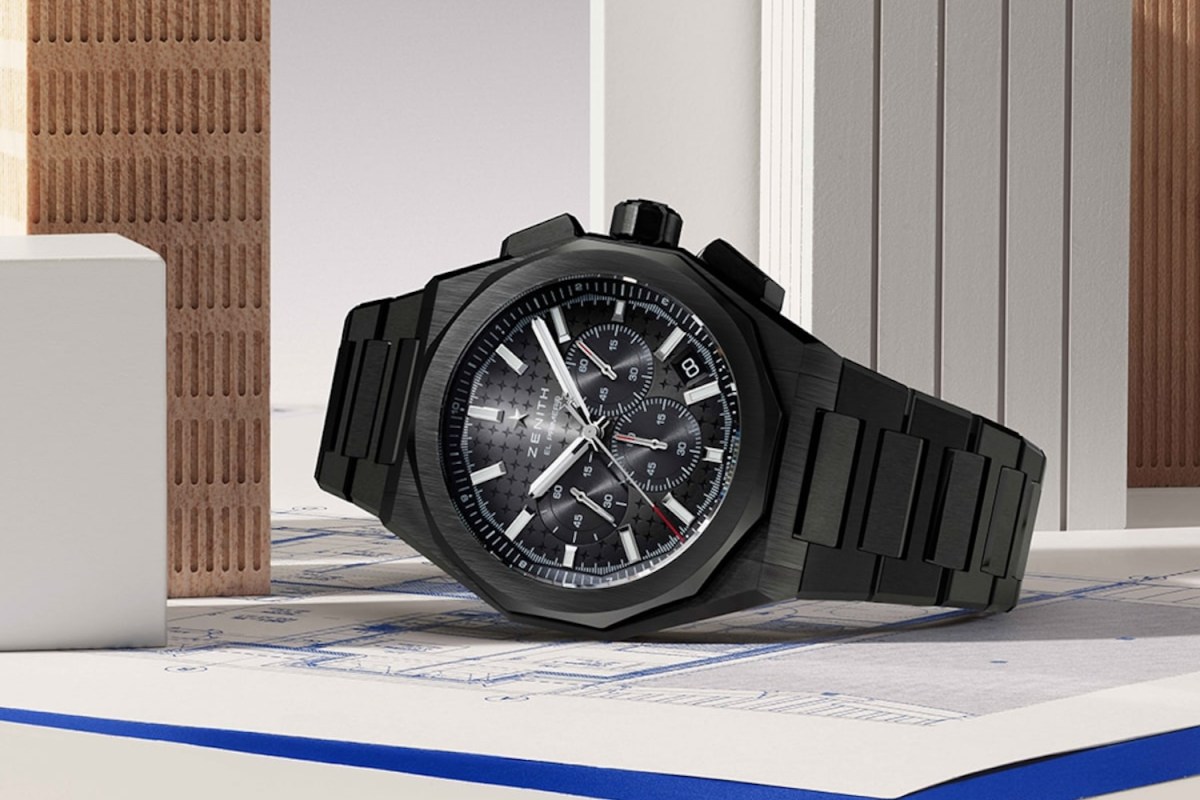
1 month agoTodd Snyder's Latest Watch Collab Was Designed to Sell Out
If there are two things to know about Todd Snyder (and, by proxy, his eponymous NYC-based label), it's that he has a hell of an eye for design, and he doesn't do things halfway. These core tenets run through the elite menswear that has established Snyder as one of the premier American designers and are on full display in his latest project: a duo of extremely limited-edition timepieces created in collaboration with the up-and-coming British watchmakers AERA.
Fashion & style
fromInsideHook
1 month agoBreitling and Aston Martin's First-Ever Titanium Navitimer
In 1952, the Aircraft Owners and Pilots Association (AOPA) - an American-founded non-profit and the world's largest aviation organization - approached Willy Breitling, scion of his family's eponymous watchmaking brand, to commission a timepiece for its members. Specifically, AOPA needed a chronograph that would allow its user to easily compute important information like speed, distance, fuel consumption and other calculations crucial to flying before the advent of flight computers.
Gadgets
fromInsideHook
2 months agoThe Best Adventure Watches
If a dive watch is a waterproof timepiece meant to travel under the water, a pilot's watch is a highly legible timepiece meant for use in the cockpit, a field watch is meant for soldiers or explorers and a GMT watch is meant for tracking a second time zone...then what the heck is an "adventure" watch? To our minds, it includes all of the above watches.
Gadgets
[ Load more ]