#fondazione-querini-stampalia
#fondazione-querini-stampalia
[ follow ]
#venice #art-exhibition #contemporary-art #adaptive-reuse #venice-biennale #art-theft #renoir #cezanne #architecture



fromdesignboom | architecture & design magazine
5 days agorenaissance church in piacenza glows with scenographic lights in davide groppi's exhibition
The central nave of Sant'Agostino becomes the spine of the exhibition, as the designer divides the space using white, geometric volumes through freestanding architectural forms that visitors can move through.
SOMA, SF


fromArchDaily
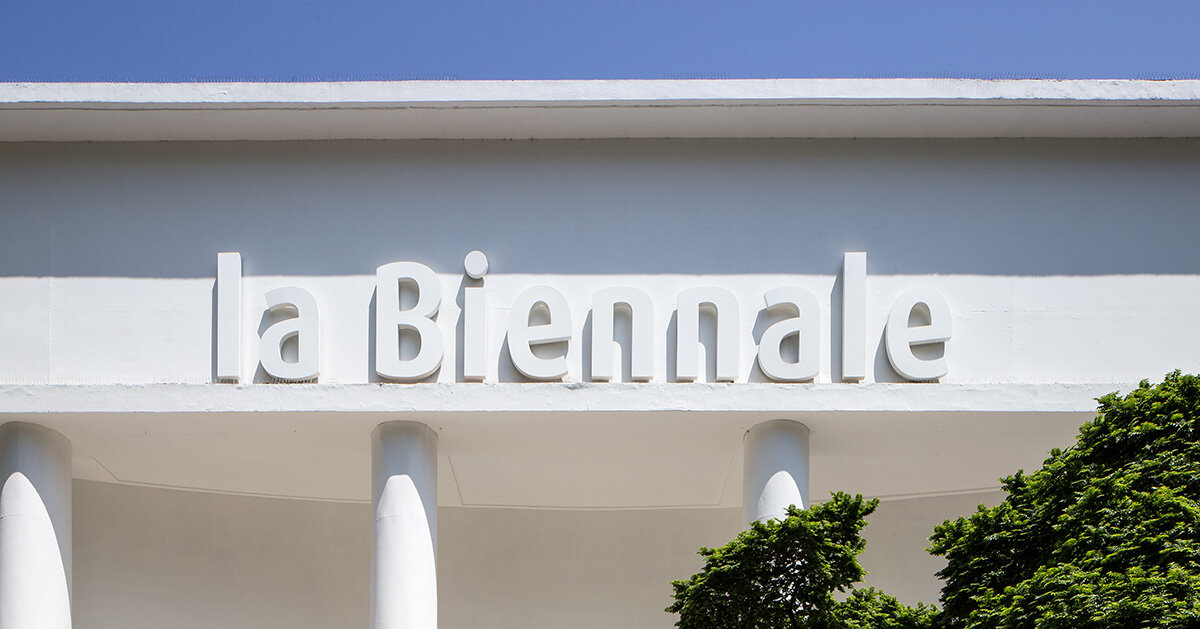
1 week agoLa Biennale di Venezia Unveils Renovated Central Pavilion at the Giardini
The project reconsiders the building as a layered architectural structure shaped by successive transformations, reorganizing these historical strata through a spatial strategy that prioritizes clarity, continuity, and flexibility.
Renovation
Travel
fromConde Nast Traveler
2 weeks agoIn Venice With My Mom and Sister, Discovering the Joy of a Cross-Generational Trip
Family vacations with aging parents and siblings become increasingly precious as life circumstances change, making intentional travel together a meaningful priority before it becomes impossible.
Design
fromDesign Milk
2 weeks agoCrisalide by Draga & Aurel Presents New Depths Within Glass
Draga & Aurel's Crisalide collection merges centuries-old Venetian glassblowing traditions with contemporary sculptural lighting design, where trapped bubbles and LED technology transform glass into dynamic artworks that shift perception through light and color.
Renovation
fromdesignboom | architecture & design magazine
2 weeks agovenice biennale reveals renovated central pavilion ahead of 61st international art exhibition
The Central Pavilion at La Biennale di Venezia has been fully refurbished, enhancing its spatial coherence and preparing for the 2026 Art Biennale.
#michelangelo

fromThe Art Newspaper - International art news and events
1 month agoArts
Clash of the Renaissance titans: an intriguing double biography of Titian and Michelangelo
Michelangelo the Elder's lifetime success and character are documented through 17th-century commemorative paintings that reveal how artistic tastes shifted dramatically after his death.
fromUntapped New York
1 year agoArts
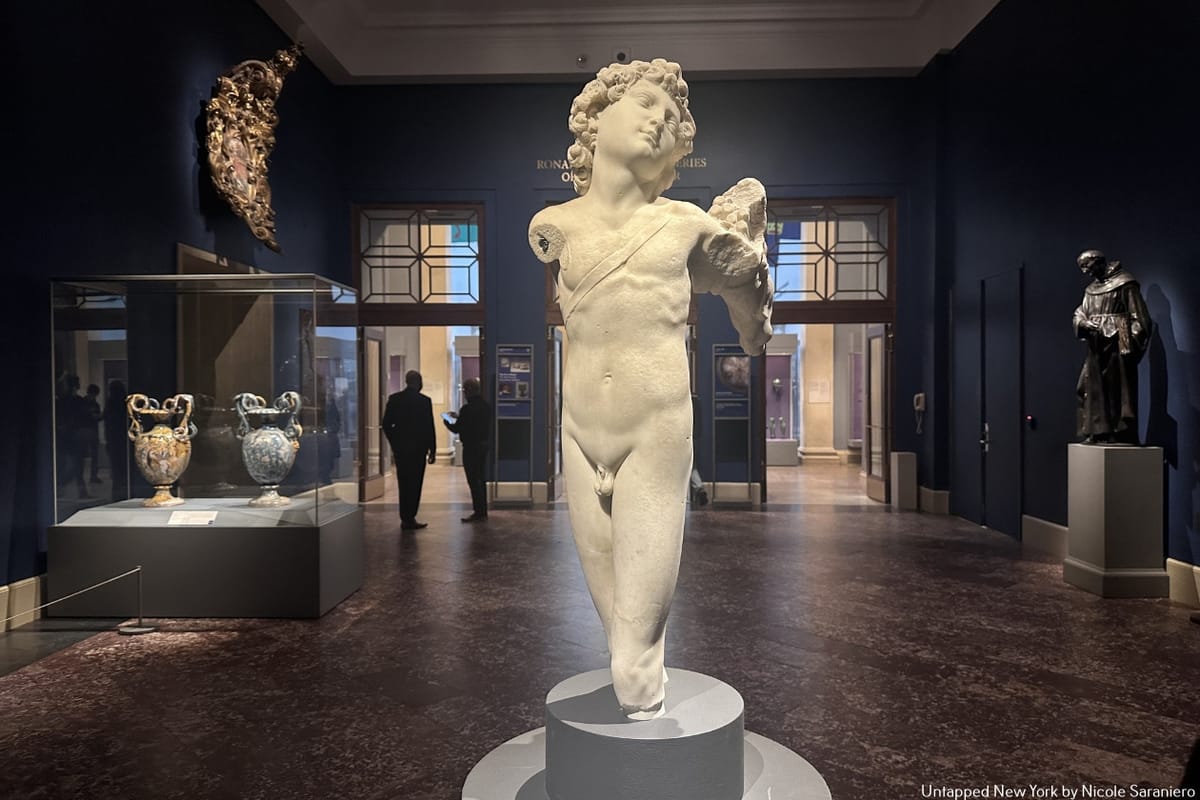
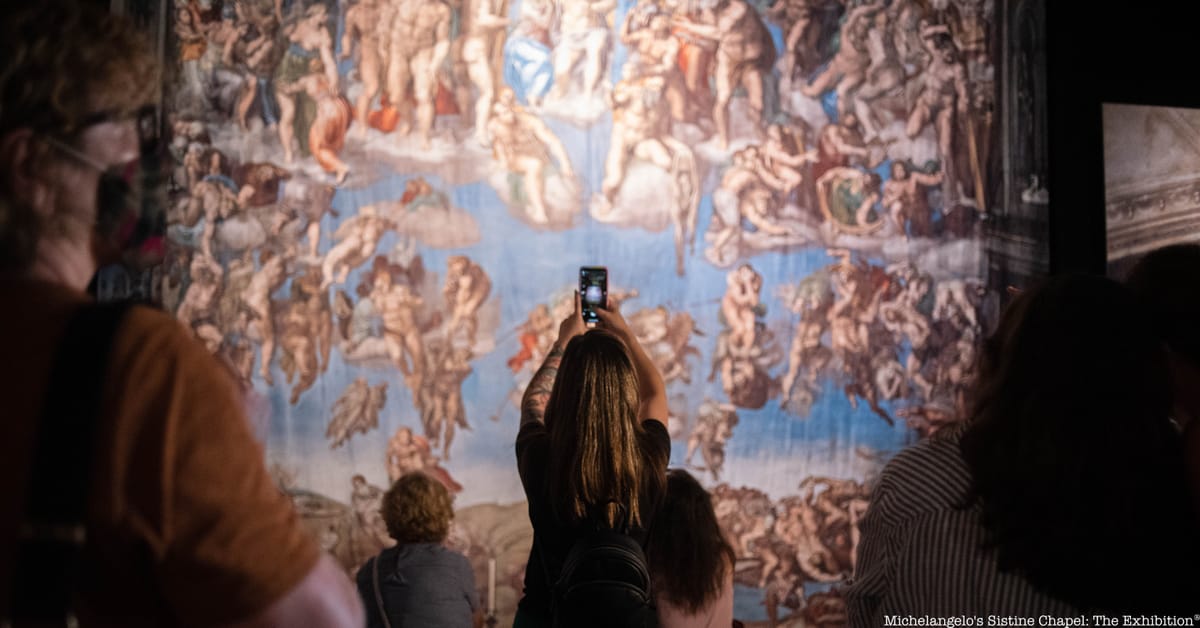
Michelangelo's Sistine Chapel Comes to Brookyln - Untapped New York
Life-sized high-definition reproductions of Michelangelo's Sistine Chapel frescoes are exhibited in Brooklyn, offering viewers five-times-closer, brushstroke-level detail and multilingual audio tours.

Europe news
fromwww.theguardian.com
3 weeks agoVenice Biennale risks losing EU funding over planned Russia involvement
The European Commission threatens to cut €2 million in funding to the Venice Biennale if Russia participates in the 2026 exhibition, citing violations of ethical standards and European democratic values.
Higher education
fromHarvard Gazette
3 weeks agoLike seeing art of Roman chapels in technicolor for first time - Harvard Gazette
Students learned centuries-old stucco sculpting techniques through hands-on practice, gaining deeper understanding of Renaissance and Baroque artists' material choices and creative processes.
fromArchDaily
2 weeks agoStefano Boeri Interiors Restores Southern Ambulatory Areas of the Colosseum in Rome
The intervention 'restored the perception of the monument's original scale and pavement level,' while enabling visitors to approach the structure more directly and understand the sequence of the ambulatory and its arches. This recalibration of levels, based on archaeological findings and geometric studies, also enabled the reorganization of the stormwater drainage system, integrating surface slopes and transitions into the paving design while maintaining coherence with the monument's historical configuration.
Renovation
History
fromMedievalists.net
3 weeks agoMedieval Bronze Doors by Donatello Return to Florence After Restoration - Medievalists.net
Donatello's fifteenth-century bronze doors have been restored and returned to the Old Sacristy of San Lorenzo in Florence, showcasing innovative sculptural techniques and Medici family patronage.
Renovation
fromwww.archdaily.com
2 weeks agoVilla Modda / depaolidefranceschibaldan architetti
Villa Modda, designed by depaolidefranceschibaldan architetti, integrates into the Val di Noto rural landscape through its name derived from native Mediterranean vegetation, reflecting deep environmental connection.
LA real estate
fromLos Angeles Times
38 years agoPozzo Firm Nearing 90th Year
Pozzo Construction Co., founded in 1898, became a major Los Angeles builder across four generations, constructing landmark buildings including Los Angeles City Hall's foundation before becoming a subsidiary of Blount Bros. Corp.
fromFast Company
1 month agoThe Getty's new logo is a blocky tribute to its vast collections
We needed a visual identity that was uniquely Getty and distinct enough to unify how we show up globally. This system gives Getty one clear, ownable expression in support of the work we do around the world.
Typography
fromArchDaily
2 weeks agoCarlo Ratti Associati Designs Buzzi Heritage Cultural Center in Italy With the New Digital Construction System
The project examines the integration of digital fabrication processes into reinforced concrete construction, highlighting that while materials such as steel and timber have undergone significant transformation through digital production methods, reinforced concrete has largely retained conventional casting techniques. The proposal aims to address this condition by incorporating digitally fabricated components into the construction system.
Renovation
Arts
fromThe Art Newspaper - International art news and events
1 week agoOne of Donatello's most important bronze statues is being restored: should it ever be shown outdoors again?
Donatello's Gattamelata statue is undergoing restoration and its future location remains uncertain after being moved indoors due to corrosion.
Science
fromwww.theguardian.com
1 month agoHumans not Mimmo the dolphin need managing in Venice lagoon, say scientists
Italian scientists monitoring a solitary dolphin in Venice conclude that human behavior management, not wildlife control, is necessary to protect the animal from boat propeller dangers.
History
fromwww.thehistoryblog.com
1 month agoEtruscan urn's polychromy restored after 1966 Florence flood
The Bottarone Urn, a 425-380 B.C. Etruscan alabaster cinerary urn depicting a married couple, was restored to its original vivid polychromy after 60 years of mud damage from Florence's 1966 Arno River flood, revealing Egyptian blue pigment for the first time.
fromApartment Therapy
1 month agoThis Soothing Italian Philosophy Transforms the Way I Do Everything
"Piano piano" is an old Italian saying that sounds nonsensical, but is actually full of wisdom, especially if you, like me, are finding yourself wishing away these frigid winter days and hoping spring and summer gets here fast. These days, I've found myself rushing from one thing to the next, frustrated at the smallest things, from post office lines to just missing my train. And I'm ready to make a change.
Mindfulness
fromwww.theguardian.com
3 weeks agoNaples museum to allow visually impaired visitors to experience art through touch
The veil covering Christ is extraordinary. It's impossible to understand how Sanmartino managed to create it. The veil defies explanation—for those who can see and for those who cannot. When you touch it, you can feel the veins pulsing beneath.
Arts

:max_bytes(150000):strip_icc()/TAL-header-venice-canal-snow-WINTERVENICE0226-73cd5024a6e6451492dc0e93c1708fa8.jpg)
fromArchDaily
2 months agoRethinking Museums: A Conversation with Beatrice Grenier on Architecture as Cultural Policy
As cultural institutions continue to proliferate worldwide in this digital era, the museum itself appears increasingly in need of redefinition. Rather than offering a single model or solution, Architecture for Culture: Rethinking Museums, written by architectural historian and curator Béatrice Grenier, argues for a more contextual and plural understanding of what a museum can be: an institution shaped by its environment, its public, and the specific cultural questions it seeks to address.
Remodel
fromArchDaily
1 month agoNaples Architecture City Guide: 15 Projects of History, Density, and Continuity
Set on the edge of the Mediterranean and shaped by centuries of continuous occupation, Naples is a city where architecture is inseparable from time. Layers of Greek foundations, Roman infrastructures, medieval churches, Baroque palaces, and Modern interventions coexist within a dense and compact urban fabric. Naples reveals itself as an accumulation of structures, adaptations, and reuse, where buildings are rarely isolated objects and more often part of a larger spatial, social, and historical system.
Miscellaneous
Science
fromArchDaily
2 months agoCRA-Carlo Ratti Associati and Italo Rota Transform MAE Carbon Fiber Archive Into an Interactive Museum in Italy
MAE Museum transforms a major carbon-fiber archive into an interactive "living museum" showcasing carbon-fiber science, production processes, and broad industrial and architectural applications.
Design
fromThe Art Newspaper - International art news and events
2 months agoHow an artist's sketch was turned into a museum
A museum design translates a blue-house and white-tower sketch into a tiled architectural language reflecting regional materials, cultural markers, and historic South–West Asian trade links.
fromTravel + Leisure
1 month ago25 of the Best Things to Do in Florence
Pallabazzer recommends seeing the historic center of Florence at different times of the day. In the early morning, you'll get to experience it "without noise and the pressing pace of crowds." Midday brings droves of visitors, but the destination is "bathed in sunshine." In the evening, "the lights of the street lamps stretch out over the Lungarni [the streets along the Arno River], creating a truly magical effect."
Travel
Miscellaneous
fromConde Nast Traveler
2 months agoWhy 2026 Is the Year You Should Finally Go to Venice
Venice is shifting toward sustainable, decentralized tourism with visitor limits, flood protections, island food production, revived artisan traditions, restored historic hotels, and the Biennale's return.
fromdesignboom | architecture & design magazine
2 months agoplay spaces revitalize fluid 1960s home in italy by studio rossettini
Studio Rossettini revitalizes House LB into a contemporary single-family residence with playful spaces that puts functionality and quality of life at its center. The from the early 1960s in Padua, reimagines the existing structure through its renovation, freeing up the perimeter walls and creating a fluid sequence of spaces that flow between the kitchen, dining room, and living room, with furnishings integrated into architectural niches.
Renovation
fromwww.theguardian.com
2 months agoPrado chief says Madrid art museum doesn't need single visitor more'
In 2025 the Prado, which is home to such masterpieces as Velazquez's Las Meninas and Hieronymus Bosch's The Garden of Earthly Delights, was visited by 3,513,402 people, an increase of more than 56,000 from the previous year. Visitor numbers have risen by more than 816,000 over the past decade. While some museum bosses would be toasting such a success, the Prado's director, Miguel Falomir, is treating it with caution. The Prado doesn't need a single visitor more, he told a press conference on Wednesday.
Miscellaneous
Renovation
fromdesignboom | architecture & design magazine
2 months agostep inside caffe nazionale, AMAA's renovation of a northern italian palazzo
Caffè Nazionale transforms a city-hall colonnade into a layered, restored café combining historic fabric, contemporary insertions, and tactile material details.
fromArchitectural Digest
2 months agoRamdane Touhami's Curated Roman Palazzo Spans Centuries-But Doesn't Take Itself Too Seriously
Designed by the celebrated mannerist architect Giacomo Barozzi da Vignola, construction of the first sections of the late Renaissance Palazzo Borghese began in the 1560s. The Palazzo was among Vignola's many other important projects (he became the principal architect for St. Peter's Basilica following Michelangelo's death). It was later expanded by Cardinal Camillo Borghese, who bought it in 1596 (in 1605, he was named Pope Paul V).

Arts
fromThe Art Newspaper - International art news and events
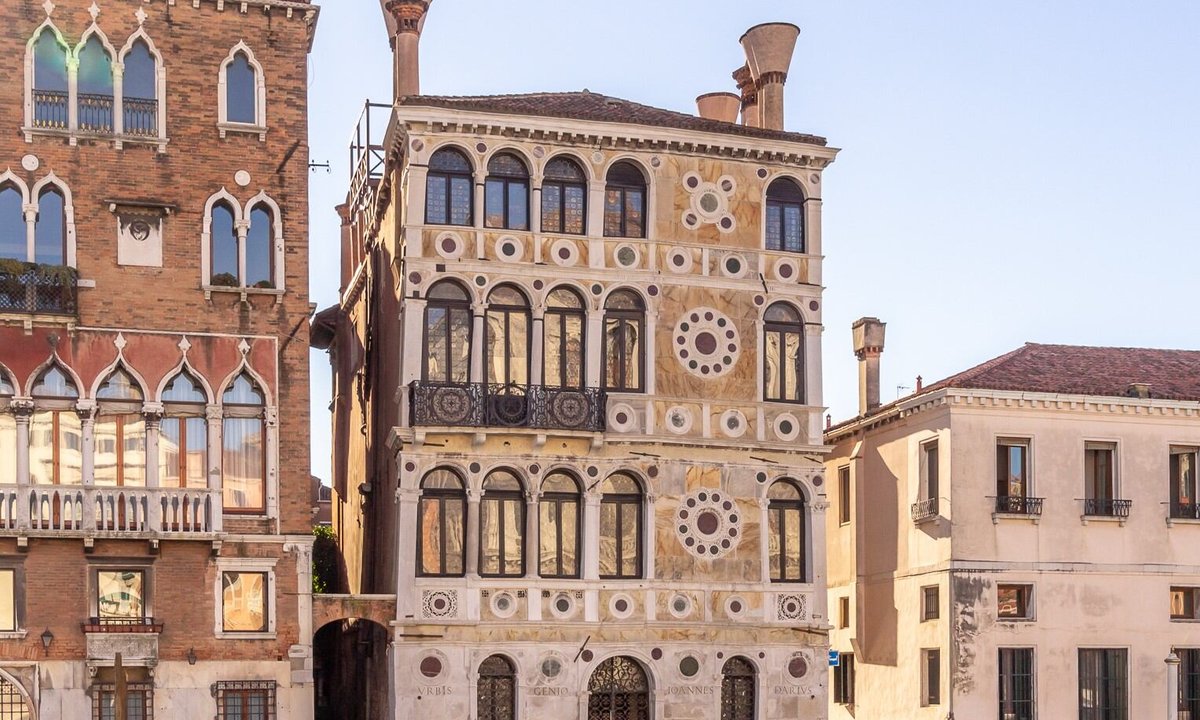
2 months agoHawai'i at the British Museum, a Venice palazzo for sale, Joseph Beuys's 'Bathtub'-podcast
British Museum presents Hawaiʻi: a kingdom crossing oceans with renewed stewardship of Hawaiian objects; Venice's Ca' Dario is for sale; Beuys' Bathtub in London show.
Arts
fromThe Art Newspaper - International art news and events
2 months agoInside the star-studded party celebrating 30 years of Fondazione Sandretto Re Rebaudengo
Patrizia Sandretto Re Rebaudengo transformed Turin into a vibrant international contemporary art center through her foundation and patronage over thirty years.
fromArtnet News
1 month agoThis Serene Canaletto Is Now One of the Italian Masters Most Expensive Works | Artnet News
A signature view of Venice by Canaletto brought a strong price for the 18th century Italian master at Christie's on February 4, leading the Old Master week in New York. Hammering at $26 million, it sold for a total of $30.5 million including fees, just over its $30 million pre-sale estimate. Backed by a guarantee and irrevocable bid, it was sure to sell.
Arts
Arts
fromdesignboom | architecture & design magazine
2 months agosustainable ice skating rink occupies palazzo diedo's frescoed banquet hall in venice
A 100-square-meter synthetic skating rink occupies Palazzo Diedo's frescoed hall, combining sustainable ice simulation, sound, and lightboxes to juxtapose Baroque permanence with bodily experience.
fromArtnet News
1 month agoMiart Marks 30 Years With a Splashy, Jazz-Inspired Edition
This year's theme, 'New Directions,' ties the fair to the legacy of John Coltrane and Miles Davis, treating jazz as a working method rather than a metaphor. It's a balance of structure and freedom, shaped by listening to galleries, to collectors, and to the wider moment we're living through. The move to the South Wing at Allianz MiCo reinforces this approach with a more compact, layered layout that sparks encounters across works, media, and generations,
Arts
Arts
fromThe Art Newspaper - International art news and events
1 month agoArtemisia Gentileschi, Michelangelo and Rembrandt bring new energy and records to New York's Old Masters sales
New York Old Masters auctions set record prices across artists—Artemisia Gentileschi, Michelangelo, Rembrandt, Canaletto—bringing historically significant, newly surfaced and restituted works into public view.
[ Load more ]