#foreign-markets
#foreign-markets
[ follow ]
fromThe Cipher Brief
3 days agoTaking a Stand on Adversaries' Influence in the Western Hemisphere
The January 3rd Operation Absolute Resolve ousted Venezuelan Dictator Nicholas Maduro, marking a significant shift in US policy towards countering adversarial influence in the western hemisphere.
World politics
#tariffs



Artificial intelligence
fromAbove the Law
2 months agoWhat If Tariffs Go Away - Or Don't? How You Can Protect Your Bottom Line With Contract Intelligence - Above the Law
AI-powered contract visibility enables organizations to quickly locate tariff-related terms, manage price and renegotiation provisions, and mitigate supply-chain and cost volatility.



fromLondon Business News | Londonlovesbusiness.com
3 days agoUS dollar rose amid a rebound in geopolitical concerns - London Business News | Londonlovesbusiness.com
The US dollar returned to the upside as geopolitical fears rebounded after US President Trump's address to the nation. The rhetoric fuelled risk aversion and flows toward the dollar while oil prices surged.
US Elections
#eu-mercosur
Europe politics
fromFortune
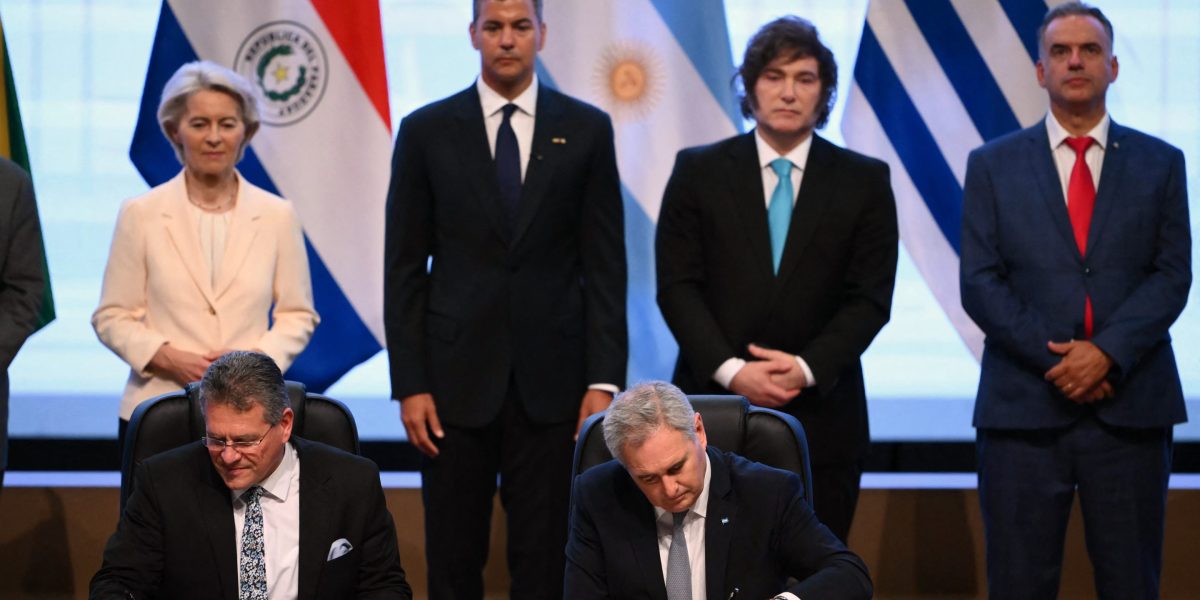
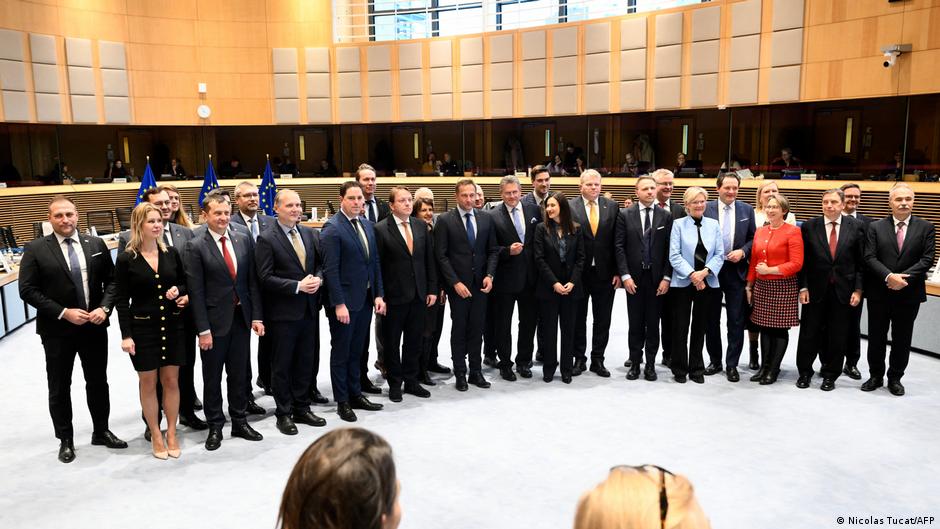
1 week agoAfter 25 years of negotiations, the EU finally signs the EU-Mercosur deal, the biggest trade deal in history linking 700 million people | Fortune
The EU-Mercosur free trade deal will begin on May 1, enhancing trade among 700 million people and reducing dependency on China and the US.

Europe politics
fromFortune
1 week agoAfter 25 years of negotiations, the EU finally signs the EU-Mercosur deal, the biggest trade deal in history linking 700 million people | Fortune
The EU-Mercosur free trade deal will begin on May 1, enhancing trade among 700 million people and reducing dependency on China and the US.
fromLondon Business News | Londonlovesbusiness.com
2 weeks agoThe significant events in the global economy over the past week - London Business News | Londonlovesbusiness.com
Weak performance in several service sectors offset gains in retail and wholesale trade, reinforcing concerns about the pace of economic recovery. Japan relies heavily on oil imports from the Middle East, making it particularly sensitive to disruptions in the region.
UK news
fromLondon Business News | Londonlovesbusiness.com
6 days agoGlobal markets react to geopolitical tensions and rising energy costs - London Business News | Londonlovesbusiness.com
U.S. financial markets experienced a volatile week, largely influenced by geopolitical developments in the Middle East and fluctuations in energy prices. Investor sentiment was driven primarily by external events rather than domestic fundamentals.
Business
fromwww.dw.com
6 days agoWTO talks end in stalemate over e-commerce
"We worked hard," WTO Director-General Ngozi Okonjo-Iweala said, adding that the US and Brazil in particular "need more time" to work out their differences over the agreement to impose levies on cross-border online orders.
World politics
Europe news
fromLondon Business News | Londonlovesbusiness.com
3 weeks agoTrump Weighing Up Fresh Tariff Framework and Markets - London Business News | Londonlovesbusiness.com
European markets decline amid rising energy prices and stagflation concerns, while defence stocks gain on Iran conflict tensions and oil prices surge past $94 despite IEA's strategic reserve release.


Remote teams
fromEntrepreneur
1 month agoGoing Global? The Game Has Changed. Here's the New Playbook.
Global expansion leaders strategically blend entity-based employment, EOR solutions, and contractor relationships, selecting the optimal model for each market, role, and business objective rather than applying uniform approaches.
European startups
fromwww.dw.com
3 weeks agoUS trade probes could lead to new tariffs for EU, China
The US launched two trade investigations targeting excess industrial capacity and forced labor imports, potentially leading to new tariffs on major trading partners after the Supreme Court limited Trump's tariff authority.
US politics
fromFortune
1 month agoTrump brags that America is 'winning so much.' Without tariffs, "we could have seen more of the good news," IMF director says. | Fortune
The U.S. economy shows strong growth and resilience, but chronic budget deficits and tariff-based trade policies threaten its long-term fiscal health.
US news
fromLondon Business News | Londonlovesbusiness.com
1 month agoThe Significant Events in the Global Economy Explained - London Business News | Londonlovesbusiness.com
Supreme Court tariff reversal lifted investor sentiment and stocks, while Fed division on rates, rising inflation, and slowing GDP kept markets cautious.

fromEntrepreneur
1 month agoWhy Global Brands Struggle When Local Markets Push Back
Companies enter new markets with momentum. Press coverage looks promising. Campaigns launch on schedule. Local teams are hired. Early dashboards suggest traction. Then progress slows. Customer interest plateaus. Partnerships take longer than expected. Internally, the conversation almost always turns to execution. Messaging must not be clear enough. The market probably needs more education. What I have learned is that this conclusion is usually wrong. What looks like market resistance is more often a signal that the brand is communicating from the wrong position.
Venture
fromwww.independent.co.uk
2 months agoThe EU is seeking new trade partnerships. Here's why
Whether it's investigating the financials of Elon Musk's pro-Trump PAC or producing our latest documentary, 'The A Word', which shines a light on the American women fighting for reproductive rights, we know how important it is to parse out the facts from the messaging. At such a critical moment in US history, we need reporters on the ground. Your donation allows us to keep sending journalists to speak to both sides of the story.
France news
fromFortune
2 months ago'The Chinese have invaded us in terms of merchandise': Mexico and Argentina lead Latin America's struggles with flood of imports | Fortune
China has been flooding Latin American markets with low-priced exports, especially autos and e-commerce goods, as its exporters adjust to U.S. President Donald Trump's tariffs and geopolitical moves. The world's second-largest economy has become a major trading partner for many Latin American nations, seeking access to their abundant natural resources and growing markets while expanding its influence in a region Trump views as America's Backyard.
E-Commerce
France news
fromwww.theguardian.com
2 months agoEU states back controversial Mercosur deal with Latin American countries
EU member states approved a landmark Mercosur free-trade deal with Argentina, Brazil, Paraguay and Uruguay, sparking widespread protests and political opposition over environmental and farming concerns.

fromwww.npr.org
1 month agoAs Trump reshapes foreign policy, China moves to limit risks, reap gains
China, which the U.S. until recently saw as its "pacing threat," may feel relieved that neither of President Trump's targets were in its neighborhood. On the other hand, it may also worry that U.S. actions are aimed in part at countering China's influence, per Trump's and his officials' explanations, and that Trump's "America First" rhetoric has not reduced his appetite for what China calls "military adventurism."
US news
fromThe Local France
2 months agoEU to ink long-awaited trade deal with South American bloc
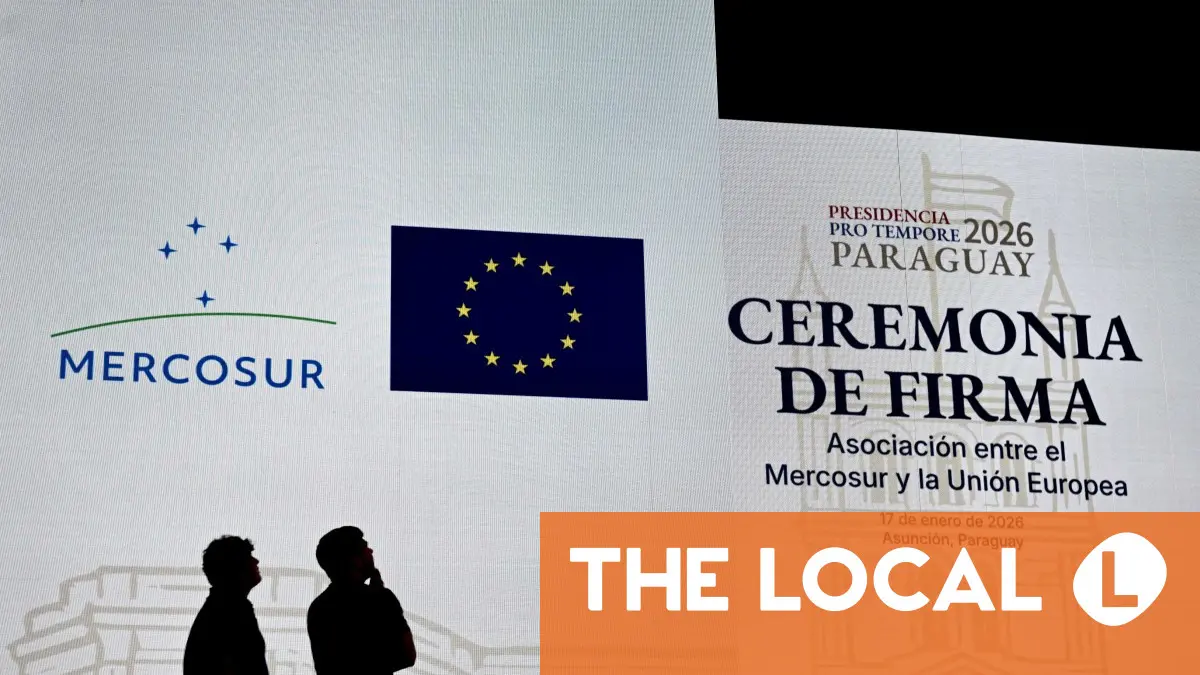
The European Union will on Saturday sign a deal 25 years in the making with the South American trade bloc Mercosur, creating one of the world's largest free trade areas at a time of growing protectionism and volatility. The long-awaited agreement comes amid the sweeping use of tariffs and trade threats by US President Donald Trump's administration, which has sent countries scrambling for new partnerships.
France news
World news
fromFortune
2 months agoBRICS could become a new pillar of global governance-if its rapid growth doesn't erode its newfound clout | Fortune
BRICS' rapid expansion risks internal incohesion and failure to reform global governance despite its vast population, resources, and strategic potential.
Business
fromHarvard Business Review
2 months agoFor Multinational Companies, Localization Matters More Than Ever
Global companies must localize core operations, duplicating supply chains and integrating regional suppliers to meet data-sovereignty and local sourcing mandates, sacrificing scale for resilience.
fromFortune
2 months agoA spectre is haunting Europe - the spectre of Trump. Cue the Asian trade deals | Fortune
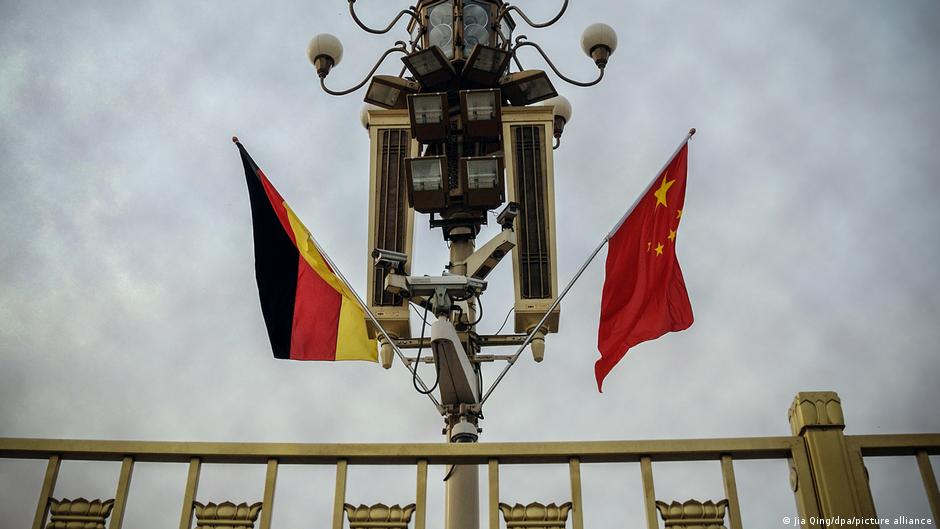
Stability. Consistency. Ever-changing complexity. With language like that, deployed in separate meetings in three Asian capitals this week, government leaders forged closer ties driven in part by a figure halfway around the world: the president of the United States. And much of the time, they didn't even mention Donald Trump's name. IN BEIJING: The U.K. and Chinese leaders called Thursday for a "long-term, stable, and comprehensive strategic partnership" between their two countries. The important words are long-term and stable. The two countries committed a decade ago to building a comprehensive strategic partnership but progress has been halting at best.
World politics
fromlondonlovesbusiness.com
2 months agoThe significant events in the global economy over the past week - London Business News
U.S. financial markets began the year on a positive note, with major stock indexes reaching new highs despite ongoing geopolitical uncertainty and emerging signs of economic cooling. Investors showed renewed confidence, particularly in smaller and value-oriented companies, which outperformed the large technology-driven stocks that dominated returns in recent years. This shift suggests broader participation in the market rally and growing optimism beyond a narrow group of companies.
Business

fromFortune
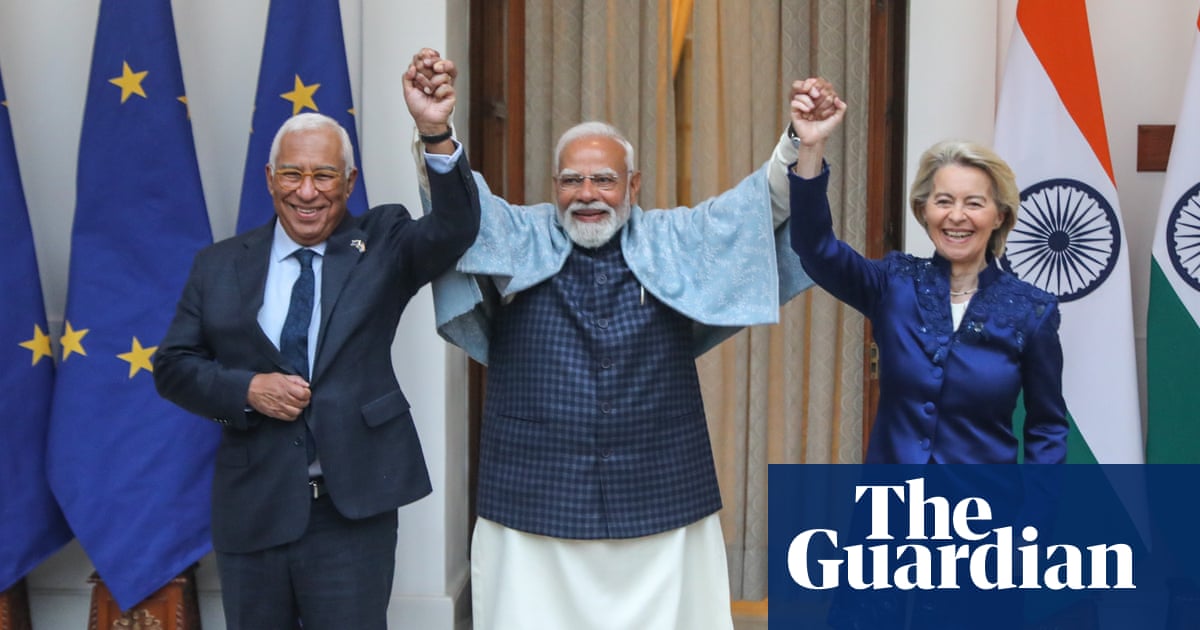
2 months agoIndia, EU reach 'mother of all' trade agreements after nearly 20 years of talks | Fortune
After nearly two decades of negotiations, India and the European Union announced Tuesday they have reached a free trade agreement to deepen economic and strategic ties. The accord, which the EU chief described as the "mother of all deals," could affect as many as 2 billion people. The deal between two of the world's biggest markets comes as Washington targets both India and the EU with steep import tariffs, disrupting established trade flows and pushing major economies to seek alternate partnerships.
Miscellaneous
fromFortune
2 months agoEU moves closer to another major Asian power on trade, upgrading ties with Vietnam | Fortune
The upgrade places the EU on the same diplomatic footing as the United States, China and Russia and was announced during a visit to Hanoi by European Council President António Costa. "At a moment when the international rules-based order is under threat from multiple sides, we need to stand side by side as reliable and predictable partners," Costa said, adding that the partnership is about "developing spheres of shared prosperity."
Miscellaneous
[ Load more ]