#fossil-mammals

[ follow ]
fromArs Technica
1 day ago

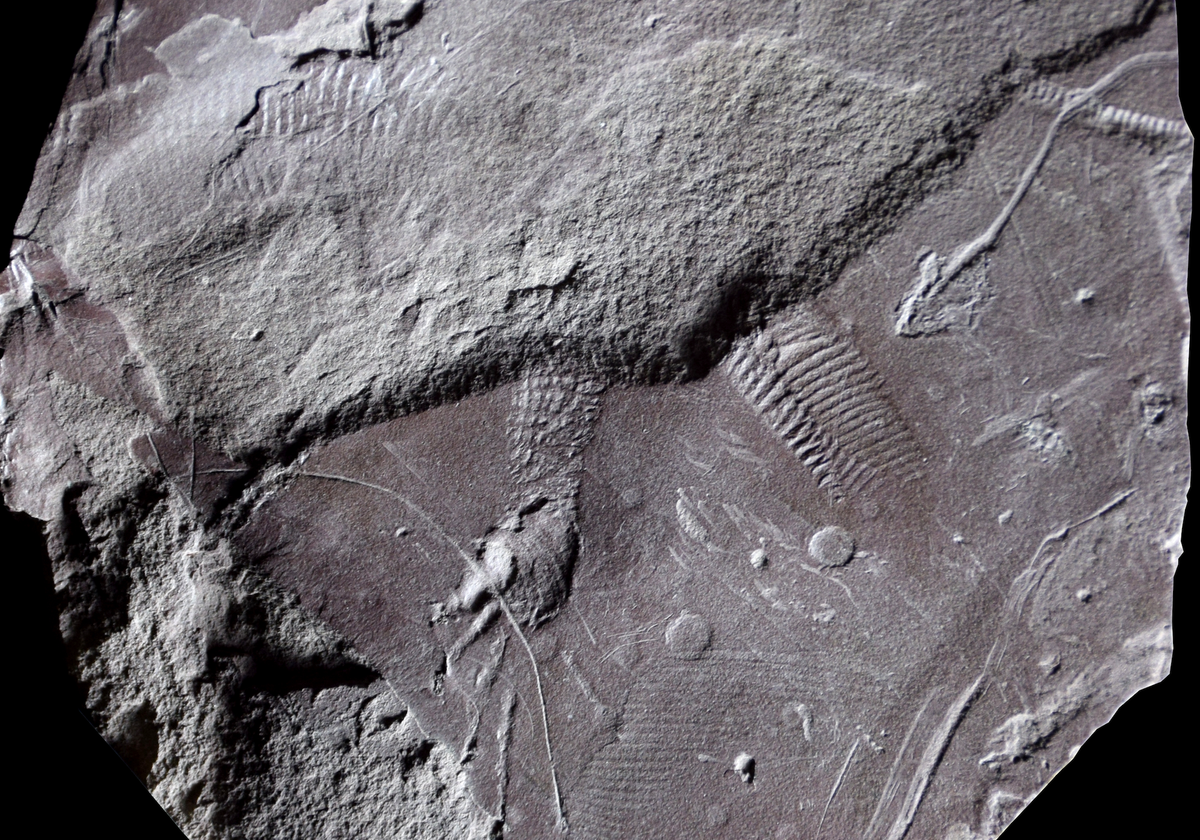
New fossil deposits show complex animal groups predating the Cambrian

Four protrusions appear to be arranged in pairs, each consisting of two connected branches surrounding a central depression. We really don't understand what any of these features represent anatomically.
OMG science
History
fromArs Technica
13 hours ago

Ice Age dice show early Native Americans may have understood probability

Native Americans used dice for games of chance over 12,000 years ago, predating Old World dice by millennia.
OMG science
fromwww.scientificamerican.com
1 day ago

Bizarre fossils reveal that complex life evolved far earlier on Earth than we thought

The Cambrian explosion may have occurred later than previously thought, as new fossils from the Ediacaran period suggest earlier complex life forms existed.
Science
fromNature
1 week ago

Daily briefing: Tiny bones from Neanderthal fetus point to downfall of the species

A genetic bottleneck contributed to the Neanderthals' extinction, while AI-generated X-rays challenge radiologists' ability to discern real from fake.
#paleontology
OMG science
fromHarvard Gazette
2 days ago

Anthropologist traces split between Homo sapiens and Neanderthals - Harvard Gazette

The transition from multiple human forms to Homo sapiens dominance involved interactions and interbreeding with Neanderthals, not a clear-cut victory.
History
fromMedievalists.net
2 days ago

Medieval "Giant" with Trepanned Skull Discovered in Mass Grave - Medievalists.net

A 9th-century mass grave in England reveals remains of young men, suggesting violent conflict during the Viking conquest of East Anglia.
OMG science
fromArs Technica
6 days ago

Explanation for why we don't see two-foot-long dragonflies anymore fails

Breathing capacity may have allowed giant insects to thrive despite lower atmospheric oxygen levels.
London
fromwww.theguardian.com
2 weeks ago

Natural History Museum tops UK attraction list with record visitors

London's Natural History Museum became the UK's most popular attraction in 2025 with 7.1 million visitors, driven by renovated gardens, a new climate gallery, and free admission.
Independent films
fromwww.theguardian.com
4 weeks ago

The Dinosaurs review Morgan Freeman's narration is so soothing, you could use this as a relaxation aid

Dinosaur documentaries increasingly rely on familiar narrative tropes and visual effects that have become clichéd, combining predictable animal behavior patterns with sensationalized predator encounters.
London
fromianVisits
2 weeks ago

Early hours visits to see the Natural History Museum's dinosaurs

The Natural History Museum offers early-morning dinosaur gallery tours starting at 9am, one hour before public opening, providing exclusive access with a guide for £30 adults and £24 children.
Science
fromwww.theguardian.com
3 weeks ago

A new start after 60: I'd had several careers but no degree then I became a palaeontologist at 62

Craig Munns pursued a degree in palaeontology at 62 while working at Geoscience Australia, focusing on invertebrate fossils and biostratigraphy analysis of drill cores from central Australia.
#de-extinction
OMG science
fromwww.theguardian.com
2 weeks ago

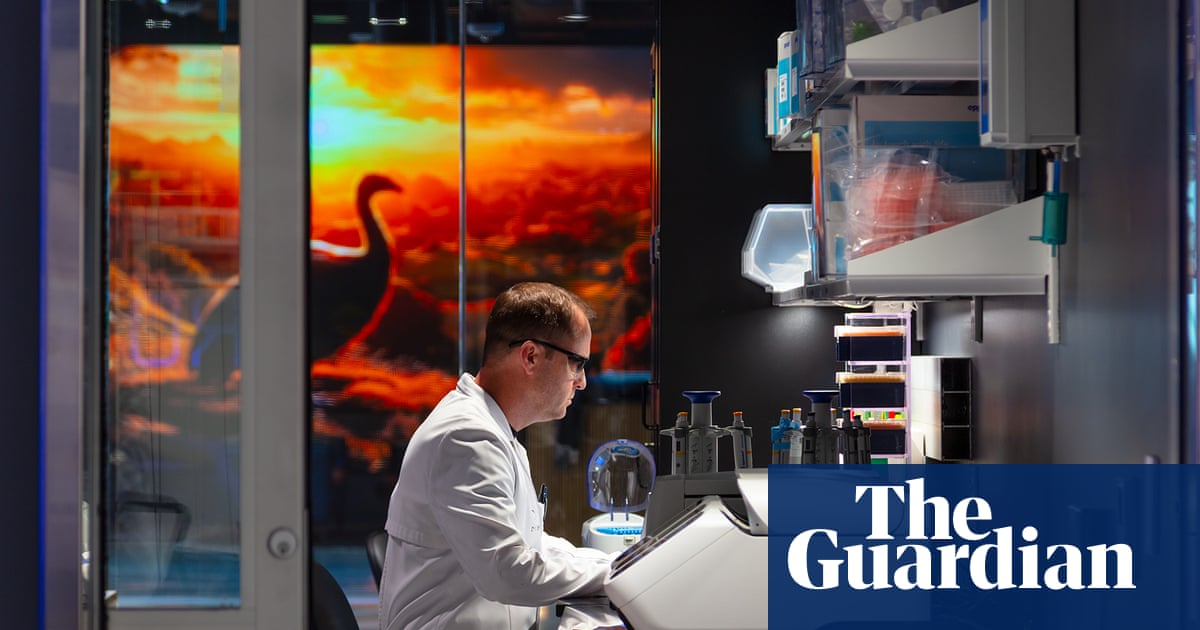
Can scientists really resurrect the dodo? Inside the company that says they can

Colossal Biosciences is using ancient DNA and gene editing to resurrect extinct species including dire wolves, woolly mammoths, and dodos, raising questions about the ethics and feasibility of de-extinction technology.
OMG science
fromwww.npr.org
1 month ago

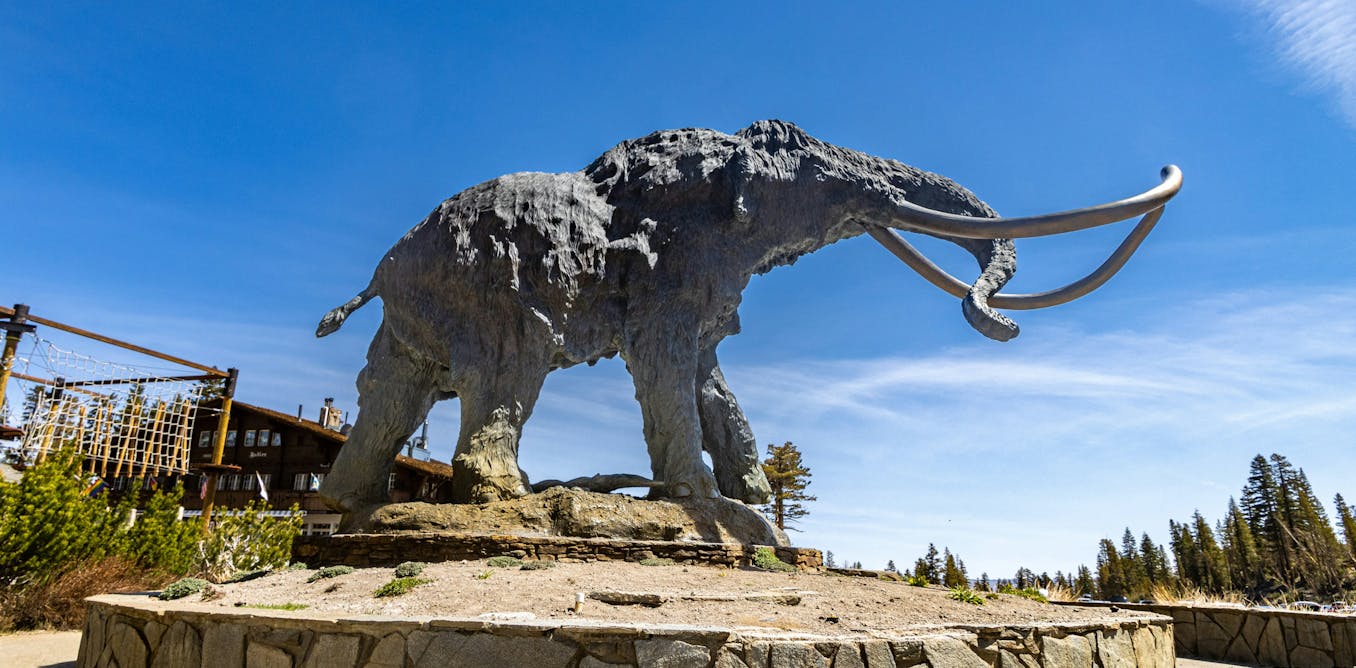
Colossal Biosciences breeds controversy while trying to revive mammoths

Colossal Biosciences uses gene-editing, cloning, and AI technologies to resurrect extinct species like woolly mammoths while developing tools to save endangered animals, though critics question the ethics and feasibility of de-extinction.
fromArs Technica
3 weeks ago

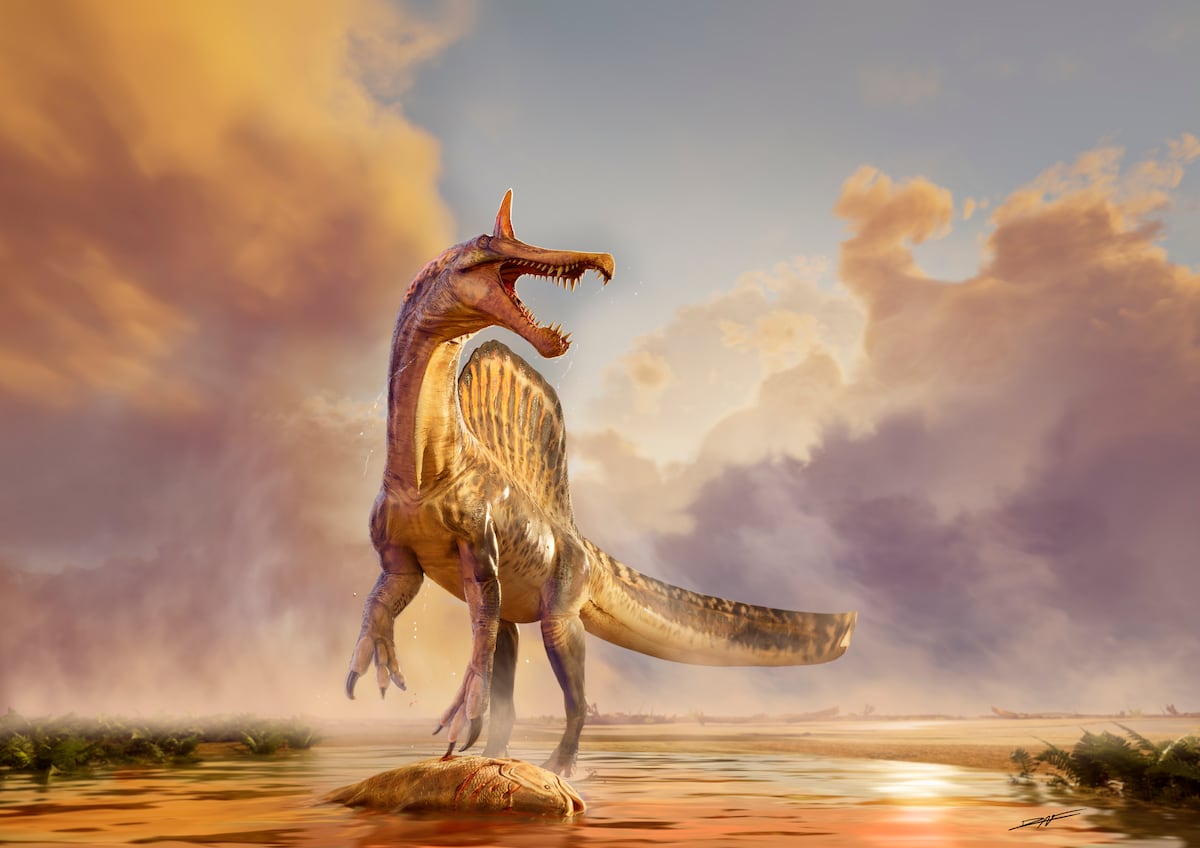
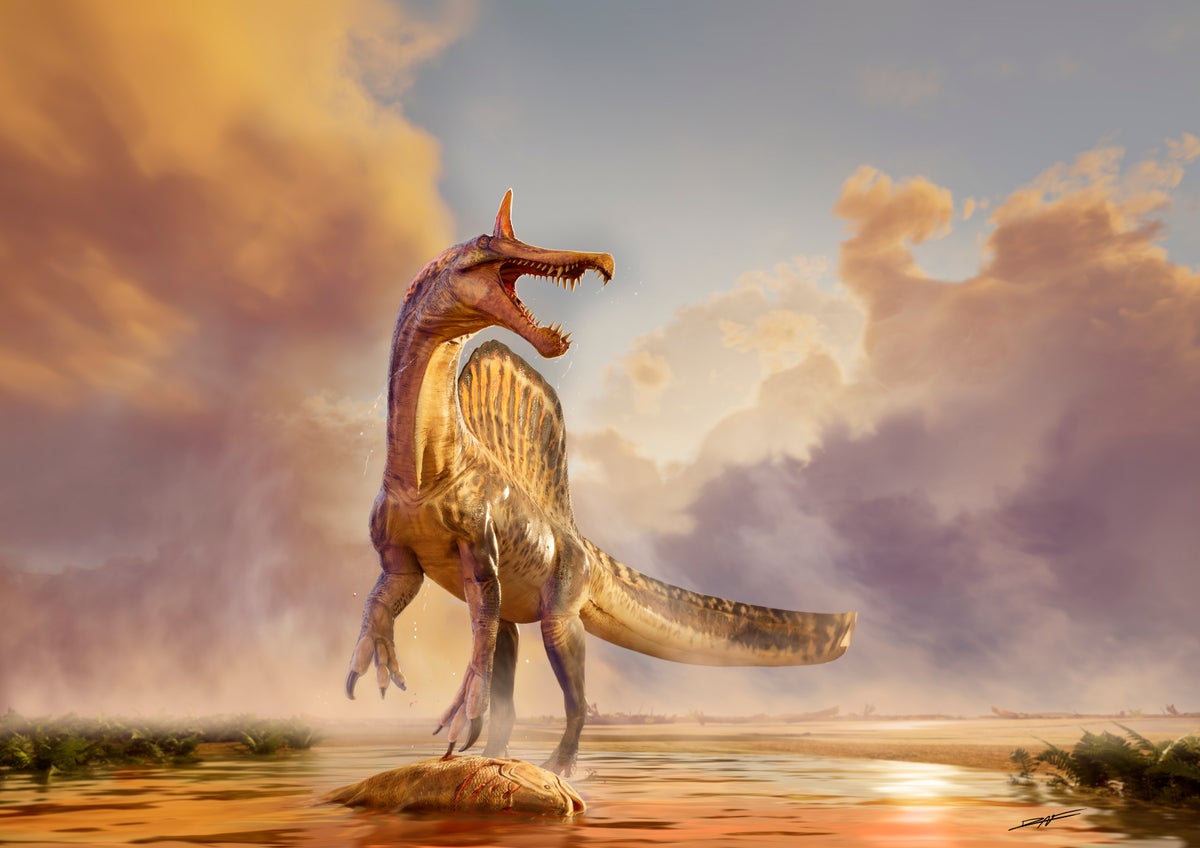
A unicorn-like Spinosaurus found in the Sahara

The Spinosaurus is a sail-backed, crocodile-snouted dinosaur that Hollywood depicted as a giant terrestrial predator capable of taking down a T. rex in Jurassic Park 3. Then they changed their mind and made it a fully aquatic diver in Jurassic World Rebirth—a rendering that was more in line with the latest paleontological knowledge. But now, deep in the Sahara Desert, a team of researchers led by Paul C. Sereno discovered new Spinosaurus fossils suggesting both scientists and filmmakers might have got it all wrong again.
Science
#dinosaur-auction
OMG science
fromState of the Planet
3 weeks ago

Earth's "Missing" Billion Years: Study Links the Great Unconformity to Early Tectonics

Tectonic forces from early supercontinent formation, rather than Snowball Earth glaciation, caused the Great Unconformity, a billion-year gap in Earth's geologic record.
US news
fromwww.npr.org
1 month ago

Newly discovered dinosaur species was a fish-eater with a huge horn

Spinosaurus mirabilis was a school-bus-length, fish-eating spinosaur with a foot-long curved horn that lived in Cretaceous marshes about 95 million years ago.
fromMail Online
3 weeks ago

Sea fossils atop world's mountains fuel claims of Noah's Great Flood

Marine fossils have been discovered on mountain ranges around the world, including the Himalayas, Andes and Rocky Mountains, which scientists say were once covered by ancient seas before being pushed upward as continents collided and mountains formed.
OMG science
fromenglish.elpais.com
1 month ago

Ants trapped in amber reveal what diminutive life was like millions of years ago

Although there are many amber stones containing a single creature, there are fewer that include two or more, as is the case with a pair of mosquitoes trapped in amber 130 million years ago which tell us that, back then, males also sucked blood. Even more extraordinary is when several organisms can be seen interacting, either eating the other, acting as a parasite, or cooperating.
Science
OMG science
fromMail Online
3 weeks ago

Scientists recreate the lost languages of ancient humans

Scientists reconstructed ancient human species languages by analyzing fossilized skeletal imprints of soft tissues like the larynx, tongue, and brain, revealing that Neanderthals likely spoke languages understandable to early Homo sapiens.
History
fromOpen Culture
1 month ago

Behold the First Realistic Depiction of the Human Face (Circa 25,000 BCE)

The Venus of Brassempouy, a 25,000-year-old mammoth ivory carving, represents the earliest realistic human face depiction and marks the dawn of beauty in human culture.
OMG science
fromArs Technica
3 weeks ago

Tiny, long-armed dinosaur leads to rethink of dinosaur miniaturization

Alvarezsaurid miniaturization preceded dietary specialization on ants, challenging the theory that small body size evolved directly coupled to insectivory.
Science
fromNature
1 month ago

Neanderthal dad, human mum: study reveals ancient procreation pattern

Female Homo sapiens and male Neanderthals mated more frequently than the reverse pairing, shaping human genetic ancestry patterns revealed through analysis of female Neanderthal specimens.
#snowball-earth
fromAeon
1 month ago
Philosophy

How the harsh, icy world of Snowball Earth shaped life today | Aeon Essays

fromAeon
1 month ago
Philosophy

How the harsh, icy world of Snowball Earth shaped life today | Aeon Essays

Science
fromenglish.elpais.com
1 month ago

A chicken-sized dinosaur related to T. rex debunks the hypothesis that its lineage shrank

A complete skeleton of Alnashetri cerropoliciensis, one of the smallest nonavian theropods ever recorded, was discovered in Argentina and published in Nature, revealing a chicken-sized carnivorous dinosaur from 95 million years ago.
fromHigh Country News
2 months ago

How pronghorn outran the Ice Age - High Country News

If they survived the summer and reached adulthood, they would become some of the fastest land animals on Earth. Adult pronghorn, a bit smaller than deer, can run seven miles in just 10 minutes, achieving short bursts of nearly 60 mph, much faster than horses or wolves. With their long thin legs and oversized hearts and lungs, they are built to cover ground in the wide-open sagebrush basins of Wyoming, my home state.
Environment
OMG science
fromwww.scientificamerican.com
1 month ago

Face of ancient human ancestor Little Foot' reconstructed for the first time

Little Foot, the most complete Australopithecus skeleton ever found, now has a reconstructed face showing large eye sockets and resemblance to other Australopithecus fossils from Africa.
Science
fromDefector
1 month ago

Finally! An Ancient Fish That Understood Life's Terrors | Defector

Haikouichthys, an early Cambrian fish, possessed four eyes and lacked jaws, reflecting distinctive sensory and feeding adaptations among early vertebrates.
fromwww.scientificamerican.com
1 month ago

Surprise spinosaurid found, Moderna flu shot back on, multidisease vaxx shows promise

In a sudden turn of events last Wednesday the U.S. Food and Drug Administration agreed to review Moderna's new mRNA flu vaccine, according to the company. The announcement came roughly a week after Moderna revealed that the FDA had rejected its application. The company said the agency originally called the plan for the vaccine's phase 3 trials acceptable, But its position changed after top FDA official Vinay Prasad overruled the agency's reviewers, according to STAT.
Science
Science
fromArs Technica
1 month ago

"Million-year-old" fossil skulls from China are far older-and not Denisovans

Homo erectus fossils from Yunxian in China are dated to about 1.77 million years, making them the oldest hominins discovered in East Asia.
fromArs Technica
1 month ago

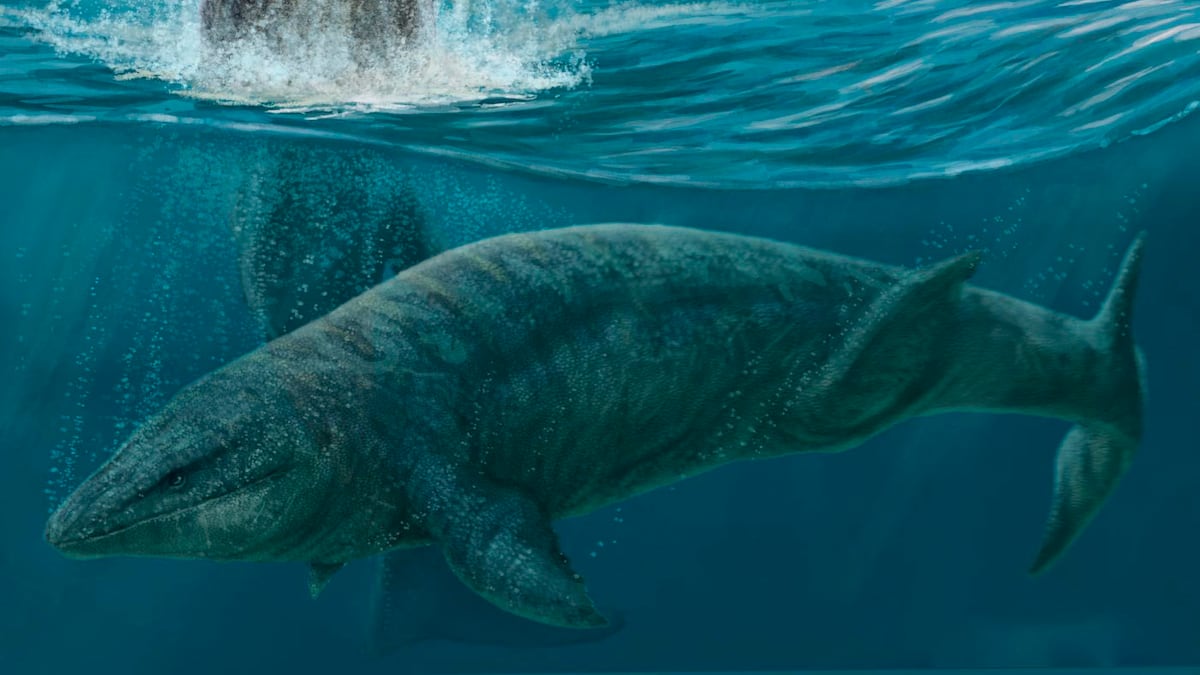
Scientists hunting mammoth fossils found whales 400 km inland

At first glance, it looked like Wooller and his colleagues might have found evidence that mammoths lived in central Alaska just 2,000 years ago. But ancient DNA revealed that two "mammoth" bones actually belonged to a North Pacific right whale and a minke whale-which raised a whole new set of questions. The team's hunt for Alaska's last mammoth had turned into an epic case of mistaken identity, starring two whale species and a mid-century fossil hunter.
Science
fromwww.scientificamerican.com
1 month ago

Could aliens in another galaxy see dinosaurs on Earth?

For example, reader David Erickson had this on his mind: If there were aliens 66 million light-years from Earth, how big a telescope would they need to see dinosaurs? Ha! I love this question. I've thought of it myself but never worked out the mathexcept to think, Probably pretty big, which turns out to dramatically underestimate the actual answer.
Science
#spinosaurus-mirabilis
fromwww.dw.com
1 month ago

New dinosaur fossils could provide evolutionary clues: study

From the beginning, we knew these bones were exceptional because of their minute size. It is equally impressive how the study of this animal overturns global ideas on ornithopod dinosaur evolution,
Science
#woolly-rhinoceros
Science
fromwww.scientificamerican.com
1 month ago

These jaw-dropping photographs show a new Triassic Park' of dinosaur prints in the Italian Alps

An exceptionally rich Triassic dinosaur tracksite with about 2,000 well-preserved prints was discovered on vertical rock faces in the Fraele Valley, Italian Alps.
Science
fromwww.dw.com
1 month ago

Tiny dinosaur fossil could provide evolutionary clues: study

A newly discovered tiny ornithopod, Foskeia pelendonum, exhibits unusually complex anatomy that reshapes understanding of ornithopod evolution.
Science
fromMail Online
1 month ago

Prehistoric killer superbug discovered in 5,000-year-old ice

An ancient Psychrobacter strain from Scarisoara Ice Cave, frozen about 5,000 years, is resistant to ten modern antibiotics and harbors over 100 resistance genes.
Science
fromArs Technica
2 months ago

We have a fossil closer to our split with Neanderthals and Denisovans

Casablanca fossils are North African counterparts to Homo antecessor, positioned near the split that led to Neanderthals/Denisovans and the lineage toward modern humans.
Science
fromwww.aljazeera.com
1 month ago

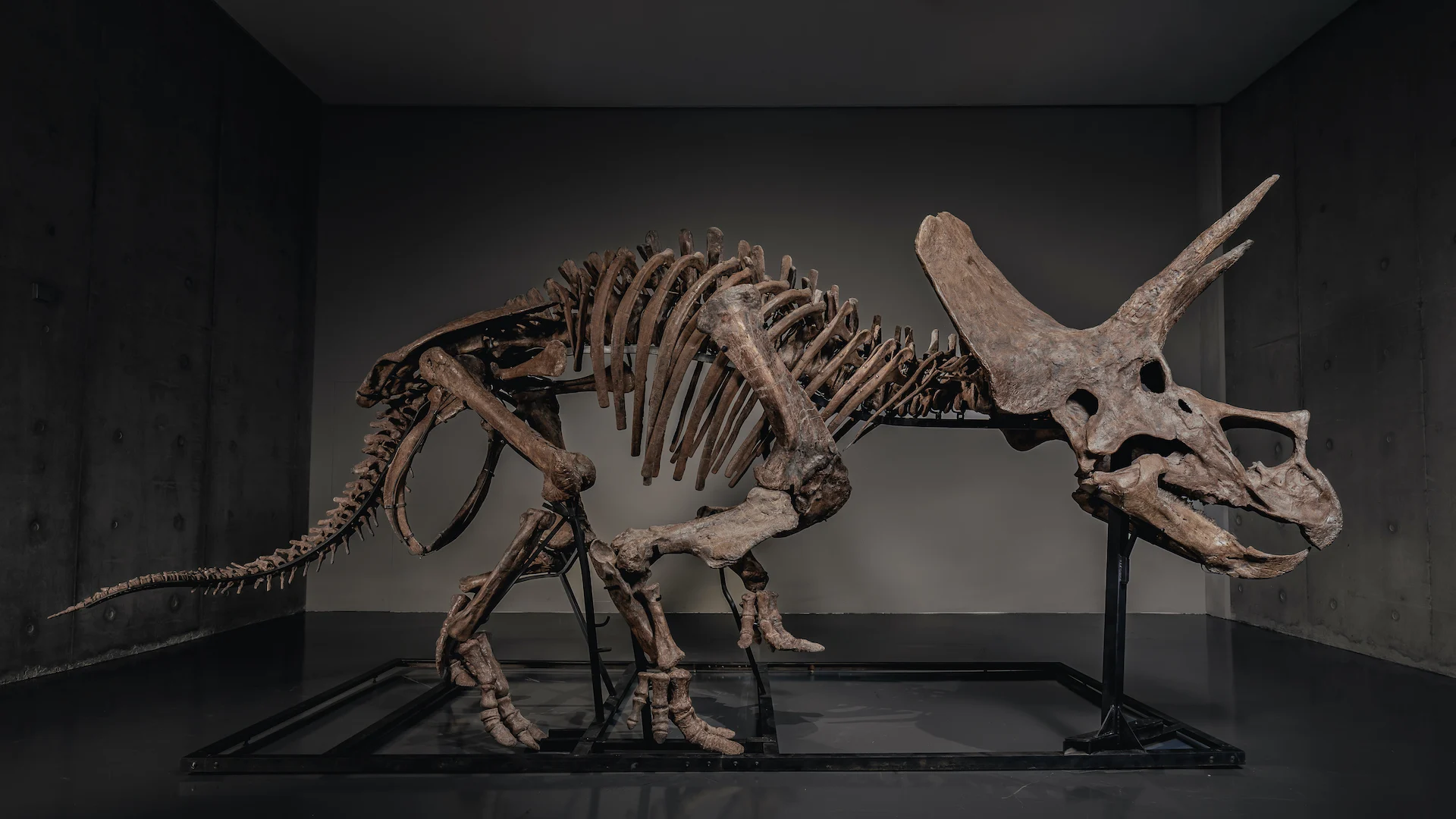
Dinosaurs for sale: Is the global fossil market harming science?

Asia's wealthy collectors drive a booming multimillion-dollar dinosaur fossil market, producing record sales and profits while raising ethical and scientific concerns.
fromwww.scientificamerican.com
2 months ago

A foraging teenager was mauled by a bear 27,000 years ago, skeleton shows

We have little physical evidence of these interactions turning violent, however, because burials were rare and carnivores were more likely to finish off their prey. That's why the embellished burial site of a 15-year-old from 27,000 years ago is an important window into the past: the teenager's bones indicate he was mauled by a bear. The finding represents some of the first evidence of its kind.
Science
fromwww.scientificamerican.com
2 months ago

Meet the Ancestor That Connects Us to Neandertals and Denisovans

New research published today in Nature dates the boneschipped out from a cave called Grotte a Hominides and nearby it over decadesto about 773,000 years ago, during the era of the last common ancestor of Homo sapiens, Homo neanderthalensis and Denisovans (a group of humans that ranged across Asia and that does not have an agreed-upon species name). We can say that the shared ancestry between these three species is perhaps in Grotte a Hominides in Casablanca, says study co-author Abderrahim Mohib, a prehistorian at the National Institute of Archaeology and Heritage Sciences in Rabat, Morocco.
Science
Science
fromwww.npr.org
1 month ago

Searching for dinosaur secrets in crocodile bones

Counting growth rings in fossil bones can overestimate dinosaur ages because rings may not form strictly once per year.
Science
fromwww.nature.com
2 months ago

Publisher Correction: A domed pachycephalosaur from the early Cretaceous of Mongolia

Copyright line amended to North Carolina Department of Natural and Cultural Resources with exclusive licence to Springer Nature Limited in the HTML and PDF versions.
Science
fromArs Technica
2 months ago

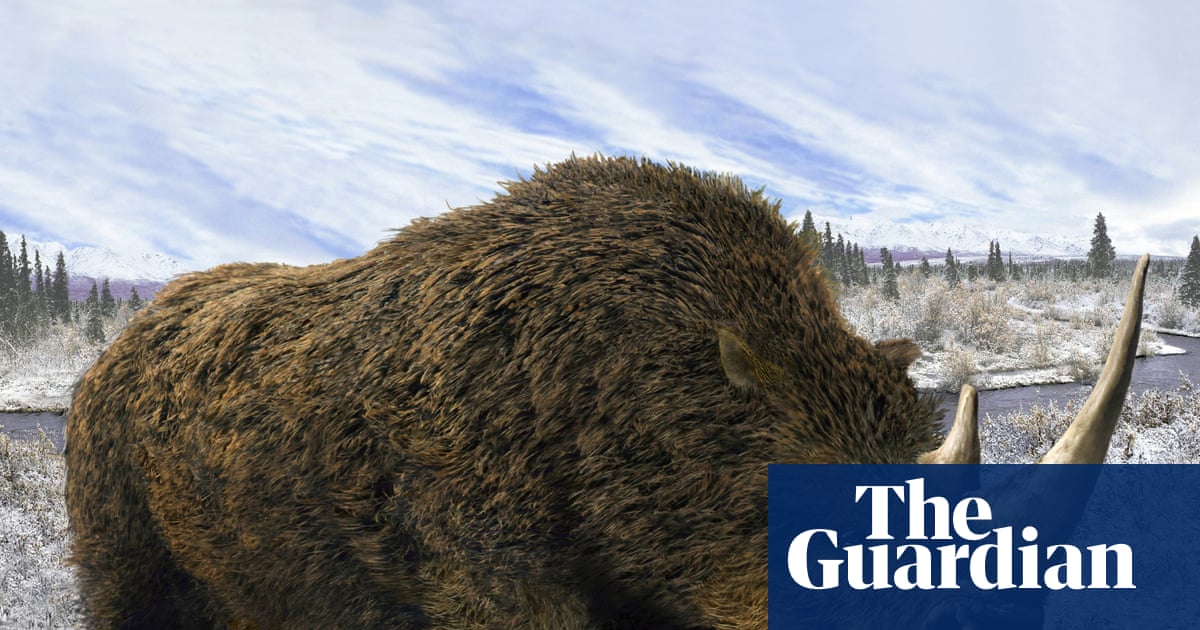
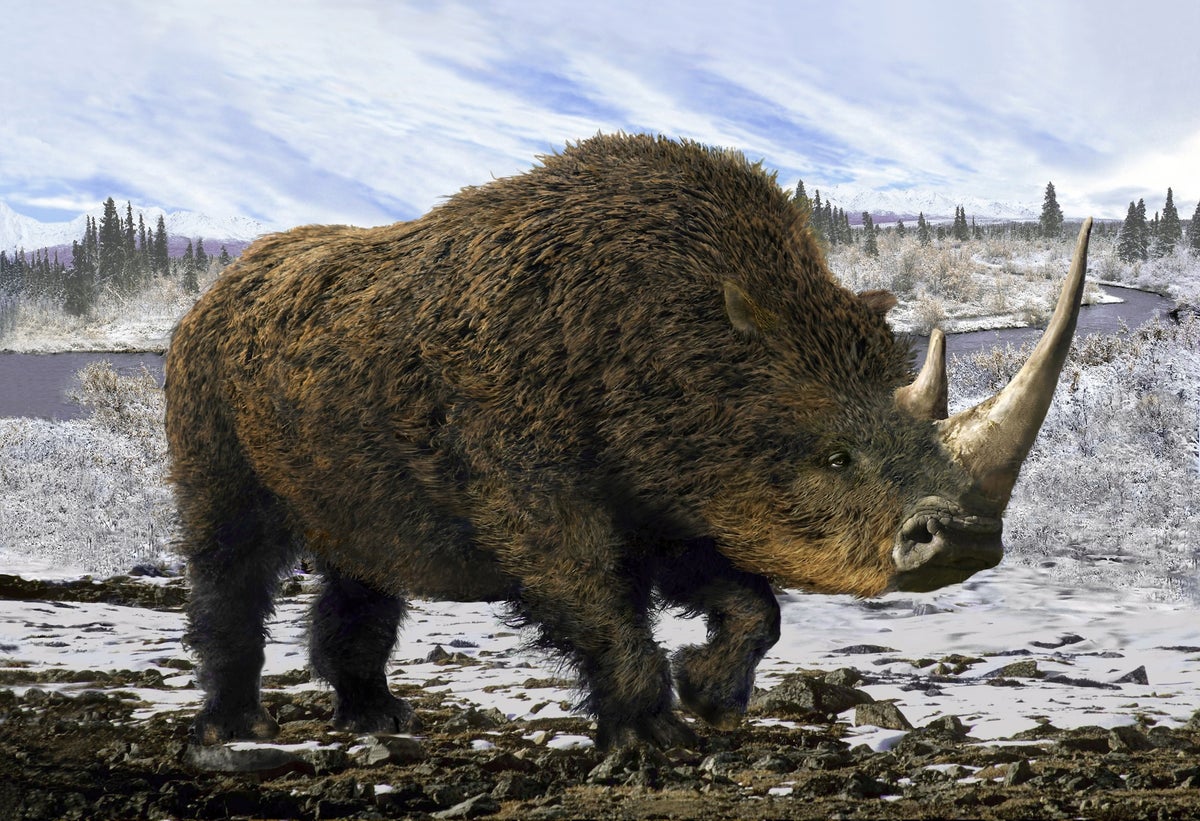
Scientists sequence a woolly rhino genome from a 14,400-year-old wolf's stomach

Woolly rhino effective population fell from about 15,600 to 1,600 between 114,000–63,000 years ago, then stabilized around 1,600 breeding individuals.
fromNature
2 months ago

Daily briefing: The battle over the identity of the first animals

Wooden objects carrying the marks of carving and use could be the oldest wooden tools ever found. Researchers dated the artefacts, found in what is now Greece, to 430,000 years ago - and suggest they might have been made by early Neanderthals or their ancestors, Homo heidelbergensis. A separate study describes 480,000-old flint-knapping tools made from antler and elephant bone, from what is now the United Kingdom.
Science
Science
fromwww.scientificamerican.com
1 month ago

New chicken-sized dinosaur baffles paleontologists

Foskeia pelendonum was a tiny, chicken-sized Early Cretaceous herbivorous dinosaur from northern Spain with unusual skull and teeth indicating novel feeding behavior and evolutionary implications.
Science
fromwww.scientificamerican.com
2 months ago

T. rex Never Stopped Growing, Dinosaur Bone Study Suggests

Tyrannosaurus rex grew longer and larger than previously believed, typically reaching at least 8.8 tons and stopping growth between 35 and 40 years.
Science
fromwww.nature.com
2 months ago

Afar fossil shows broad distribution and versatility of Paranthropus

Pliocene and Late Miocene East African fossil evidence reveals diverse early hominin taxa, varying dental and skeletal morphologies, and debates over taxic diversity.
Science
fromwww.nature.com
2 months ago

Four camera-type eyes in the earliest vertebrates from the Cambrian Period

Vertebrate vision evolved via diversification of phototransduction components and eye structures, documented by molecular data and exceptional fossil evidence from Cambrian to mammalian ancestors.
fromwww.scientificamerican.com
2 months ago

Incredibly Well-Preserved Cheetah Mummies Show Big Cats Once Roamed Saudi Arabia

Researchers have discovered the naturally mummified and skeletal remains of 61 cheetahs, which were hidden deep inside caves in northern Saudi Arabia for hundreds, and in some cases thousands, of years. The find indicates that these big cats roamed the Arabian Peninsula for millennia before they disappeared from the landscape between 49 and 188 years agoevidence that bolsters an effort to rewild the region with modern-day cheetahs, according to Ahmed Boug, general director of the National Center for Wildlife in Riyadh.
Science
fromwww.scientificamerican.com
2 months ago

For predatory dinosaurs, the Late Jurassic was an all-you-can-eat sauropod buffet

Sauropodshumongous reptiles with a long neck and tail and thick, elephantlike legsplayed a starring role in the dinosaur ecosystem, according to a new study. These massive dinosaurs are the largest creatures to ever walk on land. But they also played a crucial part in the food chain, the study authors write, acting as ecosystem engineers. The research was published on Friday in the New Mexico Museum of Natural History and Science Bulletin.
Science
fromBig Think
2 months ago

The dinosaur that vanished twice: How WWII nearly erased Spinosaurus from history

Dinosaur fever gripped the Western world during the early 1900s, fueled by the discovery of new, ever larger and more spectacular dinosaurs in Europe and especially in North America. Interest in these fossils was not merely driven by academic curiosity. Dinosaur skeletons and research had become a status symbol for museums and their financiers, whether government or private, and colonial powers turned to their areas of influence to find new remains.
Science
Science
fromwww.scientificamerican.com
2 months ago

Mystery tower fossils may be a whole new kind of life

Prototaxites represents a previously unknown, distinct branch of life that dominated terrestrial landscapes before trees, separate from fungi and plants.
fromwww.nature.com
2 months ago

Publisher Correction: Nanotyrannus and Tyrannosaurus coexisted at the close of the Cretaceous

Since the version of the article initially published, the copyright line has been amended to North Carolina Department of Natural and Cultural Resources and James Napoli, under exclusive licence to Springer Nature Limited in the HTML and PDF versions of the article.
Science
fromwww.scientificamerican.com
2 months ago

This is the most complete skeleton yet of our ancestor Homo habilis

A new, unusually complete Homo habilis skeleton from Lake Turkana shows a small, less modern body with long, ape-like arms and primitive proportions.
Science
fromNature
2 months ago

How did birds evolve? The answer is wilder than anyone thought

Jurassic birds included diverse forms like Archaeopteryx and newly discovered Baminornis, revealing complex early avian evolution and questions about origins of powered flight.
fromMail Online
1 month ago

Historic discovery older than Egypt's Great Pyramid rewrites history

The oldest known pieces of sewn clothing have been discovered in a cave in Oregon, potentially rewriting all of human history. Researchers from the US uncovered pieces of animal hide stitched together from the end of the last Ice Age, approximately 12,000 years ago. That would mean that humans in North America had advanced skills, specifically for working with plants, animals, and wood, thousands of years before the Great Pyramid of Egypt was constructed.
Science
#urban-geology
fromNature
2 months ago

What were the first animals? The fierce sponge-jelly battle that just won't end

Which animals came first? For more than a century, most evidence suggested that sponges, immobile filter-feeders that lack muscles, neurons and other specialized tissues, were the first animal lineages to emerge. Then, in 2008, a genomic study pointed to a head-scratching rival: dazzling, translucent predators called comb jellies, or ctenophores, with nerves, muscles and other sophisticated features. That single study ignited a debate that has raged for nearly 20 years, sparking fierce arguments about how complexity evolved in animals.
Science
Science
fromNature
2 months ago

A mysterious ancient fingerprint and a lemon-shaped planet - the stories you've missed

A 4,400-kilometre undersea fibre-optic cable can detect seismic waves by measuring light reflections from glass impurities along its length.
fromDefector
2 months ago

Let The Record Show That Otzi Fucked | Defector

Ötzi, the 5,000-something-year-old man found frozen in the Alps, did not have an easy go of it. He was probably murdered, shot from behind with an arrow that missed his vital organs and led to heavy bleeding and a prolonged and painful death. Days before his death, he fought another person in hand-to-hand combat and gashed his right hand. The more scientists have been able to study his body, the more ailments they have unveiled.
Science
Science
fromHigh Country News
2 months ago

Three books explore deep time and help us look forward - High Country News

Geologic records show slow processes and global catastrophes; understanding deep time reveals Earth's history and informs present and future choices.
fromwww.scientificamerican.com
2 months ago

Humans Made Poisoned Arrowheads Thousands of Years Earlier Than Previously Thought

Researchers have found traces of what appears to be plant-derived poison on tiny stone arrowheads from South Africa dated to 60,000 years ago. The finding pushes back the origin of this revolutionary hunting technology by tens of thousands of years. Scientists have long been fascinated by the development of poisoned hunting weapons. For one thing, they would have seriously leveled up our ancestors' foraging game.
Science
[ Load more ]