#gallo-roman-archaeology
#gallo-roman-archaeology
[ follow ]


fromThe Local France
2 weeks agoMysterious ancient skeletons discovered sitting upright in France
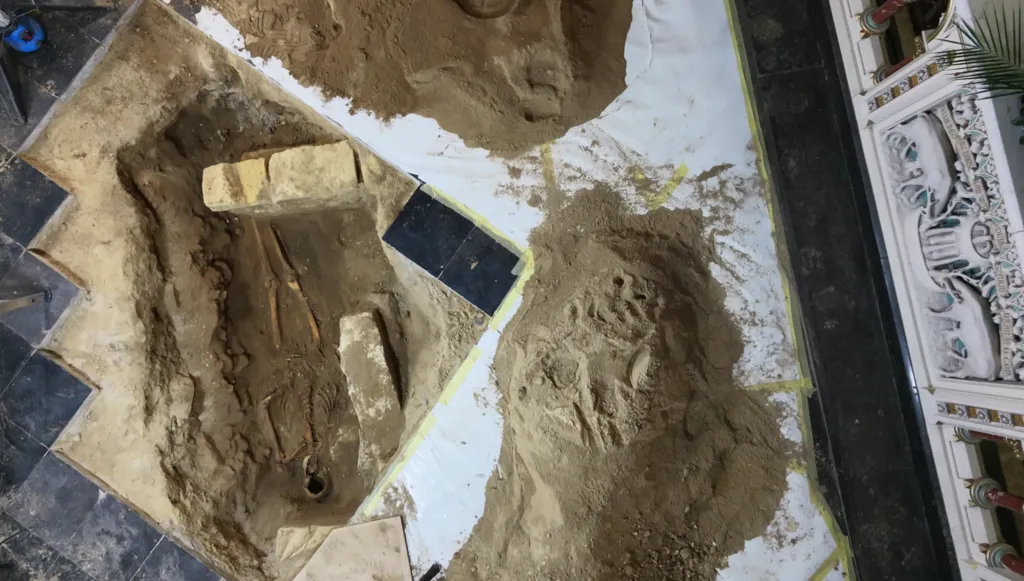
Similar to four others unearthed nearby earlier this month, it is sitting upright at the bottom of a one-metre-wide pit. The skeleton's hands are resting in its lap. Like the others, its back is against the eastern wall, its face directed westward.
France news


Renovation
fromRemodelista
3 weeks agoLetter of Recommendation: Ditch Paris for Marseille - Remodelista
A coastal journey through Marseille's diverse architecture and neighborhoods reveals charming districts like Samena, featuring eclectic design, Mediterranean landscapes, and access to natural attractions like the Calanques National Park.
fromwww.theguardian.com
2 weeks agoAncient skeleton discovered sitting upright in France
Five tombs of Gauls buried in a seated position have been discovered in central Dijon. Similar to four others unearthed nearby earlier this month, it is sitting upright at the bottom of a one-metre-wide pit. The skeleton's hands are resting in its lap. Like the others, its back is against the eastern wall, its gaze directed westward.
France news


fromArtnet News
1 week agoMassive Cache of 42,000 Pottery Shards Reveals Daily Life in Ancient Egypt
The ostraca show us an astonishing variety of everyday situations. We find tax lists, deliveries, short notes about everyday activities, religious texts, and priestly certificates attesting the quality of sacrificial animals.
Arts

fromArtnet News
3 weeks agoStrange Coin Used on U.K. Bus Turns Out to Be 2,000-Year-Old Relic
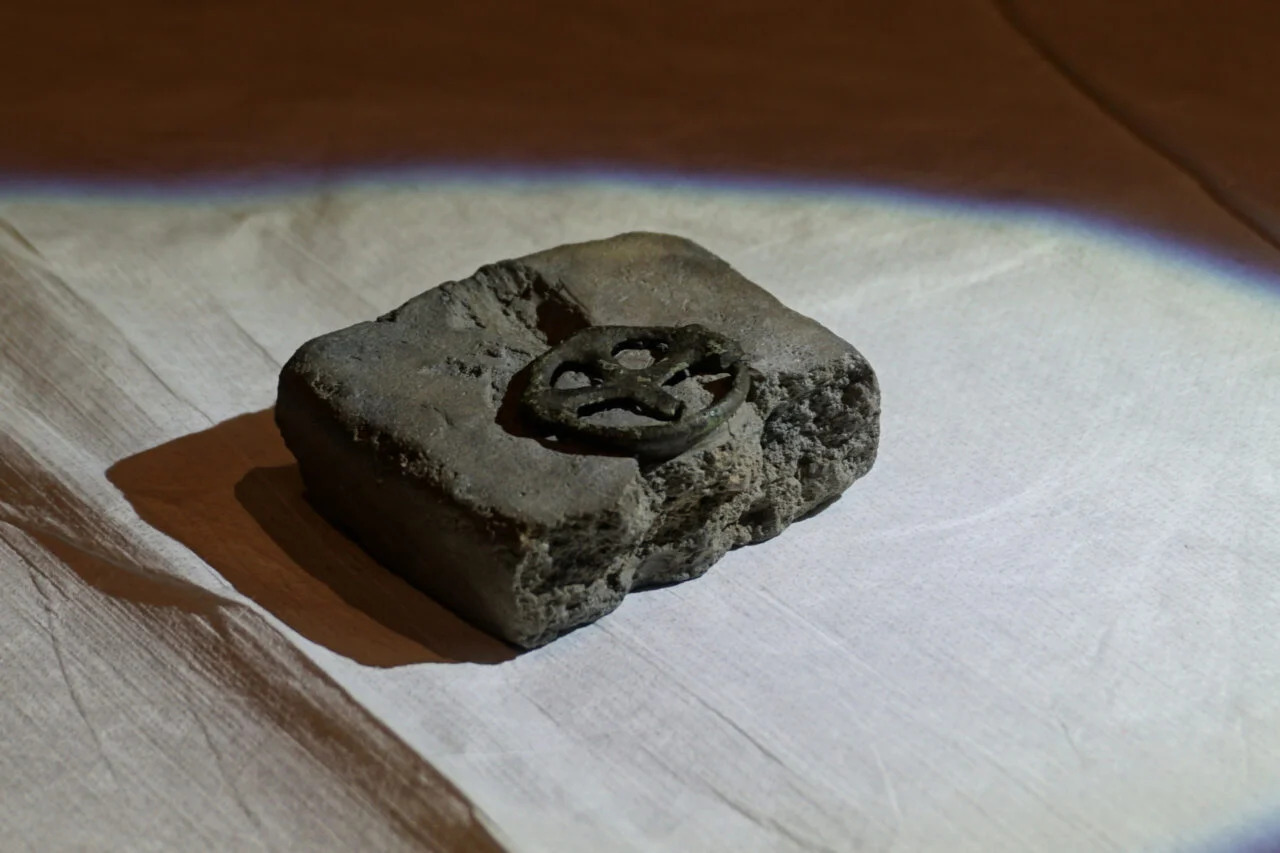
An enigmatic coin that someone used to board a British bus seven decades ago is now entering the collection of the Leeds Discovery Centre, following the revelation that it's a bit of 2,000 year old currency from the former Carthaginian trading settlement of Gadir, in modern-day Cádiz, Spain-one of Europe's longest-inhabited cities, settled by Phoenicians around 1,100 B.C.E.
Arts
fromwww.thehistoryblog.com
2 weeks agoFive more seated Gauls found in Dijon
They were all adult males between 40 and 60 years old when they died, ranging in height from 1.62 to 1.82 meters (5'4-6). They were in good overall health with excellent teeth, but osteoarthritis in the bones, particularly in the legs, attests to them having consistently experienced strenuous physical activity in their lives.
History
Arts
fromThe Art Newspaper - International art news and events
3 weeks agoPretty in pink: how Toulouse is establishing itself as a top arts destination
Toulouse is transforming into a major European cultural destination through renovated museums, prestigious exhibitions, and strategic partnerships, positioning itself as France's third-largest city.
France news
fromThe Local France
1 month agoREVEALED: What makes the French proud?
French people take greatest pride in their history of ideas, particularly the Declaration of the Rights of Man and the Citizen and the French Revolution's democratic legacy, rather than physical heritage or cultural stereotypes.
France news
fromThe Good Life France
1 month ago7 historic and officially prettiest villages in France - The Good Life France
Les Plus Beaux Villages de France, an association of 180 officially designated villages across 70 departments, preserves historic rural communities through strict selection criteria while attracting new residents and visitors through craft studios, hospitality businesses, and authentic experiences.

Travel
fromWorld Wild Schooling
2 months ago12 Top Places in Southern France for Digital Nomads To Work Remotely in Style
Southern France offers digital nomads beaches, Mediterranean climate, high-speed internet, coworking spaces, affordable accommodation, and English-friendly cities ideal for remote work and leisure.
US politics
fromwww.independent.co.uk
2 months agoInside the hunt for British Museum's missing treasures
The Independent funds on-the-ground, paywall-free investigative reporting while a six-person British Museum team celebrates breakthroughs in tracing missing Greek and Roman treasures with a golden bell.
Renovation
fromThe Good Life France
2 months agoRenovating a property in France - heritage status and protected zones - The Good Life France
Renovating property in France often requires permissions; protected zones and proximity to historic monuments can restrict even minor changes like shutters or windows.
fromThe Good Life France
2 months agoFantastic French immersion programs in France - The Good Life France
You can learn French in many ways - for instance from apps, cds, watching films and listening to the radio. But nothing fast‑tracks your learning like French immersion programs in France - especially when they're in the most amazing locations, with superb chateau accommodation and include the best wine and gastronomy and private tours... In an immersive programme, French becomes your language - not just for an hour a week, or even an hour a day if you're very disciplined, but of everyday life.
Miscellaneous
fromThe Good Life France
2 months agoDiscover Lussan in Gard, southern France - The Good Life France
Lovely Lussan in Gard, southern France, is officially one of the prettiest villages in France (' Plus Beaux Villages '). This pastoral region in the heart of Occitanie has everything an ardent Francophile could desire - picturesque villages, castles, gardens, vineyards, rich in culture and history, and great gastronomy. What to see and do in Lussan in Gard The medieval village of Lussan is perched on a hill, surrounded by rocky aromatic scrubland peppered with rosemary, lavender, thyme, sage and juniper.
Travel
History
fromMedievalists.net
1 month agoDreaming of Owning a Medieval Artefact? Here's Your Chance - Medievalists.net
TimeLine Auctions' March 3 online sale features hundreds of medieval historical objects including a 13th-century Limoges cross, 1224 Chinese armor, Viking silver mount, and Anglo-Saxon brooch.
History
fromMedievalists.net
1 month agoEast Roman Archaeology: Goals and Challenges, with Marica Cassis - Medievalists.net
Archaeology reveals material evidence of daily life, settlement patterns, and economic systems in the East Roman world that textual sources cannot provide, while facing challenges in establishing itself as a distinct field separate from classical and Islamic archaeology.
fromwww.thehistoryblog.com
2 months agoLate Antique necropolis with deliberately broken pottery found in France
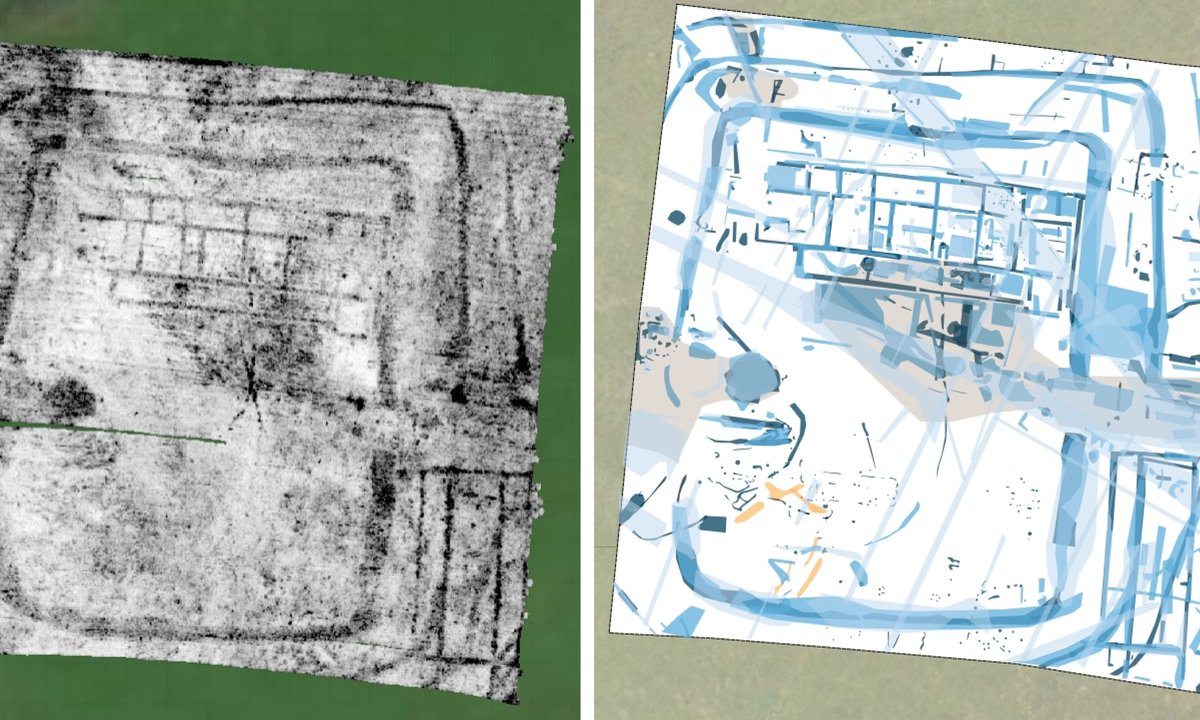
Adjacent to the masonry house is a burial ground in use from the 4th century through the first half of the 6th century. Approximately 60 individual inhumation burials have been unearthed, arranged in rows that are increasingly dense with graves as they approach the dwelling. The deceased were buried in cysts formed by reused tegulae (large clay roof tiles) or by rubble walls that supported wooden planks. They were placed in the graves in supine position facing west, north or south.
History
fromwww.thehistoryblog.com
1 month agoRare Mithraic altars found in Scotland go on display for the first time
Two exceptionally rare and beautifully carved Mithraic altars found in Inveresk, East Lothian, Scotland, are going on display for the first time. They are not just the only Roman altars ever found in Scotland, but are among the finest examples of Roman sculpture in Roman Britain. They are also uniquely early in date, having been made in 140s A.D. during Antoninus Pius' reoccupation of southern Scotland, whereas most other archaeological materials related to the worship of Mithras in Britannia date to the 3rd century.
fromMail Online
1 month agoThe bone that proves Hannibal really DID cross the Alps with elephants
While the bone was worn and poorly preserved, archaeologists managed to identify its origin by comparing it with modern elephant and mammoth bones. Despite there not being enough DNA to confirm the exact species, the researchers were able to carbon date a tiny sample of the bone. This places the elephant's death between the late fourth and early third centuries BC - right in the middle of the Second Punic War.
History
fromwww.thehistoryblog.com
1 month agoBronze Neptune from Lyon arrives in Rome
The Neptune of Lyon, one of the largest and most important bronze statues from Roman Gaul, has arrived in Rome for a one-time guest starring appearance at the Giovanni Barracco Museum of Ancient Sculpture. The statue is in the permanent collection of the Lugdunum Musee et Theatres Romains in Lyon, and is being loaned to the sculpture museum as part of an extraordinary exchange of ancient works between the two cities.
History
fromwww.thehistoryblog.com
2 months agoByzantine-era monastic compound unearthed in Upper Egypt
The foundations of several buildings made of mudbrick were unearthed, evidence of a self-sustaining residential community that sheds new light on early Christian monastic life in the region. Details of the architectural remains point to a well-planned complex. Mohamed Abdel-Badei, head of the Ancient Egyptian Antiquities Sector, said the mission uncovered rectangular mudbrick buildings oriented west to east, with dimensions ranging from about 8 by 7 metres to 14 by 8 metres.
History
[ Load more ]