#global-investment
#global-investment
[ follow ]
#etfs #geopolitical-tensions #inflation #investment #investment-strategy #geopolitical-risk #treasury-yields
#us-dollar
US Elections
fromLondon Business News | Londonlovesbusiness.com
2 days agoUS dollar rose amid a rebound in geopolitical concerns - London Business News | Londonlovesbusiness.com
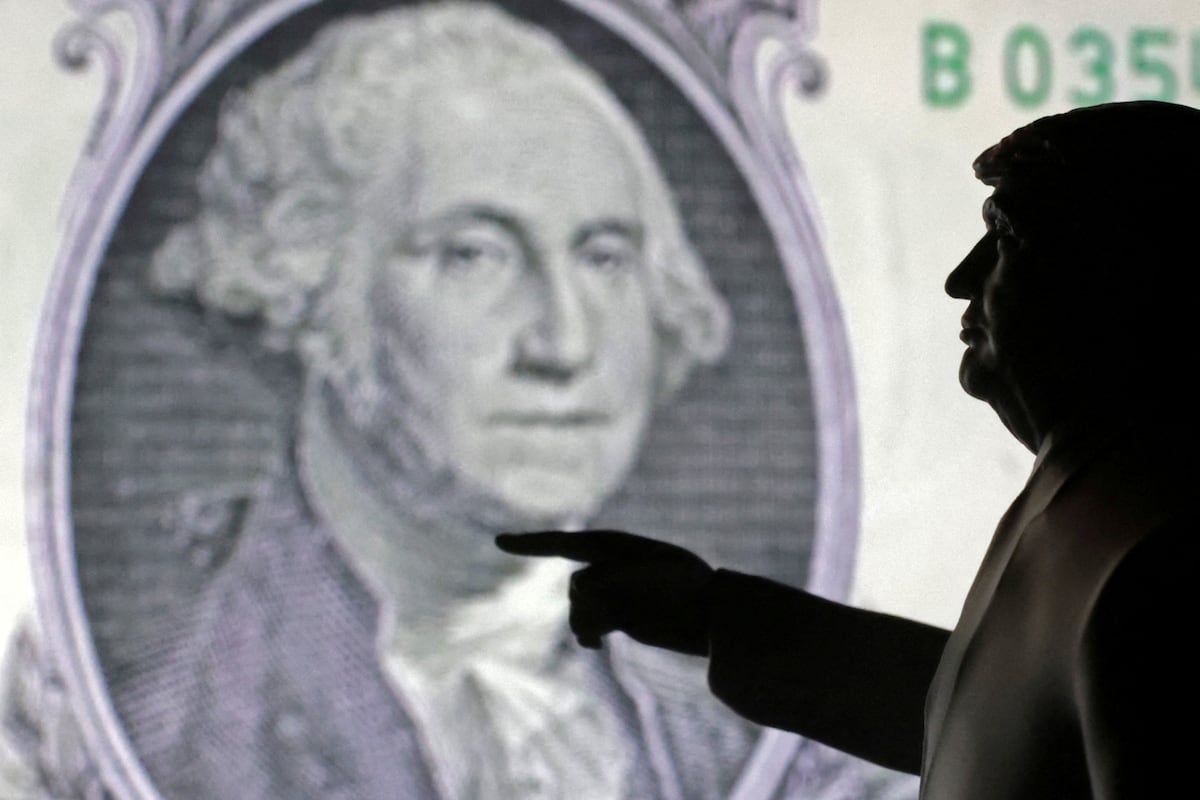
The US dollar strengthened due to geopolitical fears and better-than-expected economic data, while uncertainty keeps market volatility high.
US Elections
fromLondon Business News | Londonlovesbusiness.com
2 days agoUS dollar rose amid a rebound in geopolitical concerns - London Business News | Londonlovesbusiness.com
The US dollar strengthened due to geopolitical fears and better-than-expected economic data, while uncertainty keeps market volatility high.
fromIndependent
1 day ago'If you are using credit cards to take out cash, you need to cut up your card' - money experts share their credit card dos and don'ts
Credit cards can be very dangerous from a financial well-being perspective, if used irresponsibly. The temptation to use one to fund a big holiday or a new sofa that you can't afford can be seriously tempting.
Relationships

fromFortune
2 days agoMacquarie bets impact investing can fill an Asian financial access gap left by microfinance and commercial banks | Fortune
"The specific barrier is capital," says Lisa George, global head of the Macquarie Group Foundation. "Without access to capital, it's very hard to get social mobility and educational mobility in life."
Fundraising
#international-expansion


Bootstrapping
fromLondon Business News | Londonlovesbusiness.com
3 weeks agoFive international expansion tips for businesses to expand sustainably - London Business News | Londonlovesbusiness.com
International expansion requires thorough market research, local partnerships, localized marketing strategies, and technology infrastructure to succeed.
fromLondon Business News | Londonlovesbusiness.com
3 days agoMarkets remain nervous as Iran threatens to attack US blue-chip companies - London Business News | Londonlovesbusiness.com
Warning to the invading American ruling establishment and its affiliated spy companies. You ignored our repeated warnings about the necessity of halting terrorist operations, and today, in terrorist attacks carried out by you and your Israeli allies, a number of Iranian citizens were martyred.
World news
fromAxios
4 days agoPrivate equity's next step into 401(k)s
"I'm surprised by how neutral the rule was, when you think about the massive amount of lobbying there's been around it. It doesn't say certain assets are good or bad. Instead, it really focuses on making a rules-based framework instead of a litigation-based one."
Intellectual property law
fromLondon Business News | Londonlovesbusiness.com
4 days agoGold extends limited rebound, risks remain - London Business News | Londonlovesbusiness.com
Gold rose for a third consecutive session on Tuesday, while Treasury yields continued to decline. Comments from the Federal Reserve's Chair helped ease market expectations regarding a potentially tighter monetary policy.
Europe news
fromFortune
5 days agoPrivate equity is eying Asia's healthcare funding gap as countries get wealthier and older | Fortune
"Asia has more diabetes, cancer and cardiovascular patients than anywhere else in the world," Abrar Mir states, emphasizing the severity of the health crisis in the region.
Public health
Retirement
fromLondon Business News | Londonlovesbusiness.com
1 day agoEvery time you borrow from a bank, you're paying more than you think - London Business News | Londonlovesbusiness.com
Opportunity cost in loans includes lost potential earnings from repayment dollars, not just the interest rate paid.


World news
fromLondon Business News | Londonlovesbusiness.com
3 days agoDollar extends pullback amid softer labour signals and easing risks - London Business News | Londonlovesbusiness.com
The dollar weakened due to softening monetary policy expectations and reduced demand as a safe-haven asset amid easing Middle East tensions.
#financial-markets
Business
fromLondon Business News | Londonlovesbusiness.com
5 days agoGlobal markets react to geopolitical tensions and rising energy costs - London Business News | Londonlovesbusiness.com
U.S. financial markets faced volatility due to geopolitical tensions and energy price fluctuations, with mixed performance across major stock indices.
Europe news
fromLondon Business News | Londonlovesbusiness.com
1 week agoPrivate debt and evergreens are setting the pace in European private markets - London Business News | Londonlovesbusiness.com
Private markets are expanding to a broader investor base, with private debt and evergreen structures leading the growth in ELTIFs.
World politics
fromLondon Business News | Londonlovesbusiness.com
5 days agoUS dollar stable after successive gains - London Business News | Londonlovesbusiness.com
Escalating Middle East tensions are influencing market sentiment, keeping the dollar stable and impacting US Treasury yields amid inflation concerns.
fromLondon Business News | Londonlovesbusiness.com
2 weeks agoThe significant events in the global economy over the past week - London Business News | Londonlovesbusiness.com
Weak performance in several service sectors offset gains in retail and wholesale trade, reinforcing concerns about the pace of economic recovery. Japan relies heavily on oil imports from the Middle East, making it particularly sensitive to disruptions in the region.
UK news
Bootstrapping
fromLondon Business News | Londonlovesbusiness.com
2 weeks agoBuilding a diversified portfolio with limited capital - London Business News | Londonlovesbusiness.com
Diversification reduces risk by spreading investments across different assets, sectors, and regions rather than concentrating capital in single holdings.
fromLondon Business News | Londonlovesbusiness.com
2 days agoRecord number of investors buy gold on Iran war price crash - London Business News | Londonlovesbusiness.com
"Private investors have seized on gold's price drop. Gold's sudden retreat has given buyers the chance to reset the clock back before January's historic price spike."
Business
World news
fromFortune
1 week ago'Capital is a coward': A whole new world of elevated risk will stay embedded in global markets, keeping prices higher everywhere | Fortune
Markets rebounded as Trump eased tensions with Iran, but geopolitical risks in the Strait of Hormuz will persist, affecting global oil prices.
fromLondon Business News | Londonlovesbusiness.com
1 month agoDollar Pauses Rally Amidst Geopolitical Tensions - London Business News | Londonlovesbusiness.com
The tensions between the United States and Iran have pushed oil prices higher, raising fears of energy-driven inflation, which helped support both the dollar and Treasury yields. The 10-year yield has climbed to its highest level in roughly two weeks.
US news
Remote teams
fromEntrepreneur
1 month agoGoing Global? The Game Has Changed. Here's the New Playbook.
Global expansion leaders strategically blend entity-based employment, EOR solutions, and contractor relationships, selecting the optimal model for each market, role, and business objective rather than applying uniform approaches.
Cryptocurrency
fromBitcoin Magazine
3 weeks agoBitcoin Is Now A Legit Global Financial Player: Analysis
Bitcoin has evolved from experimental digital asset into a macro-scale instrument with over $1 trillion in capital absorption, driven by institutional participation through US spot ETFs and options markets.
US news
fromLondon Business News | Londonlovesbusiness.com
1 month agoThe Significant Events in the Global Economy Explained - London Business News | Londonlovesbusiness.com
Supreme Court tariff reversal lifted investor sentiment and stocks, while Fed division on rates, rising inflation, and slowing GDP kept markets cautious.
from24/7 Wall St.
1 week agoWith Two Companies Dictating Everything, IHE Is Riskier Than Most Investors Realize
The ETF holds 50 positions, but the top two dominate in a way that makes the rest almost incidental. Johnson & Johnson carries a 25.4% weight, and Eli Lilly and Company sits at 21.4%. Together they account for roughly 46.8% of the entire fund.
Business
from24/7 Wall St.
2 months agoThe Cross-Border Specialist Posts 25% Growth but Its Platform Rival Delivers Better Returns
Global-E posted $220.8 million in revenue, up 25.5% year-over-year, with gross margins at 45.1%. The company generated $13.2 million in net income, but profit margin remained razor-thin at 0.83%. Operating margin reached 7.7%, showing the business model works operationally, but capital efficiency remains a problem. Return on equity sits at just 0.81%, meaning the company barely generates returns on deployed capital. That's the core issue Wall Street keeps circling back to.
E-Commerce
Business
fromLondon Business News | Londonlovesbusiness.com
2 weeks agoLong-term capital is shaping modern business strategies - London Business News | Londonlovesbusiness.com
Family offices provide patient capital and strategic support for long-term business growth, prioritizing stability and multi-generational wealth preservation over short-term returns.
fromAbove the Law
2 months agoWhat If Tariffs Go Away - Or Don't? How You Can Protect Your Bottom Line With Contract Intelligence - Above the Law
With the Supreme Court potentially poised to invalidate recent tariffs, organizations face a confusing scenario. Having clear visibility into contract terms - such as price adjustments and renegotiation provisions - is essential to navigating this volatility. Come join us on at 1 p.m. ET on Jan. 27 for this CLE-approved webinar, where we'll discuss the current state of the tariff conundrum and explore strategies for achieving contract visibility with the latest AI innovations.
Artificial intelligence
from24/7 Wall St.
2 months ago3 International Growth Stocks That Can Compete With U.S. Technology
Silicon Motion Technology ( NASDAQ:SIMO) is a Hong Kong semiconductor firm that specializes in NAND flash controllers. These memory storage solutions are critical for the AI buildout, and investors have started to pick up on it. The company's stock has more than doubled over the past year and is up by more than 20% to start the year. Revenue increased by 14% year-over-year in Q3 2025, and most of the growth was driven by AI infrastructure.
E-Commerce
fromwww.sandiegouniontribune.com
1 month agoIs a weaker U.S. dollar a good thing?
The U.S. dollar's value has fallen 8% over the past year, as the price of gold has skyrocketed, said the WSJ Dollar Index. Some think it is a good thing. President Donald Trump said recently a weaker dollar is great. The idea is a weaker currency boosts exports and employment while a strong currency can throttle an economy. While the idea of a weaker dollar has had supporters over the decades, economists often argue gains can be eaten up by domestic inflation and deflation.
US news
Business
from24/7 Wall St.
1 month agoHalf of Global Market Cap Lives Outside the U.S. and BKIE Costs Almost Nothing to Own It
BKIE offers ultra-low-cost exposure to developed international markets at 4 basis points annually, with consistent outperformance versus EFA driven by fee savings over multiple time horizons.
Business
fromLondon Business News | Londonlovesbusiness.com
1 month agoThe significant events in the global economy over the past week - London Business News | Londonlovesbusiness.com
U.S. equity markets declined amid AI disruption concerns and trade uncertainty, while European markets gained strength with solid earnings and diversification appeal.
fromEntrepreneur
1 month agoWhy Global Brands Struggle When Local Markets Push Back
Companies enter new markets with momentum. Press coverage looks promising. Campaigns launch on schedule. Local teams are hired. Early dashboards suggest traction. Then progress slows. Customer interest plateaus. Partnerships take longer than expected. Internally, the conversation almost always turns to execution. Messaging must not be clear enough. The market probably needs more education. What I have learned is that this conclusion is usually wrong. What looks like market resistance is more often a signal that the brand is communicating from the wrong position.
Venture
Business
fromLondon Business News | Londonlovesbusiness.com
2 months agoThe world's leading and trailing currencies revealed, the US dollar isn't number one - London Business News | Londonlovesbusiness.com
Several small-nation currencies rank highest against the British pound, while some severely devalued currencies require tens of thousands to over a million units per £1.
Business
fromLondon Business News | Londonlovesbusiness.com
1 month agoA look at the significant events in the global economy over the past week - London Business News | Londonlovesbusiness.com
U.S. markets rotated away from large-cap technology toward smaller and value stocks amid cooling labor-market signals, mixed economic activity, and falling bond yields.
Business
fromHarvard Business Review
2 months agoFor Multinational Companies, Localization Matters More Than Ever
Global companies must localize core operations, duplicating supply chains and integrating regional suppliers to meet data-sovereignty and local sourcing mandates, sacrificing scale for resilience.
fromlondonlovesbusiness.com
2 months agoThe significant events in the global economy over the past week - London Business News
U.S. financial markets began the year on a positive note, with major stock indexes reaching new highs despite ongoing geopolitical uncertainty and emerging signs of economic cooling. Investors showed renewed confidence, particularly in smaller and value-oriented companies, which outperformed the large technology-driven stocks that dominated returns in recent years. This shift suggests broader participation in the market rally and growing optimism beyond a narrow group of companies.
Business
[ Load more ]