#harvard-forest
#harvard-forest
[ follow ]
#climate-change #biodiversity #sustainability #public-health #carbon-sequestration #environmental-science
fromFuturism
5 hours agoEPA Now Values Human Lives at $0
When lives are assigned a higher dollar value, stricter pollution standards tend to clear the 'economic efficiency' sniff test, resulting in cleaner air. But that improved air quality comes at the expense of America's industrial industries, which have to invest in pricey systems to reduce the amount of these pollutants they spew down to acceptable levels.
US Elections
fromHigh Country News
3 days agoForest Service overhaul sows confusion, concern - High Country News
"Nobody is asking for this. None of the farm groups want this. No one in conservation wants this. Nobody." Robert Bonnie, former Forest Service undersecretary, highlights widespread opposition to the reorganization.
Washington DC
#climate-change


fromCornell Chronicle
2 months agoHigher education
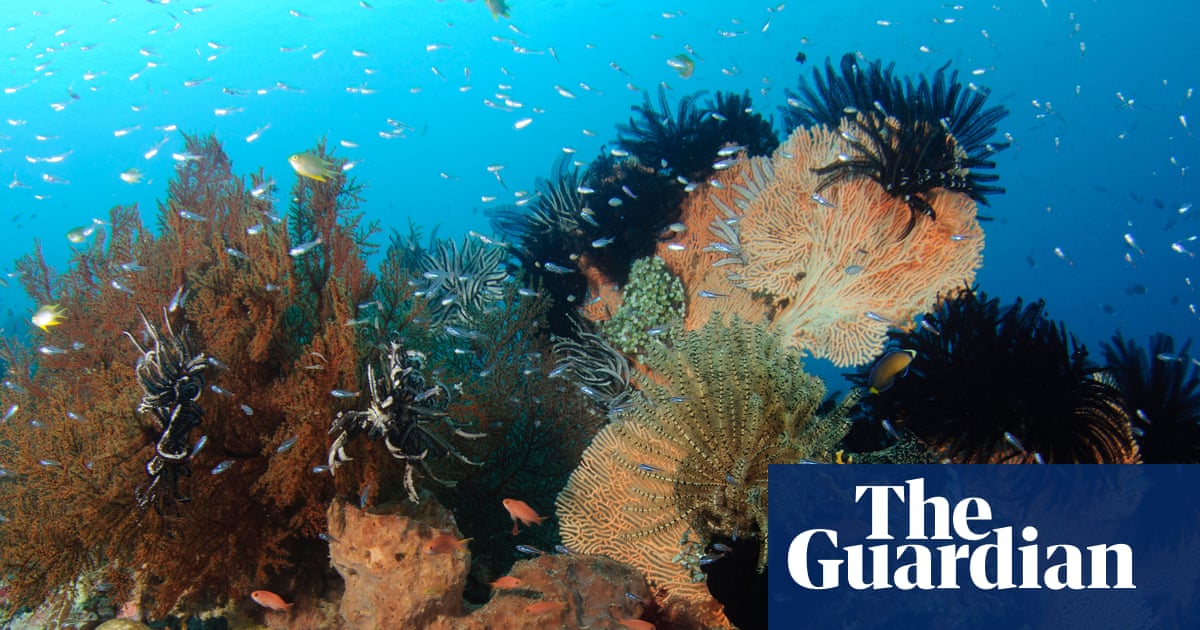
Faculty event to highlight how teaching about climate change can move beyond discourse and despair | Cornell Chronicle
A Jan. 28 Cornell event brings art, sustainability, reflection, and teaching practice together to help faculty engage climate change across humanities and community.
Canada news
fromwww.theguardian.com
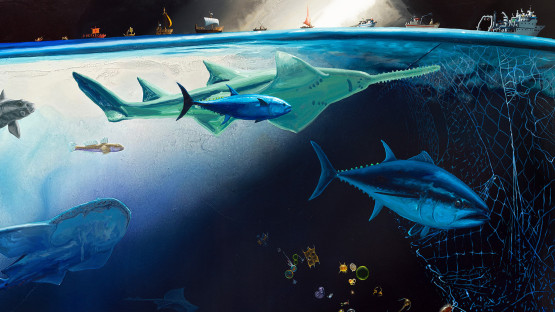
2 weeks agoWhen the Forest Breathes by Suzanne Simard review the Indiana Jones of trees returns
Suzanne Simard's research demonstrates that trees communicate and exchange resources through fungal networks, fundamentally changing understanding of forest ecosystems and their carbon recovery capacity.
Online marketing
fromSocial Media Explorer
3 weeks agoScrolling for Shade: What Homeowners are Actually Searching for Regarding Tree Care - Social Media Explorer
Social media tree-trimming trends prioritize aesthetics over proper arboriculture; professional pruning serves biological functions like wind resistance, not just visual appeal.
Education
fromState of the Planet
3 weeks agoBringing Climate Research to New York City's Classrooms
Over 500 NYC educators gathered at Columbia University's Teachers College for the third annual NYC Mid-Winter Climate Institute to integrate climate education into K-12 classrooms and address gaps in climate curriculum implementation.
fromMail Online
4 days agoBritain has just 20 years to save its wildlife, experts warn
'Our results show that the next 20 years are critical,' lead author Dr Rob Cooke told the Daily Mail. 'By around 2050, we reach a point where the choices we make on emissions and land use will largely determine whether Britain moves towards a much more degraded or a much more nature‑positive future.'
Environment
fromwww.theguardian.com
3 weeks agoMy ideas are a little revolutionary': ecologist Suzanne Simard on intelligent forests, the climate and her critics
Wildfires have become an ever bigger problem in Canada. The 2018 wildfires were the biggest in British Columbia's history, but this record was broken in 2021, and then again in 2023, when fires consumed an area three times the size of the Canadian province of Nova Scotia and the smoke travelled as far as New York City.
Canada news
Design
fromYanko Design - Modern Industrial Design News
3 weeks agoMIT Finally Built the House Your Great-Grandkids Will Inherit - Yanko Design
MIT's Heirloom House project uses nine modular concrete components engineered to last 1,000 years, assembled through gravity and friction rather than permanent fasteners.
OMG science
fromHarvard Gazette
2 weeks agoUltra-cool step toward transformative technologies - Harvard Gazette
Harvard physicists enhanced a pressure measurement device with quantum sensors to study superconductors, revealing new insights into why promising superconductor materials produce inconsistent results.
Science
fromwww.scientificamerican.com
4 weeks agoScientists created a digital library full of ants
Researchers created Antscan, a digital library of 3D scans and morphological data from 2,193 ants across 212 genera, using particle accelerator technology to advance biodiversity research and understanding of ant anatomy.
OMG science
fromCornell Chronicle
2 weeks agoEcologist, biogeochemist Emily Bernhardt to lead Cornell Atkinson | Cornell Chronicle
Emily Bernhardt, a freshwater ecologist and biogeochemist, becomes the third director of Cornell Atkinson Center for Sustainability, leading nearly 800 faculty fellows and 140 active grants focused on ecosystem protection and restoration.
fromState of the Planet
2 weeks agoCan Capitalism Solve the Climate Crisis?
Absolutely, I have experienced investing in a way that green growth has led to both equitable growth and decarbonization, but also have lived experience of what degrowth can do to a country, and how, in my view, [degrowth] is not really a solution.
Environment
fromwww.theguardian.com
2 weeks agoCan culling your garden slow a wildfire? A California city pins its hopes on a contested plan
Tucked into the ridges overlooking California's San Francisco Bay and against an expansive nature area, the house Thouati and his wife have owned for 30-some years sits in one of the highest wildfire-threat areas in the state. A scientist with a penchant for diving deep, he poured into the research. Hundreds of articles later, he said, it became clear I had to swallow my pride.
Environment
fromLos Angeles Times
3 weeks agoIf the giant sequoia is dying out, why are there tens of thousands of seedlings and saplings?
The new trees number in the thousands - at least 4,000 per acre or as many as 20,000, depending on who is counting. A few rise above head-height, the most energetic sentinels of regeneration. What will become of this nursery in the wild in the next hundred years, or thousand, is the crux of a scientific and policy dispute.
Environment
Higher education
fromCornell Chronicle
2 months agoFaculty event: How teaching about climate change can move beyond discourse and despair | Cornell Chronicle
Faculty-led panel, workshop and museum tour will model integrating art, humanities, and community-focused approaches into climate-change teaching at Cornell on Jan. 28.
fromwww.theguardian.com
4 weeks agoHumanity heating planet faster than ever before, study finds
Climate breakdown is occurring more rapidly with the heating rate almost doubling, according to research that excludes the effect of natural factors behind the latest scorching temperatures. It found global heating accelerated from a steady rate of less than 0.2C per decade between 1970 and 2015 to about 0.35C per decade over the past 10 years.
Environment
Environment
fromThe Mercury News
1 month agoLow snowpack, higher temperatures cause concern for Bay Area scientists, farmers
March precipitation in higher elevations is critical for California's water security as snowpack remains significantly below average despite February storms and warm winter conditions.
Environment
fromEarth911
1 month agoSustainability In Your Ear: The Forest Stewardship Councils' Path to a Circular Bio-based Future with Loa Dalgaard Worm
Forests face unsustainable depletion from rising demand for wood fiber, requiring circular economy models and new incentive systems to protect remaining forests while meeting material needs.
fromArs Technica
1 month agoBringing the "functionally extinct" American chestnut back from the dead
The work suggested that resistance arises from a relatively large number of sites, each with relatively minor effects. For example, the sites in the genome identified by quantitative trait analysis typically boosted resistance by about 10 points on the researchers' 100-point scale. In the genome-wide analysis, 17 individual genetic differences were associated with about a quarter of the heritable resistance traits.
Agriculture
Environment
fromwww.mercurynews.com
1 month agoOpinion: AI is destroying our planet. We must act to check its growth and save ourselves.
AI's environmental impact is severe, with 2025 freshwater consumption exceeding global bottled water use and projected energy demands by 2034 matching India's entire consumption, requiring immediate action.
fromHigh Country News
1 month agoIt's time to rethink how we care for our public lands and waters - High Country News
Wildlife populations are in decline. Recreation sites are crowded and often underfunded. Wildfires are larger, more destructive and harder to control. Climate change is reshaping natural systems, from ocean fisheries to mountain snowpacks, faster than institutions can respond. At the same time, communities are being asked to host new energy projects, transmission lines and mineral development - often without clear processes, adequate resources or trust that decisions are being made in the public interest.
Environment
Environment
fromEarth911
1 month agoGuest Idea: Late Winter Pruning Optimizes Tree Health for Backyard Carbon Sequestration
Prune backyard trees in late winter to reveal structure, improve health, and increase long-term carbon sequestration by removing nonproductive limbs and promoting stronger growth.
Environment
fromState of the Planet
1 month agoHarnessing AI, Scientists Discover a Rise in Floating Algae Across the Global Ocean
Floating algae blooms have increased globally since about 2008–2010, driven by warming oceans, changing currents, and nutrient pollution, with coastal ecological and economic harms.

fromNature
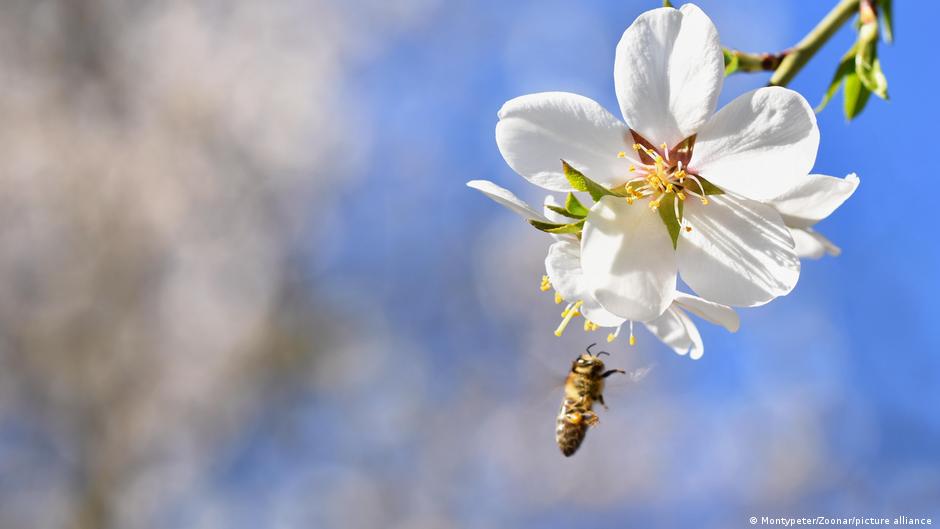
2 months agoTo improve resilience to climate change, track what endures
When the category-5 storm Hurricane Melissa struck Jamaica in October, its path crossed communities that had varying levels of preparedness. Many with maintained coastal protections, upgraded drainage and reliable early-warning systems had power and water restored in days. Others were immobilized for weeks.
Environment
fromState of the Planet
2 months agoCan Carbon Markets Offset the Emissions We Can't Eliminate?
Carbon markets are simultaneously promoted as an essential climate financing tool, and criticized as a license to pollute. A carbon market puts a price on greenhouse gas emissions via carbon credits that get bought and sold, almost like stocks. A credit represents one metric ton of CO 2 that has been avoided or removed through a specific project. A project could target emissions through agricultural practices, CO 2 capture or reforestation.
Environment
fromHigh Country News
2 months agoThe nation's trails are disappearing - High Country News
Many of them were built for purposes that no longer exist - cattle drives, mining prospecting, early U.S. Forest Service fire patrols - while others were packed by the footprints of the Chumash people well before the colonization of North America. Sections of trail cling to steep slopes that seem to barely resist gravity, shedding soil and stone with each winter storm.
Environment
fromwww.dw.com
2 months agoThe business of saving nature
The world spends 30 times more money destroying nature than protecting it. That's according to a new report from the United Nations Environment Programme (UNEP) that exposes a massive gulf between so-called "harmful investments" and financing that promotes nature preservation. The global environment agency's latest "State of Finance for Nature" (SNF) report is calling to phase out the US$7.3 trillion (6.2 trillion) in global investments that damage nature including into high-emissions energy infrastructure and manufacturing, for example.
Environment
Environment
fromwww.theguardian.com
2 months agoGermany's dying forests are losing their ability to absorb CO2. Can a new way of planting save them?
Bark beetle outbreaks, fueled by drought and heat, have devastated spruce monocultures in the Harz, prompting mixed-species replanting to increase forest resilience.
from24/7 Wall St.
2 months agoClean Harbors (CLH): The Environmental Services Moat is Expanding
Clean Harbors just locked in a $110 million contract for PFAS water filtration at Joint Base Pearl Harbor-Hickam. This isn't just another project win. It's validation of the company's end-to-end PFAS solution: lab analytics, water filtration, site remediation, and most critically, high-temperature incineration disposal.
Environment
fromNature
1 month agoBiodiversity conservation has an evidence problem - it's time to fix it
Biodiversity loss is continuing at an unprecedented rate, with species becoming extinct at between 100 and 1,000 times the average pre-human, or 'background', rate. Human activities are the main cause. Although there are hundreds of local, regional and international initiatives to conserve and sustainably use species and ecosystems, many conservation scientists worry that measures such as interventions to conserve individual species or incentives to create protected areas are not supported by strong evidence from research.
Environment
[ Load more ]