Healthcare
fromSecuritymagazine
10 hours agoHealthcare Executives Face a New Era of Personal Risk
Healthcare executives face heightened personal risks due to grievance-motivated cyber threats amid economic pressures and public accountability.
"This argues for the need to sustain such policies and shows that it is possible to right the wrongs retroactively, which is a powerful idea," said Kenneth Michelson, MD, MPH, associate professor of Pediatrics in the Division of Emergency Medicine and a co-author of the study.
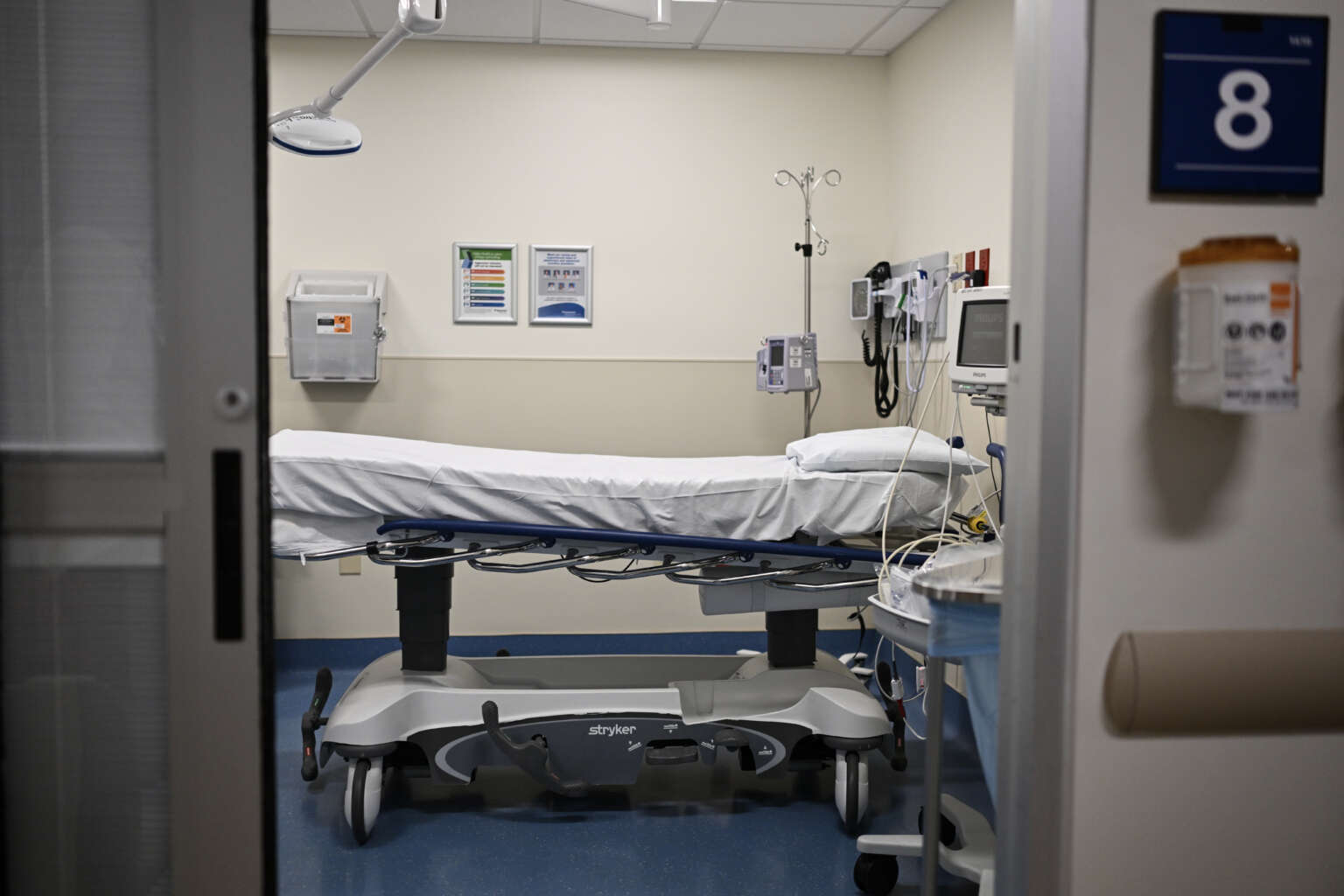
The emergency department at Michael Garron Hospital was built to care for about 150 patients a day, but now sees more than 300 patients daily, amounting to about 107,000 patients last year in a space designed for 50,000 annually.
Because of budget cuts, the Los Angeles County Department of Public Health has ended clinical services at seven of its public health clinic sites. As of Feb. 27, the county is no longer providing services such as vaccinations, sexually transmitted infection testing and treatment, or tuberculosis diagnosis and specialty TB care at the affected locations, according to county officials and a department fact sheet.
In light of the systemic dismantling of America's public health agencies, these moves essentially create a shadow infrastructure to maintain some of what is being lost. While this is a promising development, it does nothing to stop a troubling trend that has been emerging for some time: The country is quickly becoming fragmented along partisan lines when it comes to public health.
Health Minister Sylvia Jones says about 275,000 people have been attached to primary care so far in the first year of the government's plan. More than half of that progress is due to moving people off the Health Care Connect wait list.
If you're smoking three packs of cigarettes a day, should you expect society to pay when you get sick?" He added that while Americans would always have the right to "eat donuts all day," nevertheless, "should you then expect society to care for you when you predictably get very sick at the same level as somebody who was born with a congenital illness?
My dad was in the emergency room, short of breath, chest tight, upper back aching. He looked pale and confused. An ultrasound showed excess fluid between his lung and chest wall. "We'll drain it," a resident said, as if he were unclogging a sink. For the next five days, thick, red-tinged fluid filled a plastic container beside my dad's hospital bed. Doctors sent his cells for "staining," a way to identify cancer. But no one used that word.
February is a time to honor Black history, resilience, and progress. It is also a moment to confront an uncomfortable truth: in New York City, equity in health, family stability, and community well-being is still shaped by race and zip code. For too many Black families, structural inequities continue to limit access to care, not because of individual choices, but because of where people live and how our systems are designed.
Everything is changing, and in the face of that, America is failing. Over 90,000 souls have paid for our failing. Millions more are living in terror for their livelihoods and their families. But Covid-19 isn't a technology problem, or a science question, or a supply chain issue, or even a question of doctoring. This challenge is public health, and that is something we've been failing at for a damn long time.
Adult literacy advocate Toni Cordell recounts the story of feeling comforted when her doctor told her that her medical concern could be solved with an easy surgery. She agreed to proceed without asking further questions and didn't understand the medical consent forms because she didn't read well. At a follow-up office visit a couple of weeks after the procedure, Cordell was shocked when the nurse asked, "How are you feeling since your hysterectomy?"
In 2026, the US healthcare system is changing. Enhanced Affordable Care Act subsidies have expired, causing premiums for marketplace plans to spike - and pricing some families out of health insurance entirely. President Donald Trump's One Big Beautiful Bill Act will reduce coverage for some patients with Medicaid and funding for hospitals, especially those in rural areas. Costs for Medicare and private insurance are also rising: Employer-based healthcare premiums have increased by 9%, the largest rise in more than a decade.
Between March 2020 and March 2022, over 100 million telemedicine services were delivered to approximately 17 million Australians. The Australian government invested $409 million to make telehealth permanent, whilst the UK announced £600 million for digital health infrastructure in April 2025. Patient adoption is equally impressive: 60% find telemedicine more convenient than in-person appointments, 55% report higher satisfaction with teleconsultations, and 74% of millennials prefer virtual appointments for routine care. These aren't temporary shifts; they represent a fundamental transformation in healthcare delivery.