Podcast
fromArtforum
1 day agoSchlock Jock: Joshua Citarella at the Whitney Biennial
Doomscroll podcast's live tapings at the Whitney reflect changing museum priorities and the evolving relationship between art and digital discourse.
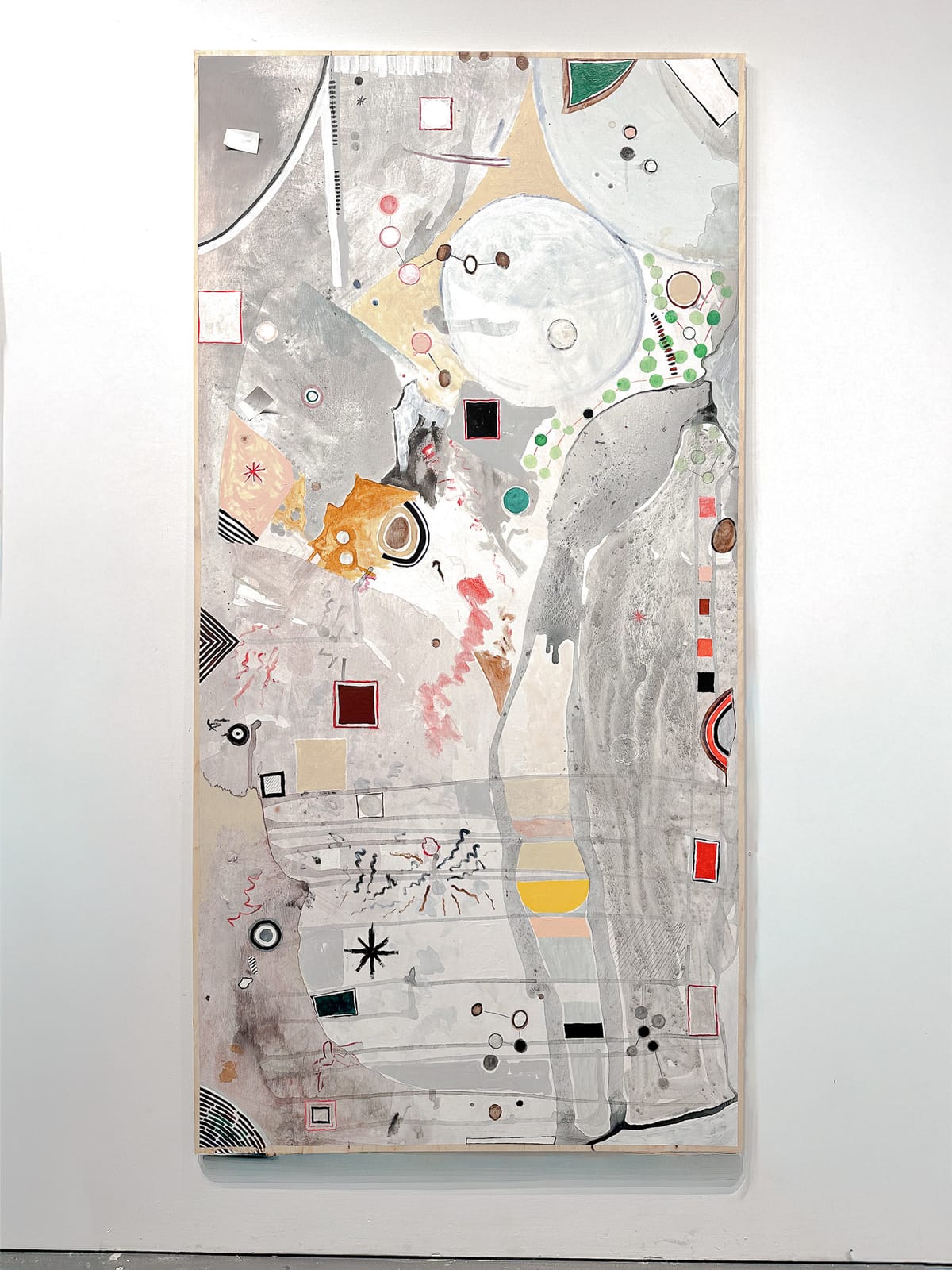
Kamrooz Aram is everywhere this year, from Mumbai Art Week to the Whitney Biennial, and critic Aruna D'Souza is grateful. She pens a beautiful meditation on his work, reading his abstract paintings as not simply a denunciation of Western modernism nor a reassertion of Islamic visual motifs, but something else entirely - something gestural, exuberant, riotous, and incomparably his own.
Michael has become a must-follow voice in queer comedy thanks to his sharp observations, deeply relatable videos, and his ability to capture the messiness, humor, and contradictions of gay culture. Whether he is skewering dating apps, touring internationally, or turning dumpsters, French onion dip, and therapy into comedy gold, his work resonates because it is honest and very funny.
The new New Museum is many things: contemporary, perhaps, but also a science, history, anthropology, and many other museums in one. It echoes the desire of its patron class to own the world and its affiliated courtier class to deliver it to them on a silver platter, or encased in perforated metal, in this case.
On Franklin Street in Brooklyn's Greenpoint neighborhood, one non-commercial gallery fosters 'a small, stubbornly human space for friction.' Friction—the ubiquitous buzzword that captures the simultaneous delight and discomfort of doing things the slow way—is at the heart of artists Pap Souleye Fall and Char Jeré's current show at Subtitled NYC. It also reflects the overall spirit of this little exhibition space and of a burgeoning movement to reject our culture of optimization in favor of a bumpier, more intimate, less alienating experience.
In 2024, I made a vow to never base my art criticism on wall labels. My decision came after reading reactions to that year's Whitney Biennial. "If every label in 'Even Better Than the Real Thing,' the 81st installment of the Whitney Biennial, were peeled off the walls and tossed into the Hudson, what would happen?" asked Jackson Arn in the New Yorker. (He went on to suggest that the overall show would have been much better.)
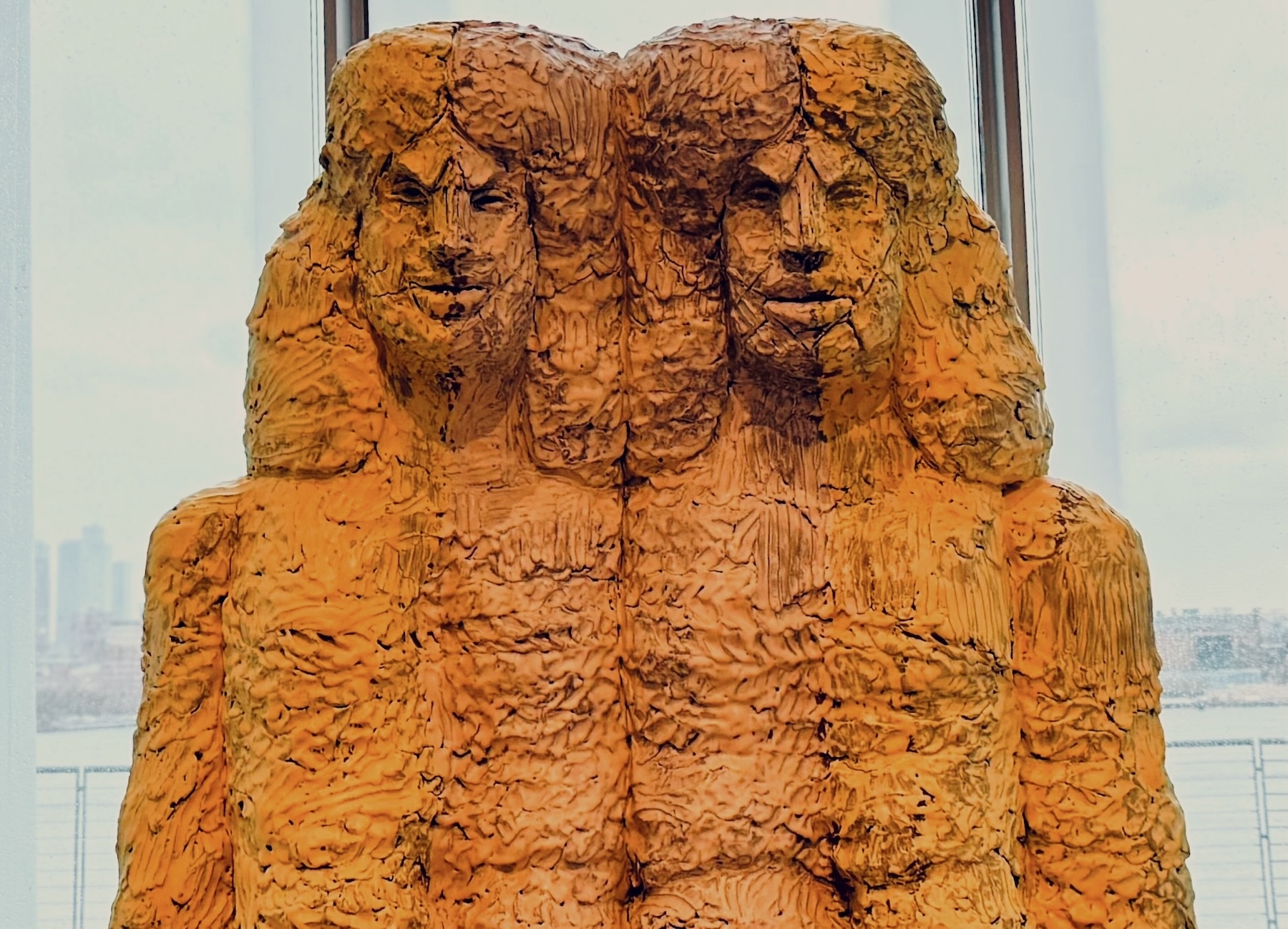
Sprouting from the roof of the San Francisco Museum of Modern Art, artist Rose B. Simpson's newly installed bronze sculpture "Behold" has its gaze fixed on the cityscape before it. The Tewa of Khaʼpʼoe Ówîngeh artist, herself a mother, crafted a tender portrait of an interconnected parent and child that "asks us to be human with each other, to change our narrative through wonder, witness and a foundation in the soft warmth of our humanity," she said in a statement.
Taking over the museum's transformed school building starting April 16, the cross-borough survey will celebrate MoMA PS1's 50th anniversary with a bevy of site-specific installations, new commissions, and rarely seen work by 53 artists and collectives living and working across New York City. A complete list of participants is included at the end of this article. This year, Greater New York will coincide with the Whitney Biennial for the first time in the show's history.
She constructed "Early Earth," the setting of two of her graphic novels, The Encyclopedia of Early Earth (2013) and The One Hundred Nights of Hero (2016). The former is a collection of creation myths for Early Earth, while the other is modeled on One Thousand and One Nights and its frame story of a woman delaying a man's predation by distracting him with storytelling.
In ChertLüdde, evocations abound: the show is a transcription of California (I've never been, but I imagine it to be sun drenched and a bit dehydrated), which is transposed onto the grid of the gallery in Schöneberg. Shells, dried stalks, bits of pottery, sea urchins, art left behind by visitors, are arranged on a stage (a duplication of the one found in Horvitz's garden in Los Angeles),
I work outside, carving and shaping the stone. Outside my house, I have a table, an extension cord, and tools. It's very cold and I have to wear all my winter clothes. When it's too cold, I do the filing and finishing work inside after I shape it outside. I listen to all kinds of music. I listen to Eminem all the time; his albums are all my favorites. For drawings, I work at Kinngait Studios or at home on my kitchen table.
Dominique McDougal and Carro Sharkey's three-part performance, 'Did4luv'-a tragicomic dance solo performed by each of the dancers, alternating every night-debuted this month at the dual 30th anniversary of Sophiensaele's inauguration as a theater and its renowned dance festival, Tanztage. This year's Tanztage invites its audience to consider the (im)material conditions of artistic production: the body and self as sources for capitalist exchange, the extractive nature of our systems of work and its resulting consequences for marginalized bodies.
Marah Al-Za'anin, an 18-year-old Palestinian artist, has transformed a tent in Gaza City's Al-Rimal neighborhood into a studio. Al-Za'anin can't have been more than 15 or 16 years old when the genocide began, but she continues to pursue her passion for art and uses her brother's phone as a light source while she paints and draws late into the night. (photo by Saeed Jaras/Middle East Images/AFP via Getty Images)