#heritage-core
#heritage-core
[ follow ]

World news
fromThe Art Newspaper - International art news and events
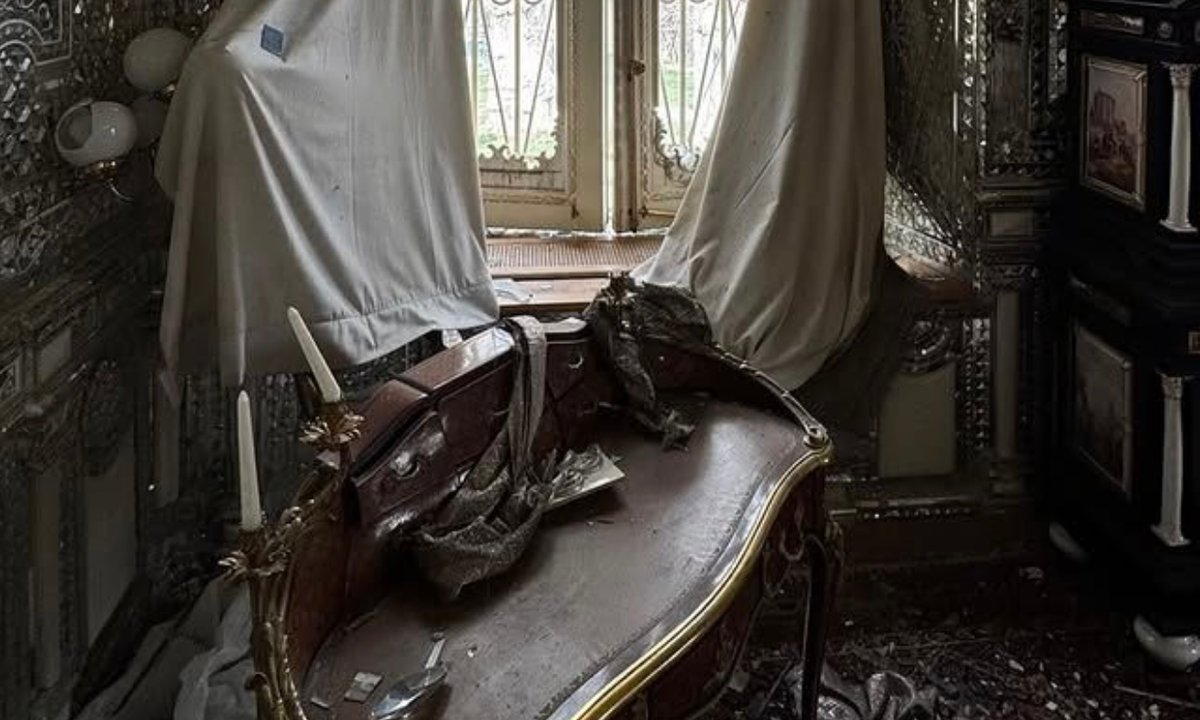
3 days agoIn a month of war, Iran's cultural heritage has suffered huge damage
Iran's war has caused severe damage to cultural heritage, infrastructure, and loss of life, notably impacting sites like Golestan Palace and Chehel Sotoun Palace.
fromwww.theguardian.com
6 days agoThe UK's free-to-access museums are the envy of the world. Charging for entry would be a big mistake | Karin Hindsbo
Twenty-five years ago, the UK made the bold and generous gesture of making its national museums free to all. Suddenly, anyone from anywhere in the world could gaze at iconic works of art by the greatest artists in history without having to pay a penny.
London
fromThe Art Newspaper - International art news and events
2 days agoUnesco grants enhanced protection to 39 Lebanese heritage sites as war escalates
The designation prohibits the sites from being targeted or used for military purposes, with violations potentially constituting serious breaches of the 1954 Hague Convention and grounds for criminal responsibility.
Arts
fromThe Art Newspaper - International art news and events
1 week agoComment | Museums must be the leaders in a moral revolution
Bregman claims, 'Today the whole of Europe risks turning into one big Venice, a beautiful open-air museum. A great destination for Chinese and American tourists. A place to admire what was once the centre of the world.' This statement encapsulates the concern that Europe is losing its cultural significance.
Arts
World politics
fromArchDaily
3 weeks agoCultural Heritage Sites in the Middle East Damaged as War Strikes Historic Urban Areas
US-Israeli military attacks on Iran in February 2026 initiated a new Middle East conflict zone, joining multiple global armed conflicts causing widespread destruction of cultural and infrastructure assets.


Design
fromdesignboom | architecture & design magazine
2 weeks agoopen-air museum revives an industrial past through reclaimed materials and sound
Echo of the Ruins transforms Zhuzhou's abandoned industrial zone into a sound museum using gabion walls filled with recycled factory debris, treating industrial silence as material rather than absence.
Travel
fromwww.theguardian.com
3 weeks agoIt takes a village the pioneering tourism project breathing new life into India's mountain communities
Village Ways pioneering community-based tourism in Himalayan villages generates income for rural communities while preserving traditional lifestyles and reducing urban migration.
fromArchDaily
4 weeks agoArchiving the Technosphere: How Museum Architecture Mediates Human-Made Systems
The contemporary technology museum has emerged as a performative participant in the systems it seeks to document. The architecture of these institutions has become increasingly fluid and bold, often mirroring the velocity and complexity of the systems it houses. They operate as mediators between the human, the ecological, and the technological realms, transforming from encyclopedic warehouses into active educational engines.
Science
fromTravel + Leisure
3 weeks agoThese Are the 25 Top Cultural Destinations in the World for 2026, According to Tripadvisor
Singapore has a special way of blending old traditions with modern life, especially evident in its historic neighborhoods like Chinatown, Little India, and Kampong Glam. There, colorful shophouses, temples, and mosques sit alongside cafes and boutiques, while long-standing food and craft traditions remain part of daily life.
Berlin
Design
fromdesignboom | architecture & design magazine
2 weeks agovernacular bridge craftsmanship informs micro-museum set within bamboo grove in china
A micro-museum in Huizhou documents two vernacular bridge types—baqiao and gaoqiao—representing distinct regional stone construction traditions adapted to varying river conditions and topography.
fromHyperallergic
2 weeks agoFlying Back With the Birds to My Hometown of Tehran
Distance does not soften the terror. It only deepens my helplessness. In moments like this, I realize that geography is not measured in miles, but in attachment. War rearranges distance. These days I find myself returning to "The Conference of the Birds," the 12th-century poem by Attar of Nishapur, seeking meaning through ancient wisdom about spiritual journeys and transformation.
Arts
Travel
fromTravel + Leisure
4 weeks agoThis Small City Was Just Named the Most Welcoming Destination in Asia
Magong, Taiwan was named the most welcoming destination in Asia and second most welcoming in the world by Booking.com's 2026 Traveller Review Awards, with friendly locals creating a relaxed, welcoming atmosphere.
London food
fromCN Traveller
1 month agoI visited my homeland to see if I could fall back in love with this fierce Mediterranean isle - this is what I discovered
Cyprus attracts visitors through its mythological heritage and Mediterranean beauty, while representing a complex homeland shaped by migration, occupation, and personal identity struggles.
Arts
fromThe Art Newspaper - International art news and events
3 weeks agoUnesco sites in Iranian city of Isfahan damaged by US-Israel strikes
UNESCO World Heritage sites in Iran, including Isfahan's Safavid monuments, have sustained significant damage from US-Israeli military strikes, threatening irreplaceable cultural artifacts and architectural treasures.
fromwww.theguardian.com
1 month agoWays to Traverse a Territory review documenting an ancient and disappearing way of life
Here dwells the indigenous Tzotzil community which has kept a pastoral way of life against the march of time. Apart from the odd forest ranger and passerby, Ruvalcaba's film focuses almost entirely on the Tzotzil women. Together, they tend herds of sheep which they still shear by hand, and use traditional tools for spinning yarns and natural dye for fabrics.
Film
History
fromMedievalists.net
1 month agoDreaming of Owning a Medieval Artefact? Here's Your Chance - Medievalists.net
TimeLine Auctions' March 3 online sale features hundreds of medieval historical objects including a 13th-century Limoges cross, 1224 Chinese armor, Viking silver mount, and Anglo-Saxon brooch.


fromColossal
1 month agoInside the Sacred Valley Ceramics Studio Referencing Ancient Peruvian Practices
It is not about reproducing the past but about engaging in dialogue with it. We apply the same level of care and rigor to all pieces. Many of our utilitarian pieces have a strong sculptural quality, and several of the more artistic works originate from everyday forms and functions. We do not establish rigid boundaries between these categories; all are part of the same vision.
Arts
fromemptywheel
2 months agoHow Do You Want Your Family to Remember You? - emptywheel
The Stasi, the secret police, were legendary for their data files. Their work was based on instilling fear, and they induced stunningly amazing numbers of East Germans into informing on their neighbors. Something along the lines of 1 in 6 East Germans were informants, whether out of fear or out of approval of what the East German government was doing.
US politics
fromwww.npr.org
2 months agoUNESCO has officially added yodeling to its list of 'Intangible Cultural Heritage'
There are some variations. So we know yodeling with text. But we have also - mostly we have yodeling without text, and this yodel we call naturjodel. And this kind of yodel works like dialects. So it depends on the region you grow up. So if you grew up in eastern part, it sounds very melancholic. When you grow up in middle part, center part of Switzerland, it's quite loud and sometimes also a little bit fast.
Music
fromHyperallergic
1 month agoThe Irish Do It Best
The Irish government will give 2,000 artists unrestricted weekly stipends in a program officials described as a "recognition, at government level, of the important role of the arts in Irish society." After a successful three-year pilot, the Irish government made its basic income program for artists permanent. Similar pilots have been launched here in the United States, but they're supported primarily by the nonprofit sector.
Arts
fromwww.theguardian.com
1 month agoArchaeology against the clock: the race to salvage fragments of early Brisbane
In a white and sterile office that could belong to any one of the warehouses that dot this industrial strip between Brisbane's airport and horse-racing precinct, a young woman is engrossed in a puzzle. Only this puzzle comprises, perhaps, three different sets, each almost (but not quite) identical to the other and none likely to be completed. Emily Totivan wears blue plastic gloves. She is an archaeology student helping to catalogue artefacts.
Science
fromAeon
2 months agoHow islanders of Oceania built fearsome armour without metal | Aeon Videos
Visually striking and intricately crafted, the traditional armour and weaponry of the Kiribati islands in the Pacific Ocean were built from coconut fibre, human hair, sharks' teeth and porcupine fish. Yet, fearsome and lethal as these objects were, the people of this remote archipelago weren't especially warlike, as British colonists had long assumed, but were instead part of a ritualised style of combat intended to keep violence between clashing groups to a minimum.
Philosophy
US politics
fromwww.independent.co.uk
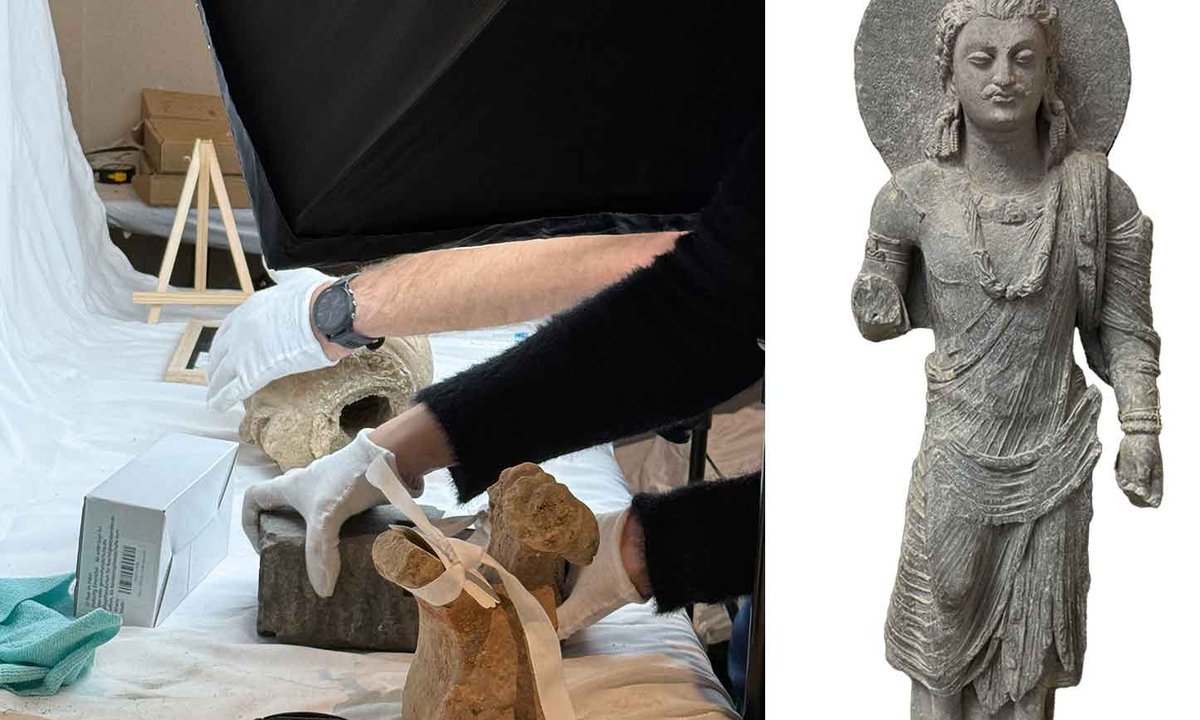
2 months agoInside the hunt for British Museum's missing treasures
The Independent funds on-the-ground, paywall-free investigative reporting while a six-person British Museum team celebrates breakthroughs in tracing missing Greek and Roman treasures with a golden bell.
Arts
fromThe Art Newspaper - International art news and events
1 month agoUK exhibition celebrates the artisans throughout history who went to war
Frontline-made objects salvaged from battlefields reveal the skills, identities, and lived experiences of ordinary soldiers across conflicts from the World Wars to modern wars.
fromHuffPost
1 month ago'Inheritourism' Is Shaping Our Vacations. Here's What Experts Want You To Know.
A 2026 travel report from Hilton identified "inheritourism" as a notable trend for the new year ― with 66% of travelers surveyed by the hotel brand saying that their parents have influenced their choice of accommodations, 60% saying they guided their choice of loyalty programs and 73% saying they shaped their general travel style.
Travel
fromwww.kaltblut-magazine.com
2 months agoThe Rural Cut
The Rural Cut places vintage fashion in Lebanon's Bekaa Valley, among vineyards, open fields, and the animals that inhabit the land. As a Beirut-based stylist, I worked with a fully Lebanese team to create a shoot that feels authentic, where each garment and every frame reflects the textures, history, and rhythm of the rural landscape. Photography by Angele Basile / Instagram: @angelebasile Styling by Rinad Saad / Instagram: @rinaaaaddd
Fashion & style
World news
fromThe Art Newspaper - International art news and events
1 month agoBill aimed at giving Israel control over all West Bank heritage sites sparks concern
Bill would establish Israeli civilian authority over West Bank antiquities, granting sweeping powers including land expropriation and council appointments, raising legal and political concerns.
fromMail Online
1 month agoMysterious symbols spanning the globe hint at a lost civilization
His investigation began after identifying recurring giant T-shapes, three-level indents, and step pyramids carved into ancient stones worldwide. 'These specific symbols that are built in different size proportions, and the symbols are found in ancient stones around the world, are not supposed to exist; no cultures are supposed to have any cross-platform,' LaCroix explained. The symbols appear in locations ranging from Turkey's Van region to South America and Cambodia.
History
fromThe Art Newspaper - International art news and events
2 months agoWorld's oldest known rock art discovered in Indonesia
Archaeologists have discovered what they believe is the world's oldest known rock art, in a cave off the island of Sulawesi, Indonesia. The hand stencil has been dated to at least 67,800 years ago, making it 1,100 years older than the earliest example of rock art that was known about before this, produced in Spain by Neanderthals. The Sulawesi work may, its finders say, provide insights into the migration of early humans to Australia.
Arts
[ Load more ]