#historic-burial-sites

[ follow ]
Design
fromArchDaily
5 days ago

Cities of the Dead: 10 Projects Exploring Burial Architecture

Cemeteries reflect cultural attitudes towards death, embodying social and political significance through their design and organization.
#mass-grave
fromMail Online
5 days ago

Mystery of 'second Sphinx' deepens as new footage reveals hidden clues

The footage captured by Trevor Grassi shows dozens of square shafts carved into bedrock, many extending deep underground but primarily filled with sand, raising new questions about what may lie beneath the surface.
OMG science
#pompeii
Women in technology
fromwww.npr.org
5 days ago

One of the first people known to change their gender was an ancient Egyptian pharaoh

Hatshepsut was a highly successful female ruler of ancient Egypt, yet her legacy was largely forgotten for over three millennia.
Science
fromMail Online
6 days ago

Second Sphinx row erupts as scientists turn on each other

A public dispute has arisen between researchers over claims of a hidden second Sphinx beneath the Giza Plateau.
#ancient-mesopotamia
Arts
fromHyperallergic
1 week ago

UK Museums Hold Over 260,000 Human Remains, Report Finds

UK museums hold over 263,000 human remains, with significant collections from former British colonies, raising ethical concerns.
France news
fromThe Local France
2 weeks ago

Mysterious ancient skeletons discovered sitting upright in France

Ancient Gauls in Dijon buried some people seated upright facing west in pits, with over 20 such tombs discovered since 1992, representing more than a quarter of all known seated Gaul burials worldwide.
London politics
fromwww.theguardian.com
2 weeks ago

Graves in England and Wales could be reused after 100 years

The Law Commission proposes modernizing England and Wales burial laws by allowing grave reuse after 100 years, reopening closed burial grounds, and establishing national standards for the first time in over 170 years.
History
fromWorld History Encyclopedia
5 days ago

Truths Wrapped in Fiction: Mesopotamian Naru Literature: Originality in Writing Ancient Bestsellers

Originality in ancient literary works was less valued than in modern times, with authors often assuming identities of famous figures.
#archaeology
fromMail Online
1 month ago
Science

Historic discovery older than Egypt's Great Pyramid rewrites history

12,000-year-old sewn animal hides and crafted items from Oregon caves show advanced Ice Age North American textile and tool skills.
fromwww.theguardian.com
1 month ago
Science

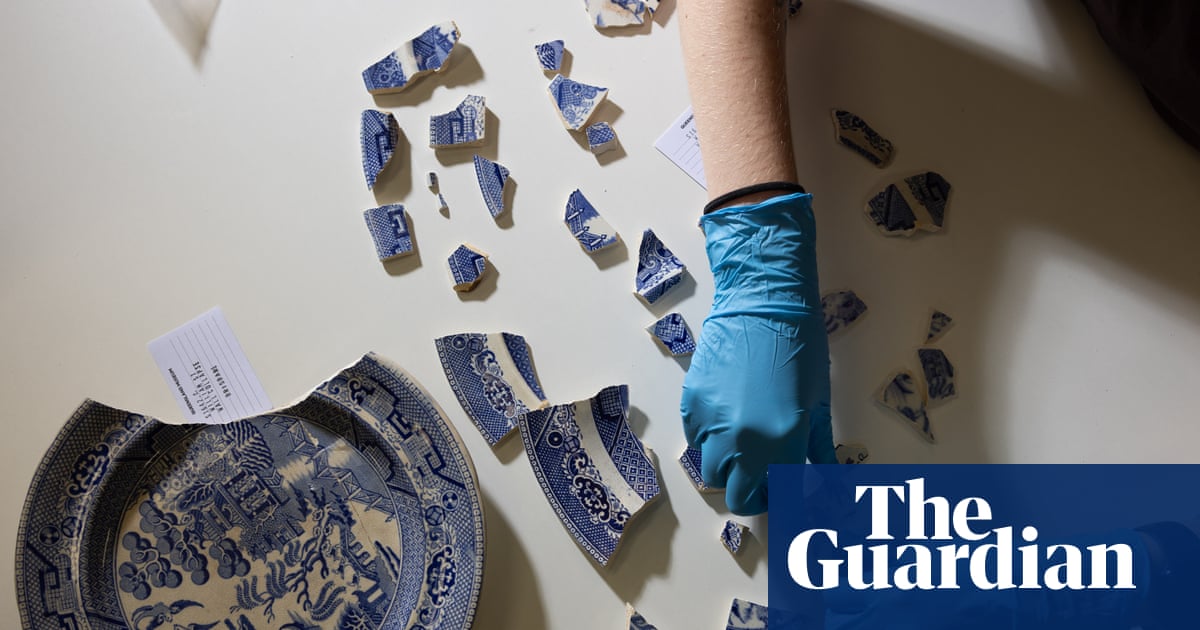
Archaeology against the clock: the race to salvage fragments of early Brisbane

Young archaeology students in Brisbane are cataloguing 19th-century ceramic fragments, reflecting growing salvage archaeology activity amid urban development and heritage preservation.
#ancient-egypt
History
fromMail Online
3 weeks ago

Ancient Egyptians used 'tippex' to fix their paintings 3,000 years ago

Ancient Egyptians used white pigment to correct errors on papyrus paintings at least 3,000 years ago, similar to modern correction fluid.
History
fromwww.theguardian.com
1 month ago

The Donald Trump of ancient Egypt': Ramses II's ego is on full display in new exhibition

Ramses II, Egypt's most ambitious pharaoh, remains remarkably preserved after 3,000 years, yet is overshadowed by Tutankhamun's fame despite his greater achievements and legacy.
London
fromThe Art Newspaper - International art news and events
1 month ago

Blockbuster show on ancient Egyptian pharaoh Ramses II opens in London

A major exhibition featuring over 180 ancient Egyptian treasures from Ramses II's reign opened in London near Battersea Power Station, running through May 31, with proceeds funding Egyptian archaeological research and conservation.
History
fromwww.theguardian.com
1 month ago

The Donald Trump of ancient Egypt': Ramses II's ego is on full display in new exhibition

Ramses II, Egypt's most ambitious pharaoh, remains remarkably preserved after 3,000 years, yet is overshadowed by Tutankhamun's fame despite his greater achievements and legacy.
France news
fromwww.theguardian.com
2 weeks ago

Ancient skeleton discovered sitting upright in France

Archaeologists in Dijon, France discovered multiple Gaulish skeletons buried seated upright facing west around 300-200 BC, raising questions about burial practices and whether individuals were interred alive.
#relocation
fromIndependent
3 weeks ago
London food

An Irish Goodbye... from Cairo: 'You'd be surprised how often you visit the pyramids when you actually live here'

fromIndependent
3 weeks ago
London food

An Irish Goodbye: 'You'd be surprised how often you visit the pyramids when you actually live here'

fromIndependent
3 weeks ago
London food

An Irish Goodbye... from Cairo: 'You'd be surprised how often you visit the pyramids when you actually live here'

fromIndependent
3 weeks ago
London food

An Irish Goodbye: 'You'd be surprised how often you visit the pyramids when you actually live here'

fromThe Art Newspaper - International art news and events
3 weeks ago

Mummies and other human remains held in UK museums raise serious ethical questions, warn scholars

The significant number of ancestors held in UK museums is extremely distressing and symbolic of the colonial origins of these collections. We hope that the responses gathered by The Guardian will be shared with the relevant communities to support them in bringing their ancestors home.
London
fromMedievalists.net
1 week ago

Who Lies in Winchester's Medieval Mortuary Chests? - Medievalists.net

This project demonstrates the combined power of science, the study of human remains and historical research to discover new information about the six mortuary chests and their occupants which would not have been available to us a generation ago.
History
fromThe Art Newspaper - International art news and events
3 weeks ago

Ancient Egyptian 'Tipp-Ex' discovered on papyrus at UK's Fitzwilliam Museum

The corrective fluid analysed using light infrared photography revealed a mixture of huntite and calcite, while images made using a 3D digital microscope show that there also are flecks of yellow orpiment, probably to make it blend in better with the fresh papyrus, which would have originally been pale cream in colour.
Typography
#mesopotamia
Science
fromNature
3 weeks ago

How pollutants and poo paint a picture of past civilizations

Environmental archaeologists extract mud cores from swamps to analyze molecular biomarkers like coprostanol, revealing ancient human population trends and behaviors.
History
fromMedievalists.net
2 weeks ago

Two Medieval Men Found Buried in Prehistoric Site - Medievalists.net

Medieval men were buried in the Menga dolmen, a Neolithic monument in Spain, over 4,000 years after its construction, demonstrating the site's enduring symbolic importance across millennia.
History
fromwww.thehistoryblog.com
3 weeks ago

43,000 ostraca found at one site shed light on social history of Egypt

Excavations at Athribis in Lower Egypt uncovered 13,000 ostraca, bringing the total to 43,000 fragments—the largest collection at any single Egyptian archaeological site, spanning from the 3rd century BCE to the 11th century CE.
fromwww.thehistoryblog.com
3 weeks ago

Coffins of Amun's singers, sealed papyri found at Luxor

The coffins are elaborately painted in vivid polychrome. They were stacked in layers and carefully arranged so the 22 coffins fit into the constricted space. They were placed in 10 horizontal rows and the lids separated from the body of the coffin to maximize the limited space. There are no personal names on most of the coffins, but there are titles. The most common title found in the coffin is Singer of Amun or Chantress of Amun.
History
fromwww.thehistoryblog.com
3 weeks ago

Samnite burials of children with bronze warrior belts found

The excavation ultimately unearthed 34 burials, 15 of them belonging to children between two and ten years old when they died. The graves are clustered in groups, probably reflecting family nuclei. Most the grave types are earthen pits covered with roof tiles angled against each other.
History
#book-of-the-dead
fromBrooklyn Eagle
2 months ago
Brooklyn

PREMIUM Rare, ancient 'Books of the Dead', part of Brooklyn Museum's Egyptian collection, restored for viewing for the first time

fromBrooklyn Eagle
2 months ago
Brooklyn

PREMIUM Rare, ancient 'Books of the Dead', part of Brooklyn Museum's Egyptian collection, restored for viewing for the first time

Miscellaneous
fromMail Online
2 months ago

New evidence upends origins of Egypt's Great Pyramid

Erosion-based dating suggests the Great Pyramid may date 20,000–40,000 years ago, challenging the conventional 2580 BC attribution.
History
fromWorld History Encyclopedia
3 weeks ago

What Defines a Civilization?

Civilization requires a writing system, government, food surplus, labor division, and urbanization, with Mesopotamia recognized as the birthplace of civilization due to its early city construction around 5400 BCE.
Arts
fromThe Art Newspaper - International art news and events
1 month ago

2,000-year-old inscriptions found in Valley of the Kings offer fresh insight into Indian presence in Ancient Egypt

Nearly 30 inscriptions in ancient Indian languages discovered in Valley of the Kings tombs provide evidence of Indian presence in Egypt between the first and third centuries AD.
US politics
fromEmptywheel
2 months ago

Third Cave's a Charm

Republicans will block expiration of Bush tax cuts; Democrats could see a $3.6 trillion tax increase in 2012 if Obama does not act.
Business
fromFast Company
2 months ago

Navigating the ghosts of cultures past

Organizational culture constantly changes; leaders must discern which legacy cultural elements to retain and which to remove while balancing enduring beliefs with adaptive practices.
fromMail Online
2 months ago

Long-lost Egyptian scroll fuels debate over real-life biblical giants

An ancient Egyptian papyrus held by the British Museum has been cited as possible evidence supporting some of the Bible's most controversial claims about giants. The 3,300-year-old document, known as Anastasi I, has been in the museum's collection since 1839 and has recently resurfaced on the Associates for Biblical Research, renewing interest in its possible links to biblical accounts. The papyrus describes encounters with the Shosu people, said to stand 'four cubits or five cubits' tall, up to eight feet in height.
Books
fromMail Online
2 months ago

Lost tomb of mysterious 'cloud people' unearthed after 1,400 years

Archaeologists in Mexico have uncovered a 1,400-year-old tomb in the Central Valleys of Oaxaca that had been lost to history. The stone structure, built by the Zapotec culture, known as Be'ena'a, or 'The Cloud People', is adorned with sculptures, murals and carved symbols that suggest ritual significance. The Zapotec believed their ancestors descended from the clouds and that, in death, their souls returned to the heavens as spirits.
World news
fromBig Think
2 months ago

7,000-year-old underwater wall raises questions about ancient engineering - and lost-city legends

Nine meters (30 feet) beneath the waves, they found it: a vast, man-made stone wall, averaging 20 meters (66 feet) wide and two meters (6.6 feet) tall. The structure consists of some 60 massive granite monoliths, set directly onto the bedrock in pairs at regular intervals. Smaller slabs and packing stones fill in the gaps, locking the whole into a single, deliberate construction. With an estimated total mass of around 3,300 tons, this is the largest underwater structure ever discovered in France.
France news
Science
fromArs Technica
2 months ago

Earliest African cremation was 9,500 years ago

A 9,500-year-old intact hunter-gatherer cremation pyre containing an adult woman's remains was found at Mount Hora, Malawi, indicating organized communal ritual and labor.
fromOpen Culture
1 month ago

Seven Wonders of the Ancient World: From the Walls of Babylon to the Sewers of Rome

Seven were the strings of the lyre (unless there happened to be eight or nine), seven were the gates of Thebes, and seven were the "wandering stars" in the night sky (if you count the sun and moon). The identity of the wonders was less important than the length of their list, and indeed, additions and changes were proposed since the beginning.
History
History
fromWorld History Encyclopedia
1 month ago

12 Great Cities of Ancient Mesopotamia: The Rise and Fall of the Earliest Cities in the World

Twelve major Mesopotamian cities including Nineveh, Uruk, Babylon, and Ur became legendary through Greek writings and yielded significant archaeological discoveries, each connected to a patron deity whose prestige determined the city's fate.
History
fromMail Online
1 month ago

The first non-binary person? Stone Age woman was buried like a MAN

Stone Age societies in Hungary practiced flexible gender roles, with some individuals buried according to non-traditional gender norms, indicating tolerance for complex identities 7,000 years ago.
fromMedievalists.net
1 month ago

Viking-Age Woman Buried with Her Dog in Norway - Medievalists.net

Excavations carried out in 2025 by the Arctic University Museum of Norway revealed that the artefacts came from a boat burial. The grave contained the skeleton of a woman placed inside a boat measuring about 5.5 metres in length. She had been buried together with a dog, suggesting the animal may have been an important companion in life.
History
Arts
fromArtnet News
2 months ago

Who Is Zahi Hawass, the Controversial Face of Modern Egyptology?

Zahi Hawass is a charismatic, media-savvy Egyptian archaeologist who led major projects, popularized discoveries, and champions further excavations including a likely undisturbed Nefertiti tomb.
fromArs Technica
1 month ago

Museums incorporate "scent of the afterlife" into Egyptian exhibits

Her team's analysis of the residue samples contained beeswax, plant oils, animal fats, bitumen, and resins from coniferous trees such as pines and larches, as well as vanilla-scented coumarin (found in cinnamon and pea plants) and benzoic acid (common in fragrant resins and gums derived from trees and shrubs). The resulting fragrance combined a "strong pine-like woody scent of the confers," per Huber, mixed in with "a sweeter undertone of the beeswax" and "the strong smoky scent of the bitumen."
Science
fromHyperallergic
2 months ago

Request for Proposals: Operator for the Harlem African Burial Ground Cultural Education Center

For two centuries, from the mid-1600s to the mid-1800s, free and enslaved New Yorkers of African descent were buried at the Harlem African Burial Ground. Over time, the history of this site was lost - erased by the subsequent redevelopment of the land. Today, the Harlem African Burial Ground project is a community-driven vision to honor and memorialize this historic site with a new outdoor memorial and indoor cultural education center, while also addressing affordable housing and jobs needs in the East Harlem community.
Arts
fromwww.thehistoryblog.com
1 month ago

Centurion's tombstone reused in someone else's grave

Both of the cyst graves feature funerary markers reused as building material. One of them contains the partially preserved tombstone of Legio I Italica centurion Gaius Valerius Verecundus was engraved with a wreath of which only traces remain and an inscription that describes him as having been heavily pressed by fate.
History
History
fromwww.thehistoryblog.com
1 month ago

1,000-year-old gold-filled tomb unearthed in Panama

A richly furnished elite Coclé tomb (800–1000 A.D.) at El Cano reveals ornate gold and ceramics, indicating centralized chiefdoms with long-distance exchange and ritual complexity.
History
fromWorld History Encyclopedia
1 month ago

The Family in Ancient Mesopotamia: Providing for Each Other Through Life and Past Death

Family was the essential unit providing social stability, continuity of traditions, and forming the basis for palace and temple hierarchies in ancient Mesopotamia.
fromMail Online
1 month ago

Mysterious symbols spanning the globe hint at a lost civilization

His investigation began after identifying recurring giant T-shapes, three-level indents, and step pyramids carved into ancient stones worldwide. 'These specific symbols that are built in different size proportions, and the symbols are found in ancient stones around the world, are not supposed to exist; no cultures are supposed to have any cross-platform,' LaCroix explained. The symbols appear in locations ranging from Turkey's Van region to South America and Cambodia.
History
fromMail Online
2 months ago

Mystery of Egypt's pyramids deepens as hidden megastructure revealed

More than 200 scans from multiple satellites, including Italy's Cosmo-SkyMed and the US-based Capella Space, showed uniform results suggesting massive pillars about 65 feet in diameter wrapped in spirals and plunging nearly 4,000 feet deep. Those pillars appear to end in 260-foot cubic chambers beneath all three pyramids and the Sphinx, which Biondi described as 'huge chambers' measuring roughly 260 feet in length and width.
History
History
fromWorld History Encyclopedia
2 months ago

Empress of the Nile: The Daredevil Archaeologist Who Saved Egypt's Ancient Temples from Destruction

Christiane Desroches-Noblecourt, a pioneering Egyptologist, rescued and preserved Egypt's ancient temples through scholarship, advocacy, and decisive cultural stewardship.
History
fromwww.thehistoryblog.com
1 month ago

Early Bronze Age chieftain burial found in France

A richly furnished Early Bronze Age chieftain's pit grave (c.1900–1800 B.C.) with Armorican flint arrowheads, bronze daggers, and rock crystal was found at Ecouche-les-Vallees, Normandy.
History
fromTime Out London
1 month ago

A new 'Cleopatra' immersive experience in London will be all about Ancient Egypt

Cleopatra: The Experience opens at Immerse LDN as a 3,000 square metre, nine-gallery immersive exhibition tracing the late Ptolemaic dynasty with artefacts, AR, VR and staged environments.
fromwww.thehistoryblog.com
2 months ago

Monumental Republican tombs found in Rome suburb

An monumental early Republican-era funerary complex has been discovered in a suburb of Rome. The excavation of the Via di Pietralata east of Rome also uncovered a stretch of an ancient road, a small cult building and two monumental basins dating back to the 3rd and 2nd centuries B.C. Remains from this early in the Republican era are scarce in the Eternal City, which make these finds very archaeologically significant.
History
History
fromwww.thehistoryblog.com
2 months ago

Unique bone box found in Roman-era grave

A tiny Roe-deer bone box with sliding lid and ring-and-dot decoration was buried as a prized cosmetic container in a Late Roman woman's grave.
History
fromwww.thehistoryblog.com
2 months ago

Bronze Age tombs with luxury imported goods found in Cyprus

Two 14th-century BCE chamber tombs in Larnaca contained locally made and widely imported luxury goods, demonstrating extensive long-distance trade networks.
History
fromMedievalists.net
2 months ago

'Princely' Early Medieval Burial Discovered in England - Medievalists.net

A 7th-century elite Anglo-Saxon burial site in Suffolk includes a princely grave with a fully harnessed horse, weapons, and two individuals.
History
fromenglish.elpais.com
1 month ago

The underground odyssey that led archaeologists to a Zapotec burial site

Looting revealed a hidden Zapotec Tomb of the Owl near La Cantera, which took six years to locate and links to the ancient Zapotec civilization.
History
fromWorld History Encyclopedia
2 months ago

Mesopotamian Art and Architecture: The Birth of Art and Architecture in the Ancient World

Mesopotamian art and architecture began over 7,000 years ago, evolving from northern sites into Sumerian innovations and sustained through multiple ancient Mesopotamian periods.
fromWorld History Encyclopedia
2 months ago

Festivals in Ancient Mesopotamia: Courting the Goodwill of the Gods

as the gods were understood as the true monarchs and the king as simply their steward. In order to maintain his authority, the king needed to court the goodwill of the gods, and although they made their approval clear through military victories, bountiful harvests, and prosperous trade, events such as the Akitu festival provided an annual opportunity for the divine to continue its relationship with the ruling house or withdraw its favor.
History
History
fromwww.mercurynews.com
1 month ago

Today in History: February 16, Tutankhamen's tomb unsealed

Feb. 16 features major historical events including King Tutankhamen's burial chamber unsealing (1923), Fort Donelson surrender (1862), Castro becoming Cuba's premier (1959), and several modern political and transportation incidents.
History
fromMail Online
2 months ago

Father of alien archaeology says pyramids not built by human hands

Erich von Däniken claimed extraterrestrials aided ancient civilizations in building pyramids, but archaeological evidence attributes pyramid construction to organized human labor.
fromwww.thehistoryblog.com
2 months ago

Late Antique necropolis with deliberately broken pottery found in France

Adjacent to the masonry house is a burial ground in use from the 4th century through the first half of the 6th century. Approximately 60 individual inhumation burials have been unearthed, arranged in rows that are increasingly dense with graves as they approach the dwelling. The deceased were buried in cysts formed by reused tegulae (large clay roof tiles) or by rubble walls that supported wooden planks. They were placed in the graves in supine position facing west, north or south.
History
fromMedievalists.net
2 months ago

Byzantine Monastic Site Found in Upper Egypt - Medievalists.net

The team identified multiple buildings aligned roughly west-east, in several sizes, ranging from about 8 × 7 metres to 14 × 8 metres. Within these structures are rectangular halls-some interpreted as spaces for worship-alongside smaller rooms that may have served devotional or practical functions for the monks. Excavators also noted evidence of plastered wall surfaces and tiled floors, as well as architectural features such as entrances and surviving supports, including beams.
History
History
fromWorld History Encyclopedia
2 months ago

Mesopotamian Government: Helping and Serving the Gods

Ancient Mesopotamian government treated rulers and officials as divinely chosen stewards modeled on family roles, with kings handling civic administration and priests overseeing temple affairs.
#ancient-mathematics
History
fromWorld History Encyclopedia
2 months ago

Ur: the center of the Sumerian Renaissance

Ur was an influential Sumerian port city and ancient trade center in southern Mesopotamia with notable archaeological finds and contested biblical associations.
History
fromWorld History Encyclopedia
1 month ago

Mesopotamian Education: Creating the First Written Works in History

The Sumerians established formal scribal schools (edubba) after inventing writing, training students in cuneiform, Sumerian and Akkadian, and a broad range of scholarly subjects.
History
fromwww.thehistoryblog.com
2 months ago

1,400-year-old Zapotec tomb found in southern Mexico

A 1,400-year-old Zapotec tomb with exceptionally preserved murals, reliefs, and ritual iconography was unearthed in Oaxaca, offering new insights into Zapotec ancestor worship and hierarchy.
[ Load more ]