#historical-exhibit-removal
#historical-exhibit-removal
[ follow ]
#british-museum #cultural-heritage #museums #performance-art #cultural-infrastructure #heritage #museum-ethics
Design
fromdesignboom | architecture & design magazine
3 days agoreversible cultural pavilion activates public space in frankfurt 2026
Spain's pavilion for World Design Capital 2026 emphasizes reversible cultural infrastructure and sustainable design through innovative materials and construction methods.
fromThe Art Newspaper - International art news and events
2 days agoThe Louvre's new director is inheriting a troubled, traumatised museum-can he repair the damage?
The Louvre accumulated considerable delays in the deployment of its security equipment, in favour of an event-driven policy, a judgment Des Cars said was unfair.
Arts

Arts
fromThe Art Newspaper - International art news and events
2 days agoShould English museums charge tourists? Plus, Raphael at the Met and Senga Nengudi at the Whitechapel Gallery-podcast
The UK government is considering charging tourists for entry to national museums, challenging the current policy of free admission.
Social justice
fromThe Art Newspaper - International art news and events
3 weeks agoComment | What is the role of art museums in times of civic stress?
The Walker Art Center maintains open doors as a welcoming civic space during federal immigration enforcement, offering cultural programming and art-making resources to support affected Minneapolis communities.
fromThe Art Newspaper - International art news and events
3 weeks agoMummies and other human remains held in UK museums raise serious ethical questions, warn scholars
The significant number of ancestors held in UK museums is extremely distressing and symbolic of the colonial origins of these collections. We hope that the responses gathered by The Guardian will be shared with the relevant communities to support them in bringing their ancestors home.
London
fromArchDaily
1 month agoArchiving the Technosphere: How Museum Architecture Mediates Human-Made Systems
The contemporary technology museum has emerged as a performative participant in the systems it seeks to document. The architecture of these institutions has become increasingly fluid and bold, often mirroring the velocity and complexity of the systems it houses. They operate as mediators between the human, the ecological, and the technological realms, transforming from encyclopedic warehouses into active educational engines.
Science
London
fromCN Traveller
3 weeks agoThis fascinating new exhibition, an hour from London, is the hottest ticket for history buffs this summer
Hever Castle presents a comprehensive exhibition on Anne Boleyn, Henry VIII's second wife, marking 500 years since their courtship that led to the Church of England's establishment.
fromThe Art Newspaper - International art news and events
1 week agoComment | Museums must be the leaders in a moral revolution
Bregman claims, 'Today the whole of Europe risks turning into one big Venice, a beautiful open-air museum. A great destination for Chinese and American tourists. A place to admire what was once the centre of the world.' This statement encapsulates the concern that Europe is losing its cultural significance.
Arts
fromwww.bbc.com
1 month agoBarbican tower plans scaled back after backlash
Developers LaSalle Investment Management, Lipton Rogers and Skidmore, Owings & Merrill (SOM) say they have listened to feedback and made "substantial" revisions to the 1 Silk Street plan, and have reduced the western section of the block by three storeys. The original plans for the 1980s former Linklaters building involved demolishing it and building a block of two towers, each standing 20 storeys above the ground floor.
London politics

fromHyperallergic
2 weeks agoWhat Do We Really Think of the New New Museum?
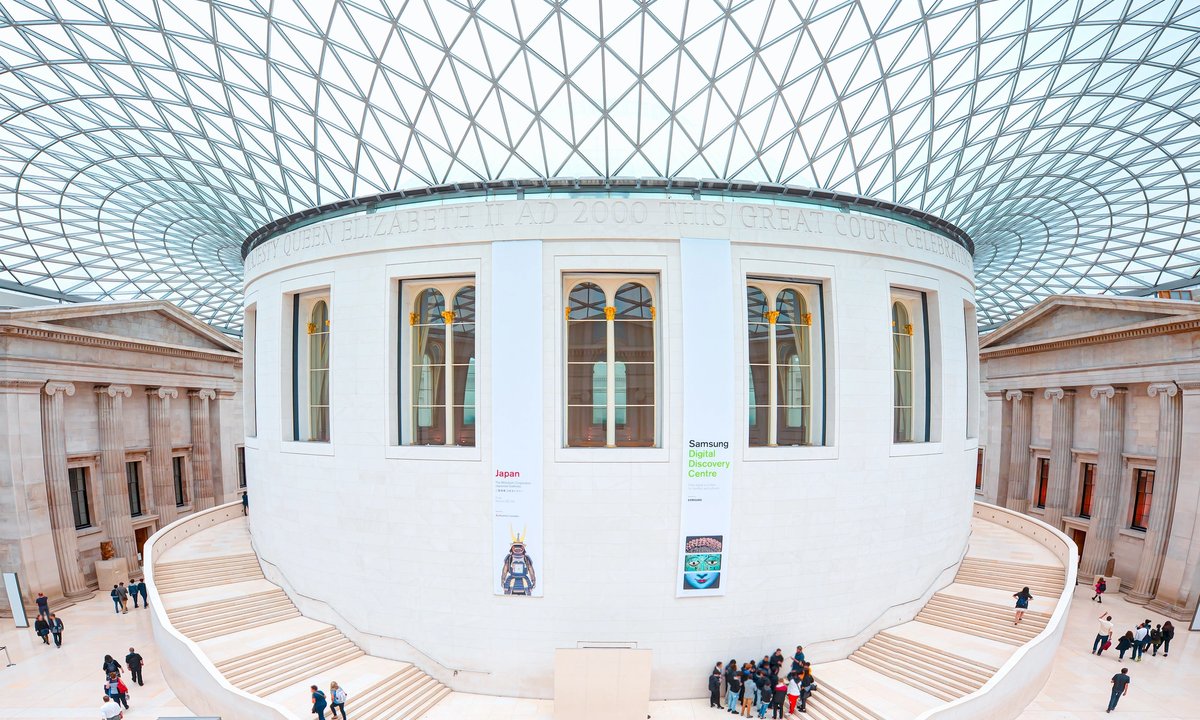
The new New Museum is many things: contemporary, perhaps, but also a science, history, anthropology, and many other museums in one. It echoes the desire of its patron class to own the world and its affiliated courtier class to deliver it to them on a silver platter, or encased in perforated metal, in this case.
Arts
UK news
fromThe Art Newspaper - International art news and events
1 month ago'A sad day': UK cultural organisations criticise contractor's decision to remove artworks from court cells
Serco removed prisoner-produced artworks from court custody suites across England and Wales, undermining rehabilitative benefits, mindfulness, employability skills, and prisoners' cultural rights.
US politics
fromwww.independent.co.uk
2 months agoInside the hunt for British Museum's missing treasures
The Independent funds on-the-ground, paywall-free investigative reporting while a six-person British Museum team celebrates breakthroughs in tracing missing Greek and Roman treasures with a golden bell.
Arts
fromHyperallergic
2 weeks agoMeet the Woman Who Made Museums More Accessible
Lorena Bradford, the National Gallery of Art's first head of Accessible Programs, transformed museum accessibility by creating intentional programs for disabled visitors, including ASL tours, memory loss programs, and medical student training initiatives.
fromArchDaily
1 month agoHeritage Without Permanence: When Architecture Endures by Disappearing
A Gothic cathedral can take centuries to complete. A world exposition pavilion may stand for six months. A ritual structure in Kolkata rises and vanishes within five days. Yet each draws pilgrimage, shapes collective memory, and reorganizes urban life. If heritage has long been defined by what endures, architecture repeatedly shows that cultural authority can also belong to what gathers people.
Design
Relationships
fromSlate Magazine
2 months agoI Walked In On My Colleague Defiling a Precious Piece of Art. Now His Fate Is in My Hands.
An artist masturbated on a communal sculpture, apologized, promised to stop, and trusting him may be reasonable unless a recurring inappropriate sexual pattern appears.
LGBT
fromThe Art Newspaper - International art news and events
1 month agoThe US struggles with history, Stephen Friedman Gallery closes, Tudor Heart pendant acquired by the British Museum-podcast
Cultural divisions and contested historical representation surface before the US 250th, amid art-market upheavals and the British Museum's acquisition of the Tudor Heart.
Artificial intelligence
fromFuturism
2 months agoAnthropic Knew the Public Would Be Disgusted by How It Was Destroying Physical Books, Secret Documents Reveal
Anthropic bought, shredded, and scanned millions of used books to train AI, relying on first-sale doctrine and a transformative-use ruling to avoid paying authors.
fromThe Art Newspaper - International art news and events
2 months agoArt Gallery of Ontario curator resigned after failed acquisition of Nan Goldin work
Although the AGO had planned to jointly purchase Goldin's moving-image work Stendhal Syndrome (2024) with the Vancouver Art Gallery (VAG) and Minneapolis's Walker Art Center, it pulled out in mid 2025 after its modern and contemporary curatorial working committee voted 11-to-9 against it. The move was unexpected, especially as the AGO already had three Goldin works in its collection. (The VAG and Walker Art Center proceeded with the joint acquisition.)
Miscellaneous
Arts
fromThe Art Newspaper - International art news and events
3 weeks agoComment | Why museum leadership needs to decentralise
Traditional museum leadership models are failing under contemporary pressures, requiring a fundamental shift from centralized, individual authority to distributed, collaborative leadership structures.
fromwww.theguardian.com
1 month agoArchaeology against the clock: the race to salvage fragments of early Brisbane
In a white and sterile office that could belong to any one of the warehouses that dot this industrial strip between Brisbane's airport and horse-racing precinct, a young woman is engrossed in a puzzle. Only this puzzle comprises, perhaps, three different sets, each almost (but not quite) identical to the other and none likely to be completed. Emily Totivan wears blue plastic gloves. She is an archaeology student helping to catalogue artefacts.
Science
from6abc Philadelphia
2 months agoSlavery exhibits at President's House in Philadelphia removed after Trump administration directive
Crews dismantled plaques telling the stories of the nine enslaved people who lived in the President's House in Philadelphia, and were owned by George Washington.
US politics
fromThe Art Newspaper - International art news and events
3 weeks agoUK council criticised over sale of collection including works by pioneering photographer Tony Ray-Jones
Due to the lack of viable alternative storage options and in light of the significant financial pressures facing the county council, no suitable alternatives were identified. However, the council admits that the works have not been offered to any of the county's museums or galleries.
Arts
Arts
fromThe Art Newspaper - International art news and events
2 months agoMuseum wall texts are an art in their own right-but will they survive the digital age?
Museums should balance providing contextual wall text and inviting wordless, personal interpretation to make art accessible and meaningful to diverse visitors.
fromThe Art Newspaper - International art news and events
1 month agoWhen it comes to restitution, how can museums solve a problem like inalienability?
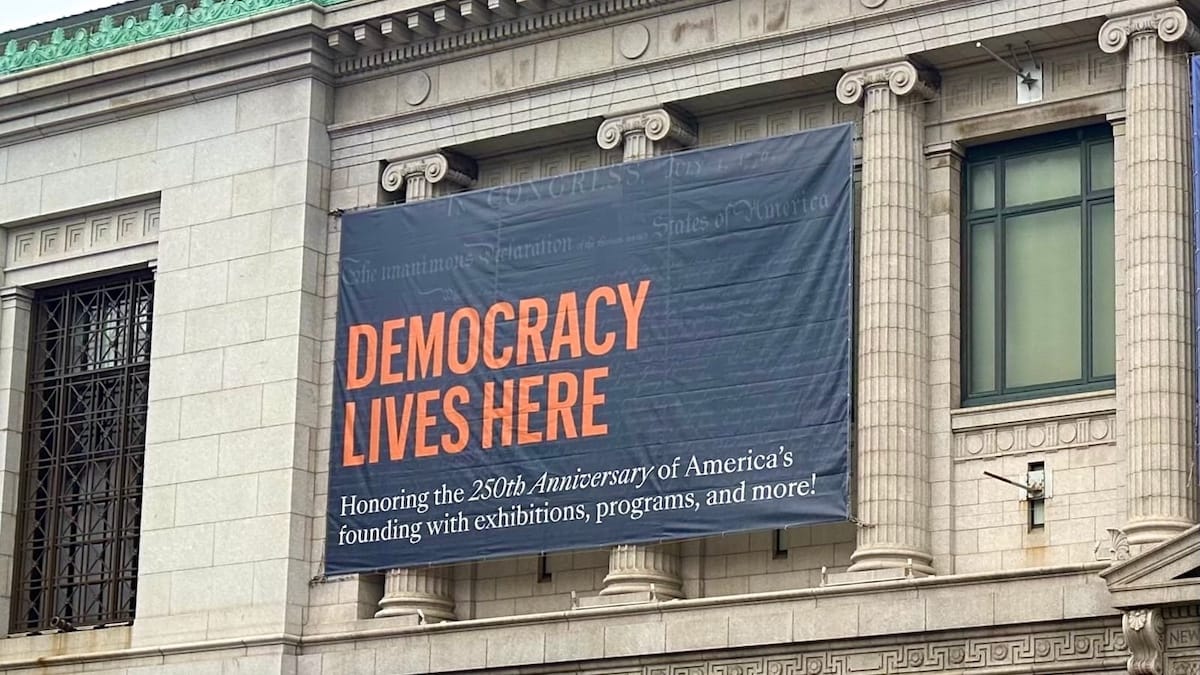
When Thomas Jefferson wrote about the "inalienable" rights of man in the US Declaration of Independence 250 years ago, it's possible he lifted the term from the French. And long before it was ever used as an adjective to describe human rights, it defined royal property. To this day, "inalienability" remains a cornerstone of public collections in France-and many other countries-impacting museums and their ability to deaccession, including for purposes of restitution.
Arts
Arts
fromThe Art Newspaper - International art news and events
2 months agoTrump administration puts renewed pressure on Smithsonian to turn over materials for review
The Trump administration set a 13 January deadline for Smithsonian review materials and implied federal funding could be withheld if the institution does not comply.
fromThe Art Newspaper - International art news and events
2 months agoPhiladelphia sues US Department of the Interior and National Park Service over removal of slavery exhibit
Following the removal of a slavery exhibit at the former presidential homes of George Washington and John Adams in Philadelphia earlier this month, the municipal government is suing the US Department of the Interior and the National Park Service (NPS), claiming that the NPS acted outside of its authority. The exhibits memorialised the nine individuals Washington enslaved during his tenure in Philadelphia as the nation was being founded.
Arts
fromThe Art Newspaper - International art news and events
2 months agoPersistent low attendance and funding cuts are forcing US museums to think local
Among the museum directors paying keen attention to the ruling, on 3 December, that all federal grants from the Institute of Museum and Library Services (IMLS) would be reinstated, the director of the Seattle Art Museum Scott Stulen heaved a sigh of relief. In 2025, the Pacific Northwest's leading art museum saw all its federal funding cut. That represented the loss of an annual income stream, he says, of between $300,000 and $400,000.
Arts
Arts
fromTime Out London
1 month agoThis underrated, tiny west London museum is celebrating its 100th birthday with a blockbuster year of exhibitions in 2026
Leighton House celebrates its 100th year with exhibitions and workshops showcasing its history, international influences, Arab Hall origins, and restored collections.
fromHyperallergic
2 months agoArt Movements: The Brooklyn Museum's New Top Contemporary Art Curator
Brooklyn Museum Fills Its Top Contemporary Curator Spot Robert Wiesenberger was named senior curator of contemporary art at the Brooklyn Museum, a post that has been vacant since the departure of Eugenie Tsai in 2023. He comes from the Clark Art Institute in Williamstown, Massachusetts, where he was curator of contemporary projects, and was previously a curatorial fellow at the Harvard Art Museums.
Arts
[ Load more ]