History
fromOpen Culture
5 days agoHow Everything in a Medieval Castle Worked, from Its Moats to Its Dungeons
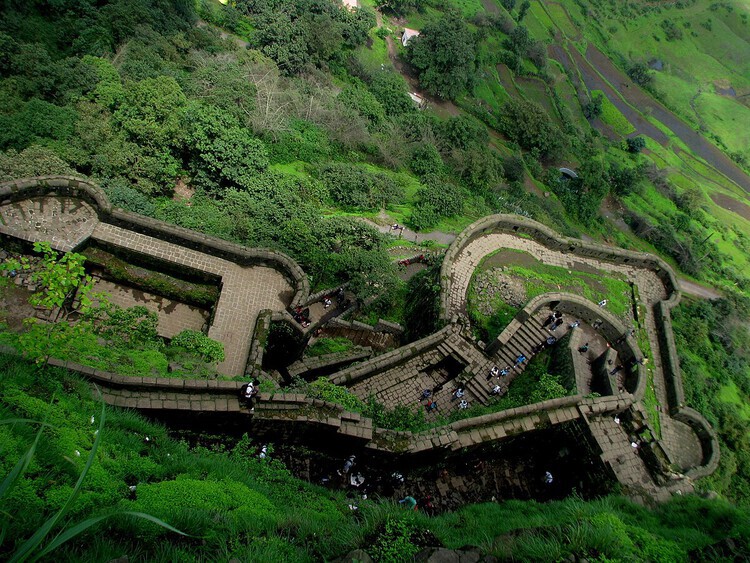
Medieval castles were complex structures designed for defense, featuring elements like barbicans, moats, and parapets.
The designation prohibits the sites from being targeted or used for military purposes, with violations potentially constituting serious breaches of the 1954 Hague Convention and grounds for criminal responsibility.
The Rio-Antirrio Bridge, with its triangular sections resembling giant sails, is the world's longest multi-span cable-stayed bridge, spanning 2,880 meters across the Rion Strait. Completed in 2004, it transformed travel between the Peloponnese and mainland Greece, reducing ferry crossing times significantly. The views from the bridge are breathtaking, offering glimpses of the indigo waters and majestic mountain ranges.
"It doesn't matter what [story] you want to tell-maps help bring it to life, they help you connect to spaces. And it has to be interactive. You have to be able to read, to click."
After the historical Iranian city of Isfahan was targeted by several major strikes, its governor Mehdi Jamalinejad claimed that serious damage had been inflicted even after blue shields were put on the roofs of culturally important buildings. This is an internationally recognized signal under the 1954 Hague Convention for the Protection of Cultural Property in the Event of Armed Conflict.
Singapore has a special way of blending old traditions with modern life, especially evident in its historic neighborhoods like Chinatown, Little India, and Kampong Glam. There, colorful shophouses, temples, and mosques sit alongside cafes and boutiques, while long-standing food and craft traditions remain part of daily life.
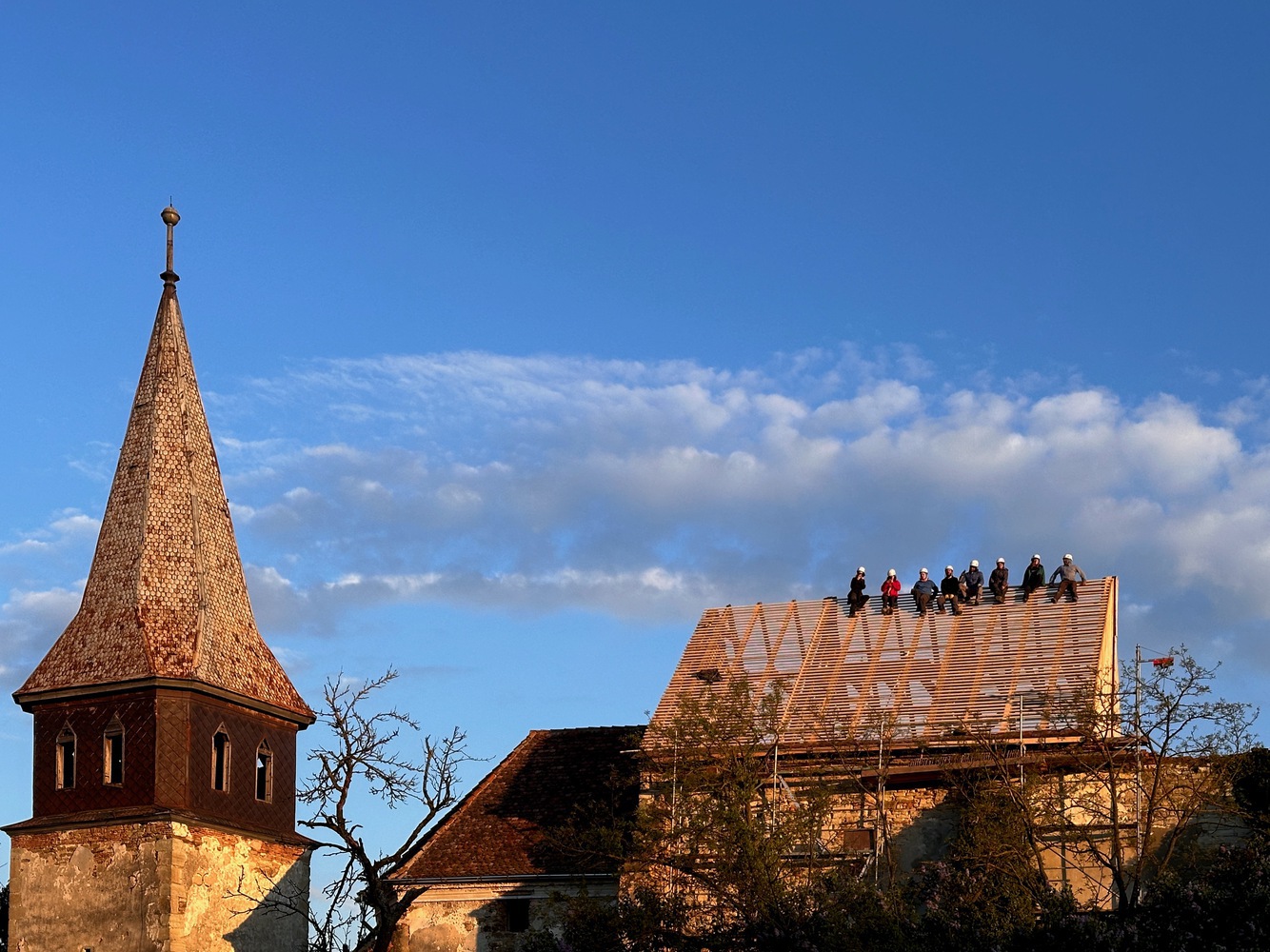
The Grade II listed building is on Historic England's Heritage at Risk Register and is currently recorded as being in poor condition. The national Marine Society and Sea Cadets (MSSC), which held the lease, has confirmed that it can no longer meet the building's repair obligations and will surrender the lease so that restoration can be carried out by new occupants.
The most serious confirmed damage to date has been to Tehran's Golestan palace, dating back to the 14th century, and the 17th-century Chehel Sotoon palace in Isfahan. Judging from videos and public statements, neither historic building was hit by a missile directly but the shock wave from nearby blasts and possibly some missile debris, shattered glass and brought down tiles and masonry.
Travelers often overlook tiny European countries, but, as I discovered on a recent trip to Luxembourg-Europe's seventh-smallest nation, with a population of just 699,000-there's much to discover in these hidden gems. Last summer, I visited my aunt, who has lived in Europe for over 20 years, with stints in Paris, Vienna, Zug, Switzerland, and now, Luxembourg. We spent three days touring the historic city nestled between Belgium, Germany, and France. It's built on a rocky plateau overlooking deep gorges, a sweeping canyon, and surrounding countryside.
Europe has never been short on spectacle. Yet beyond the headline cities and endlessly recycled itineraries lies a quieter, deeper continent; one that's best encountered through patience and a willingness to detour from the obvious itinerary. Our 7 wonders of Europe for 2026 in Europe are not places that beg for attention. Instead, they reward those prepared to explore more than a few miles from the nearest airport and linger a little longer than planned.
In the UK and the US, it is often crystal clear when your new home is classified as a heritage home or period property, but in France it can be less obvious. You could be breaking the rules simply by installing new windows. So how can you check that your big plans aren't going to upset anyone - or worse, break the law?
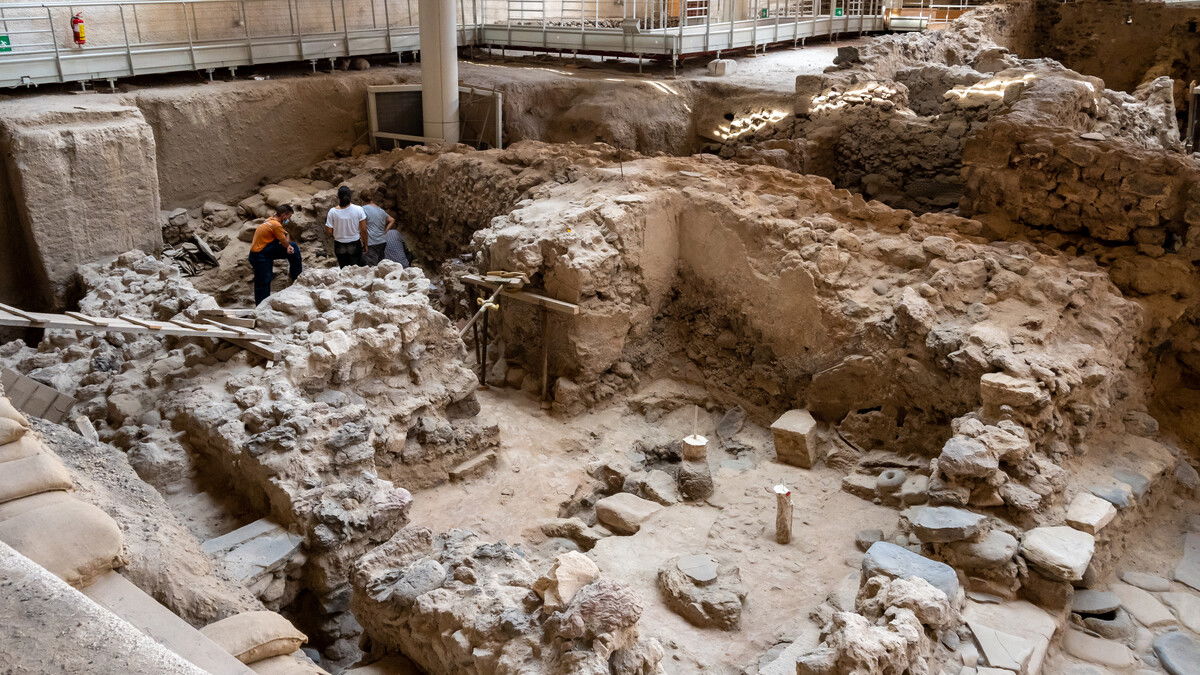
What makes this canopy special isn't just that it uses 3D printing technology, though that's certainly impressive. It's the way the designers thought about the entire system. Rather than simply throwing a roof over the tombs and calling it a day, they created what's essentially a climate-control system disguised as architecture. The canopy features a double-layer envelope that does way more than keep rain off ancient stone. Built into this roof are ventilation and air extraction components that actively regulate temperature and humidity.
Seven were the strings of the lyre (unless there happened to be eight or nine), seven were the gates of Thebes, and seven were the "wandering stars" in the night sky (if you count the sun and moon). The identity of the wonders was less important than the length of their list, and indeed, additions and changes were proposed since the beginning.
Treasures unearthed by hundreds of archaeologists so far during work on the controversial planned HS2 train line have been shown exclusively to the BBC. The 450,000 objects, which are being held in a secret warehouse, include a possible Roman gladiator's tag, a hand axe that may be more than 40,000 years old and 19th Century gold dentures. It is an "unprecedented" amount and array of items, which will yield new insights into Britain's past, says the Centre for British Archaeology.
Heritage sites constitute complex spatial archives in which architecture, history, and collective memory converge. They encompass a wide spectrum of contexts-from archaeological remains, ancient and historic townscapes, UNESCO-listed landscapes, to early modern civic structures and industrial infrastructures. Yet these environments confront challenges: climate change, urban transformation, disaster, shifting social needs, and the gradual erosion of material fabric. Revitalization and restoration projects respond to these conditions by positioning architectural and spatial practice as an active mediator between preservation and the contemporary topologies.
Two exceptionally rare and beautifully carved Mithraic altars found in Inveresk, East Lothian, Scotland, are going on display for the first time. They are not just the only Roman altars ever found in Scotland, but are among the finest examples of Roman sculpture in Roman Britain. They are also uniquely early in date, having been made in 140s A.D. during Antoninus Pius' reoccupation of southern Scotland, whereas most other archaeological materials related to the worship of Mithras in Britannia date to the 3rd century.
While the bone was worn and poorly preserved, archaeologists managed to identify its origin by comparing it with modern elephant and mammoth bones. Despite there not being enough DNA to confirm the exact species, the researchers were able to carbon date a tiny sample of the bone. This places the elephant's death between the late fourth and early third centuries BC - right in the middle of the Second Punic War.
The Assassins and the Knights Templar have become two of the most iconic groups of fighters from the period of the Crusades. In recent times, they have been popularised through the video game and movie franchise, Assassin's Creed. But who were they really and how did they interact in the Holy Land? It's an intriguing story that Dr Steve Tibble and Tony McMahon investigate in the first episode of their new podcast series, Talking Templars.