#historical-remains

[ follow ]
History
fromArs Technica
17 hours ago

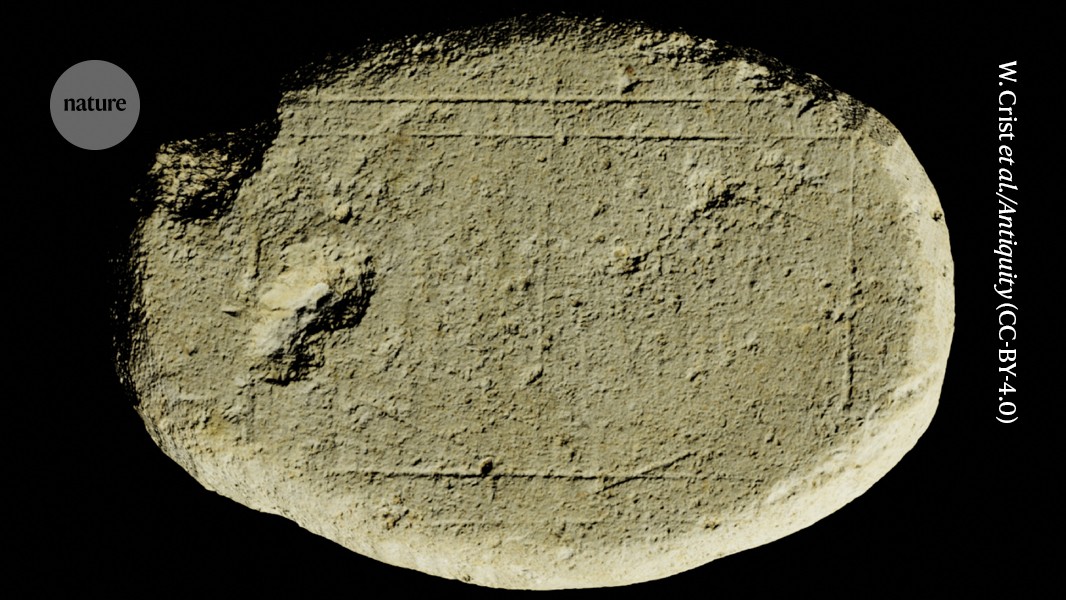
Ice Age dice show early Native Americans may have understood probability

Native Americans used dice for games of chance over 12,000 years ago, predating Old World dice by millennia.
#archaeology
Europe news
fromwww.dw.com
2 days ago

UNESCO World Heritage sites facing the heat

World Heritage sites are increasingly threatened by climate change, with 80% facing stress from rising temperatures and extreme weather events.
#pompeii
Berlin food
fromCN Traveller
2 days ago

"This is a place you feel, not see": why everyone is falling in love with Athens right now

Athens embodies a vibrant, chaotic lifestyle that prioritizes human connection over pristine monuments and modernity.
Design
fromArchDaily
4 days ago

Cities of the Dead: 10 Projects Exploring Burial Architecture

Cemeteries reflect cultural attitudes towards death, embodying social and political significance through their design and organization.
fromMail Online
3 days ago

Mystery of 'second Sphinx' deepens as new footage reveals hidden clues

The footage captured by Trevor Grassi shows dozens of square shafts carved into bedrock, many extending deep underground but primarily filled with sand, raising new questions about what may lie beneath the surface.
OMG science
fromCN Traveller
1 week ago

7 wonders of Greece for 2026

The Rio-Antirrio Bridge, with its triangular sections resembling giant sails, is the world's longest multi-span cable-stayed bridge, spanning 2,880 meters across the Rion Strait. Completed in 2004, it transformed travel between the Peloponnese and mainland Greece, reducing ferry crossing times significantly. The views from the bridge are breathtaking, offering glimpses of the indigo waters and majestic mountain ranges.
Europe news
#ancient-egypt
Roam Research
fromArs Technica
2 weeks ago

Study pinpoints when bow and arrow came to North America

North Americans adopted the bow and arrow about 1,400 years ago, replacing the atlatl and dart, with rapid adoption in the south and gradual replacement in the north.
#roman-archaeology
fromwww.thehistoryblog.com
2 days ago

Neolithic axe found in Lake Constance

The axe was the most important find in the group and would have been highly valued in the Neolithic community. Experiments with fiddle bows have found that it takes more than a day of work to manufacture an axe like this one.
History
Science
fromNature
3 weeks ago

How pollutants and poo paint a picture of past civilizations

Environmental archaeologists extract mud cores from swamps to analyze molecular biomarkers like coprostanol, revealing ancient human population trends and behaviors.
World politics
fromArchDaily
3 weeks ago

Cultural Heritage Sites in the Middle East Damaged as War Strikes Historic Urban Areas

US-Israeli military attacks on Iran in February 2026 initiated a new Middle East conflict zone, joining multiple global armed conflicts causing widespread destruction of cultural and infrastructure assets.
fromThe Art Newspaper - International art news and events
3 weeks ago

Ancient Egyptian 'Tipp-Ex' discovered on papyrus at UK's Fitzwilliam Museum

The corrective fluid analysed using light infrared photography revealed a mixture of huntite and calcite, while images made using a 3D digital microscope show that there also are flecks of yellow orpiment, probably to make it blend in better with the fresh papyrus, which would have originally been pale cream in colour.
Typography
Arts
fromABC7 San Francisco
1 week ago

Expert team works to prepare ancient Etruscan exhibit this summer at Legion of Honor

Art conservators at the DeYoung Museum are restoring ancient Etruscan artifacts using modern technology for an upcoming exhibit.
History
fromMedievalists.net
2 days ago

Medieval "Giant" with Trepanned Skull Discovered in Mass Grave - Medievalists.net

A 9th-century mass grave in England reveals remains of young men, suggesting violent conflict during the Viking conquest of East Anglia.
fromVulture
4 weeks ago

A World Forever in the Shadow of Apocalypse

At least that's the mood director Gianfranco Rosi evokes in his mesmerizing documentary Pompei: Below the Clouds, which won a Special Jury Prize at the Venice Film Festival last year and is finally being released theatrically in the U.S., ahead of a March 27 streaming premiere on Mubi. The apocalypse Rosi presents is not just the legendary one that destroyed the ancient Roman town of the film's title but an ongoing one that encompasses the calamities of our modern era as well as the rejuvenation that sometimes accompanies destruction.
Film
History
fromBig Think
3 days ago

Ghost map: Europe's first glimpse of Tenochtitlan shows a city already destroyed

The 1524 map of Tenochtitlan reflects the cultural clash and hybridization between indigenous and European perspectives after the city's destruction.
History
fromWorld History Encyclopedia
4 days ago

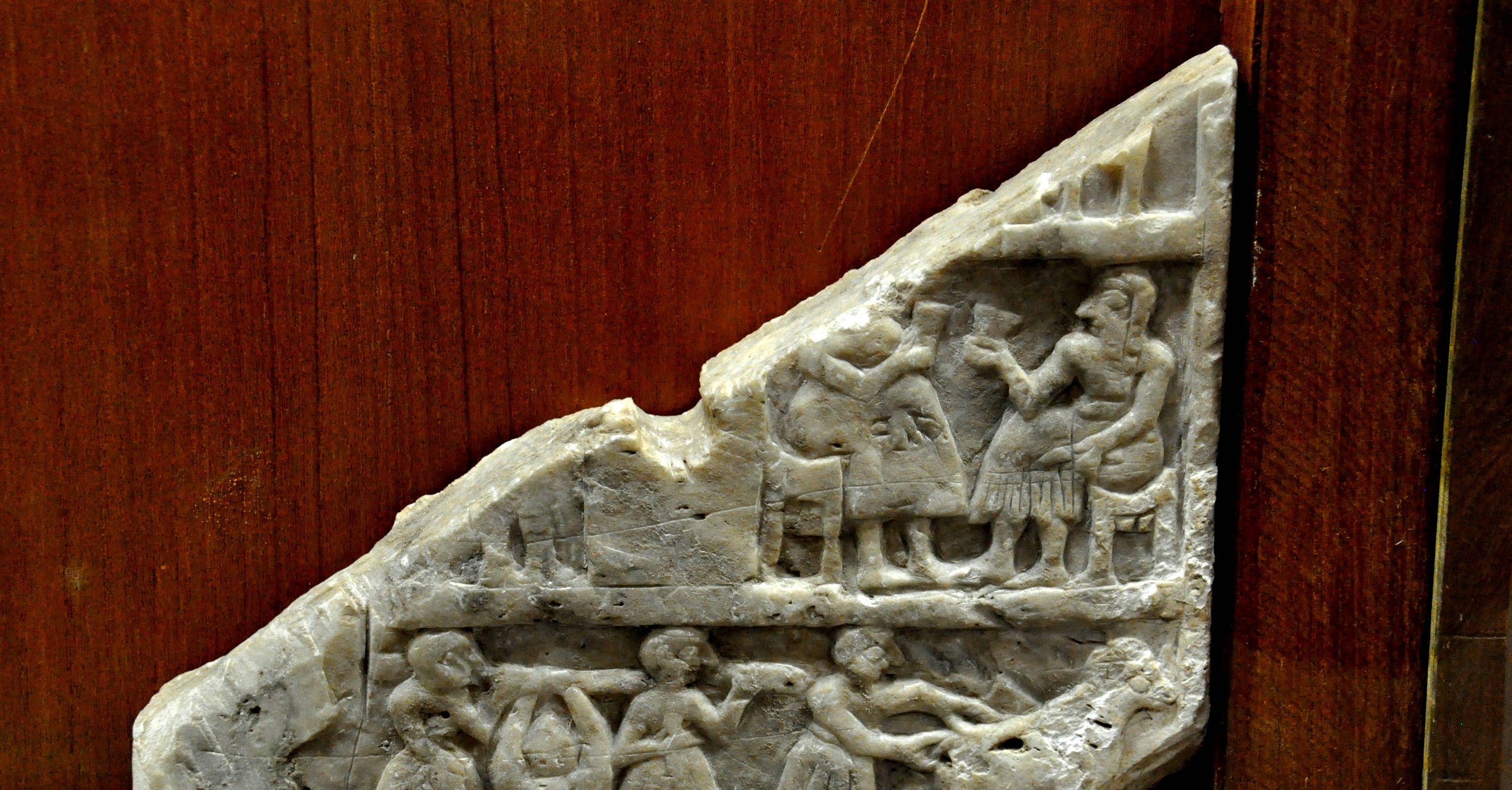
Truths Wrapped in Fiction: Mesopotamian Naru Literature: Originality in Writing Ancient Bestsellers

Originality in ancient literary works was less valued than in modern times, with authors often assuming identities of famous figures.
#mesopotamia
Arts
fromHyperallergic
3 weeks ago

How Much Did It Cost to Paint a Pompeii Room Egyptian Blue?

Egyptian blue pigment cost Roman homeowners 50-90% of a legionary's annual salary to cover a single room, making it an extraordinarily expensive luxury item in first-century CE Pompeii.
Books
fromNature
1 month ago

Brain mysteries and Bronze Age diplomacy: Books in brief

Lionel Penrose's mid-twentieth century research connected genetic abnormalities to hand creases, establishing the hand as a significant diagnostic tool across multiple medical disciplines.
#ancient-graffiti
fromwww.dw.com
2 weeks ago
History

Ancient graffiti reveals scenes of everyday life in Pompeii

Ancient graffiti reveals insights into the lives of everyday people in Pompeii, showcasing spontaneous expressions from various social classes.
fromwww.dw.com
2 weeks ago
History

Ancient graffiti reveals scenes of everyday life in Pompeii

Ancient graffiti from Pompeii and Herculaneum reveals spontaneous messages from everyday people including slaves and soldiers, providing direct insight into daily life in the Roman empire.
History
fromwww.dw.com
2 weeks ago

Ancient graffiti reveals scenes of everyday life in Pompeii

Ancient graffiti reveals insights into the lives of everyday people in Pompeii, showcasing spontaneous expressions from various social classes.
History
fromwww.dw.com
2 weeks ago

Ancient graffiti reveals scenes of everyday life in Pompeii

Ancient graffiti from Pompeii and Herculaneum reveals spontaneous messages from everyday people including slaves and soldiers, providing direct insight into daily life in the Roman empire.
Medicine
fromwww.npr.org
1 month ago

That ain't perfume! Ancient bottle contained feces, likely used for medicine

Chemical analysis of ancient Roman vessels confirmed a two-millennium-old medicinal recipe by Galen combining human feces and fragrant materials.
History
fromMail Online
2 weeks ago

Roman artifact found in the Americas shatters New World history

A Roman terracotta head discovered in a sealed Mexican tomb in 1933 suggests Roman contact with the Americas around 200 AD, predating Columbus by over a thousand years.
fromwww.thehistoryblog.com
2 weeks ago

Five more seated Gauls found in Dijon

They were all adult males between 40 and 60 years old when they died, ranging in height from 1.62 to 1.82 meters (5'4-6). They were in good overall health with excellent teeth, but osteoarthritis in the bones, particularly in the legs, attests to them having consistently experienced strenuous physical activity in their lives.
History
History
fromMedievalists.net
2 weeks ago

Two Medieval Men Found Buried in Prehistoric Site - Medievalists.net

Medieval men were buried in the Menga dolmen, a Neolithic monument in Spain, over 4,000 years after its construction, demonstrating the site's enduring symbolic importance across millennia.
US politics
fromEmptywheel
2 months ago

Third Cave's a Charm

Republicans will block expiration of Bush tax cuts; Democrats could see a $3.6 trillion tax increase in 2012 if Obama does not act.
#roman-villa
fromBig Think
2 months ago

7,000-year-old underwater wall raises questions about ancient engineering - and lost-city legends

Nine meters (30 feet) beneath the waves, they found it: a vast, man-made stone wall, averaging 20 meters (66 feet) wide and two meters (6.6 feet) tall. The structure consists of some 60 massive granite monoliths, set directly onto the bedrock in pairs at regular intervals. Smaller slabs and packing stones fill in the gaps, locking the whole into a single, deliberate construction. With an estimated total mass of around 3,300 tons, this is the largest underwater structure ever discovered in France.
France news
fromConde Nast Traveler
2 months ago

A Guide to Viking's 'Ancient Mediterranean Treasures' Cruise, On and Off the Ship

Onboard/Offboard is a series that explores the can't-miss highlights of our favorite cruises-from the shore excursions to book to the spa treatments too relaxing to pass up. A new ship sometimes needs time to work out the kinks, but at this point-more than 100 vessels later- Viking has the routine down pat. In early November, I boarded the Viking Vesta, the line's 12th ocean vessel, in Istanbul, a few months into service.
Travel
fromwww.thehistoryblog.com
3 weeks ago

Samnite burials of children with bronze warrior belts found

The excavation ultimately unearthed 34 burials, 15 of them belonging to children between two and ten years old when they died. The graves are clustered in groups, probably reflecting family nuclei. Most the grave types are earthen pits covered with roof tiles angled against each other.
History
History
fromWorld History Encyclopedia
3 weeks ago

What Defines a Civilization?

Civilization requires a writing system, government, food surplus, labor division, and urbanization, with Mesopotamia recognized as the birthplace of civilization due to its early city construction around 5400 BCE.
UK news
fromwww.bbc.com
2 months ago

Sifting through the Roman rubbish of 'the London lasagne'

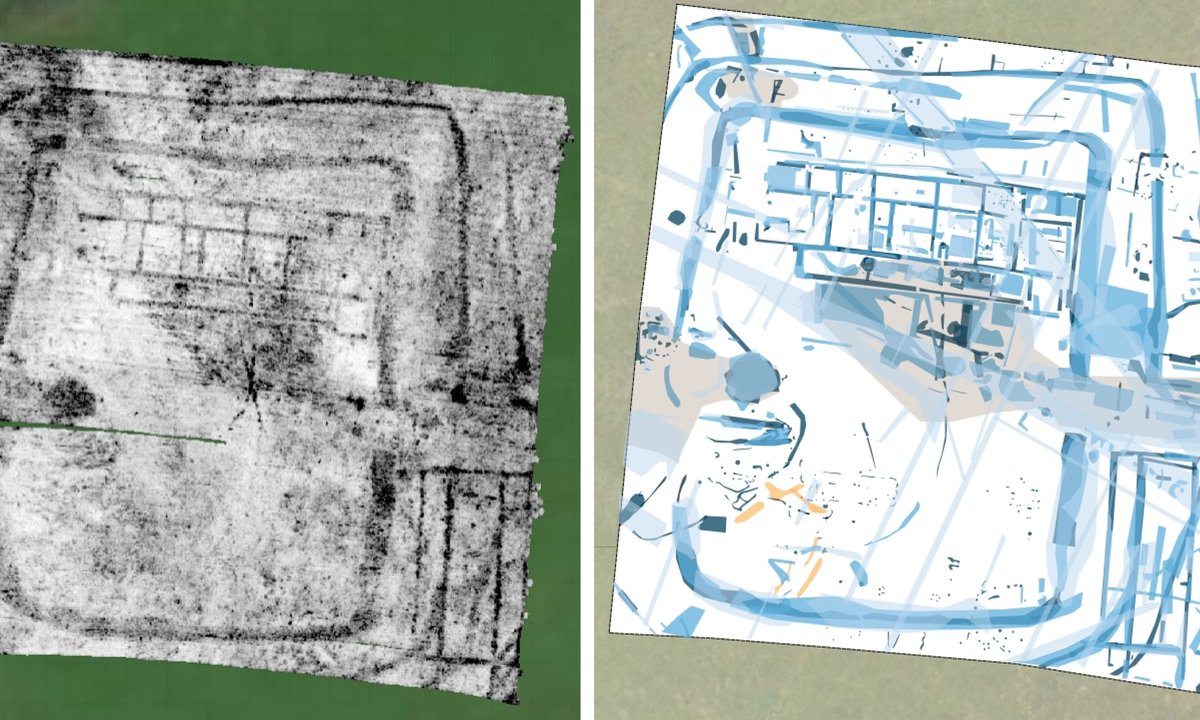
London's archaeology reveals layered remains from prehistory to Victorian times, including rare Roman frescoes, a mausoleum, a luxurious villa, and early theatres.
fromMail Online
2 months ago

Long-lost Egyptian scroll fuels debate over real-life biblical giants

An ancient Egyptian papyrus held by the British Museum has been cited as possible evidence supporting some of the Bible's most controversial claims about giants. The 3,300-year-old document, known as Anastasi I, has been in the museum's collection since 1839 and has recently resurfaced on the Associates for Biblical Research, renewing interest in its possible links to biblical accounts. The papyrus describes encounters with the Shosu people, said to stand 'four cubits or five cubits' tall, up to eight feet in height.
Books
History
fromArs Technica
3 weeks ago

Centuries before the Inca, Peru's wealthy imported parrots from afar

The Ychsma kingdom maintained a sophisticated long-distance trade network spanning hundreds of kilometers across the Andes to import live parrots from the Amazon rainforest centuries before the Inca Empire.
fromwww.scientificamerican.com
2 months ago

Humans Made Poisoned Arrowheads Thousands of Years Earlier Than Previously Thought

Researchers have found traces of what appears to be plant-derived poison on tiny stone arrowheads from South Africa dated to 60,000 years ago. The finding pushes back the origin of this revolutionary hunting technology by tens of thousands of years. Scientists have long been fascinated by the development of poisoned hunting weapons. For one thing, they would have seriously leveled up our ancestors' foraging game.
Science
fromMail Online
2 months ago

Lost tomb of mysterious 'cloud people' unearthed after 1,400 years

Archaeologists in Mexico have uncovered a 1,400-year-old tomb in the Central Valleys of Oaxaca that had been lost to history. The stone structure, built by the Zapotec culture, known as Be'ena'a, or 'The Cloud People', is adorned with sculptures, murals and carved symbols that suggest ritual significance. The Zapotec believed their ancestors descended from the clouds and that, in death, their souls returned to the heavens as spirits.
World news
Science
fromFuturism
2 months ago

Scientists Investigating 2,000-Year-Old Artifact That Appears to Be a Battery

A reconstructed Baghdad battery configuration could have produced about 1.4 volts, comparable to a modern AA battery, using a porous clay separator and an electrolyte.
History
fromwww.thehistoryblog.com
4 weeks ago

Origin of repatriated erotic mosaic uncovered

A Nazi-looted mosaic depicting an intimate domestic scene was repatriated to Pompeii, but research revealed it originated in Latium, not Pompeii or its surrounding region.
#ancient-mesopotamia
fromOpen Culture
1 month ago

Seven Wonders of the Ancient World: From the Walls of Babylon to the Sewers of Rome

Seven were the strings of the lyre (unless there happened to be eight or nine), seven were the gates of Thebes, and seven were the "wandering stars" in the night sky (if you count the sun and moon). The identity of the wonders was less important than the length of their list, and indeed, additions and changes were proposed since the beginning.
History
History
fromWorld History Encyclopedia
1 month ago

12 Great Cities of Ancient Mesopotamia: The Rise and Fall of the Earliest Cities in the World

Twelve major Mesopotamian cities including Nineveh, Uruk, Babylon, and Ur became legendary through Greek writings and yielded significant archaeological discoveries, each connected to a patron deity whose prestige determined the city's fate.
Science
fromwww.nature.com
2 months ago

Author Correction: Hunter-gatherer sea voyages extended to remotest Mediterranean islands

Corrections to regional radiocarbon uncertainties do not meaningfully change conclusions about timing of the Mesolithic–Neolithic transition or maritime voyages in the central Mediterranean.
History
fromOpen Culture
1 month ago

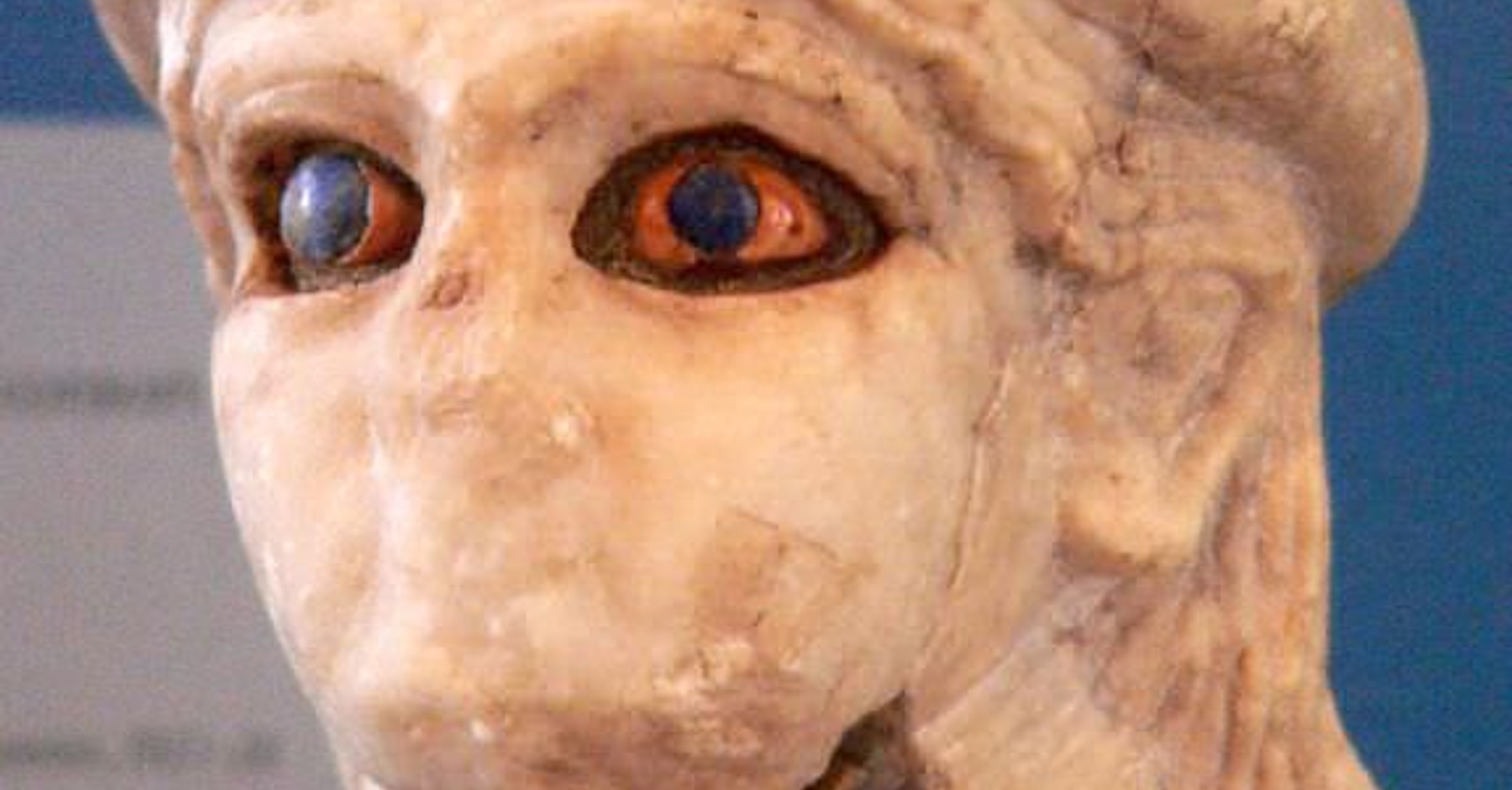
Behold the First Realistic Depiction of the Human Face (Circa 25,000 BCE)

The Venus of Brassempouy, a 25,000-year-old mammoth ivory carving, represents the earliest realistic human face depiction and marks the dawn of beauty in human culture.
fromMail Online
1 month ago

Ancient time capsule found in Iraq corroborates the Bible

King Nebuchadnezzar II himself 'speaks' in the text, proudly describing how he restored an old, crumbling stepped temple tower in the city of Kish that was dedicated to the Mesopotamian god and goddess of war, Zababa and Ishtar. He explained that earlier kings had built and fixed the ziggurat before, but it had fallen into disrepair again from age and rain.
History
History
fromMedievalists.net
1 month ago

East Roman Archaeology: Goals and Challenges, with Marica Cassis - Medievalists.net

Archaeology reveals material evidence of daily life, settlement patterns, and economic systems in the East Roman world that textual sources cannot provide, while facing challenges in establishing itself as a distinct field separate from classical and Islamic archaeology.
History
fromwww.thehistoryblog.com
1 month ago

1,000-year-old gold-filled tomb unearthed in Panama

A richly furnished elite Coclé tomb (800–1000 A.D.) at El Cano reveals ornate gold and ceramics, indicating centralized chiefdoms with long-distance exchange and ritual complexity.
fromMail Online
1 month ago

Mysterious symbols spanning the globe hint at a lost civilization

His investigation began after identifying recurring giant T-shapes, three-level indents, and step pyramids carved into ancient stones worldwide. 'These specific symbols that are built in different size proportions, and the symbols are found in ancient stones around the world, are not supposed to exist; no cultures are supposed to have any cross-platform,' LaCroix explained. The symbols appear in locations ranging from Turkey's Van region to South America and Cambodia.
History
History
fromOpen Culture
1 month ago

Ten Lost Roman Wonders: The World's Longest Tunnel, Tallest Dam, Widest-Spanning Bridge & More

Many major Roman constructions survive only as ruins or are entirely lost, with once-grand structures like Trajan's Bridge and Nero's Subiaco Dams no longer intact.
fromwww.thehistoryblog.com
2 months ago

Late Antique necropolis with deliberately broken pottery found in France

Adjacent to the masonry house is a burial ground in use from the 4th century through the first half of the 6th century. Approximately 60 individual inhumation burials have been unearthed, arranged in rows that are increasingly dense with graves as they approach the dwelling. The deceased were buried in cysts formed by reused tegulae (large clay roof tiles) or by rubble walls that supported wooden planks. They were placed in the graves in supine position facing west, north or south.
History
#ancient-mathematics
History
fromwww.theguardian.com
1 month ago

Apocalypse no: how almost everything we thought we knew about the Maya is wrong

Classic Maya lowlands likely supported up to 16 million people during AD 600–900, implying unprecedented population density, complex agriculture, and advanced urban organization.
History
fromwww.thehistoryblog.com
2 months ago

Bronze Age tombs with luxury imported goods found in Cyprus

Two 14th-century BCE chamber tombs in Larnaca contained locally made and widely imported luxury goods, demonstrating extensive long-distance trade networks.
History
fromWorld History Encyclopedia
2 months ago

Ur: the center of the Sumerian Renaissance

Ur was an influential Sumerian port city and ancient trade center in southern Mesopotamia with notable archaeological finds and contested biblical associations.
fromwww.thehistoryblog.com
2 months ago

Monumental Republican tombs found in Rome suburb

An monumental early Republican-era funerary complex has been discovered in a suburb of Rome. The excavation of the Via di Pietralata east of Rome also uncovered a stretch of an ancient road, a small cult building and two monumental basins dating back to the 3rd and 2nd centuries B.C. Remains from this early in the Republican era are scarce in the Eternal City, which make these finds very archaeologically significant.
History
History
fromwww.thehistoryblog.com
2 months ago

Unique bone box found in Roman-era grave

A tiny Roe-deer bone box with sliding lid and ring-and-dot decoration was buried as a prized cosmetic container in a Late Roman woman's grave.
History
fromWorld History Encyclopedia
2 months ago

Empress of the Nile: The Daredevil Archaeologist Who Saved Egypt's Ancient Temples from Destruction

Christiane Desroches-Noblecourt, a pioneering Egyptologist, rescued and preserved Egypt's ancient temples through scholarship, advocacy, and decisive cultural stewardship.
History
fromWorld History Encyclopedia
1 month ago

Mesopotamian Art and Architecture: The Birth of Art and Architecture in the Ancient World

Mesopotamian art and architecture began over 7,000 years ago, evolving from northern sites into Sumerian innovations and sustained through multiple ancient Mesopotamian periods.
History
fromwww.thehistoryblog.com
1 month ago

Phoenician scarab found at Nuragic site in Sardinia

A 2,700-year-old Phoenician steatite scarab seal from Lebanon was found at inland Nuragic Ruinas in Sardinia, indicating long-distance contacts and exchange.
fromwww.thehistoryblog.com
1 month ago

Rare Mithraic altars found in Scotland go on display for the first time

Two exceptionally rare and beautifully carved Mithraic altars found in Inveresk, East Lothian, Scotland, are going on display for the first time. They are not just the only Roman altars ever found in Scotland, but are among the finest examples of Roman sculpture in Roman Britain. They are also uniquely early in date, having been made in 140s A.D. during Antoninus Pius' reoccupation of southern Scotland, whereas most other archaeological materials related to the worship of Mithras in Britannia date to the 3rd century.
fromMail Online
2 months ago

Mystery of Egypt's pyramids deepens as hidden megastructure revealed

More than 200 scans from multiple satellites, including Italy's Cosmo-SkyMed and the US-based Capella Space, showed uniform results suggesting massive pillars about 65 feet in diameter wrapped in spirals and plunging nearly 4,000 feet deep. Those pillars appear to end in 260-foot cubic chambers beneath all three pyramids and the Sphinx, which Biondi described as 'huge chambers' measuring roughly 260 feet in length and width.
History
History
fromwww.thehistoryblog.com
1 month ago

Terracotta head found at Magna Roman Fort

A rare terracotta female head, likely a locally made copy of an earlier imported model, was discovered at Magna Roman Fort and is now displayed.
History
fromTime Out London
1 month ago

A new 'Cleopatra' immersive experience in London will be all about Ancient Egypt

Cleopatra: The Experience opens at Immerse LDN as a 3,000 square metre, nine-gallery immersive exhibition tracing the late Ptolemaic dynasty with artefacts, AR, VR and staged environments.
[ Load more ]