History
fromOpen Culture
3 days agoHow Everything in a Medieval Castle Worked, from Its Moats to Its Dungeons
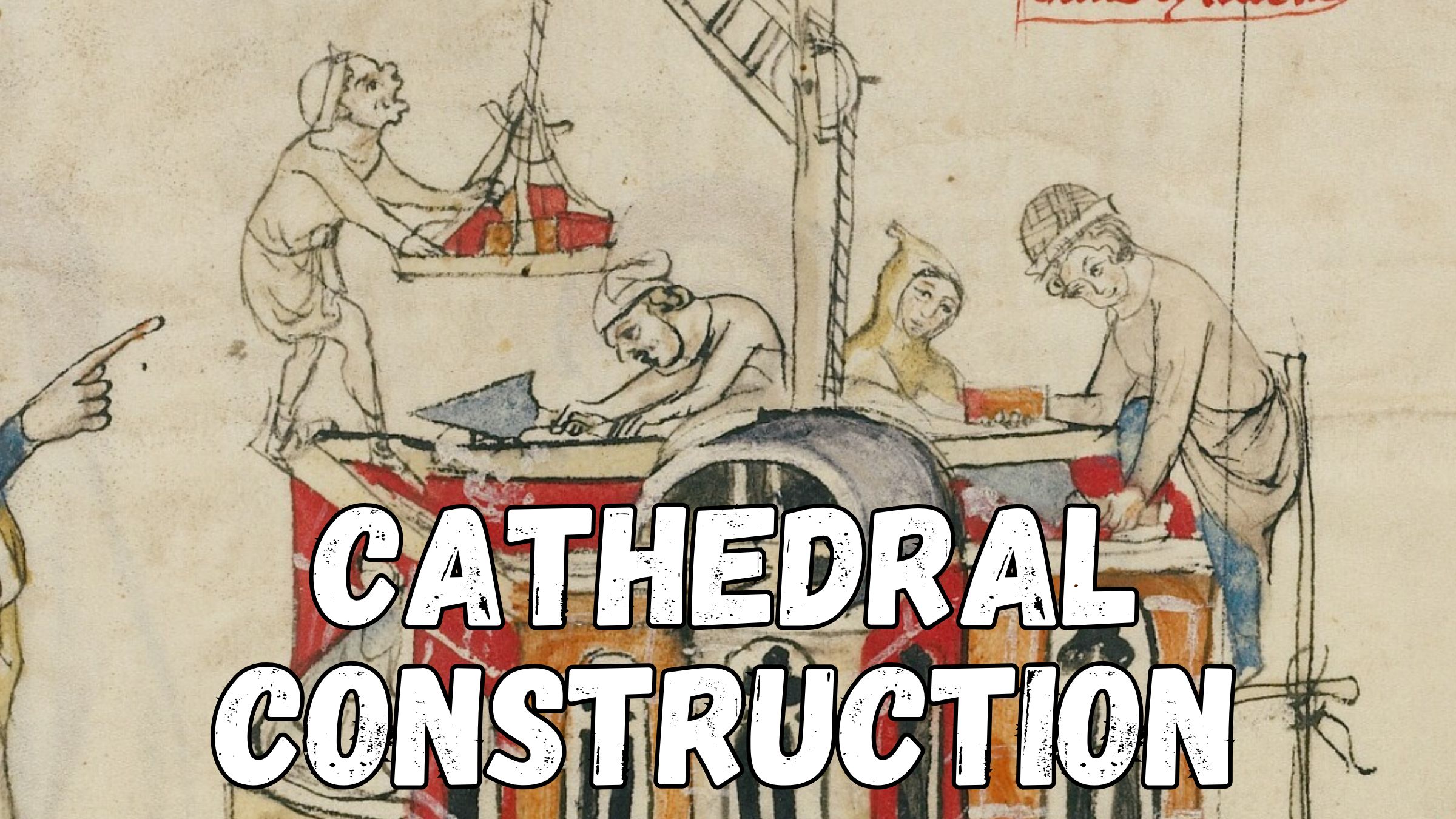
Medieval castles were complex structures designed for defense, featuring elements like barbicans, moats, and parapets.
The designation prohibits the sites from being targeted or used for military purposes, with violations potentially constituting serious breaches of the 1954 Hague Convention and grounds for criminal responsibility.
"It doesn't matter what [story] you want to tell-maps help bring it to life, they help you connect to spaces. And it has to be interactive. You have to be able to read, to click."
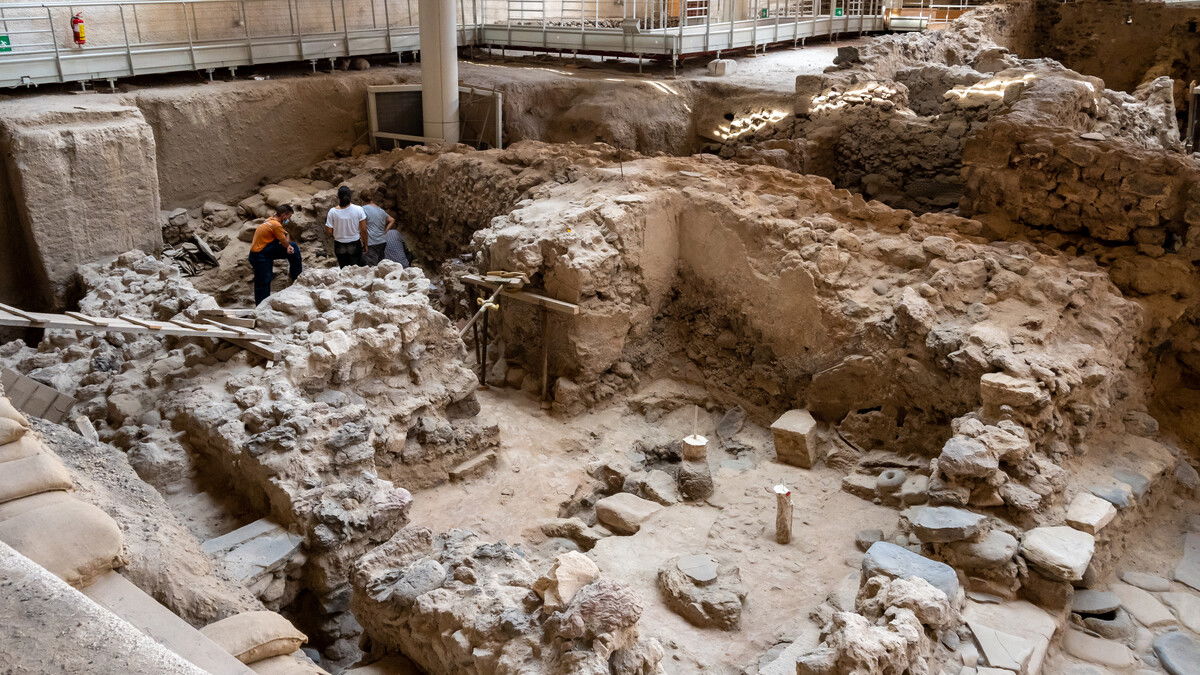
At least that's the mood director Gianfranco Rosi evokes in his mesmerizing documentary Pompei: Below the Clouds, which won a Special Jury Prize at the Venice Film Festival last year and is finally being released theatrically in the U.S., ahead of a March 27 streaming premiere on Mubi. The apocalypse Rosi presents is not just the legendary one that destroyed the ancient Roman town of the film's title but an ongoing one that encompasses the calamities of our modern era as well as the rejuvenation that sometimes accompanies destruction.
Singapore has a special way of blending old traditions with modern life, especially evident in its historic neighborhoods like Chinatown, Little India, and Kampong Glam. There, colorful shophouses, temples, and mosques sit alongside cafes and boutiques, while long-standing food and craft traditions remain part of daily life.
The most serious confirmed damage to date has been to Tehran's Golestan palace, dating back to the 14th century, and the 17th-century Chehel Sotoon palace in Isfahan. Judging from videos and public statements, neither historic building was hit by a missile directly but the shock wave from nearby blasts and possibly some missile debris, shattered glass and brought down tiles and masonry.
After the historical Iranian city of Isfahan was targeted by several major strikes, its governor Mehdi Jamalinejad claimed that serious damage had been inflicted even after blue shields were put on the roofs of culturally important buildings. This is an internationally recognized signal under the 1954 Hague Convention for the Protection of Cultural Property in the Event of Armed Conflict.
Seven were the strings of the lyre (unless there happened to be eight or nine), seven were the gates of Thebes, and seven were the "wandering stars" in the night sky (if you count the sun and moon). The identity of the wonders was less important than the length of their list, and indeed, additions and changes were proposed since the beginning.
Travelers often overlook tiny European countries, but, as I discovered on a recent trip to Luxembourg-Europe's seventh-smallest nation, with a population of just 699,000-there's much to discover in these hidden gems. Last summer, I visited my aunt, who has lived in Europe for over 20 years, with stints in Paris, Vienna, Zug, Switzerland, and now, Luxembourg. We spent three days touring the historic city nestled between Belgium, Germany, and France. It's built on a rocky plateau overlooking deep gorges, a sweeping canyon, and surrounding countryside.
From reproductive rights to climate change to Big Tech, The Independent is on the ground when the story is developing. Whether it's investigating the financials of Elon Musk's pro-Trump PAC or producing our latest documentary, 'The A Word', which shines a light on the American women fighting for reproductive rights, we know how important it is to parse out the facts from the messaging.
What makes this canopy special isn't just that it uses 3D printing technology, though that's certainly impressive. It's the way the designers thought about the entire system. Rather than simply throwing a roof over the tombs and calling it a day, they created what's essentially a climate-control system disguised as architecture. The canopy features a double-layer envelope that does way more than keep rain off ancient stone. Built into this roof are ventilation and air extraction components that actively regulate temperature and humidity.
Europe has never been short on spectacle. Yet beyond the headline cities and endlessly recycled itineraries lies a quieter, deeper continent; one that's best encountered through patience and a willingness to detour from the obvious itinerary. Our 7 wonders of Europe for 2026 in Europe are not places that beg for attention. Instead, they reward those prepared to explore more than a few miles from the nearest airport and linger a little longer than planned.
Onboard/Offboard is a series that explores the can't-miss highlights of our favorite cruises-from the shore excursions to book to the spa treatments too relaxing to pass up. A new ship sometimes needs time to work out the kinks, but at this point-more than 100 vessels later- Viking has the routine down pat. In early November, I boarded the Viking Vesta, the line's 12th ocean vessel, in Istanbul, a few months into service.
Two exceptionally rare and beautifully carved Mithraic altars found in Inveresk, East Lothian, Scotland, are going on display for the first time. They are not just the only Roman altars ever found in Scotland, but are among the finest examples of Roman sculpture in Roman Britain. They are also uniquely early in date, having been made in 140s A.D. during Antoninus Pius' reoccupation of southern Scotland, whereas most other archaeological materials related to the worship of Mithras in Britannia date to the 3rd century.
It's hard to name the best cities in Europe-there are so many great bustling hubs (not to mention charming small towns) spread across a relatively small continent, making it more a question of what you're looking for. Sure, some travelers just beeline to the best-known landmarks, eager for the chance to cross Rome's Colosseum or Paris's Eiffel Tower off their list. But we're in favor of taking a step back and asking yourself what you're most interested in.
Paris has long been considered the ultimate symbol of European beauty, romance, and culture. However, younger retirees, digital nomads, and lifestyle seekers are increasingly discovering that many smaller European towns offer equal or greater charm without the high costs and crowds. These destinations provide historic architecture, walkable streets, vibrant local culture, and stunning natural surroundings, often at a fraction of the price associated with major capitals. From coastal villages to medieval hill towns, Europe offers countless alternatives that feel authentic, relaxed, and deeply rewarding.
A 2026 travel report from Hilton identified "inheritourism" as a notable trend for the new year ― with 66% of travelers surveyed by the hotel brand saying that their parents have influenced their choice of accommodations, 60% saying they guided their choice of loyalty programs and 73% saying they shaped their general travel style.
More than 200 scans from multiple satellites, including Italy's Cosmo-SkyMed and the US-based Capella Space, showed uniform results suggesting massive pillars about 65 feet in diameter wrapped in spirals and plunging nearly 4,000 feet deep. Those pillars appear to end in 260-foot cubic chambers beneath all three pyramids and the Sphinx, which Biondi described as 'huge chambers' measuring roughly 260 feet in length and width.
The only building known to have been designed by Vitruvius himself was found under Piazza Andrea Costa in a preventative archaeology excavation before redevelopment. Unlike the ancient public building found in 2023 which was speculated to be the long-sought basilica, the newly-discovered structure matches the detailed description in Vitruvius' De Architectura. The accuracy with which the remains found coincided with Vitruvian descriptions left experts astonished.
An monumental early Republican-era funerary complex has been discovered in a suburb of Rome. The excavation of the Via di Pietralata east of Rome also uncovered a stretch of an ancient road, a small cult building and two monumental basins dating back to the 3rd and 2nd centuries B.C. Remains from this early in the Republican era are scarce in the Eternal City, which make these finds very archaeologically significant.


:max_bytes(150000):strip_icc()/TAL-header-aventine-hill-terrace-rome-ROMEHIDDENGEMS0126-642afc06aef6450098a63077ff43df8f.jpg)


:max_bytes(150000):strip_icc()/TAL-rhodes-old-town-RHODESGR0124-1453db92296f45a6a1add11c976d8fd9.jpg)