#hobie-harris
#hobie-harris
[ follow ]
#contemporary-art #art #architecture #sculpture #art-exhibition #brooklyn #exhibition #art-exhibitions #photography
fromHi-Fructose Magazine - The New Contemporary Art Magazine
3 days agoKyle Cobban Draws From The Unknown - Hi-Fructose Magazine
"It's an amalgamation of the Chicago neighborhood aesthetic with a Bulls fan, quite literally. It's kind of on the nose, but that's how I juxtapose the elements of my work, with the structure of a home and then a figure who is around or in the home."
Chicago Bulls
Graphic design
fromdesignboom | architecture & design magazine
2 days agohiggsfield brings art-directed quality to AI image generation at production scale
Higgsfield's Soul 2.0 revolutionizes AI photo generation for the creative industry, enhancing visual quality and efficiency in producing artistic imagery.
#art



Arts
fromIrish Independent
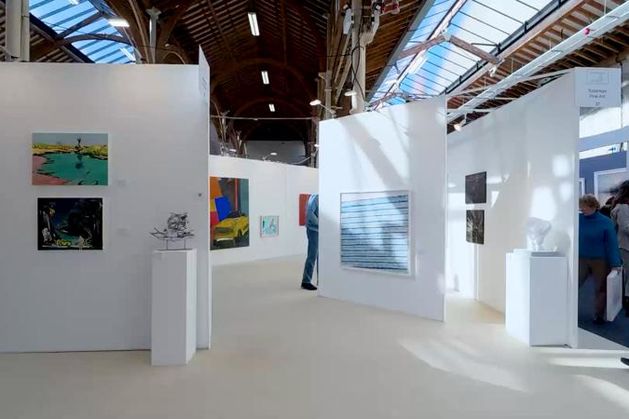
5 days ago'You have to step in and experience it' - artists on the rise of AI-generated art and the 'essential' gallery visit
Miriam Fitzgerald Juskova's exhibit combines paper quilling with mathematics, showcasing intricate art that engages viewers and emphasizes the value of handmade creations.


fromBrooklyn Paper
6 days ago'Embrace Winter': 14th annual Bay Ridge Art Walk draws crowds to Third Avenue * Brooklyn Paper
"This festival, 'Embrace Winter,' is now in its 14th year. We've hosted several events throughout the season, and this is our final one. Today we're here celebrating art, culture and community all coming together."
Brooklyn
Renovation
fromdesignboom | architecture & design magazine
6 days agopaul rudolph's historical walker guest house returns in exhibition curated by A$AP rocky
The Walker Guest House, designed by Paul Rudolph, is showcased in Los Angeles with original and modern design elements, highlighting its significance in American modernism.
fromTime Out New York
3 weeks agoThis free art show in the East Village spotlights awesome work from senior artists
The show features pieces by participants in JASA's programs. The organization, which serves more than 40,000 older adults every year, offers art classes and creative workshops designed to bring people together while encouraging self-expression. The results will be on full display here, from paintings and textile work to other handmade pieces that reflect the artists' personal stories and styles.
Miscellaneous
Arts
fromThe Art Newspaper - International art news and events
3 days agoPaul Pfeiffer will be inaugural artist-in-residence at Brooklyn's Barclays Center arena
Paul Pfeiffer will be the inaugural artist-in-residence at Barclays Center, focusing on media workshops for those affected by the criminal-justice system.
#contemporary-art

fromArtnet News
2 weeks agoArts
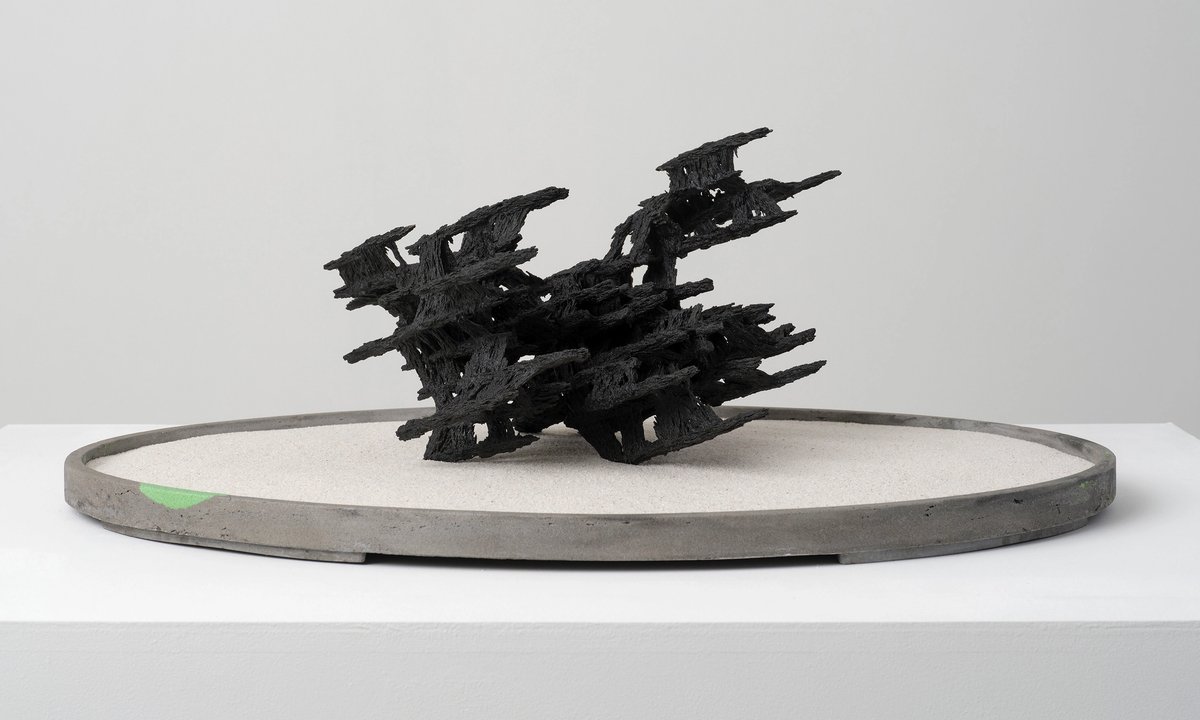
'New Humans' and the Strange End of Contemporary Art as We Know It | Artnet News
The 'New Humans' exhibition at the New Museum suggests contemporary art's project may be concluding, focusing broadly on future visions and modernist traditions rather than engaging with current technological anxieties.

fromHyperallergic
3 days agoThe Art World Is a Joke
Kamrooz Aram is everywhere this year, from Mumbai Art Week to the Whitney Biennial, and critic Aruna D'Souza is grateful. She pens a beautiful meditation on his work, reading his abstract paintings as not simply a denunciation of Western modernism nor a reassertion of Islamic visual motifs, but something else entirely - something gestural, exuberant, riotous, and incomparably his own.
Arts

Arts
fromThe Art Newspaper - International art news and events
2 weeks agoGullah artist Sam Doyle's narrative portraits stand out Outsider Art Fair in New York
Sam Doyle's paintings at the Outsider Art Fair showcase his unique cultural narratives and artistic style, reflecting Gullah heritage and significant historical figures.
fromArtnet News
2 weeks agoPeter Halley Returns to Austria with First Solo Show in Two Decades
In many ways working in the tradition of Kazimir Malevich and Josef Albers, his compositions employ a language of squares and rectangles known as "Cells" and "Prisons," connected by bold lines called "Conduits." Together, these geometric and linear arrangements tap into the inherent geometry that structure reality, and conceptually refer to the construction of everyday life, both public and private as well as physical and psychological.
Arts
fromwww.amny.com
1 month agoThe Modern Salon redefines art and brings quiet design authority to the Winter Show | amNewYork
In the midst of the fabulous The Winter Show last weekwhere connoisseurship, collecting, and cultivated taste converge under one vaulted roofthere was a moment of pause, exhale, and recalibration at the heart of the fair: the VIP Collectors Lounge. This year, not as sponsorship, but as philosophy made spatial. It was titled The Modern Salon. Conceived and designed by frenchCALIFORNIA, The Modern Salon rejected the trade-fair instinct toward visual noise and brand fragmentation.
Design
fromHyperallergic
2 weeks agoWhat Do We Really Think of the New New Museum?
The new New Museum is many things: contemporary, perhaps, but also a science, history, anthropology, and many other museums in one. It echoes the desire of its patron class to own the world and its affiliated courtier class to deliver it to them on a silver platter, or encased in perforated metal, in this case.
Arts
fromHyperallergic
3 weeks agoArt Problems: How Do I Get Gallery Representation?
Dealers like artists with established sales records because it lowers their already considerable financial exposure. Renting a gallery space in Tribeca costs anywhere between $8,000-30,000 a month on top of staff, marketing, and daily operations. With that kind of overhead, very few business owners can afford to take on the financial risk of untested artists.
Arts
fromHyperallergic
3 weeks agoEmbracing Friction in the Art World
On Franklin Street in Brooklyn's Greenpoint neighborhood, one non-commercial gallery fosters 'a small, stubbornly human space for friction.' Friction—the ubiquitous buzzword that captures the simultaneous delight and discomfort of doing things the slow way—is at the heart of artists Pap Souleye Fall and Char Jeré's current show at Subtitled NYC. It also reflects the overall spirit of this little exhibition space and of a burgeoning movement to reject our culture of optimization in favor of a bumpier, more intimate, less alienating experience.
Arts
[ Load more ]