#holy-land-christianity
#holy-land-christianity
[ follow ]
#jerusalem #holy-week #christianity #palm-sunday #baptism #archaeology #greece #christian-zionism #pilgrimage




:max_bytes(150000):strip_icc()/TAL-rhodes-old-town-RHODESGR0124-1453db92296f45a6a1add11c976d8fd9.jpg)
World politics
fromArchDaily
3 weeks agoCultural Heritage Sites in the Middle East Damaged as War Strikes Historic Urban Areas
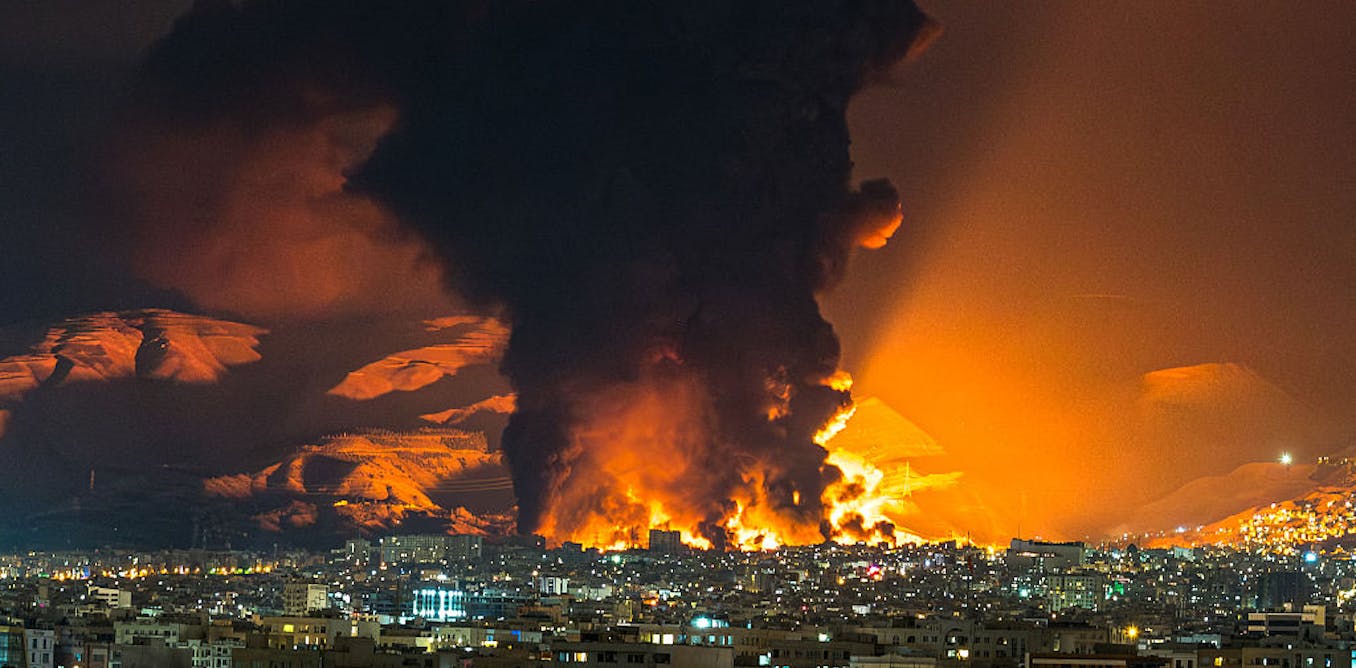
US-Israeli military attacks on Iran in February 2026 initiated a new Middle East conflict zone, joining multiple global armed conflicts causing widespread destruction of cultural and infrastructure assets.

fromMail Online
1 month agoKey Bible detail about Jesus' crucifixion confirmed after 2,000 years
According to the Gospel of John, Roman soldiers broke the legs of the two men executed alongside Jesus to hasten their deaths. But when they came to Jesus, they did not break his legs because they saw he was already dead. This detail has long intrigued historians and doctors because crucifixion victims often survived for many hours, and sometimes days.
Medicine
fromThe Conversation
3 weeks agoNotions of 'Christendom' often miss the mark - medieval Europe's ideas about faith and power were not so simple
Some citizens might see themselves as Christian nationalists simply because they are Christian and patriotic. Others, however, assert that the United States is rightfully a Christian nation that ought to be governed by Christian leaders, ethics and laws. As a historian, I'm aware that Christian nationalism relies upon a selective and often distorted view of American history.
Philosophy
Science
fromMail Online
1 month agoBiblical earthquake during Jesus' crucifixion confirmed
A 2012 geological study found seismic evidence near the Dead Sea suggesting earthquakes occurred around 31 BC and between 26-36 AD, potentially supporting the Gospel account of an earthquake during Jesus' crucifixion.
World news
fromwww.theguardian.com
1 month agoAl-Aqsa is a detonator': six-decade agreement on prayer at Jerusalem holy site collapses
A six-decade status quo at Jerusalem's Al-Aqsa/Temple Mount collapsed amid arrests, bans, and far-right-backed Jewish extremist incursions, raising risk of regional unrest.
Philosophy
fromThe Conversation
1 month agoThe apocrypha, Christianity's 'hidden' texts, may not be in the Bible - but they have shaped tradition for centuries
Apocryphal texts, though excluded from official biblical canons, significantly shaped early Christian tradition and provide valuable insights into early religious practices and beliefs.
Design
fromArchDaily
1 month agoNiall McLaughlin Architects Wins International Competition for Museum of Jesus' Baptism at Bethany, Jordan
Níall McLaughlin Architects won the international competition to design a museum at Al-Maghtas, Bethany, planned to open in 2030 marking the bimillennial of Christ's baptism.
fromThe Nation
1 month agoWalking the Camino in the Shadow of Belief
The particular Camino that I chose to follow-colloquially known as the Camino Frances, or French Way, since it starts at the base of the Pyrenees, the border between France and Spain-is the most famous of all the Caminos. Walking, on average, six to seven hours and 30 kilometers a day, I passed from the south of France into the north of Spain, walking westward through cities that included Pamplona, Logroño, Burgos, and Ponferrada, along with numerous small towns and villages.
Mindfulness
fromwww.dw.com
1 month agoItaly: Remains of St. Francis displayed in Assisi
For the first time in nearly eight centuries, the general public was able to see the remains of one of the Catholic Church's best-known saints. The patron saint of Italy's remains have been resting in a stone sarcophagus for centuries. On Saturday, the coffin was ceremoniously transferred from the crypt to the lower church of the Basilica of St Francis of Assisi. The display will last one month and end on March 22.
History
World news
fromThe Art Newspaper - International art news and events
1 month agoBill aimed at giving Israel control over all West Bank heritage sites sparks concern
Bill would establish Israeli civilian authority over West Bank antiquities, granting sweeping powers including land expropriation and council appointments, raising legal and political concerns.
fromMail Online
1 month agoJesus' Bible prophecies that came true are finally proven
Mathematician Peter W Stoner tackled this question in his 1960 book Science Speaks, calculating the odds of a single first-century individual fulfilling just 48 of these prophecies by chance. The result was staggering: one in 10 followed by 157 zeros, a number so vast it far exceeds the total number of electrons in the observable universe. To make the math easier to grasp, Stoner began with eight key prophecies, including being born in Bethlehem, descending from David, and performing miracles.
Philosophy
History
fromOpen Culture
1 month agoThe Dead Sea Scrolls: Discover the Secrets of the Bible's Oldest and Strangest Texts
Dead Sea Scrolls include the oldest known biblical manuscripts, diverse texts (biblical, apocryphal, sectarian, unknown) that complicated but did not completely upend understanding of Christianity.
fromMedievalists.net
1 month agoWhy were pseudo-Arabic inscriptions placed on churches in Greece?, with Alicia Walker - Medievalists.net
A conversation with Alicia Walker on the pseudo-Arabic inscriptions (or pseudo-kufic) that appear on a number of tenth- and eleventh-century churches in Greece, most notably at the monastery of Hosios Loukas. What did the Arabic script signify in Orthodox culture at the time if not tension with Islam? Alicia Walker is Professor of History of Art at Bryn Mawr College.
History
fromMedievalists.net
2 months agoByzantine Monastic Site Found in Upper Egypt - Medievalists.net
The team identified multiple buildings aligned roughly west-east, in several sizes, ranging from about 8 × 7 metres to 14 × 8 metres. Within these structures are rectangular halls-some interpreted as spaces for worship-alongside smaller rooms that may have served devotional or practical functions for the monks. Excavators also noted evidence of plastered wall surfaces and tiled floors, as well as architectural features such as entrances and surviving supports, including beams.
History
History
fromMedievalists.net
2 months agoFrom Holy War to Heritage: Places to Visit if You Want to Understand the Baltic Crusades - Medievalists.net
Baltic Crusades transformed the region through conquest, colonization and Christianization between the 12th and 15th centuries, leaving castles, churches and towns across the Baltic coast.
[ Load more ]