#humam-sakhnini
#humam-sakhnini
[ follow ]
#gaza #art #palestine #war #humanitarian-crisis #contemporary-art #israel #human-rights #resilience #community #iran






fromThe New Yorker
1 week agoIn "Yes," an Israeli Filmmaker Charges Israel with Self-Satisfied Brutality
Lapid's frenzied and disgusted vision emerges as he follows the fortunes of a young Tel Aviv couple—a jazz pianist known only as Y and a dancer named Yasmine. Their artistic background is overshadowed by their roles as sexy disco clowns at a big outdoor party for the rich and politically connected.
Music production

fromwww.npr.org
2 days agoThis fringe actor finds the spotlight in Israel's most provocative film post-Oct. 7
In the film, Bronz's character is commissioned to compose a new national anthem for post-Oct. 7 Israel, and writes a warmongering ballad about destroying Gaza and 'love sanctified in blood.'
Independent films
Film
fromwww.independent.co.uk
3 weeks agoGiant portrait of Gaza girl Hind Rajab appears on beach ahead of Oscars
A sand portrait of 5-year-old Hind Rajab appears on a Yorkshire beach to promote the Oscar-nominated film 'The Voice of Hind Rajab,' which documents her death during an Israeli military operation in Gaza City in January 2024.
World news
fromwww.aljazeera.com
2 weeks agoWhat the Iran war looks like from the occupied West Bank
While global attention focuses on Iran-Israel missile exchanges, West Bank Palestinians face ongoing settler violence, military raids, and daily restrictions amid falling shrapnel from regional conflict.
Russo-Ukrainian War
fromArtforum
3 weeks agoRoman Khimei and Yarema Malashchuk on image-making in wartime
Ukrainian artists document social transformation and wartime trauma through performance-based video work that challenges traditional documentary approaches and confronts death's instrumentalization in conflict.
fromwww.aljazeera.com
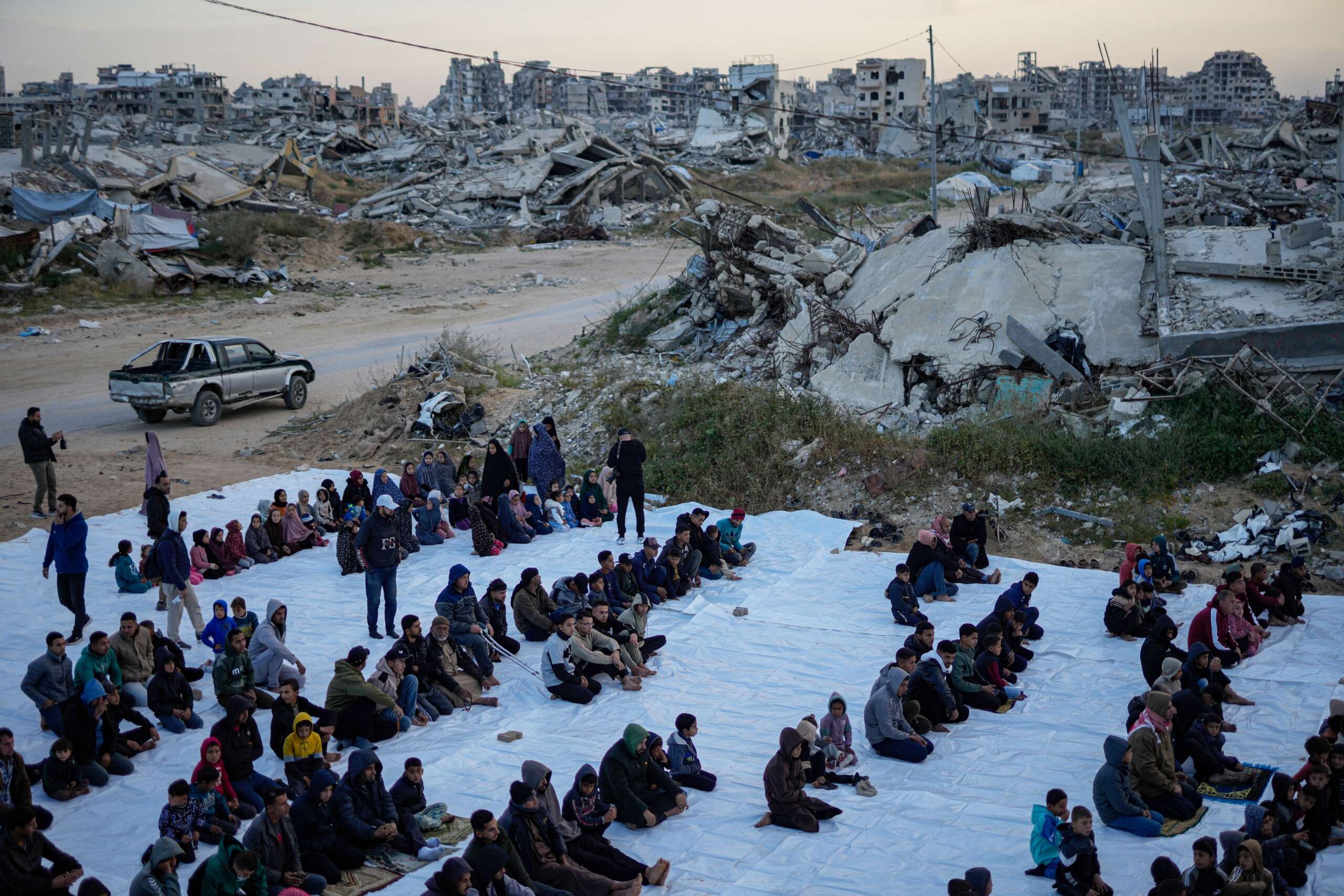
2 weeks agoQuran echoes loudly as Palestinian reciters gather in Gaza
Two hundred and fifty-six Quran memorisers—Palestinians who have committed the entire holy book to memory—sat in the place while companions beside them listened attentively, following each word carefully to ensure the recitation remained flawless. The gathering, titled Safwat Al-Huffaz—The Elite of Quran Memorisers, has become a special collective way of observing Ramadan in Gaza.
World news
Berlin food
fromwww.aljazeera.com
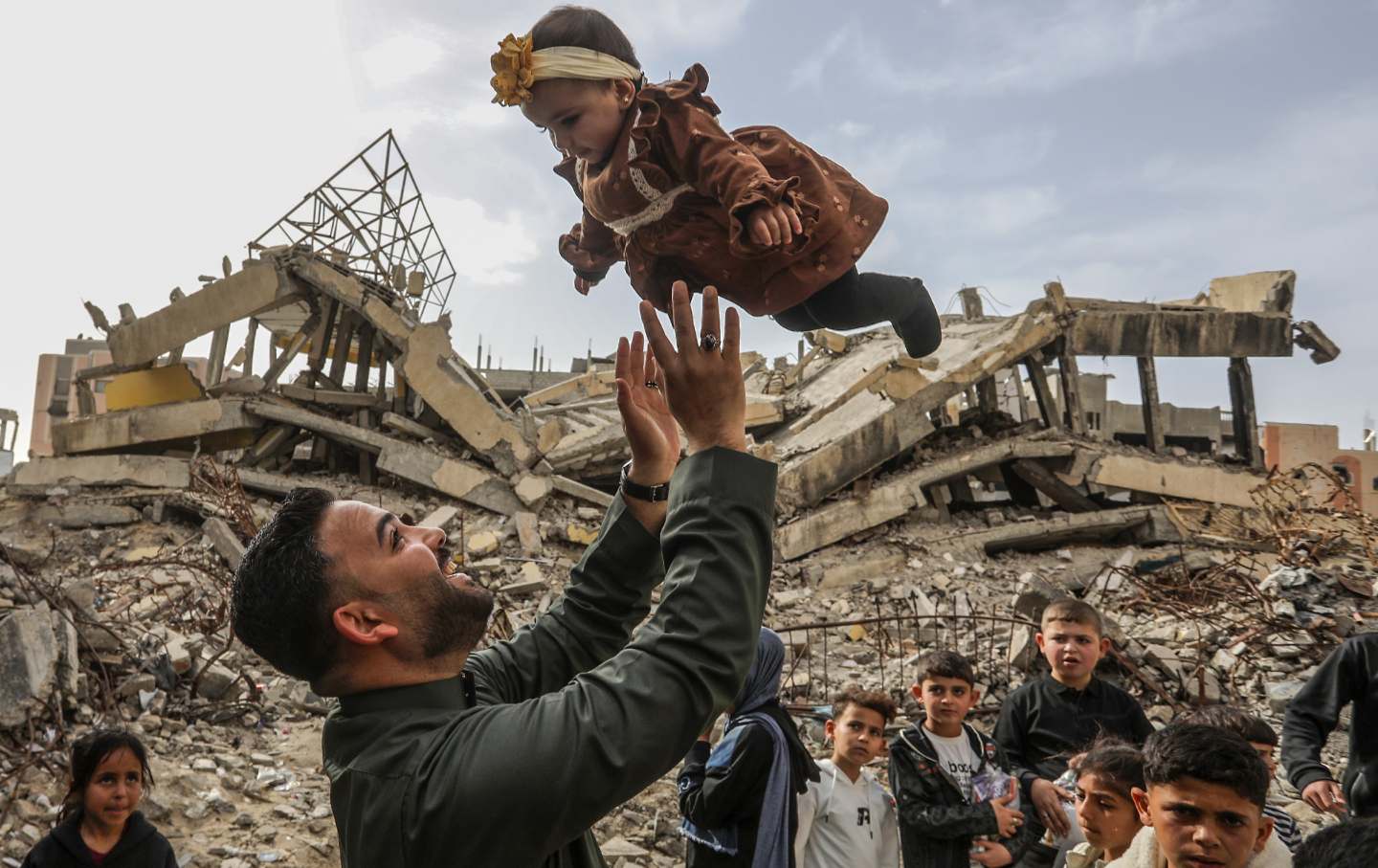
2 weeks agoBaking in rubble: Gaza woman keeps Eid traditions alive despite shortages
Gazans persist in baking traditional Eid cookies despite border closures, ingredient shortages, and lack of cooking gas, maintaining cultural traditions while generating income for families.
Writing
fromKqed
1 month agoA Glimpse of Iran Through the Eyes of its Artists and Journalists
Iranian-American artists and writers explore diaspora, identity, and historical trauma through poetry, fiction, and documentary, examining the lasting impact of political upheaval and U.S. intervention on Iranian communities.
#art

Arts
fromIrish Independent
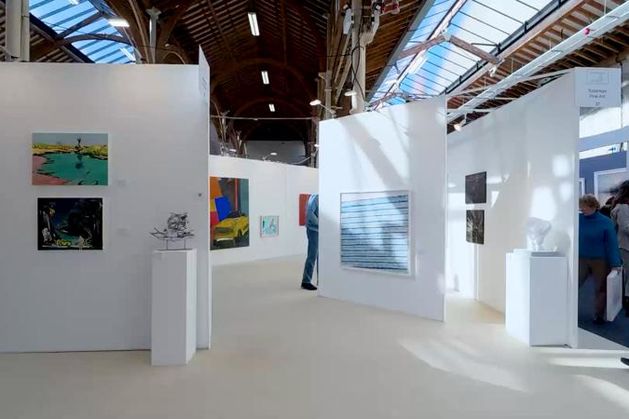
3 days ago'You have to step in and experience it' - artists on the rise of AI-generated art and the 'essential' gallery visit
Miriam Fitzgerald Juskova's exhibit combines paper quilling with mathematics, showcasing intricate art that engages viewers and emphasizes the value of handmade creations.
Independent films
fromConde Nast Traveler
4 weeks agoWhat It Took for Film Director Cherien Dabis to "Find Palestine Everywhere But Palestine"
Palestinian-American filmmaker Cherien Dabis promotes her Oscar-shortlisted film about Palestinian displacement, exploring intergenerational trauma shaped by movement restrictions and border constraints.
fromHyperallergic
1 week agoLebanese Artist Ali Sbeity Reportedly Killed in Israeli Strike
Ali Sbeity painted vibrant portraits and landscapes of his rural hometown in Southern Lebanon, often sharing his works on his Facebook. He participated in numerous local arts exhibitions and created murals for schools in Beirut.
Arts
fromThe Art Newspaper - International art news and events
1 week agoTextiles weave tales of Palestine's rich but troubled history
Textiles are a window into the communities that created them, with every motif and line signalling a different memory, tradition or identity. Often seen as folk art, these pieces of embroidery and weaving bring together dozens of narrative threads, from Japan to South America. But nowhere is it more fraught with meaning than in Palestine.
Arts
fromHyperallergic
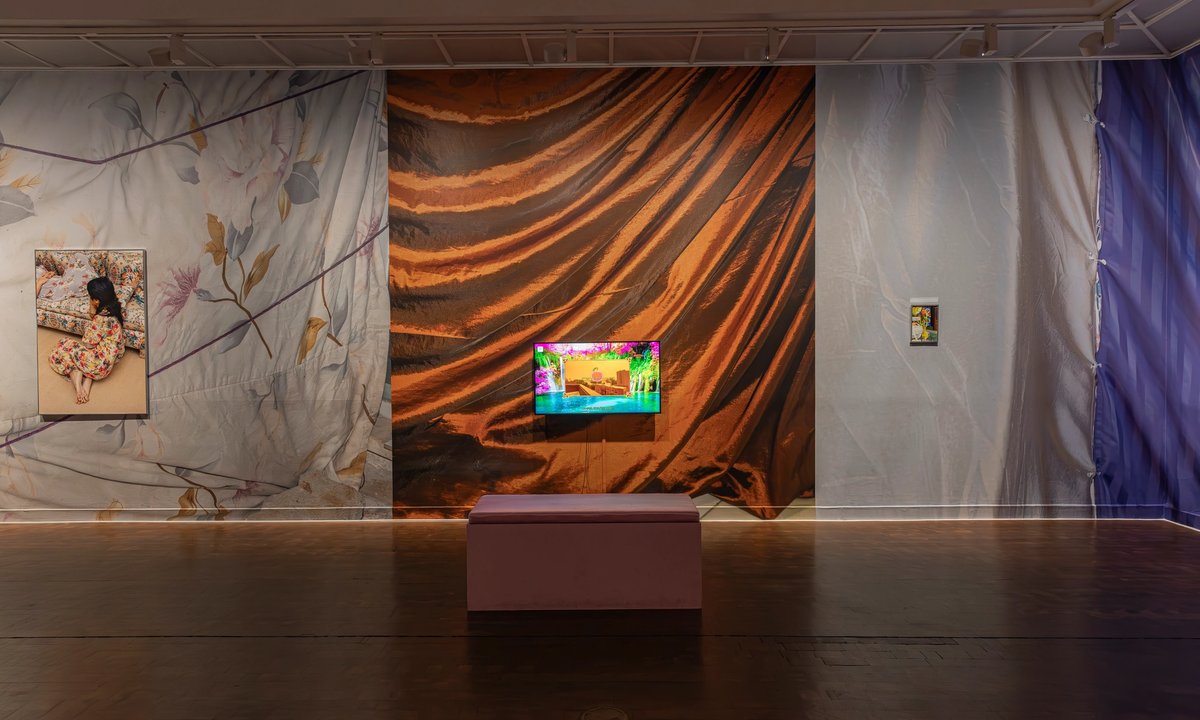
2 weeks agoWhen a Palestinian Artist Asserts Her Own Humanity
There is a scene in "Morgenkreis | Morning Circle" (2025), a 16-mm film by Berlin-based Palestinian artist Basma al-Sharif, that unfolds at the threshold of a daycare center. A young boy clings to his father, his fists locked into the fabric of his coat, his arms wrapped tightly around him. The father gently tries to pry himself free while a daycare worker crouches nearby, attempting to distract the child and coax him inside. It is an ordinary moment, one that anyone who has ever been a child - or cared for one - recognizes instantly, as well as the gut-wrenching feeling it provokes.
Arts
Arts
from48 hills
2 weeks agoFor Iranian artist Shiva Ahmadi, 'ornamentation becomes a form of resistance' - 48 hills
Shiva Ahmadi's interdisciplinary art practice channels personal experiences of displacement, political upheaval, and immigrant anxiety into visually seductive works that address brutal global issues affecting marginalized communities.
fromThe Local Germany
1 month agoDozens of film figures condemn Berlinale 'silence' on Gaza
The signatories include many artists who have presented work at the Berlin Film Festival. Swinton was herself last year awarded its prestigious Honorary Golden Bear award. They said they "fervently disagree" with Wenders's comments, arguing that filmmaking and politics cannot be separated. "Just as the festival has made clear statements in the past about atrocities carried out against people in Iran and Ukraine, we call on the Berlinale to fulfil its moral duty and clearly state its opposition to Israel's genocide," the letter adds.
Film
World politics
fromwww.theguardian.com
1 month agoSeven of my relatives were killed in Gaza. For me, Herzog's visit was never an abstract debate | Shamikh Badra
Australian state prioritized conferring legitimacy on a leader accused of incitement while suppressing peaceful protest and failing to address genocide-related legal obligations.
Design
fromwww.amny.com
2 months agoBetween Worlds': Musah Swallah art exhibit in Chelsea shows the transformation of surface into message amNewYork
Musah Swallah uses canvas, wood, and cork to foreground material history while making saturated color the structural, inheriting and advancing modern and African painting lineages.
fromwww.aljazeera.com
2 months agoGaza war docudrama The Voice of Hind Rajab nominated for Academy Award
The film tells the true story of Hind, who was killed by Israeli forces in 2024 as she and her family tried to evacuate Gaza City, blending recordings of real emergency calls with dramatic re-enactments. It draws on harrowing audio from Hind Rajab's call to the Palestine Red Crescent Society, in which rescuers tried to reassure her as she lay trapped in a bullet-ridden car with the bodies of her aunt, uncle and three cousins, who had all been killed by Israeli fire.
Film
fromTruthout
2 months ago"The Voice of Hind Rajab" Nominated for Oscar for Best International Film
The Voice of Hind Rajab has been nominated for an Academy Award for best international feature, a recognition for the Tunisian film that features the voice of a 5-year-old girl whose phone call begging for help was heard across the world before she was killed by Israeli forces in Gaza. The film is a mix of a documentary and drama that weaves in the recordings of Hind's phone call along with scripted, dramatized scenes of Palestinian Red Crescent dispatchers as they agonized over trying to save her. It was nominated alongside four other films.
Film
fromwww.aljazeera.com
1 month agoTo Die for Palestine Ep 2
A Chadian chemist and a British activist, both born in Jerusalem, vow to fight for Palestine by any means necessary even if it costs them death. Two men devoted their lives to the Palestinian resistance but paid the ultimate price. Bashir Jibril, born in Jerusalem to a Chadian family, joined the Popular Front for the Liberation of Palestine (PFLP) after the 1967 Arab-Israeli war. He trained military cadres and took part in the 1970 airliner hijackings, before being killed in a car bomb explosion in Athens in 1978.
World news
fromwww.aljazeera.com
2 months agoGaza is not a real estate fantasy
But urgency should never become an excuse for illusion, spectacle, or political shortcuts. The contrast between rhetoric and reality could not be sharper. While United States President Donald Trump and a group of world leaders gathered in Davos, Switzerland, to sign the charter of the so-called Board of Peace and unveil glossy reconstruction plans, the killing in Gaza continued. Since the ceasefire came into effect on October 10, no fewer than 480 Palestinians have been killed.
World news
fromHyperallergic
1 month agoQueer Arab Artists on Their Own Terms
"The show is about giving the pen back to the writer, giving the paintbrush back to the artist, during this time of genocide," the Ridikkuluz told Hyperallergic in an interview at the gallery. "And when there's been so much censorship, these are artists that might not have been able to do this anywhere else."
Arts
fromHyperallergic
2 months agoPalestinian Embroidery Today
The ongoing repression of dissidents in Venezuela following the US attacks reminds us that President Trump never had the interest of the nation's people at heart. The painful reality of many immigrants is one of being caught between dehumanizing forces in their native countries and in exile, and reduced to abstractions in an increasingly unnuanced "discourse" that flattens lived experience.
Arts
fromHyperallergic
2 months agoMs. Rachel Sells Artworks by Children From Gaza
In her latest effort to raise funds for Palestinian children, Rachel Accurso, the early childhood educator and YouTuber best known as Ms. Rachel, will present an exhibition and sale of artworks by children from Gaza in New York City this week. Accurso, whose joyful educational videos have surpassed as many as one billion views, has vocally opposed Israel's genocide in Gaza, and particularly the killing of children, on her popular social media platforms, drawing significant right-wing backlash and harassment.
Arts
[ Load more ]