#im-pei
#im-pei
[ follow ]


Design
fromdesignboom | architecture & design magazine
2 days agoreversible cultural pavilion activates public space in frankfurt 2026
Spain's pavilion for World Design Capital 2026 emphasizes reversible cultural infrastructure and sustainable design through innovative materials and construction methods.
Berlin music
fromArchitectural Digest
11 years agoThe 34 Best Frank Gehry Buildings That Everyone Should Know
Frank Gehry revolutionized contemporary architecture through sculptural, dynamic designs that transform cities economically and culturally, exemplified by the Guggenheim Museum Bilbao and its catalyzing 'Bilbao Effect.'
fromArchitectural Digest
2 years agoBrutalist Architecture Is Divisive-Here's Everything You Need to Know About the Style to Determine Your Stance
The style is characterized by raw, exposed concrete and bold geometric forms. You've certainly seen it before in many cultural and civic buildings built between the 1950s and '70s. With countless examples spanning countries and continents, the look has both historical significance and remains popular-particularly in residential design-today.
Miscellaneous
Berlin
fromArchDaily
1 month agoEthiopian Modernism: Mid-Century Architecture of Africa's Capital
Architectus won the 2026 World Monuments Fund/Knoll Modernism Prize for conserving Africa Hall in Addis Ababa, highlighting underappreciated Modernist architecture across Africa and Ethiopia's significant twentieth-century architectural heritage.
Design
fromYanko Design - Modern Industrial Design News
4 days agoBiomimetic Architecture Reaches New Heights With This Bird-of-Paradise Yoga Space - Yanko Design
Thilina Liyanage's architecture translates animal gestures into functional designs, exemplified by the Rifle Bird Yogashala inspired by the Victoria's riflebird's courtship display.
fromdesignboom | architecture & design magazine
5 days agophilippe starck plans nha estate as a coastal village of breezy villas in vietnam
Each Philippe Starck-designed villa begins with a grounded base formed in stone to give weight to the lower levels and establish a tactile connection to the earth. Above, the architect designs lighter structures, where glass and slender framing open the interiors toward the horizon.
Renovation
fromLos Angeles Times
15 years agoModern notes grace a historic pedigree
Designed by noted residential architect Roland E. Coate, the home was built in 1926 for Annie Wilson, daughter of pioneering Southern California businessman and politician Benjamin Wilson, for whom Mt. Wilson is named. The gently sloping 1-acre-plus property was once part of the vast holdings of George S. Patton, father of the famed U.S. general.
LA real estate
fromConde Nast Traveler
1 month agoArchitect Andre Fu Shows Us Around His Native Hong Kong
With a cornucopia of credits to his name-having designed some of Asia's hottest new hotels including the Waldorf Astoria Osaka, Capella Taipei, and Upper House Hong Kong; restaurants like Duddell's and Estro in Hong Kong; and even furniture for Louis Vuitton-Fu needs as much artistic inspiration as he can get to fuel his work. Fortunately, he doesn't have to go far in this dynamic city: "There's the ultramodern and chic, yes, but the city's spirit is rooted in places that are grounded and authentic," he says.
Travel
Arts
fromThe Art Newspaper - International art news and events
1 month ago'It doesn't put walls around everything': behind the plans for Manila's new contemporary art centre
The Ayala Foundation is developing Kontempo Center for Contemporary Art in Manila, led by artistic director Reuben Keehan, emphasizing exhibitions and public programming over permanent collections.
fromdesignboom | architecture & design magazine
1 month agored and white geometric sports complex emerges along daixi's riverfront
The project is structured around the concept of 'Abstract Landscape,' drawing from principles in Chinese landscape painting that prioritize spiritual interpretation over literal representation. Rather than replicating historical forms, the design translates landscape qualities into geometric compositions and spatial sequences. Abstract volumes reference the condition of distant mountains and nearby waters, while controlled color contrasts establish a clear visual framework.
Miscellaneous
fromArchitectural Digest
1 month agoThis Walter Gropius Wonder Narrowly Escaped Demolition-and Gained a Stained Glass Masterpiece
Gropius, who from 1919 to 1928 directed the Bauhaus in Weimar and Dessau, designed the house in 1921-22 for lawyer Fritz Otte. The property is considered a dramatic evolution of Gropius's earlier seminal Haus Sommerfeld, which was also located in Berlin, but destroyed in World War II. The Bauhaus founder embraced a forward-looking approach with an unadorned, sharp-edged structure that rejected the heaviness of 19th-century historicism.
Berlin
fromThe Architect Elevator
2 months agoThe Mighty Metaphor
The Architect Elevator is a metaphor-in reality, the company leadership may be sitting on the same building floor as you; my car metaphors could fill an entire book; and " Architecture is Selling Options " has become the anchor of many architecture keynotes. So, at least my world of architecture is full of metaphors.
Software development
Travel
fromArchitectural Digest
1 month ago15 Architectural Destinations to Add to Your Must-Visit List in 2026
Malacca and Macau showcase diverse architectural and cultural fusion from Portuguese, Dutch, Chinese, Malay, and international influences, attracting culinary tourism and major casino-driven economies.
France news
fromOpen Culture
1 month agoHow This Skyscraper Ruined Paris, and Why They're Now Trying to Make It Invisible
Tour Montparnasse symbolizes Parisian modernity and commercialism but remains widely disliked as the city's lone central skyscraper, contrasting with celebrated landmarks like the Eiffel Tower.
fromAeon
2 months agoFrom Michigan to Singapore, a meditation on dreams built on sand | Aeon Videos
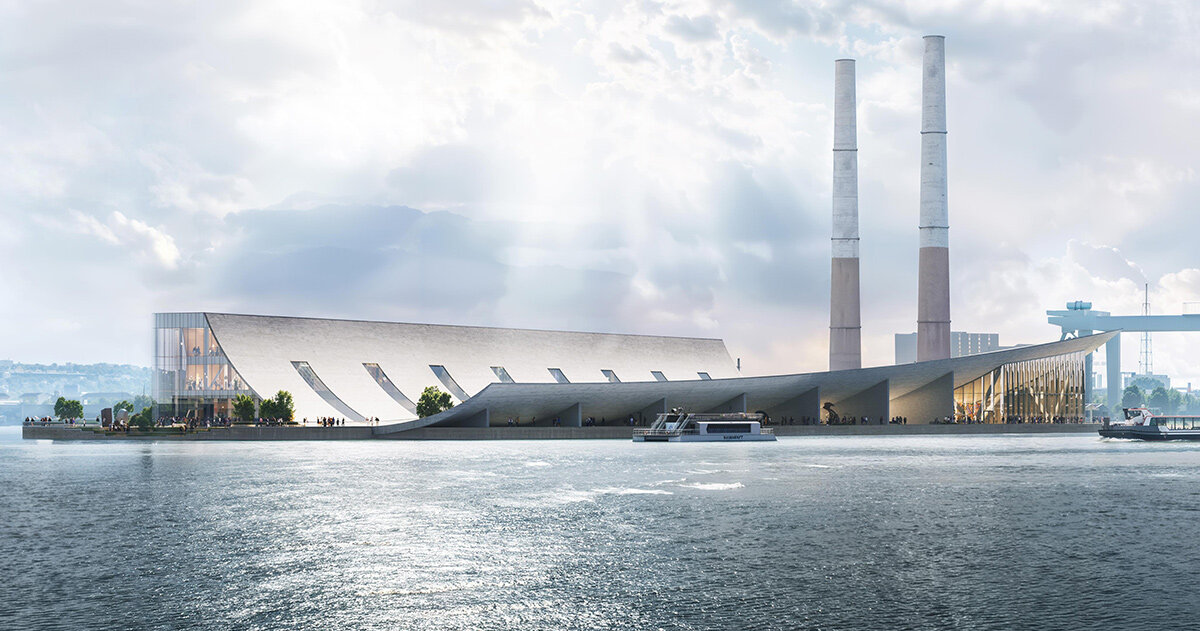
A sprawling tale of two Singapores, the short documentary Sandcastles draws connections between Singapore, Michigan - a 19th-century ghost town swallowed by sand following widespread deforestation - and the island country of Singapore, where rapid development and land reclamation has, for decades, been enabled by the importation of sand. More poetic exploration than call to action, the work surveys waterways, cycles of development and the transient nature of sand - deceptively sturdy over short timescales but, over decades, quite volatile.
Philosophy
Design
fromdesignboom | architecture & design magazine
3 weeks agoasia's leading international design show returns to the historic shanghai exhibition centre
Design Shanghai's 13th edition showcases 500+ brands from 20 countries, positioning Chinese creativity globally while celebrating East Asian craft heritage and contemporary design innovation.
fromThe Art Newspaper - International art news and events
2 months agoFrom shopping malls to housing estates, Singapore Biennale integrates art into the city's urban fabric
"The idea is that intention is not the whole story," says Selene Yap, a co-curator of the Biennale. "Systems can generate a certain kind of afterlife, and there are side effects." While the waterfall impresses, it also has consequences, she adds. The work uncovers how Singapore imports hydropower through transnational infrastructure, including the Vajiralongkorn Dam, whose construction has displaced Thailand's indigenous Karen hill tribe, forcing many to live in floating homes on the reservoir.
Arts
Design
fromdesignboom | architecture & design magazine
1 month agorepetitive vertical fins enfold concrete structure embedded within thailand's mountainscape
SIM STUDIO embeds a linear concrete structure in Thailand's mountainous terrain using repetitive vertical fins as climatic filters, spatial organizers, and structural elements that frame views and regulate light.
fromHyperallergic
2 months ago"Sandcastles" Tells the Tale of Two Singapores
Singapore, Michigan, was a thriving lumber town in the late 1800s, until erosion from mass deforestation caused the surrounding sand dunes to shift and swallow it whole. Yet just as quickly as the town disappeared under sand, its namesake in the East emerged from it: Around the world, Singapore is renowned for its use of land reclamation - importing sand to increase landmass and spur urban development.
Arts
fromRemodelista
1 month agoBauhaus Beauty: A 1930s-Inspired Design for a 700-Square-Foot Pied-a-Terre in Warsaw - Remodelista
We didn't have any specific guidelines; rather, there was complete trust and a lot of fun. Since they're my friends, we understood each other very well. That creative freedom led to a complete transformation of the small apartment, which is in a modernist townhouse from the 1930s.
Renovation
Arts
fromThe Art Newspaper - International art news and events
2 months agoOur pick of the top shows during Singapore Art Week
Basoeki Abdullah's portraits and state gifts exemplify artist-led diplomacy and high-society influence, highlighted by a Singapore-focused exhibition and complementary public programmes.
Design
fromArchDaily
1 month agoUnbuilt Visions for the Centre Pompidou Presented at "Concours Beaubourg 1971" Exhibition in Paris
Paris exhibition displays about 100 archival documents from the 1971 Beaubourg competition, revealing alternative proposals and the lasting influence on Centre Pompidou and architecture.
fromdesignboom | architecture & design magazine
2 months agocurved glass atriums penetrate residence's aluminum roof in bangkok
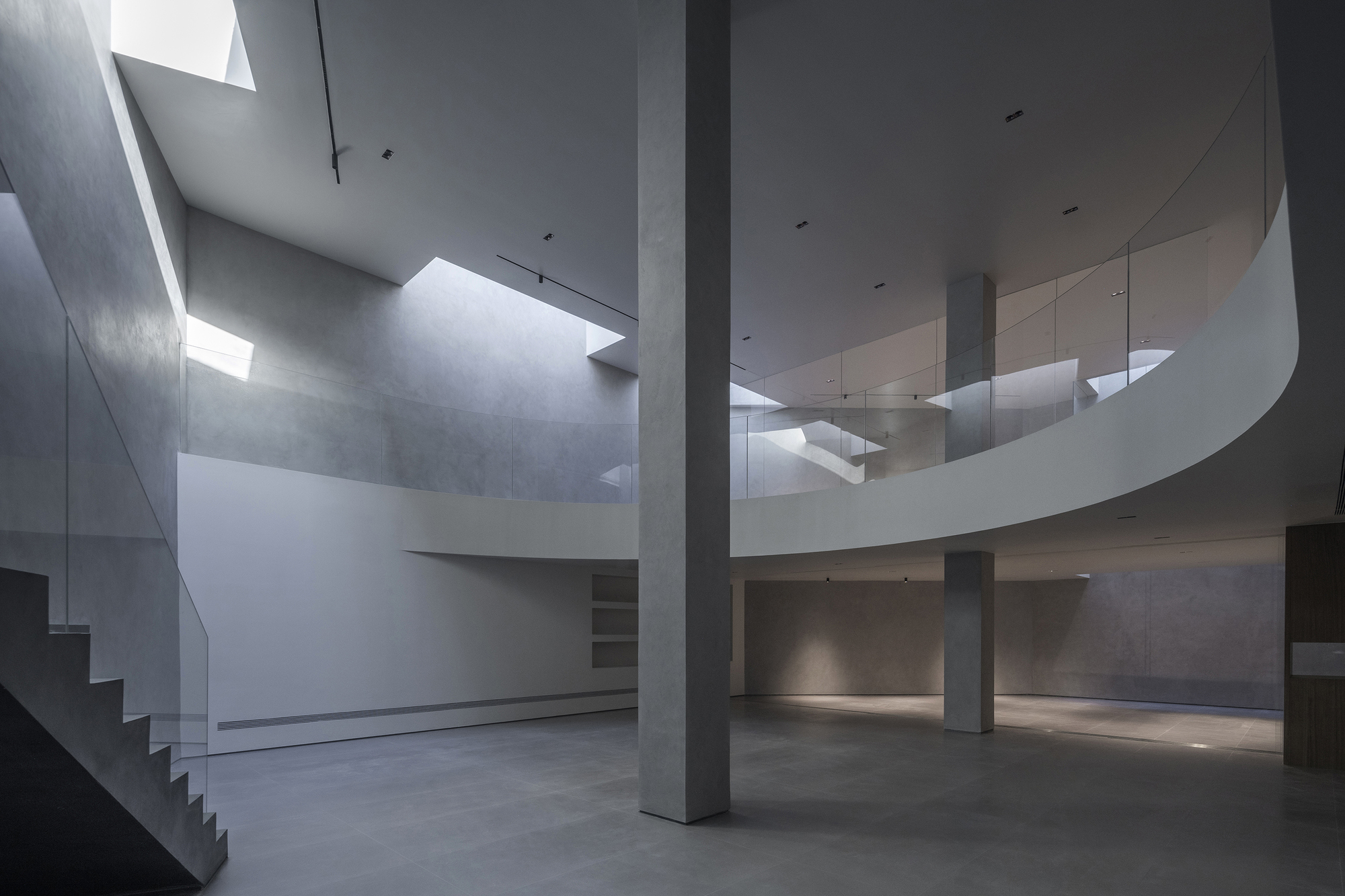
This elongated entrance sequence establishes a gradual transition from the public urban environment to the private domestic space. Enclosed by stone walls and a timber ceiling, the passage leads into a double-height living area that opens onto the central courtyard, creating immediate visual and spatial continuity across levels. The courtyard functions as the core of the house, mediating environmental performance and spatial organization.
Design
Design
fromdesignboom | architecture & design magazine
2 months agoa 1930s chair is the architectural inspiration for gad's nature experience center in china
A free-form roof floats like a cloud, allowing relaxed, locally adapted architecture that grows from alpine terrain and frames mountain, village, and water landscapes.
Design
fromdesignboom | architecture & design magazine
2 months agorow of circular red panels lines the facade of cafe on-site by aptdotapt in china
Dual facades use semi-cylindrical volumes and openable rear tracks to filter urban noise and pollution while seamlessly expanding the café into the adjacent park.
fromArchDaily
2 months agoRevisiting 2025: 20 Classic Projects and Defining Stories in Architecture
Every architectural project is the result of deliberate choices. Beyond form and function, buildings embody technical, political, and cultural decisions that shape their relationship with both their surroundings and the people who inhabit them. ArchDaily's AD Narratives series explores these processes by bringing together accounts that trace projects from initial conception to built realization. In parallel, the AD Classics series turns to works of historical significance, presenting not only the stories behind these buildings but also technical drawings
Design
fromArchDaily
1 month agoPlayful and Ironic: The Legacy of Postmodernist Architecture in the United States
Postmodernism began as a critique of modernism's exhausted promises. By the late 1960s and early 1970s, many designers no longer treated modernism as radical or socially redemptive. Urban renewal projects accelerated the demolition of historic neighborhoods, and landmark preservation battles raised urgent questions about what the United States valued and, ultimately, protected. The loss of major civic icons, including New York's Penn Station, sharpened public awareness that progress often arrives through erasure.
Design
Design
fromdesignboom | architecture & design magazine
2 months agorippling metal roof drapes over interlocking stone volumes of vietnamese cafe
Asymmetrical interlocking volumes and a sloped, westward roof with layered metal cladding create a sun-shaded, material-rich café that encourages movement and slow rhythms.
Design
fromdesignboom | architecture & design magazine
2 months agophilippe starck exhibition in paris traces eco-design from housing to furniture and objects
Philippe Starck transforms eco-design from decorative motifs into actionable, systemic approaches that reframe housing, resource use, memory, and everyday life.
fromdesignboom | architecture & design magazine
2 months agovespa-inspired curved geometry shapes vietnam residence clad in wood
The project's design concept originates from the upper-level bedroom, conceived as a personal retreat oriented toward the sky and surrounding rooftops. Located on the third floor, the room is defined by a large glazed opening that frames views outward while allowing daylight to penetrate deep into the interior. The window opening is proportioned to resemble a simple hut-like frame, reinforcing a direct visual relationship with the sky and an existing mango tree preserved on the site.
Design
[ Load more ]