#in-flight-wine
#in-flight-wine
[ follow ]
#air-travel #cocktails #wine-tourism #winemaking #sparkling-wine #tannins #comfort-food #alaska-airlines
fromTravel + Leisure
3 days agoThe Best Cocktail to Order on a Flight, According to Science
"Our study confirmed that in an environment of loud noise, our sense of taste is compromised. Interestingly, this was specific to sweet and umami tastes, with sweet taste inhibited and umami taste significantly enhanced," Robin Dando, one of the study's authors, told the Cornell Chronicle after the study came out.
Boston food
fromTravel + Leisure
1 day agoWe Asked 8 Food and Beverage Experts for the Best Thing to Eat on a Cruise-and They All Picked the Same Kind of Food
Marisa Christensen, Holland America's associate vice president of food and beverage operations, directs guests to the line's Dive-In burger. 'It's made fresh to order, incredibly satisfying, and so easy to enjoy right after embarkation when you're settling in.'
Silicon Valley food
#alaska-airlines
:max_bytes(150000):strip_icc()/TAL-header-alaska-airlines-international-business-class-AKAIRBUSNSCLASS0426-e220f6720ece45b5a53f025167fe7b2c.jpg)
Travel
fromwww.businessinsider.com
4 days agoAlaska is rolling out a new business-class experience as it expands further into Europe and Asia. Here's what to expect.
Alaska Airlines is enhancing its 787 business class to compete with major US carriers by introducing new amenities and a distinct identity.

fromEater Portland
2 weeks agoHead to This Sellwood-Moreland Wine Bar for Fluffy Focaccia
The signature bar snack (or as the menu playfully puts it, "snak") here is Sinclair's riff on Chex Mix, which incorporates crunchy ramen noodles, almonds, and spicy-oily Sichuan chile crisp ($12). You'd be remiss not to order some of Sinclair's fluffy focaccia. I had it as part of the Rosemary's Other Baby plate, which came with a rosemary-laced tomato jam that the owner thriftily imparts added flavor from the bar's wine.
Portland food
fromTravel + Leisure
3 weeks agoUnited Teams Up With Netflix's 'Chef's Table' for Elevated In-flight Dining From 11 Global Chefs
This collaboration represents an unprecedented look at how we can elevate the inflight dining experience, bringing the culinary brilliance featured on Chef's Table to the skies. By partnering with United, we are turning a global culinary journey into a reality for millions of passengers.
LA food

Cocktails
fromTasting Table
2 weeks agoWhat Makes A Celebrity Liquor Worth Buying, According To A Master Mixologist - Tasting Table
Celebrity liquor quality varies widely, with success depending on genuine distiller partnerships rather than marketing alone, as consumers quickly identify inferior products.
Paris food
fromTravel + Leisure
3 weeks agoThis French City Is a Wine Lover's Dream Just 2 Hours From Paris
Bordeaux has transformed into a cultural and culinary destination attracting Parisians, accessible via two-hour TGV train rides and offering wine experiences, museums, luxury hotels, and fine dining.
fromThe Mercury News
3 weeks agoVicinity sommelier pours some of his own vintages at Los Gatos restaurant
The minerality is off the charts, exuberantly defining the wine after a barrel fermentation of nine months on the lees in 85% American and 15% French oak. This unicorn wine demonstrates exceptional quality and craftsmanship in its production and flavor profile.
Silicon Valley food
Miscellaneous
fromCalifornia Post
1 month agoWhat crisis? Napa Valley finds unique way to fight back as wineries wither
Luxury wine experiences in California now focus on exclusive, immersive storytelling that transforms visitors into lifelong customers through private access and personal connections with winemaking families.
:max_bytes(150000):strip_icc()/TAL-mimosa-on-airplane-BSTFLIGHTDRINKS0126-fc687bbbcdc34dbab5dd4edfef91b605.jpg)
fromTravel + Leisure
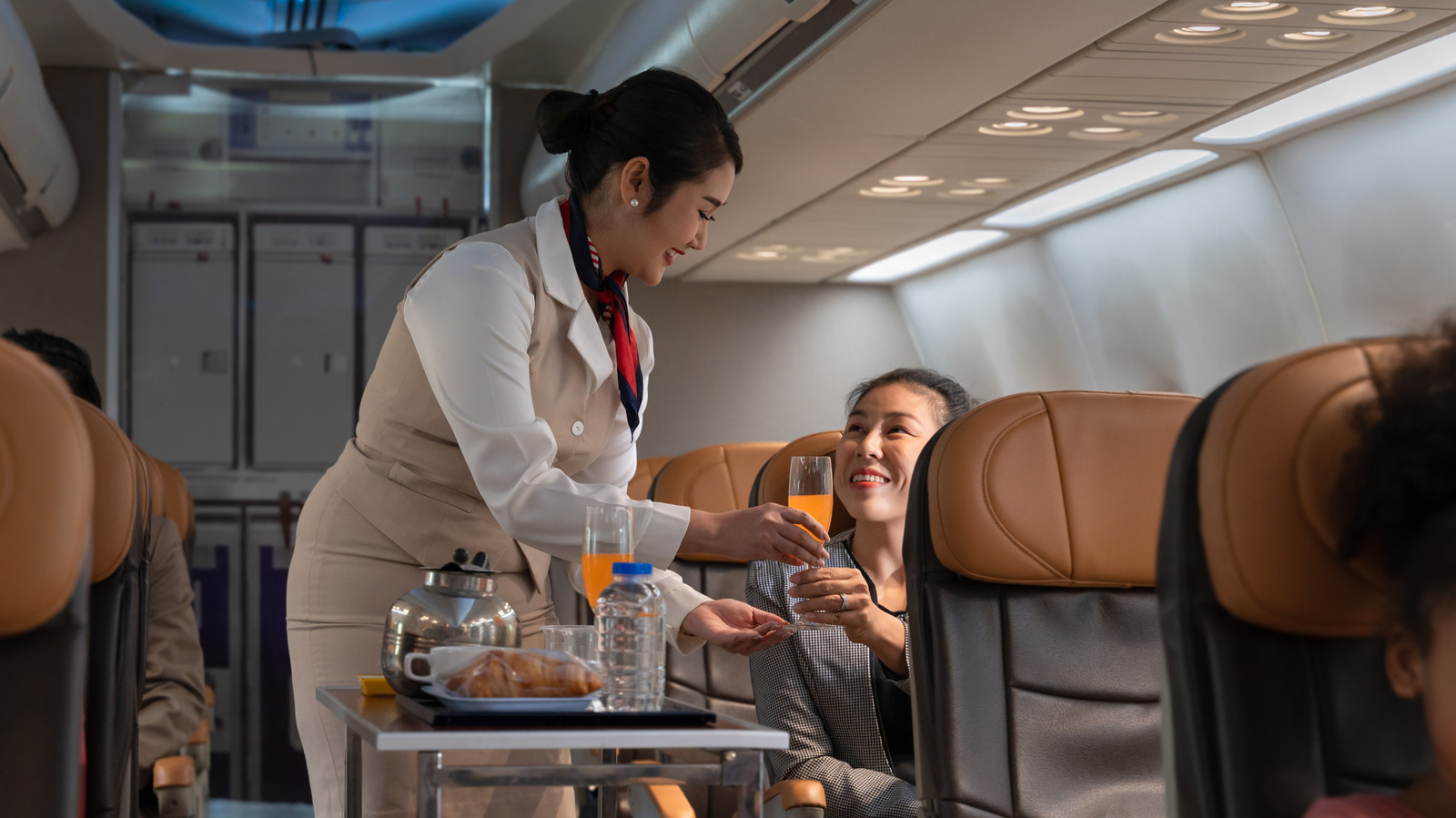
1 month agoWe Asked 6 Wine Experts What They Drink on a Flight, and They All Agree on This Beverage
"airlines have really stepped up their game. I've spotted bottles on beverage carts that I'd have to hunt for on the ground, which tells me they're working with people who actually know wine. They have a captive audience at 35,000 feet, and they could easily rely on subpar offerings. So when an airline chooses to stock something genuinely good, it says a lot."
Food & drink
Wine
fromABC7 Los Angeles
3 weeks agoFrom fish sauce to fine wine: Red Boat's new venture
Cuong Pham, a former Apple engineer, launched Red Boat Fish Sauce in 2011 after discovering his mother's ancestral ingredient, creating a celebrated artisan condiment now beloved by chefs and home cooks worldwide.
fromGastropoda
13 years agoWine steaks
Former consort braved the newly reincarnated Absolute Bagels & bailed when he found 45 people in line, in the cold. One of our oldest friends, who retreated to the Bay Area long ago, always used to say: "The more New Yorkers get fucked, the more they like it." Now with more Instagram...
New York City
Books
fromFood & Beverage Magazine
1 month agoBookish Wine: Where Romantasy, Art, and Wine Collide - Food & Beverage Magazine
Bookish Wine pairs special-edition romantasy novels with bespoke Sonoma wines to create a limited-release, collectible, immersive reading-and-tasting experience for romantasy communities.
fromBusiness Insider
2 months agoI've visited Napa several times. It's great, but this nearby wine region stole my heart.
I've visited California wine country several times over the past couple of years, including many trips to the iconic Napa Valley. And although I definitely recommend a trip to Napa, there's another nearby wine region that I find myself returning to even more often: Sonoma. More than just the city of Sonoma, the entire county feels like its own world. With rolling vineyards, rugged beaches, and redwood forests, it offers so much more than wine alone. Here's why this region stole my heart.
California
fromPUNCH
2 months agoIt's Not Easy Being Green
the Strengthening Organic Enforcement (SOE) rules, set by the USDA, declared that importers-that's right, the firms that typically handle sales and logistics, not just the winemakers- also need to be certified organic in order for the wines to retain the label. According to a spokesperson from the USDA, the regulations are an effort to "better protect organic businesses and consumers" and "keep fraud out of the market."
Agriculture
fromElite Traveler
2 months agoFine Dining at 35,000ft: The Best FirstClass Airline Menus in the World
Singapore Airlines Singapore Airlines continues to set the benchmark for in-flight gastronomy. Its'Book the Cook ' program allows passengers to pre-select from a wide range of dishes created by its International Culinary Panel, including globally recognized chefs. Highlights include lobster thermidor, wagyu beef with truffle jus, and refined regional specialties. Paired with champagnes and wines that often retail for several hundred dollars per bottle, each course is presented on fine tableware, elevating the experience.
Dining
fromwww.theguardian.com
2 months agoDoing dry January? Use languishing bottles of wine to make the ultimate comfort food
Hands up, who is dry Januarying? While it's not something I do explicitly, I do like to cut back a bit at the beginning of the year. The marathon that is Christmas socialising can be fun but relentless, and I imagine there are many others in the same boat. When it comes to wine, at least, the problem with cutting back is what to do with the rest of the bottle.
Cooking
Wine
fromElite Traveler
1 month agoInside Chile's Golden Valley Estate Crowned the World's Best Vineyard
Vik winery in Chile's Millahue Valley ranks number one globally, producing premium wines through hand-harvested grapes, native yeast fermentation, and innovative aging methods including underground clay amphorae.
fromSlate Magazine
2 months agoA Pillar of the Fancy Restaurant Experience Is Strangling Our Taste Buds. It's Time for a Major Change.
Back in 2024, after a reporting trip for a whiskey magazine, I got tired of drinking. Perhaps it was the sluggishness I felt each morning, or maybe it was the podcast I'd heard while traveling, which shared the news that one or two glasses of red wine was not, as we had long been told, healthy. Whatever the reason, I tossed in the daily drinking towel after that trip, figuring that going forward, I might only have a drink or two every now and again.
Food & drink
fromElite Traveler
1 month agoHow to Serve Caviar at Home, According to Chefs
Whether spooned delicately onto porcelain, presented on ice beneath candlelight, or passed around at an intimate dinner party, those glossy pearls have long been shorthand for celebration, indulgence, and impeccable taste. Caviar has always belonged to the world of heightened moments, from champagne-soaked soirées on the French Riviera to late-night tastings in Parisian salons. Yet despite its storied reputation, it's not reserved solely for five-star dining rooms and private members' clubs.
Food & drink
fromPsychology Today
1 month agoHow AI Is Rewiring Winemaking and Wine Collecting
The Brain Science Here's where neuropsychology enters the vineyard. The human brain's relationship with wine is deeply emotional and multisensory. When we taste wine, our orbitofrontal cortex integrates sensory information with memory and emotion; it's why a particular bottle might remind us of our grandmother's kitchen or that study-abroad summer in Tuscany. This neural complexity is what makes wine special, and it's also what makes AI's role in the industry controversial.
Wine
fromElite Traveler
1 month agoEurope's Most Famous Wine Dynasties Just Released an Ultra-Limited Case
Founded in 1992 by Miguel Torres and Robert Drouhin to promote the exchange of ideas, its members include Domaine Clarence Dillon (Château Haut-Brion), Famille Perrin (Chateau de Beaucastel) and Alsace's Famille Hugel, as well as Sassicaia makers Tenuta San Guido, the Douro's Symington family, Riesling specialists Egon Müller and Tuscany's 26 th-generation winemakers Marchesi Antinori. Earlier this week, all 12 descended on the Paris's Grand Palais for the launch of the PFV Generations Case, an ultra-limited-edition case of 12 wines - one from each family. Treats in the coffret include a 2016 Chateau Mouton Rothschild, a 2004 Vega Sicilia Unico, and a Champagne Pol Roger Sir Winston Churchill 2002 (which the house's 6 th-generation ambassador Bastien Collard de Billy was pouring on the night, and I can report tasted absolutely stellar). To sweeten the deal, each case also includes a VIP visit to every estate, some of which aren't open to the public. The case is priced at €32,000 and only a dozen have been created.
Wine
fromTasting Table
2 months ago7 Whiskey Barrel Aged Wines, Ranked - Tasting Table
Starbucks' Reserve Roasteries sell whiskey barrel-aged cold brew, some beer is aged in bourbon barrels, and wine is an obvious beneficiary of this method too. Though the practice of aging wine in bourbon barrels is contested by some consumers - naysayers say the process diminishes the flavors that come from thoughtfully growing and sourcing the grapes, thus undermining the farmers - others are staunch fans of the finished product.
Wine
fromelitetraveler.com
2 months agoDo You Need an AI Wine Cellar?
For wine collectors, the art of cellar management has always been as much about precision as it is indulgence. Temperature, humidity, and provenance all dictate whether a vintage will flourish or falter, and even the most meticulous collectors know that storage mistakes can be costly. Now, a new wave of technology promises to take out the guesswork. AI wine cellars, as futuristic as they sounds, are systems that use artificial intelligence to track bottles, catalogue vintages, and anticipate optimal conditions.
Wine
fromSlate Magazine
2 months agoThere's One Category of Alcohol Taking the Biggest Hit of All. It Should Be the Last.
In 2025, legacy Oregon craft brewery Rogue Ales & Spirits filed for bankruptcy and shuttered operations, California uprooted 38,134 acres of wine grapes (in order to cope with overproduction and stymie future excess crops), and Jim Beam announced it would cease production of bourbon at its main distillery for the duration of 2026. An increasing push toward sobriety has flooded the market with nonalcoholic alternatives to traditional tipples.
Wine
fromPortland Monthly
1 month agoNA Bubbles and Grilled Cheese at L'Orange's Sibling Wine Bar
Instead of being dropped to a sober corner, a few nonalcoholic sparkling wines are listed right next to the German Rieslings and proper Champagnes, simply marked with an icon indicating their NA status. It's a way to give due respect, says co-owner and beverage director Jeff Vejr, and to note that these wines are delicious. They aren't necessarily cheaper than their boozy counterparts, either. "To dealcoholize wine is way more expensive than to just produce it naturally," Vejr says.
Wine
fromTasting Table
2 months agoThe Absolute Best Nonalcoholic Sparkling Wine In Stores Is Worth The Splurge - Tasting Table
While nonalcoholic wines haven't always been a hit, many brands are challenging stereotypes with their wow-worthy wines, and such is the case with Bolle's Blanc de Blancs. Coming in at $40 for a standard 750-milliliter bottle or $90 for a magnum, this alcohol-free bubbly isn't the most budget-friendly option. It is, however, worth every penny. In a ranking of several non-alcoholic wines, Tasting Table's taste tester dubbed Bolle's Blanc de Blancs the best of the best.
Wine
fromFood & Beverage Magazine
2 months agoDAOU Vineyards Returns as Official Wine Partner of the 2026 Nexo Dallas Open - Food & Beverage Magazine
We are proud to return to the Nexo Dallas Open for year two of our three-year partnership and celebrate the inspiring talent, energy, and spirit of the tennis community in Dallas, said Neb Lukic, President, Luxury Sales and Marketing, Treasury Americas. At DAOU, we believe world-class winemaking and tennis share a pursuit of excellence, precision, and passion. We look forward to continuing to share the essence of DAOU through 2027, creating memorable moments that reflect the quality and elegance of both our wines and this tournament experience.
Wine
fromSan Francisco Bay Times
2 months agoSavor Sipping a Trio of Romantic Reds - San Francisco Bay Times
Romance and renewal are on the menu now and through February. It's a time to recharge and get moving on shaping a successful 2026. But that doesn't mean you can't slow down and enjoy an evening sip after a long day, or crack open a bottle with a loved one and celebrate the moment. These unique California reds offer an opportunity to relax and toast to finding joy in the new year.
Wine
Wine
fromTravel + Leisure
2 months agoThis Luxury Hotel Brand Just Unveiled Its New Wine-and It's All You'll Want to Drink on Your Next Vacation
Montage Healdsburg launched Montage Estate wines from on-site vineyards designed and harvested by Jesse Katz, debuting a 2023 cabernet sauvignon exclusive to Montage and Pendry.
fromElite Traveler
2 months agoDubai Is the World's Most Expensive City for Champagne
Dubai: The world's most expensive glass of champagne Luxury excess finds its natural home in Dubai, which tops Blacklane's Champagne Index as the most expensive city in the world for a glass of champagne, averaging $49 per 125ml pour - 21 per cent higher than in New York. The survey's most extravagant single pour was recorded at the Waldorf Astoria Dubai, where a glass of Veuve Clicquot costs $64.
Wine
[ Load more ]