#interdisciplinary-archaeology

[ follow ]
History
fromArs Technica
2 days ago

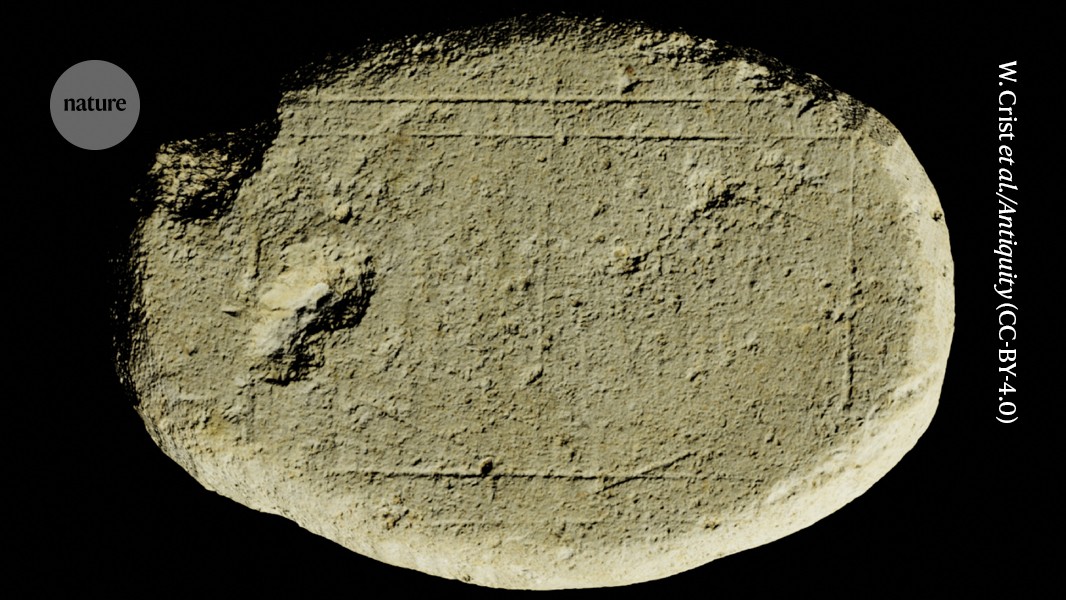
Ice Age dice show early Native Americans may have understood probability

Native Americans used dice for games of chance over 12,000 years ago, predating Old World dice by millennia.
Design
fromArchDaily
3 days ago

Cultural Centers Beyond the Building: 6 Unbuilt Projects Integrating Landscape

Cultural centers are evolving to reflect diverse architectural explorations and redefine public institutions' roles in various contexts.
OMG science
fromHarvard Gazette
4 days ago

Anthropologist traces split between Homo sapiens and Neanderthals - Harvard Gazette

The transition from multiple human forms to Homo sapiens dominance involved interactions and interbreeding with Neanderthals, not a clear-cut victory.
#pompeii
fromWarpweftandway
5 days ago

Upcoming Collaborative Learning Events

The first event is a roundtable on "Zhuangzi: Fate, Desires, Transformation" on April 6th at 9:00am Beijing time.
Philosophy
fromNature
1 week ago

Now is the time for scientific societies to guide global research

Modern scientific societies are increasingly vulnerable due to their dependence on membership fees and journal subscriptions, which are being challenged by the rise of virtual networking and open-access publishing.
Science
History
fromMedievalists.net
2 days ago

Medieval Mediterranean Island Reveals Global Connections Through DNA Study - Medievalists.net

A genetic study reveals Ibiza's medieval population was diverse, connected to Europe, North Africa, and the Sahel through migration and trade.
UX design
fromYannglt
1 week ago

AI and the Rosetta Stone

AI enhances the translation between design and engineering, increasing speed while challenging the preservation of meaning.
#cultural-heritage
Design
fromArchDaily
6 days ago

Cities of the Dead: 10 Projects Exploring Burial Architecture

Cemeteries reflect cultural attitudes towards death, embodying social and political significance through their design and organization.
Data science
fromNature
2 weeks ago

How I squeeze fresh science from public data

Utilizing existing data can lead to significant discoveries and collaborations in research.
Arts
fromHyperallergic
1 week ago

UK Museums Hold Over 260,000 Human Remains, Report Finds

UK museums hold over 263,000 human remains, with significant collections from former British colonies, raising ethical concerns.
History
fromMedievalists.net
4 days ago

Medieval "Giant" with Trepanned Skull Discovered in Mass Grave - Medievalists.net

A 9th-century mass grave in England reveals remains of young men, suggesting violent conflict during the Viking conquest of East Anglia.
Psychology
fromPsychology Today
2 weeks ago

The Creativity of Science: How We Discover New Things

Psychological research requires creativity to design studies, develop explanations, and provide practical recommendations.
OMG science
fromNature
1 week ago

How DNA in dirt is shaking up the study of human origins

Ancient DNA can be recovered from sediments, revolutionizing the study of extinct species and the history of ecosystems.
Alternative medicine
fromArs Technica
2 weeks ago

Never mind Band-Aids, Neanderthals had antiseptic birch tar

Neanderthals likely used birch tar for medicinal purposes, including treating infections and insect bites, beyond its known use as a weapon adhesive.
fromThe Art Newspaper - International art news and events
1 week ago

Comment | Museums must be the leaders in a moral revolution

Bregman claims, 'Today the whole of Europe risks turning into one big Venice, a beautiful open-air museum. A great destination for Chinese and American tourists. A place to admire what was once the centre of the world.' This statement encapsulates the concern that Europe is losing its cultural significance.
Arts
Roam Research
fromArs Technica
2 weeks ago

Study pinpoints when bow and arrow came to North America

North Americans adopted the bow and arrow about 1,400 years ago, replacing the atlatl and dart, with rapid adoption in the south and gradual replacement in the north.
fromThe Art Newspaper - International art news and events
3 weeks ago

Mummies and other human remains held in UK museums raise serious ethical questions, warn scholars

The significant number of ancestors held in UK museums is extremely distressing and symbolic of the colonial origins of these collections. We hope that the responses gathered by The Guardian will be shared with the relevant communities to support them in bringing their ancestors home.
London
#archaeology
Philosophy
fromWarpweftandway
2 weeks ago

Two Collaborative Learning () Events This Week

The 四海为学 Collaborative Learning Project hosts two free public events: Louise Edwards discussing childhood and gender in China on March 19, and Peter Hershock exploring AI and agency from a Buddhist perspective on March 20.
fromArtnet News
1 week ago

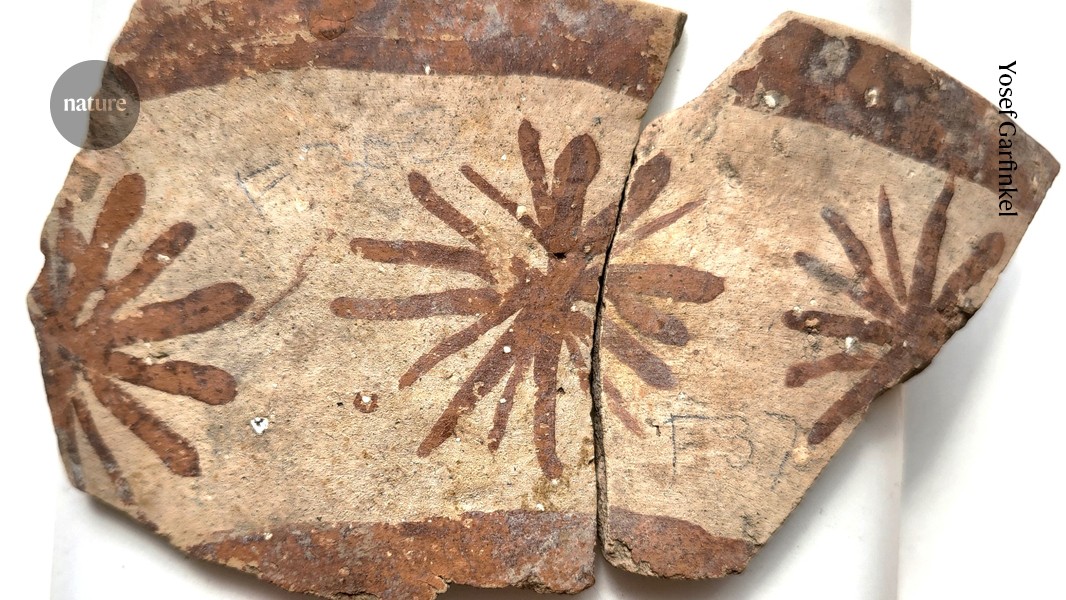
Massive Cache of 42,000 Pottery Shards Reveals Daily Life in Ancient Egypt

The ostraca show us an astonishing variety of everyday situations. We find tax lists, deliveries, short notes about everyday activities, religious texts, and priestly certificates attesting the quality of sacrificial animals.
Arts
Board games
fromOpen Culture
4 weeks ago

AI Figures Out the Rules of a Mysterious 2,000-Year-Old Board Game from Ancient Rome

Machine learning and AI simulation helped researchers determine how an ancient Roman stone board game was played by testing different rule sets against observed wear patterns.
Science
fromNature
4 weeks ago

How pollutants and poo paint a picture of past civilizations

Environmental archaeologists extract mud cores from swamps to analyze molecular biomarkers like coprostanol, revealing ancient human population trends and behaviors.
Arts
fromABC7 San Francisco
1 week ago

Expert team works to prepare ancient Etruscan exhibit this summer at Legion of Honor

Art conservators at the DeYoung Museum are restoring ancient Etruscan artifacts using modern technology for an upcoming exhibit.
History
fromMedievalists.net
1 week ago

Scientists Confirm Remains of Medieval Emperor Otto the Great - Medievalists.net

Emperor Otto the Great's identity has been confirmed through scientific research, including DNA analysis, after centuries of uncertainty.
Agriculture
fromArs Technica
1 month ago

Re-creating the complex cuisine of prehistoric Europeans

Hunter-gatherer-fishers across Eastern Europe combined specific regional foods into distinct preparations, mixing fish with berries, legumes, grasses, and vegetables rather than relying on fish alone.
London
fromwww.theguardian.com
4 weeks ago

Vast scale of overseas human remains held in UK museums decried by MPs and experts

UK museums hold over 263,000 human remains from around the world, with 37,000 known to originate from overseas former colonies, representing a colonial legacy that many consider sacrilegious and shameful.
History
fromWorld History Encyclopedia
1 week ago

Ten Ancient Mesopotamia Facts You Need to Know: Fun Facts on the Cradle of Civilization

Mesopotamia, known as the cradle of civilization, saw significant innovations from 6500 BCE to the 7th century, shaping agriculture, governance, and daily life.
Arts
fromArtnet News
2 weeks ago

Archaeologists Identify Lost Medieval Village in Polish Forest | Artnet News

Researchers in Poland have located Stolzenberg, a lost medieval village in Pomerania, using metal detection and geophysical surveys that revealed 1,500 surface anomalies including coins and building remnants.
Roam Research
fromArs Technica
1 month ago

How moss helped convict grave robbers of a Chicago cemetery

Cemetery officials were caught grave-robbing after becoming reckless, with moss analysis providing crucial evidence for prosecution.
Books
fromNature
1 month ago

Brain mysteries and Bronze Age diplomacy: Books in brief

Lionel Penrose's mid-twentieth century research connected genetic abnormalities to hand creases, establishing the hand as a significant diagnostic tool across multiple medical disciplines.
fromArchDaily
1 month ago

Archiving the Technosphere: How Museum Architecture Mediates Human-Made Systems

The contemporary technology museum has emerged as a performative participant in the systems it seeks to document. The architecture of these institutions has become increasingly fluid and bold, often mirroring the velocity and complexity of the systems it houses. They operate as mediators between the human, the ecological, and the technological realms, transforming from encyclopedic warehouses into active educational engines.
Science
Philosophy
fromApaonline
1 month ago

Why Engage with the Past? Philosophy and Its History

Philosophy departments distinguish between contemporary theoretical and practical philosophy addressing current issues, and history of philosophy studying outdated theories from past philosophers.
Higher education
fromInsideHook
1 month ago

Are the Humanities Poised for an Academic Comeback?

AI-driven interdisciplinary courses combining humanities and artificial intelligence offer a potential pathway to revitalize humanities programs facing institutional cuts and declining enrollment.
#ancient-graffiti
fromwww.dw.com
2 weeks ago
History

Ancient graffiti reveals scenes of everyday life in Pompeii

Ancient graffiti reveals insights into the lives of everyday people in Pompeii, showcasing spontaneous expressions from various social classes.
fromwww.dw.com
2 weeks ago
History

Ancient graffiti reveals scenes of everyday life in Pompeii

Ancient graffiti from Pompeii and Herculaneum reveals spontaneous messages from everyday people including slaves and soldiers, providing direct insight into daily life in the Roman empire.
History
fromwww.dw.com
2 weeks ago

Ancient graffiti reveals scenes of everyday life in Pompeii

Ancient graffiti reveals insights into the lives of everyday people in Pompeii, showcasing spontaneous expressions from various social classes.
History
fromwww.dw.com
2 weeks ago

Ancient graffiti reveals scenes of everyday life in Pompeii

Ancient graffiti from Pompeii and Herculaneum reveals spontaneous messages from everyday people including slaves and soldiers, providing direct insight into daily life in the Roman empire.
#roman-archaeology
fromwww.theguardian.com
1 month ago

Ways to Traverse a Territory review documenting an ancient and disappearing way of life

Here dwells the indigenous Tzotzil community which has kept a pastoral way of life against the march of time. Apart from the odd forest ranger and passerby, Ruvalcaba's film focuses almost entirely on the Tzotzil women. Together, they tend herds of sheep which they still shear by hand, and use traditional tools for spinning yarns and natural dye for fabrics.
Film
History
fromMail Online
2 weeks ago

Roman artifact found in the Americas shatters New World history

A Roman terracotta head discovered in a sealed Mexican tomb in 1933 suggests Roman contact with the Americas around 200 AD, predating Columbus by over a thousand years.
Philosophy
fromApaonline
1 month ago

The Humanities Challenge: Expanding the Circle of Philosophy

Philosophy offers transformative insights and vision into human life, and public humanities must evolve beyond traditional academic formats to make philosophy accessible to broader audiences through innovative, engaging methods.
Medicine
fromwww.npr.org
1 month ago

That ain't perfume! Ancient bottle contained feces, likely used for medicine

Chemical analysis of ancient Roman vessels confirmed a two-millennium-old medicinal recipe by Galen combining human feces and fragrant materials.
History
fromMedievalists.net
2 weeks ago

Two Medieval Men Found Buried in Prehistoric Site - Medievalists.net

Medieval men were buried in the Menga dolmen, a Neolithic monument in Spain, over 4,000 years after its construction, demonstrating the site's enduring symbolic importance across millennia.
Business
fromFast Company
2 months ago

Navigating the ghosts of cultures past

Organizational culture constantly changes; leaders must discern which legacy cultural elements to retain and which to remove while balancing enduring beliefs with adaptive practices.
US politics
fromwww.independent.co.uk
2 months ago

Inside the hunt for British Museum's missing treasures

The Independent funds on-the-ground, paywall-free investigative reporting while a six-person British Museum team celebrates breakthroughs in tracing missing Greek and Roman treasures with a golden bell.
UK news
fromwww.bbc.com
2 months ago

Sifting through the Roman rubbish of 'the London lasagne'

London's archaeology reveals layered remains from prehistory to Victorian times, including rare Roman frescoes, a mausoleum, a luxurious villa, and early theatres.
History
fromWorld History Encyclopedia
3 weeks ago

What Defines a Civilization?

Civilization requires a writing system, government, food surplus, labor division, and urbanization, with Mesopotamia recognized as the birthplace of civilization due to its early city construction around 5400 BCE.
US politics
fromEmptywheel
2 months ago

Third Cave's a Charm

Republicans will block expiration of Bush tax cuts; Democrats could see a $3.6 trillion tax increase in 2012 if Obama does not act.
History
fromwww.thehistoryblog.com
1 month ago

Origin of repatriated erotic mosaic uncovered

A Nazi-looted mosaic depicting an intimate domestic scene was repatriated to Pompeii, but research revealed it originated in Latium, not Pompeii or its surrounding region.
fromArchDaily
2 months ago

Unearthing the Ground: Architecture and the Politics of the Subterranean

Beneath the visible surface of cities lies an invisible architecture. Subways, tunnels, water systems, data cables, and bunkers form a dense network that sustains urban life while remaining largely unseen. The ground beneath our feet is not a void but a complex territory that holds the infrastructures, memories, and anxieties of our age. In recent years, as land becomes scarce and climate pressures intensify, architects and urbanists have turned their gaze downward, rediscovering the subterranean as both a physical and conceptual frontier.
Design
fromInside Higher Ed | Higher Education News, Events and Jobs
2 months ago

We Need to Revitalize Area Studies (opinion)

Just before winter break, news broke that the University of North Carolina at Chapel Hill plans to close its centers for African, Asian, European, Middle Eastern, Latin American and Slavic, Eurasian and East European studies. Though UNC administrators said in a statement that decisions on closures are not finalized, they confirmed they are evaluating centers and institutes as part of a budget-cutting effort in response to state and federal funding changes.
Higher education
Science
fromNature
2 months ago

Daily briefing: Scientists delve into the smells of history

Researchers recreate historical smells and use imaging, AI, and biomedical advances to probe heritage, ancient human timelines, medical rescue devices, and rare-disease genetics.
Science
fromFuturism
2 months ago

Scientists Investigating 2,000-Year-Old Artifact That Appears to Be a Battery

A reconstructed Baghdad battery configuration could have produced about 1.4 volts, comparable to a modern AA battery, using a porous clay separator and an electrolyte.
Philosophy
fromPsychology Today
2 months ago

Can Accepting Our Biological Heritage Improve the World?

Biological imperative centers on protecting, promoting, and propagating genetic code, shaping behavior, sex-specific roles, physiology, and intergenerational wellbeing.
History
fromMedievalists.net
1 month ago

East Roman Archaeology: Goals and Challenges, with Marica Cassis - Medievalists.net

Archaeology reveals material evidence of daily life, settlement patterns, and economic systems in the East Roman world that textual sources cannot provide, while facing challenges in establishing itself as a distinct field separate from classical and Islamic archaeology.
Arts
fromHyperallergic
1 month ago

Did the British Museum Remove Palestine From Its Displays?

The British Museum amended some Middle East gallery labels to use ancient regional terms like 'Canaan' while continuing to use 'Palestine' in many displays.
Philosophy
fromArchDaily
1 month ago

When Do Buildings Begin to Matter? Rethinking Heritage in Local Time

Global heritage systems prioritize longevity and material authenticity rooted in European slow-growth models, disadvantaging rapidly changing cities where cultural time operates unevenly.
Science
fromNature
1 month ago

Daily briefing: Hunter-gatherers in Europe's 'water world' resisted the switch to farming for millennia

Rhine-Meuse delta populations retained substantial hunter-gatherer ancestry for millennia before steppe-related mixing spurred Bell Beaker expansion and large genetic turnovers.
Philosophy
fromApaonline
1 month ago

Science and Culture in Latin America, Alejo Stark

Scientific knowledge is culturally embedded; Indigenous and colonial practices fundamentally shaped modern science, and values and power influence inquiry.
Science
fromArs Technica
2 months ago

Research roundup: 6 cool stories we almost missed

Mineral fingerprinting and zircon analysis indicate humans transported Stonehenge stones from distant quarries, not glaciers.
fromwww.scientificamerican.com
2 months ago

Humans Made Poisoned Arrowheads Thousands of Years Earlier Than Previously Thought

Researchers have found traces of what appears to be plant-derived poison on tiny stone arrowheads from South Africa dated to 60,000 years ago. The finding pushes back the origin of this revolutionary hunting technology by tens of thousands of years. Scientists have long been fascinated by the development of poisoned hunting weapons. For one thing, they would have seriously leveled up our ancestors' foraging game.
Science
fromDefector
2 months ago

Let The Record Show That Otzi Fucked | Defector

Ötzi, the 5,000-something-year-old man found frozen in the Alps, did not have an easy go of it. He was probably murdered, shot from behind with an arrow that missed his vital organs and led to heavy bleeding and a prolonged and painful death. Days before his death, he fought another person in hand-to-hand combat and gashed his right hand. The more scientists have been able to study his body, the more ailments they have unveiled.
Science
Arts
fromArtnet News
2 months ago

Who Is Zahi Hawass, the Controversial Face of Modern Egyptology?

Zahi Hawass is a charismatic, media-savvy Egyptian archaeologist who led major projects, popularized discoveries, and champions further excavations including a likely undisturbed Nefertiti tomb.
Science
fromwww.nature.com
2 months ago

Author Correction: Hunter-gatherer sea voyages extended to remotest Mediterranean islands

Corrections to regional radiocarbon uncertainties do not meaningfully change conclusions about timing of the Mesolithic–Neolithic transition or maritime voyages in the central Mediterranean.
#ancient-mathematics
fromMail Online
1 month ago

Mysterious symbols spanning the globe hint at a lost civilization

His investigation began after identifying recurring giant T-shapes, three-level indents, and step pyramids carved into ancient stones worldwide. 'These specific symbols that are built in different size proportions, and the symbols are found in ancient stones around the world, are not supposed to exist; no cultures are supposed to have any cross-platform,' LaCroix explained. The symbols appear in locations ranging from Turkey's Van region to South America and Cambodia.
History
History
fromenglish.elpais.com
1 month ago

The underground odyssey that led archaeologists to a Zapotec burial site

Looting revealed a hidden Zapotec Tomb of the Owl near La Cantera, which took six years to locate and links to the ancient Zapotec civilization.
fromwww.thehistoryblog.com
2 months ago

Late Antique necropolis with deliberately broken pottery found in France

Adjacent to the masonry house is a burial ground in use from the 4th century through the first half of the 6th century. Approximately 60 individual inhumation burials have been unearthed, arranged in rows that are increasingly dense with graves as they approach the dwelling. The deceased were buried in cysts formed by reused tegulae (large clay roof tiles) or by rubble walls that supported wooden planks. They were placed in the graves in supine position facing west, north or south.
History
History
fromwww.thehistoryblog.com
2 months ago

Unique bone box found in Roman-era grave

A tiny Roe-deer bone box with sliding lid and ring-and-dot decoration was buried as a prized cosmetic container in a Late Roman woman's grave.
fromwww.thehistoryblog.com
1 month ago

Rare Mithraic altars found in Scotland go on display for the first time

Two exceptionally rare and beautifully carved Mithraic altars found in Inveresk, East Lothian, Scotland, are going on display for the first time. They are not just the only Roman altars ever found in Scotland, but are among the finest examples of Roman sculpture in Roman Britain. They are also uniquely early in date, having been made in 140s A.D. during Antoninus Pius' reoccupation of southern Scotland, whereas most other archaeological materials related to the worship of Mithras in Britannia date to the 3rd century.
History
fromMail Online
2 months ago

Father of alien archaeology says pyramids not built by human hands

Erich von Däniken claimed extraterrestrials aided ancient civilizations in building pyramids, but archaeological evidence attributes pyramid construction to organized human labor.
History
fromMedievalists.net
2 months ago

10 Medieval Studies' Articles Published Last Month - Medievalists.net

Local populations in Anatolia used spolia to assert cultural continuity with the ancient and Byzantine past, challenging exclusive Western claims to that heritage.
fromMedievalists.net
2 months ago

The Classical Near East, with Kevin van Bladel - Medievalists.net

A conversation with Kevin van Bladel on his proposal regarding "The Classical Near East," a constellation of fields defined by the classical literary traditions of medieval Near Eastern cultures, including Byzantium.
History
[ Load more ]