#interstate-moving-trends
#interstate-moving-trends
[ follow ]





fromHudson Valley Post
3 days agoMassive Population Surge Hits This Hudson Valley, New York County
"People are choosing Westchester - not just to visit, but to live, build families, and invest in their future. When we create housing opportunities and vibrant neighborhoods, people come - and they stay."
Upper West Side
#migration
Silicon Valley
fromFortune
3 days agoGen Z fled San Francisco for Texas and Florida. Now they're turning 'welcomer cities' into the next big tech towns | Fortune
Younger workers are leaving San Francisco for more affordable 'welcomer cities' like Nashville and Orlando, seeking better work-life balance and job opportunities.

Silicon Valley
fromFortune
3 days agoGen Z fled San Francisco for Texas and Florida. Now they're turning 'welcomer cities' into the next big tech towns | Fortune
Younger workers are leaving San Francisco for more affordable 'welcomer cities' like Nashville and Orlando, seeking better work-life balance and job opportunities.

#american-expats
Europe politics
fromInsideHook
2 weeks agoExpat-Curious? Inside the European Communities Vying for Fleeing Americans.
American retirees are increasingly purchasing homes in Europe, particularly Italy, to fulfill lifelong dreams and escape tight U.S. real estate markets, with specialized services facilitating international transactions despite geopolitical tensions.
fromCalifornia Post
6 days agoMass exodus from Los Angeles revealed in shocking new figures
Los Angeles County's population has now dipped to just under 9.7 million, marking a continuation of a steady slide for the nation's most populous county. The raw number of departures is eye-catching, but experts say the broader trend may be even more concerning: fewer people are coming in to replace those who leave.
Los Angeles
#emigration
London politics
fromLondon Business News | Londonlovesbusiness.com
5 days agoLondoners are most likely to emigrate as the UK exodus trends emerge - London Business News | Londonlovesbusiness.com
Londoners show the highest intention to emigrate in England, driven by cost of living and economic concerns.

London politics
fromLondon Business News | Londonlovesbusiness.com
5 days agoLondoners are most likely to emigrate as the UK exodus trends emerge - London Business News | Londonlovesbusiness.com
Londoners show the highest intention to emigrate in England, driven by cost of living and economic concerns.
fromwww.businessinsider.com
1 week agoThe top places in the US where people are moving to
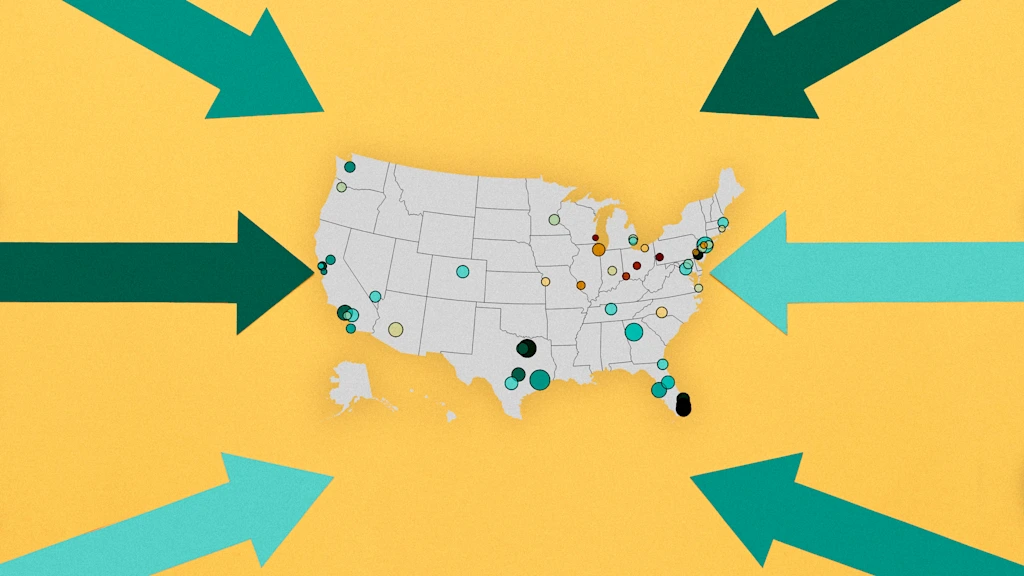
"Domestic migration patterns continue to redistribute the population from the largest counties to less populous ones. Collectively, the 50 counties with 1 million or more people in 2025 had a net domestic migration loss of 637,634."
California




fromFast Company
2 weeks agoIf you want housing abundance, let the market work
Good urbanism should transcend politics. Socialists and capitalists can walk the same neighborhood and agree it's a pleasant place to live. They can each appreciate the tree canopy, the corner café with people spilling onto the sidewalk, the mix of ages on bikes and on foot, the architectural details of older buildings, and so on.
Philosophy
fromwww.cbc.ca
2 weeks agoThinking of moving to a more 'affordable' part of the country? Consider this | CBC News
I lost a lot of money while I was in Alberta. I had quite a lot of debt. Sure, you might save $4 or $5 on your bills, but ultimately, that's not what saved me money at all. Moving to Montreal in the summer of 2024 helped replenish the family's budget, even though la belle province is notorious for its higher taxes.
Canada news
fromTravel + Leisure
2 weeks agoThe Hottest Zip Codes in America Right Now, According to New Migration Data
As we move into a new year, the data shows that people are being much more strategic about where they move. While the massive surge of migration to the Sunbelt remains a primary driver of growth, moving to a particular state or region is taking a back seat to moving to very specific neighborhoods.
Miami
fromRedfin | Real Estate Tips for Home Buying, Selling & More
1 week agoWhat Happens If You Need to Move Soon After Buying a Home?
"When deciding whether to sell quickly or rent out the home, many homeowners underestimate the logistics involved with moving only part of their belongings or staging while relocating. Storage may seem like a simple add-on, but it actually introduces multiple steps, additional labor, and can significantly increase costs, sometimes even doubling them."
Real estate
Travel
fromForbes
3 weeks agoWhere Americans Are Moving Abroad Right Now
Remote work and rising living costs drive millions of Americans to relocate abroad earlier in their careers, with over 180,000 relocating last year to countries offering affordability, cultural familiarity, and English-speaking communities.
Higher education
fromInside Higher Ed | Higher Education News, Events and Jobs
1 month agoThe Growing Gap Between Housing Need and Inventory (opinion)
College housing systems face operational strain from surging single-room accommodation requests driven by increased disability disclosures and privacy preferences, exceeding fixed inventory capacity.
Real estate
fromInc
2 weeks agoWhy Connectivity Is the New 'Location' in Commercial Real Estate
Digital infrastructure and connectivity now rival or surpass traditional location as the primary factor determining real estate value for business properties, with 96% of U.S. business leaders willing to pay premium prices for reliable connectivity.
fromBusiness Matters
1 month agoThe impact of road signs on economic development
When routes are well organized, there are clear directional signs, and speed limits become reasonable. The early installation of warning signs allows transport companies to plan deliveries more accurately and avoid delays. For businesses, time is money. When a truck carrying goods does not spend hours detouring due to an unclear traffic scheme or stuck in traffic where it could have been avoided thanks to competent traffic management, fuel costs, driver wages, and vehicle maintenance costs are reduced.
Alternative transportation
Real estate
fromRedfin | Real Estate Tips for Home Buying, Selling & More
2 weeks agoHow Moving Trends Are Changing in 2026
Moving trends in 2026 show lower overall mobility but more intentional relocations driven by lifestyle, affordability, and family considerations rather than job changes, with the 'lock-in effect' keeping homeowners in place due to high housing costs and limited inventory.
fromTravel + Leisure
1 month agoWhere Gen Z Is Moving in the U.S. for Jobs and Affordability
The top ZIP code Gen Z is moving to in 2025 is 55401, a central area of Minneapolis on the banks of the Mississippi River. Homes in the area are mainly made up of stylish condos and command a median house price of $372,500, which is lower than the average U.S. house price.
Upper West Side
US news
fromwww.nydailynews.com
1 month agoFor first time in 90 years, more people are leaving the U.S. than moving in
The United States experienced net negative migration for the first time since the Great Depression, with approximately 150,000 more people leaving than entering in 2025, driven by Americans seeking better economic opportunities, safety, and quality of life abroad.
fromTravel + Leisure
1 month agoThese 5 U.S. States Will Pay You to Move There-and One Even Has a $23,000 Relocation Package
The highest compensation comes from the Ascend West Virginia program, which is worth more than $23,000, according to the study. To receive the package-which includes $12,000 in cash, a free coworking space, and outdoor gear rentals, among other perks-you must be 18 or older and have a full-time remote job for a company outside of the state.
Retirement



Real estate
fromwww.housingwire.com
3 weeks agoHousing market is poised for growth in 2026 if Iran conflict doesn't raise rates
Existing home sales are positioned for growth in 2026 if mortgage rates remain below 6.25%, with positive purchase applications and inventory levels supporting market expansion.
fromSilicon Canals
3 weeks agoPeople who moved countries for love and people who moved countries for work carry completely different versions of displacement. One chose a person and lost a place. The other chose a place and discovered that without their people in it, a better country can still feel like a beautiful room with no furniture - Silicon Canals
She said she stood in her new kitchen, which had radiant floor heating and a view of the fjord, and cried because the bread smelled wrong. She'd moved from São Paulo for a man she'd met at a data science conference. The apartment was beautiful. The healthcare was extraordinary. The man was kind. And the bread smelled wrong, and that wrongness cracked open something in her she hadn't known was load-bearing.
Remote teams
fromThe Salt Lake Tribune
1 month agoOpinion: Want more babies? Abolish commutes.
The Trump administration really wants Americans to have more kids. President Trump, the self-proclaimed " fertilization president," has called for a new " baby boom." Transportation Secretary Sean Duffy says communities with big families should get more government funds. The on-again-off-again Trump ally Elon Musk, father of at least 14, has warned that "civilization will disappear" if we don't get busy.
US politics
fromArchDaily
1 month agoMoving Capitals Across Global Contexts: From Strategic Planning to Environmental Necessity
Across history, the relocation of capital cities has often been associated with moments of political rupture, regime change, or symbolic nation-building. From Brasília to Islamabad, new capitals were frequently conceived as instruments of centralized power, territorial control, or ideological projection. In recent decades, however, a different set of drivers has begun to shape these decisions. Rather than security or representation alone, contemporary capital relocations are increasingly tied to structural pressures such as demographic concentration, infrastructural saturation, environmental risk, and long-term resource management.
World news


fromFast Company
2 months agoU.S. population growth is slowing because of declining immigration. What does it mean for the workforce?
The U.S.'s population growth is slowing as immigration has declined amid President Donald Trump's deportation push and stricter border policies. According to new Census Bureau data, the drop-off is the biggest since the COVID-19 pandemic. From July 2024 to July 2025, the population of the United States grew by 1.8 million people (about 0.5%). This was mostly driven by immigration: During that period, the U.S. added 1.3 million immigrants.
US politics
fromBoston.com
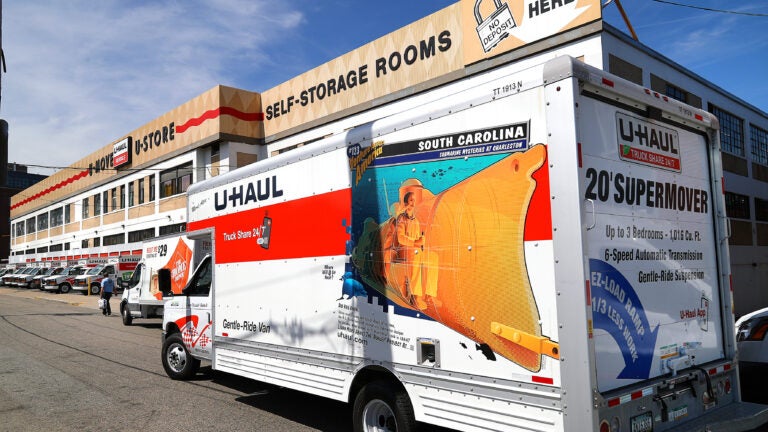
2 months agoU-Haul ranks Massachusetts near the bottom for growth - again
"The latest U-Haul Growth Index shows Massachusetts ranked near the bottom of the nation in inbound moves - a clear sign we are losing competitive ground compared with states like Texas, Florida and others attracting more residents," said Christopher R. Anderson, MOA co-organizer and president of the Massachusetts High Technology Council, in a statement.
US news
fromForbes
1 month agoTransit-Oriented Housing On Track For Continued Growth
Once a nice-to-have niche urban design concept, TOD has become an essential part of many urban neighborhoods. It has helped address the shortage of housing by enabling the development of higher-density residential communities near transit stations. It has helped revitalize countless once-deteriorating or static urban enclaves near transit hubs by activating sidewalks near the developments. And it has spurred walking and transit use, enabling residents of TODs to reduce or eliminate automobile dependency.
Real estate
fromBoston Condos For Sale Ford Realty
2 months agoAre Americans Moving Less Frequently? Boston Condos For Sale Ford Realty
Regional Concentration: Most relocations now occur within the same region rather than across the country. Households are increasingly "trading one nearby city for another" to find better housing affordability without leaving their home state or region. Proximity to Home: Over 50% of moves stay within the same county, and approximately 80% remain within the same state. Long-distance interstate moves accounted for only about 19.3% of all relocations in 2024-2025.
Real estate
Real estate
fromYahoo Life
1 month ago5 winter address trends: How people are changing where they live, work & receive mail in 2026
Winter-driven seasonal migration, remote work, and safety concerns are transforming home addresses into flexible, accessible, and controllable services rather than fixed locations.
Real estate
fromFast Company
1 month agoHousing market inventory power: Where states stand heading into spring
Rising active listings and months-of-supply indicate growing buyer leverage; markets with inventory above 2019 experienced weaker price growth, while below-2019 markets showed more resilience.
Real estate
fromwww.housingwire.com
2 months agoComparing RV and manufactured housing data sheds critical light on U.S. affordable housing crisis
MHI's public claims of representing and unifying all manufactured housing segments contrast with evidence and past leaders' statements revealing uneven representation and persistent industry issues.
[ Load more ]