#language-neuroscience

[ follow ]
Berlin music
fromPsychology Today
1 day ago

When Music Was Used to Deceive, Control, Survive

Yom HaShoah commemorates the 6 million Jews and 5 million others who perished in the Holocaust, reflecting on music's dual role in history.
Typography
fromMedium
2 days ago

AI is rewriting the rules. Language is following.

The word 'delve' has surged in usage due to AI's influence on language and communication patterns.
Psychology
fromPsychology Today
2 days ago

Silent Minds: Exploring the Absence of Inner Speech

Inner speech varies among individuals, and not everyone experiences it, indicating diverse cognitive processes.
#language-learning
Online learning
fromwww.theguardian.com
4 days ago

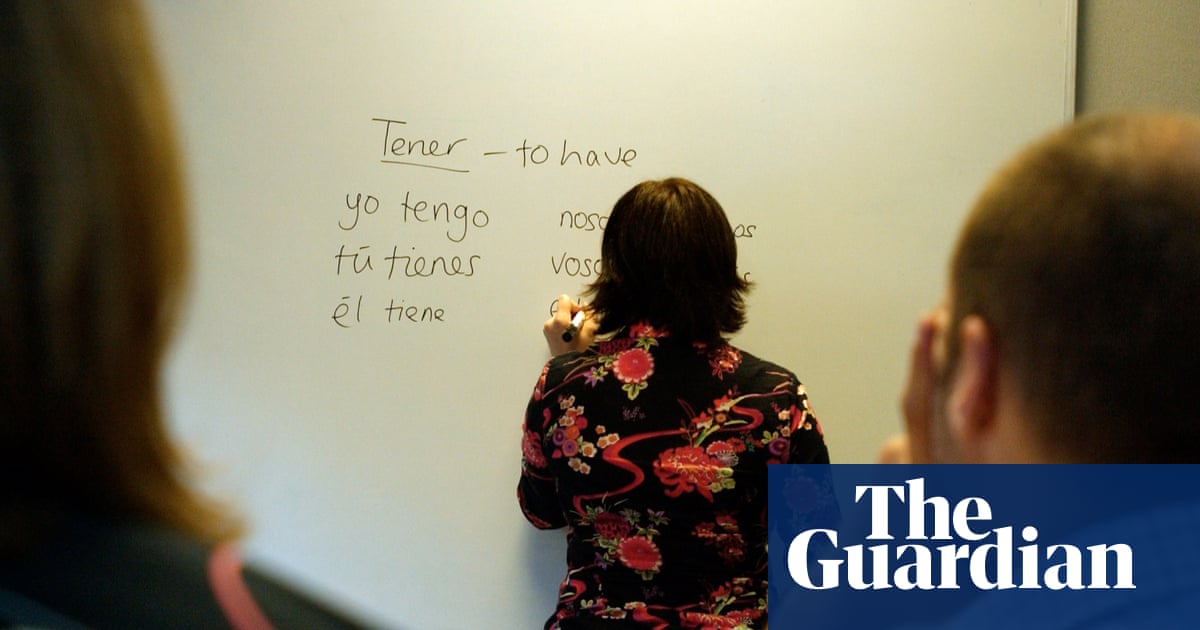
Don't stop at Duolingo, set realistic goals, balance skills: how to start learning a new language

Being multilingual enhances sophistication, cultural understanding, and cognitive abilities, making language learning beneficial for personal and social growth.
Online learning
fromwww.theguardian.com
4 days ago

Don't stop at Duolingo, set realistic goals, balance skills: how to start learning a new language

Being multilingual enhances sophistication, cultural understanding, and cognitive abilities, making language learning beneficial for personal and social growth.
fromPortland Mercury
4 days ago

In Ling Ling Huang's Immaculate Conception, Friends Share Brains

"For me... the main thing is just how deep a love can be, and how much everything else can complicate it," explained violinist and author Ling Ling Huang.
Writing
#artificial-intelligence
Data science
fromPsychology Today
6 days ago

A New Digital Twin for Brain Activity Aims to Speed Research

A new AI model can predict human brain activity from various stimuli, accelerating neuroscience research and understanding of the brain.
fromPsychology Today
1 week ago

What Reading Fluency Has to Do With Leadership: Nothing

The assumption that difficulty with reading or writing signals lower intelligence or diminished leadership ability is not supported by evidence. Decades of research show little to no correlation between dyslexia and lower general intelligence.
Education
Science
fromNature
1 week ago

First atlas of brain organization shows development over a lifetime

Scientists created an atlas mapping brain connectivity patterns across the human lifespan, linking them to cognitive performance and potential developmental issues.
SF food
fromNature
1 week ago

Aversive learning hijacks a brain sugar sensor to consolidate memory - Nature

Nutrient sensors in the brain and digestive tract regulate appetite, feeding behavior, and cognitive processes related to memory and learning.
Psychology
fromSilicon Canals
1 week ago

9 cognitive habits people develop when they grew up bilingual that have nothing to do with language and everything to do with how their brain learned to hold two realities at once - Silicon Canals

Bilingualism can delay Alzheimer's onset by five years and reshapes cognitive processes beyond language.
Philosophy
fromApaonline
1 week ago

Distracting Metaphors

Metaphors can illuminate or obscure understanding, but some, like Holocaust comparisons, can provoke discomfort and controversy.
Typography
fromPsychology Today
5 days ago

Change-a-Letter Puzzles Reveal How Meaning Emerges

Meanings of words exist within an interdependent system, as demonstrated by Change-a-Letter puzzles that show how meaning emerges relationally.
Science
fromNature
1 week ago

Functional hierarchy of the human neocortex across the lifespan - Nature

Brain network organization changes across the lifespan, revealing functional connectivity gradients that relate to cognitive and behavioral outcomes.
fromwww.scientificamerican.com
2 weeks ago

Can you solve these language puzzles? Test your skills with these problems from North America's biggest linguistics competition

Computational linguistics is a two-way street: You're either using a computer to do things with human language or communicate or translate or teach a foreign language, or you're using computational techniques to learn something about human languages. Her work documenting and preserving endangered languages uses a little bit of both.
Education
Artificial intelligence
fromThe Verge
2 weeks ago

This is not a fly uploaded to a computer

Eon Systems claimed to create a digital fly brain emulation, but provided no scientific verification, peer review, or detailed methodology—only social media videos that generated hype through influencer endorsements.
Science
fromwww.nature.com
1 week ago

Retraction Note: Multisensory learning binds neurons into a cross-modal memory engram

The article has been retracted due to irreproducible voltage imaging results and errors in data analysis, despite some conclusions being substantiated.
Psychology
fromPsychology Today
1 week ago

How to Think About the Brain

The brain operates through localization, with specific areas dedicated to distinct tasks, despite outdated and simplistic representations of its function.
OMG science
fromMail Online
3 weeks ago

Scientists recreate the lost languages of ancient humans

Scientists reconstructed ancient human species languages by analyzing fossilized skeletal imprints of soft tissues like the larynx, tongue, and brain, revealing that Neanderthals likely spoke languages understandable to early Homo sapiens.
Data science
fromNature
3 weeks ago

AI can 'same-ify' human expression - can some brains resist its pull?

Large language models are homogenizing human writing styles, reasoning methods, and perspectives, potentially creating widespread sameness in discourse even among non-direct AI users.
Psychology
fromSilicon Canals
1 week ago

Research suggests people who read before bed every night have a fundamentally different brain than people who watch TV - Silicon Canals

Reading before bed enhances brain connectivity and cognitive function, while screen time offers less mental engagement.
Artificial intelligence
fromPsychology Today
3 weeks ago

Anti-Intelligence: When Language Operates Without a Mind

AI generates language through a fundamentally different structural architecture than human cognition, not through inferior intelligence but through inverted processes detached from lived experience and stakes.
Higher education
fromNews Center
1 month ago

AI Model Predicts Language Development in Children with Hearing Loss - News Center

Advanced machine learning models predict spoken language outcomes in children with cochlear implants more accurately than traditional approaches, enabling identification of at-risk patients for targeted interventions.
Psychology
fromPsychology Today
2 weeks ago

Why Handwriting Is Better for Your Brain Than Typing

Handwriting activates motor, language, and attention systems more fully than typing, improving memory through deeper processing and supporting cognitive health.
Education
fromPsychology Today
3 weeks ago

Why Uneven Development Matters in Dyslexia

Dyslexia involves unexpected reading difficulty despite strong cognitive abilities; removing this concept from definitions risks harming students' education by obscuring their strengths.
Typography
fromPsychology Today
4 weeks ago

Left-Handers Are Better at Mirror-Writing Than Right-Handers

Left-handers demonstrate significantly faster and more accurate mirror-writing abilities compared to right-handers, supported by scientific research.
Psychology
fromSilicon Canals
2 weeks ago

Psychology says people who remember the exact location of every item in their childhood home - which drawer, which shelf, which cupboard - aren't sentimental, their brain mapped that house the way a body maps a minefield, and the precision that looks like nostalgia is actually surveillance that never turned off - Silicon Canals

Detailed childhood home memories reflect survival-based hypervigilance rather than nostalgia, with brains mapping familiar spaces like tactical terrain to navigate unpredictable or chaotic environments.
Education
fromPsychology Today
1 month ago

Fluent at Home, Silent at Work: Growing Up Bilingual

Heritage speakers lack formal language instruction in their native language, creating gaps in professional and academic domains that they internalize as personal failure rather than systemic educational gaps.
Psychology
fromPsychology Today
3 weeks ago

The Evolution of Brain and Intelligence

Human brains are large and complex but not uniquely so compared to other species; human intelligence is adapted to specific ecological niches, with symbolic reasoning being a key cognitive distinction from other animals.
Science
fromPsychology Today
1 month ago

How the Brain Interprets Faces Into Social Messages

Facial expressions emerge from coordinated activity across multiple brain regions operating on different timescales, from rapid motor signals to slower stable representations, creating socially meaningful and well-coordinated gestures.
Mental health
fromPsychology Today
1 month ago

From Trauma to Tetris: How Neuroplasticity Rewires Memories

Tetris and similar visuospatial tasks can reduce traumatic memory intensity by interfering with visual imagery processing, offering women practical tools for managing trauma and chronic stress.
Psychology
fromSilicon Canals
3 weeks ago

I used to think I had a terrible memory until I realized I can recall every tone shift in every argument my parents ever had but not what I ate yesterday. My memory works fine. It was just trained on threat detection instead of daily life. - Silicon Canals

People from unpredictable environments develop heightened memory for threat signals and emotional cues as a survival mechanism, not a memory deficiency.
Psychology
fromPsychology Today
3 weeks ago

Can Brain Stimulation Make Us More Altruistic?

Synchronizing brain activity between frontal and parietal regions through electrical stimulation increases altruistic choices, particularly when personal costs are high.
fromFast Company
1 month ago

Our brains are wired to ignore information. Here are neuroscience-backed tips for communicating memorably

The human brain is engineered to ignore most of what it sees and hears, according to the neuroscientists I interviewed for the audio original Viral Voices. If that's the case, how are you supposed to make a memorable impression? The empowering news is that if you understand how the brain works, what it discards, and what it pays attention to, you'll be far more persuasive than you've ever imagined. Persuasive people have influence in their personal and professional lives.
Philosophy
fromPsychology Today
1 month ago

Is It Better to Learn a Second Language as a Child or Adult?

Parents often hear the warning: "If your child doesn't learn a second language early, they'll never be fluent." Adults, meanwhile, are told: "It's just too late for you to learn now." These claims are familiar and tidy, but misleading. Are they actually true? Is it better to learn a second language as a child or as an adult? The short answer is that it depends on what we mean by "better."
OMG science
fromFast Company
17 years ago

Talking About Nerve!

I received an email recently that claims Wal-Mart senior management has been calling mandatory meetings for the company's employees in which the employees are told they "cannot" vote for the Obama-Biden ticket "or any other employee-friendly, union-friendly candidates for political office". It's not an urban legend, according to the sources I checked. This makes me so angry I just boil. When it comes to the Constitution, I am a rabid supporter.
fromPsychology Today
1 month ago

Could Glial Cells Be the Key to New Schizophrenia Treatments?

Anyone living with schizophrenia understands the true limitations of current treatment options. Antipsychotics remain the single leading treatment for the disorder, and they are riddled with undesirable side effects. Weight gain, tardive dyskinesia, and excessive drowsiness are a few. Much research is devoted to expanding the range of medication options, and few academics have pursued other avenues. However, there is a possibility that treatment for schizophrenia can be approached through cellular methods if long-term research validates early signs of hope.
Mental health
Psychology
fromPsychology Today
1 month ago

Neuroplasticity Across the Lifespan

Brain plasticity enables structural and functional changes throughout life, but remains constrained by biological boundaries and developmental timing.
fromPsychology Today
2 months ago

Don't Get Lost in Translation

Led Zeppelin warned us about the perils of misunderstood communications in relationships. Failing to translate what we are trying to say or do so that someone else gets it is the root of so many problems. But translation is a fantastic find when it goes right. Here are some things I've learned about translating meaning from a lifetime of speaking numerous languages, practicing a wide array of martial arts, and communicating science.
Philosophy
Silicon Valley
fromSilicon Canals
1 month ago

Psychology says people who still use complete sentences in text messages share 7 cognitive traits that are becoming increasingly rare - Silicon Canals

Maintaining full sentences and proper punctuation in digital messages correlates with stronger impulse control and deeper information processing, reflecting healthier cognitive habits.
fromSilicon Canals
1 month ago

7 phrases you should always avoid if you want to sound intelligent, according to psychology - Silicon Canals

You know that sinking feeling when you realize you've been using a phrase that makes you sound less intelligent than you actually are? I had one of those moments a few years back during a pitch meeting for my startup. I was presenting to potential investors, and I kept saying "I think" before every point I made. "I think our user acquisition strategy will work."
Startup companies
#neuroplasticity
fromAeon
1 month ago
Philosophy

What the metaphor of 'rewiring' gets wrong about neuroplasticity | Aeon Essays

fromAeon
1 month ago
Philosophy

What the metaphor of 'rewiring' gets wrong about neuroplasticity | Aeon Essays

fromPsychology Today
1 month ago

Are There Linguistic Conspiracy Theories?

The term "conspiracy theory" calls to mind a variety of dubious claims and controversies, like rumors about Area 51, claims that the Earth is flat, and the movement known as QAnon. At first blush, these phenomena would seem to have little in common with bogus word origins. But there are a variety of false etymologies that spread virally and refuse to go away, in much the same way that stories about chemtrails, black helicopters, and UFOs refuse to die.
Writing
fromFast Company
1 month ago

How hesitation is a fundamental brain feature, according to neuroscientists

At the Winter Olympics, skiers, bobsledders, speedskaters, and many other athletes all have to master one critical moment: when to start. That split second is paramount during competition because when everyone is strong and skilled, a moment of hesitation can separate gold from silver. A competitor who hesitates too much will be left behind -but moving too early will get them disqualified.
Science
OMG science
fromPsychology Today
2 months ago

The Divided Brain: How Two Halves Create One Mind

Brain hemispheres are structurally and functionally specialized yet continuously communicate via the corpus callosum, with contralateral control enhancing perceptual and motor efficiency.
Artificial intelligence
fromTechCrunch
1 month ago

Cohere launches a family of open multilingual models | TechCrunch

Cohere launched Tiny Aya open-weight multilingual models supporting 70+ languages, runnable offline on everyday devices with a 3.35B-parameter base and regional variants.
fromThe Atlantic
1 month ago

Words Without Consequence

For the first time, speech has been decoupled from consequence. We now live alongside AI systems that converse knowledgeably and persuasively-deploying claims about the world, explanations, advice, encouragement, apologies, and promises-while bearing no vulnerability for what they say. Millions of people already rely on chatbots powered by large language models, and have integrated these synthetic interlocutors into their personal and professional lives. An LLM's words shape our beliefs, decisions, and actions, yet no speaker stands behind them.
Philosophy
fromSilicon Canals
1 month ago

What neuroscience reveals about people who replay conversations in their head for hours after they happen - Silicon Canals

Neuroscientists have a name for the brain network that fires up when you're not focused on an external task: the default mode network, or DMN. It's the constellation of regions - the medial prefrontal cortex, posterior cingulate cortex, and angular gyrus among them - that hums to life when you daydream, reflect on yourself, or think about other people's mental states.
Psychology
Science
fromwww.scientificamerican.com
1 month ago

Speech sounds are a blurhere's how your brain sorts them out

High-gamma brain-wave power drops about 100 milliseconds after word boundaries, marking word endings and tracking native-language fluency.
Psychology
fromPsychology Today
1 month ago

How the Brain Chooses What Matters

Selective sensory prioritization can improve clarity by letting one modality dominate when multisensory integration would create competition or reduce precision.
Mental health
fromPsychology Today
2 months ago

Using the Mind to Pilot the Brain

Resiliency skills training and psychoeducational interventions can reduce rising PTSD and stress-related conditions, especially among law enforcement, first responders, and combat veterans.
Education
fromNature
2 months ago

How learning handwriting trains the brain: the science behind the cursive wars

Cursive penmanship is being reinstated in schools because pen-based letter production activates the brain more than typing, though cursive-specific benefits remain limited.
fromPsychology Today
1 month ago

AI-Decoded Brain Signals May Help Paralyzed Regain Movement

Artificial intelligence (AI) machine learning is making a difference in assistive technology to help restore movement for the paralyzed. A new study in the American Institute of Physics journal APL Bioengineering shows how AI has the potential to restore lower-limb functions in those with severe spinal cord injuries (SCIs) by identifying patterns in brain signals captured noninvasively via electroencephalography (EEG).
Artificial intelligence
Science
fromHarvard Gazette
2 months ago

Want to speed brain research? It's all in how you look at it. - Harvard Gazette

SmartEM uses machine learning to guide common single-beam scanning electron microscopes in real time, increasing scanning speed sevenfold and democratizing high-resolution connectomics.
Education
fromSilicon Canals
1 month ago

7 words highly intelligent people use in conversation that average people mispronounce - Silicon Canals

Correct pronunciation of commonly mispronounced words often reflects extensive reading, attention to language, and habitual auditory correction rather than showing off.
Artificial intelligence
fromPsychology Today
2 months ago

Mental Murmuration: A Metaphor for the Workings of the Brain

Neural processing consists of fluid, distributed patterns of activation across interconnected networks that function collectively like a murmuration, not as a container of discrete informational bits.
Science
fromPsychology Today
2 months ago

How the Cerebellum Helps Words Flow From Your Brain

A right posterior cerebellar region partners with left-hemisphere language centers to support fluency, sharing neural mechanisms with physical coordination across hemispheres.
#aphantasia
fromPsychology Today
1 month ago

Are Frontal Lobe Breakups Real?

There are lots of reasons why relationships fall apart; all kinds of incompatibilities can doom romance. Some are trivial, but occasionally there might be something more profound at the root of an estrangement. Recently, the concept of the "frontal lobe breakup" appeared in popular culture. The idea is that the final stage of development in the executive regions of the brain-the frontal lobes-changes someone's perspective about their relationship. The onset of advanced cognitive skills in one partner creates a gap in maturity too big to bridge.
Psychology
Science
fromwww.scientificamerican.com
2 months ago

String Theory May Have a New Neuroscientific Niche

Mathematical tools from string-theory contexts can model biological branching networks such as neuronal wiring without implying a fundamental link between string theory and consciousness.
Education
fromFast Company
2 months ago

7 ways to learn faster and improve your memory, backed by neuroscience

Active retrieval practice and interleaving improve learning speed, retention, and confidence while revealing knowledge gaps to focus further study.
Psychology
fromwww.theguardian.com
2 months ago

I see sounds as shapes. Synaesthesia has given me an extraordinary ability for languages

Auditory-visual synaesthesia produces vivid visual imagery from sound, facilitating exceptional language learning but complicating everyday tasks like driving with loud music.
Science
fromFast Company
2 months ago

Neuroscience just discovered a weird way to tell when someone is really listening to you

People blink less when they concentrate harder on listening, so decreased blink rate can indicate attentive listening.
Science
fromPsychology Today
2 months ago

How Meaning Emerges From Brain Circuitry

Meaning arises from distributed, context-dependent neural assemblies that link sensory-motor patterns, learned associations, evolutionary history, and goal-directed circuits to produce 'aboutness.'
fromFast Company
2 months ago

How to train your brain like your muscles, according to a neurologist

It might come as a surprise to learn that the brain responds to training in much the same way as our muscles, even though most of us never think about it that way. Clear thinking, focus, creativity, and good judgment are built through challenge, when the brain is asked to stretch beyond routine rather than run on autopilot. That slight mental discomfort is often the sign that the brain is actually being trained, a lot like that good workout burn in your muscles.
Science
Science
fromFast Company
2 months ago

Neuroscience just showed how 1 type of activity stops your brain from aging

Regular engagement in creative activities correlates with younger brain age, stronger neural connections, and greater benefits for higher expertise, with dancing adding physical advantages.
fromFuturism
2 months ago

Scientists Preparing to Simulate Human Brain on Supercomputer

The team, which is being led by Jülich neurophysics professor Markus Diesmann, will leverage the Joint Undertaking Pioneer for Innovative and Transformative Exascale Research (JUPITER) supercomputer for their simulation. JUPITER is currently the fourth most powerful supercomputer in the world according to the TOP500 list, and features thousands of graphical processing units. The team demonstrated last month that a " spiking neural network " could be scaled up and run on JUPITER, effectively matching the cerebral cortex's 20 billion neurons and 100 trillion connections.
Science
fromwww.theguardian.com
2 months ago

I see time as a grid in my mind. I remember the birthdays of friends I haven't seen for 65 years

Did someone with spatial-sequence synaesthesia design the calendar app on mobile phones? Because that's how time and dates look in my brain. If you say a date to me, that day appears in a grid diagram in my head, and it shows if that box is already imprinted with a holiday, event or someone's birthday. Public holidays and special events like Christmas and Easter are already imprinted for the year, and the diagram goes backwards to about 100,000BC
Psychology
fromIndependent
2 months ago

Luke O'Neill: Here are the four ages when your brain wiring alters

Shakespeare wrote in his play As You Like It that we humans go through seven ages. The first is the "infant mewling and puking"; next "the whining schoolboy"; then "the lover sighing like a furnace", followed by the soldier "full of strange oaths, seeking the bubble reputation"; then "the justice in fair round belly"; the sixth age is "with spectacles on nose"; and finally there's "second childishness".
Science
Psychology
fromPsychology Today
1 month ago

When Two Brains Meet

Human brains are wired to seek and reward social connection; even brief moments of joint attention and acknowledgment produce meaningful neural and psychological benefits.
[ Load more ]