#liberalism-epistemology
#liberalism-epistemology
[ follow ]
#public-opinion #philosophy #higher-education #liberalism #public-sphere #democratic-theory #authoritarianism
#adam-smith

Philosophy
fromwww.theguardian.com
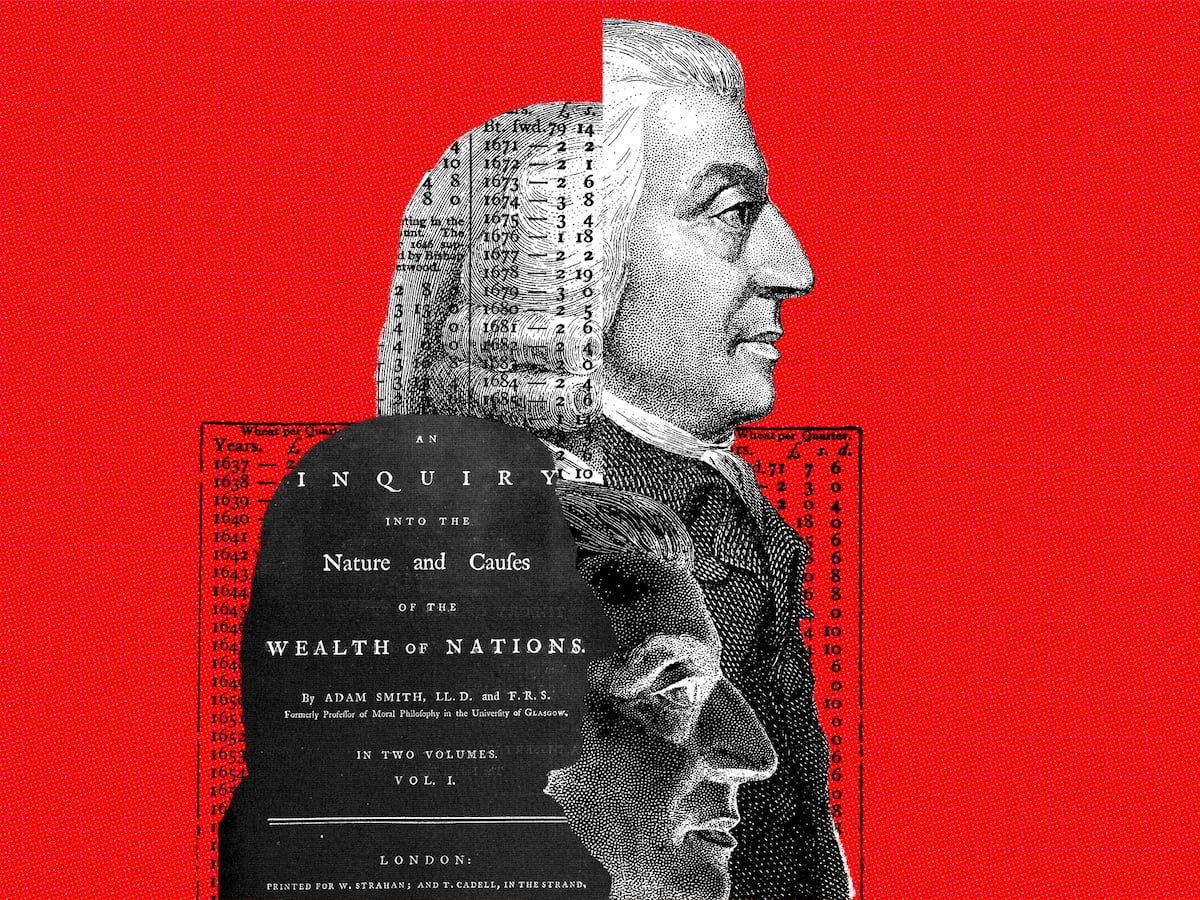
3 weeks agoThe Guardian view on Adam Smith: he deserves rescuing from the free-market myth | Editorial
Adam Smith's economic philosophy has been oversimplified by free-market advocates who misrepresent his nuanced views on self-interest, morality, and the role of institutions in generating wealth.


Law
fromAbove the Law
2 weeks agoThe Rule Of Law Joins America's Dead Pets On The Rainbow Bridge - Above the Law
Trump attorney John Lauro claimed the DOJ improved under Attorney General Pam Bondi, contradicting legal observers who view current conditions as a constitutional crisis threatening prosecutorial independence.
fromemptywheel
3 weeks agoMixing The Mixed Constitution - emptywheel
Burke's was a broadside that not only excoriated the social upheavals effected by the French revolutionaries and (by extension) commended by Marx, but the continual economic and social instability prized by modern liberal economic philosophy and practice. Against a new class of elites-mainly, an alliance between ideological progressive theorists and a rising financial oligarchy-Burke urged protection of the stability, tradition, and social continuities vital for the flourishing of ordinary people.
Left-wing politics
fromBig Think
1 month agoHow the U.S. Constitution protects liberty from the powerful's dark impulses
The real Führer is always a judge. Out of Führerdom flows judgeship. One who wants to separate the two from each other or puts them in opposition to each other would have the judge be either the leader of the opposition or the tool of the opposition and is trying to unhinge the state with the help of the judiciary.
History
Law
fromAbove the Law
1 month agoJustice Gorsuch: Originalism Requires We Recall That The Founders Knew How To F-ing Party - Above the Law
Justice Gorsuch argues that founding-era 'habitual drunkard' laws cannot justify modern firearm restrictions for drug users, citing evidence that Founders consumed far more alcohol than modern standards would classify as habitual use.
Higher education
fromInside Higher Ed | Higher Education News, Events and Jobs
1 month agoA Closer Look at Faculty Political Diversity
Liberal faculty members significantly outnumber conservative faculty members across academia, with ratios varying from 2:1 to 82:1 depending on discipline and study methodology.
Law
fromAbove the Law
1 month agoStanding Up And Cheering For American-ish Principles - Above the Law
Trump's State of the Union challenge to Democrats about protecting American citizens over illegal aliens was a rhetorical trap that oversimplified complex policy issues requiring nuanced discussion rather than simple yes-or-no responses.
fromenglish.elpais.com
2 weeks agoLea Ypi, writer: The two major problems of the 21st century are capitalism and the nation-state'
In her latest book, Indignity, Ypi blends archival material with a fictionalized account of her grandmother's childhood in Thessaloniki and her arrival in Albania, exploring themes of memory and dignity.
Philosophy
fromBig Think
1 month agoHow our view of "fundamental" has evolved over time
In antiquity, many opined about "the elements" in combination. Around 2500 years ago, Leucippus and Democritus founded the idea of atoms. Perhaps everything, they opined, was composed of indivisible building blocks. In the late 1700s, hydrogen and oxygen were discovered. Circa 1804, John Dalton revived atomism to explain chemical behavior. Then in 1869, Mendeleev developed the periodic table: organizing the atoms.
Science
fromwww.theguardian.com
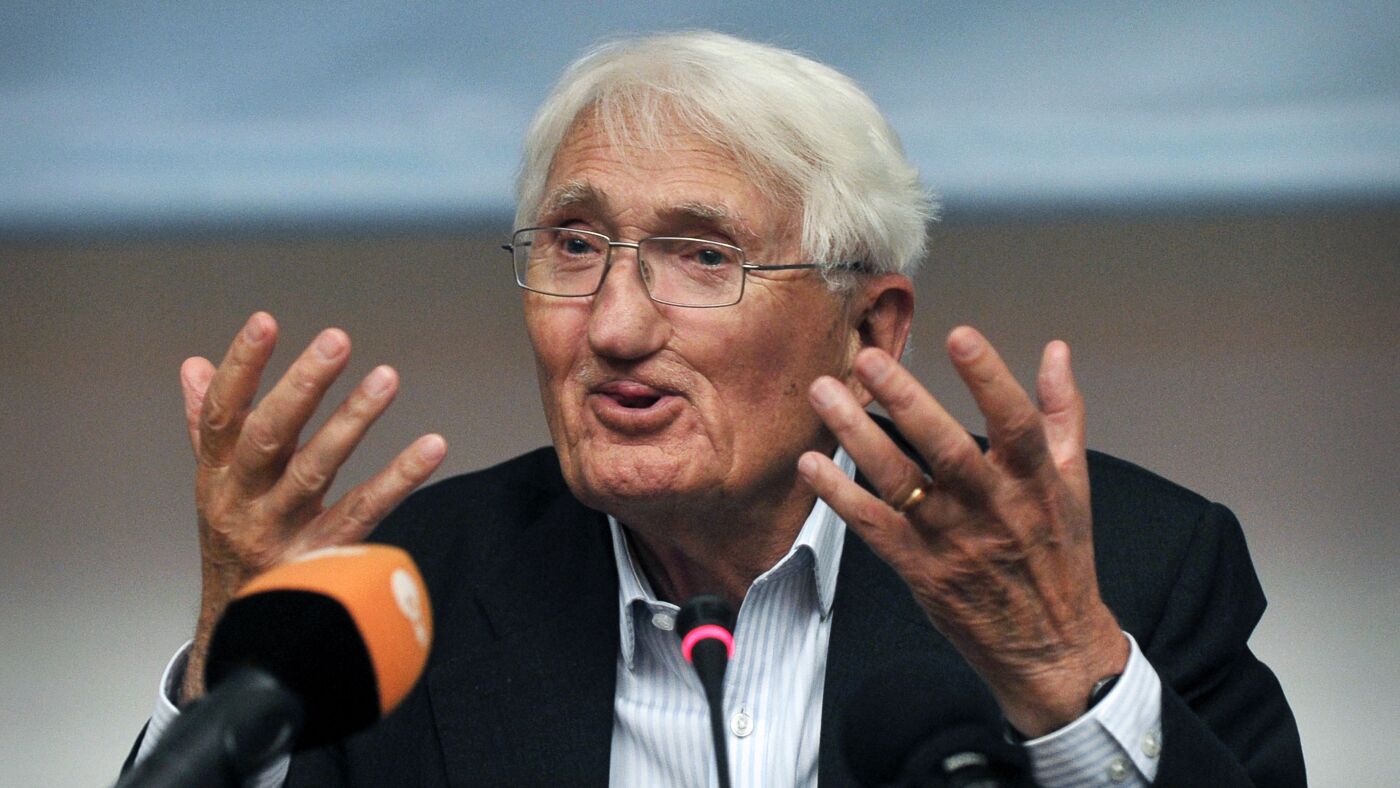
2 weeks agoThe Guardian view on the legacy of Jurgen Habermas: philosophical sustenance for illiberal times | Editorial
The Theory of Communicative Action, his 1980s magnum opus, was not (to put it mildly) as accessible as some of his newspaper opinion pieces. But its central idea—that our nature as linguistic beings puts reason and the search for consensus at the core of who we are—remains an antidote both to intellectual relativism and Trumpian realism, which elevates national or individual self-interest above all other sources of human motivation.
Philosophy
fromHarvard Gazette
1 month agoExcerpt from 'The Cradle of Citizenship' by James Traub - Harvard Gazette
The same deep forces that afflict many Western nations have wrenched us apart: the transition to a postindustrial economy and the attendant erosion of working-class security, the demographic shift toward a "majority minority" nation, the cultural upheaval that has dethroned men, and especially white men, from their age-old dominance - and the rise of entrepreneurs of outrage eager to exploit all that free-floating anger.
Education
Philosophy
fromwww.theguardian.com
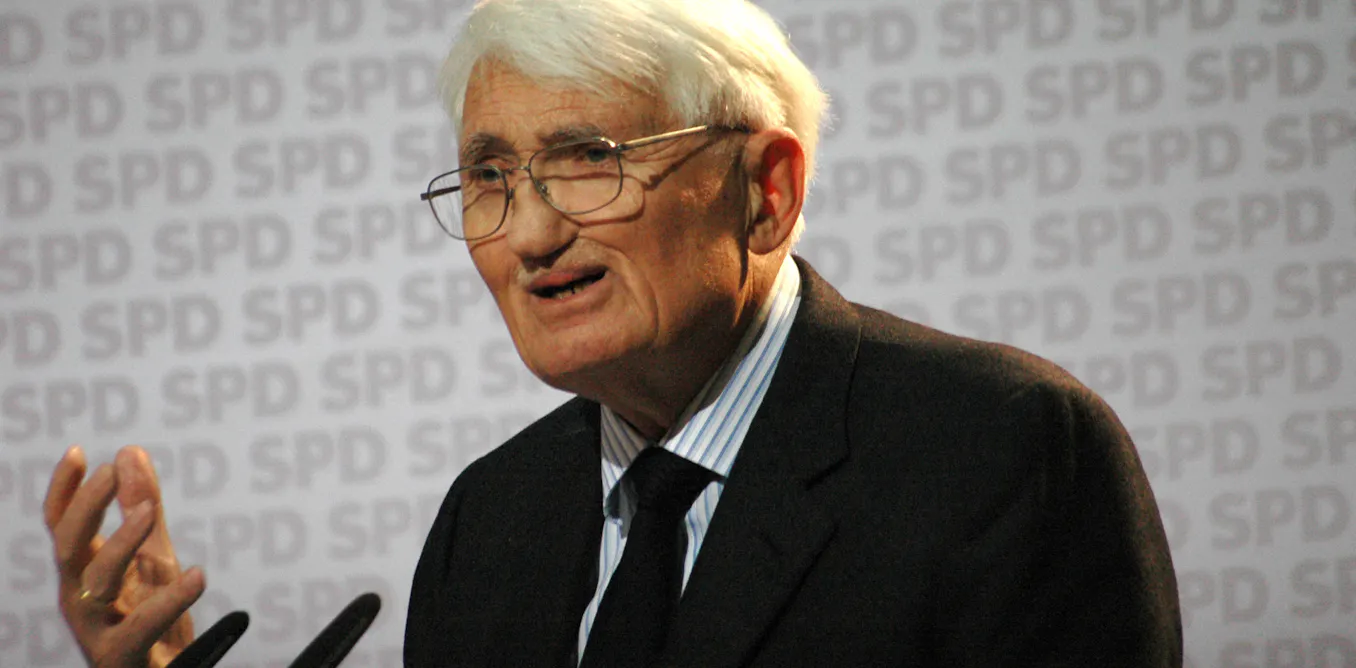
3 weeks agoJurgen Habermas obituary
Jürgen Habermas transformed from a Hitler Youth member into a leading defender of Enlightenment values and democratic theory after witnessing Nazi atrocities, dedicating his philosophy to ensuring collective democratic influence over society.
Education
fromPsychology Today
1 month agoA True Believer in the Intellectual Spirit
Entrenched anti-intellectualism, market-driven educational priorities, and political pressures are undermining liberal arts, academic freedom, and intellectual life while religious movements retain transformative power.
fromApaonline
3 weeks agoRecommendation: U.K. Spinoza Circle
Spinoza was an heir to both Jewish and Christian culture-in Amsterdam he grew up in a Jewish community within a Protestant society-yet he distanced himself from both these religions. He did not want to be a member of a religious institution with strict, prescriptive codes of belonging and belief. He feared-quite rightly-that a [institutional religion would constrain philosophical freedom].
Philosophy
fromenglish.elpais.com
2 months agoIt is easier to overthrow a tyrant than to govern a leaderless country
Any lingering doubts about the true motives behind the 2003 invasion of Iraq were dispelled when looters were ransacking Baghdad, carrying off millennia-old artifacts from the Iraqi capital's archaeological museum, while U.S. troops fortified the Ministry of Oilthe only government building left untouched and from which not a single document emerged. The disastrous and illegal invasion, spearheaded by the United States with military support from the United Kingdom
World news
UK politics
fromwww.theguardian.com
1 month agoIf you want to know what Reform would be like in power, look at how it threatened Bangor University | Gaby Hinsliff
A university debating society declined appearances by two Reform-linked figures citing zero tolerance for racism, transphobia, or homophobia, increasing their visibility online.
Philosophy
fromHarvard Gazette
3 weeks agoWhere have all the public intellectuals gone? - Harvard Gazette
Public intellectuals are essential in democratic cultures to articulate unformed ideas and help citizens understand their values, but conditions supporting intellectual life in America are eroding due to social and economic shifts.
fromNature
1 month ago'What are we doing here?' The polymaths who searched for the meaning of life
A mentor once told me that, when writing a research statement for a professorship, I had to start with the most ambitious pitch I could imagine - and then go ten times bigger. It's tricky enough to do this as a cosmologist, given that the topic of study is the entire Universe. But there is a quest that is more ambitious still: to find out 'what are we doing here?'
Books
fromThe Conversation
3 weeks agoWhat James Madison can teach Americans about religious freedom today
Since taking office for a second time, the Trump administration has issued a number of executive orders on religion that raise new questions about religious freedom. On May 1, 2025, the administration established the Religious Liberty Commission. The commission will advise the White House on policies intended to protect the free exercise of religion and to prevent discrimination against people of faith by the federal government.
Philosophy

fromFast Company
2 months agoOur embrace of individuals over institutions isn't serving us well
In the early 20th century, sociologist Max Weber noted that sweeping industrialization would transform how societies worked. As small, informal operations gave way to large, complex organizations with clearly defined roles and responsibilities, leaders would need to rely less on tradition and charisma, and more on organization and rationality. He also foresaw that jobs would need to be broken down into specialized tasks and governed by a system of hierarchy,
History

fromemptywheel
2 months agoThis Is Not A Constitutional Moment - emptywheel
This script is based on a theory proposed by Bruce Ackerman, Sterling Professor of Law and Political Science at Yale Law School. Ackerman's idea is laid out in his 1991 book We The People: Foundations, and is discussed in the second of his Oliver Wendell Holmes Lectures of 2006. It's gained prominence since the 2024 election and the wholesale assault on our governmental system by Trump.
US politics
fromLGBTQ Nation
1 month agoPolitical pragmatism is not a moral failing. It may be the only thing that can save us. - LGBTQ Nation
He is not worthy of the presidency. He takes bribes blatantly. And now he's being a racist, blatantly. They were supposed to deport the dangerous criminals. They were not supposed to go after small children, storm schools, bring terror upon, you know, the little kids and the women and children, not just the immigrants in the school. All the children are scared.
US politics
Philosophy
fromApaonline
1 month agoThe Humanities Challenge: Expanding the Circle of Philosophy
Philosophy offers transformative insights and vision into human life, and public humanities must evolve beyond traditional academic formats to make philosophy accessible to broader audiences through innovative, engaging methods.
fromFuturism
2 months agoResearchers Just Discovered Something Startling About How Conservatives Pick Political Positions
As it turns out, neuroscience might be able to explain why. In a new study whose findings will surprise absolutely no one who's endured a fiery holiday dinner debate, researchers discovered that conservative and liberal brains don't just arrive at fundamentally different conclusions, but take strikingly different paths to get there. It's a fascinating piece of research which just might explain something about the yawning political divides currently tearing society apart.
US politics
fromwww.mercurynews.com
1 month agoOpinion: Liberty doesn't defend itself right now, it needs our help.
In the United States, we haven't yet seen rifles aimed at large crowds, but we do observe masked federal agents detaining protesters in unmarked vehicles, flashy ICE raids staged like military operations and pardons for political violence all clear warning signs. Ignoring this is the first step toward complacency, which can kill liberty. Fascism is often misunderstood. It is not just political oppression; it is a set of traits, as scholars and observers point out,
US politics
fromAeon
2 months agoWhy Hume is better at explaining modern capitalism than Marx | Aeon Essays
Left-leaning regions of the United States and elsewhere in the world among the richest? When Japan and South Korea sought to become economic powerhouses in the later 20th century, they adopted Leftist policies such as strong public education, universal healthcare and increased gender equality - if countries seeking to compete in capitalist arenas adopt broadly Leftist policies, then how do we explain why Leftists are always talking about overthrowing capitalism?
Philosophy
Philosophy
fromApaonline
2 months agoIn the Midst of a Crisis: Relational Liberalism and the Contemporary Challenges to Democratic Legitimacy
Contemporary democracies face a legitimacy crisis driven by widespread erosion of trust, causing representation breakdowns, unchecked power, and extreme asymmetries in wealth, status, and influence.
fromPsychology Today
2 months agoWhat's the Point of Philosophy?
Unlike me, Dan Dennett, or-I suspect-most scientists studying the brain, Richard maintains that science is: i) neutral between the view that consciousness is (to simplify) identical to parts of your brain and what goes on inside of it, and the view that consciousness is a fundamental property of reality, found in all particles of matter (or, for that matter, other theories such as dualism and idealism) and ii) to be sharply distinguished from philosophy.
Philosophy
fromApaonline
2 months agoWhy We Should Doubt that Academic Philosophy Benefits the Broader Public
A professional philosopher outside the academy walls can act as a popularizer (the goal here is to make philosophy more accessible to the general public), an applied ethicist (the major task is to offer an analysis of various specific moral issues that arise within a society), and a public intellectual (I limit this role to questions that have political connotation). Of course, there are overlaps between these roles and they certainly do not exhaust all possible forms of public engagement of a professional philosopher.
Philosophy


fromPsychology Today
1 month agoIf Justice Doesn't Exist, Then Numbers Don't Either
A drawn circle is at least something physical. You can see it, touch it, erase it. The skeptic can still say, "Circles are grounded in physical reality. Justice is different; it's just an idea in your head." So let's talk about the number two. Point to it. Not two apples, not two fingers, not a numeral on a page-that's just a symbol.
Philosophy
fromPsychology Today
2 months agoWhy You Can't Rely on Your Own Morality Alone
What does it mean to say that you are restrained solely by your own morality, by your own mind? The conscience is often described as an inner voice telling us what to do when others may be opposed. A moral compass is that which distinguishes between right and wrong, good and bad. Our conscience, our moral compass, sets the groundwork for doing the right thing.
Philosophy
fromPsychology Today
2 months agoA Third Kind of Philosophy
Many philosophers strike me as like Polish apparatchiks in 1983-they turn up to work and do what they did yesterday just because they don't know what else to do, not because they seriously believe in the system they are maintaining. I think it's not been fully appreciated how much of a blow it is to the confidence of the field's youth that scientific ambitions are increasingly abandoned as untenable.
Philosophy


fromPsychology Today
1 month agoA Better Grammar for Political Debates
I am using the word pragmatism in a specific sense. I am not speaking about being pragmatic as a political tactic; deciding what issues should be given priority and what battles to choose, or a willingness to compromise, or a recognition that there are limits to what can be accomplished at any time. I am writing now about pragmatism in a meaning closer to its philosophical origin in the writings of William James-that truth is not found in abstract principles or beliefs,
Philosophy
Philosophy
fromApaonline
2 months agoRecently Published Book Spotlight: The Rise of Polarization: Affects, Politics, and Philosophy
Prevailing accounts of affective polarization misdiagnose the phenomenon by focusing on survey patterns instead of the underlying narrative and affective practices that shape political life.
fromApaonline
1 month agoPhilosophy, Technology, and Mortality
This APA Blog series has broadly explored philosophy and technology with a throughline on the influence of technology and AI on well-being. This month's post brings those themes into focus recounting a vital Washington Post Opinion piece by friend of the APA Blog, Samuel Kimbriel. Samuel is the founding director of the Aspen Institute's Philosophy and Society Initiative and Editor at Large for Wisdom of Crowds. We collaborated on a Substack Newsletter about intellectual ambition, building on his essay, Thinking is Risky.
Philosophy
[ Load more ]