#luminescent-creatures

[ follow ]
Science
fromwww.theguardian.com
12 hours ago

Satellite mirror plans could disrupt sleep and ecosystems worldwide, scientists say

Deployment of reflective satellites could disrupt ecosystems and human health by altering natural night-time light environments.
fromTravel + Leisure
1 day ago

What Actually Makes Some Ocean Water Such a Vibrant Turquoise Color-the Science Behind That Dreamy Shade

When light shines through water, colors with longer wavelengths are absorbed by the water, with the longest wavelengths absorbed first. Blue and violet have the shortest wavelengths of visible light, so they are able to penetrate the deepest.
Travel
OMG science
fromwww.scientificamerican.com
2 days ago

See the first stunning images of a massive coral reef that has lain hidden for decades

A newly discovered coral colony off Argentina's coast is rich in life and requires protection from environmental changes.
fromwww.scientificamerican.com
3 days ago

See these ziti-sized fish scale a 50-foot waterfall

During major floods, thousands of tiny fish convene at Luvilombo Falls in the upper Congo River Basin to undertake a peculiar vertical migration, described for the first time today in Scientific Reports.
OMG science
Psychology
fromwww.scientificamerican.com
2 weeks ago

These fish can tell when you're staring

Fish can perceive when they or their offspring are being watched and respond with increased aggression, demonstrating attention attribution abilities previously documented mainly in primates, birds, and domestic animals.
fromwww.scientificamerican.com
3 days ago

Bizarre fossils reveal that complex life evolved far earlier on Earth than we thought

Hundreds of fossils uncovered in southern China's province of Yunnan reveal that at least some of the life-forms scientists had thought arose in the Cambrian period were alive and thriving millions of years earlier, in an era known as the Ediacaran period.
OMG science
OMG science
fromArs Technica
3 days ago

Male octopuses guided through mating by female hormones

Octopuses have a unique reproductive process that involves a specialized appendage for mating, studied by scientists for the first time.
fromArs Technica
2 weeks ago

The science of how fireflies stay in sync

The fireflies were most likely to change their own flashing rhythm in response when the LED blinked almost, but not quite, at the same time as the fireflies. The males would speed up their next flash if the LED blinked just before and waited a bit longer for their next flash when the LED blinked right after.
Science
Travel
fromTravel + Leisure
2 weeks ago

This Rare Firefly Phenomenon Only Happens Once a Year-But You Can Now See It Year-round at This Smoky Mountains Park

Anakeesta adventure park will launch a Nighttime Firefly Experience this spring, an artistic light installation inspired by the rare synchronous fireflies of Great Smoky Mountains National Park.
OMG science
fromwww.theguardian.com
3 days ago

Sex at arm's length? Male octopuses use specialised arm to mate, scientists find

Male octopuses use a sensory arm to detect female hormones and deliver sperm, enabling mating even without visual contact.
OMG science
fromNature
1 week ago

Giants of the deep and the wonder of space: Books in Brief

Right whales have drastically declined from abundant populations in the 17th century to fewer than 400 today.
Science
fromNature
3 weeks ago

No such thing as a shark? Genomes shake up ocean predator's family tree

Sharks may not form a natural biological group; hexanchiformes might be more closely related to rays and skates than to other sharks, making sharks a paraphyletic group.
fromBig Think
1 week ago

One of the most radical reinventions in evolutionary history

Few transformations in the history of life have been as extreme as the embrace of the ocean by seagrass. Like whales and dolphins, modern seagrasses descend from land-dwelling ancestors.
OMG science
Miami Marlins
fromwww.npr.org
1 month ago

Peer pressure can make this clownfish change its stripes

Tomato clownfish flexibly adjust stripe loss based on environmental cues and social hierarchy, with adult presence accelerating the fading process.
fromwww.independent.co.uk
3 weeks ago

Bees can breathe underwater for a week, scientists discover

This study started from a discussion with my co-author and postdoctoral researcher, Sabrina Rondeau, whose recent findings showed that these queens can survive submersion for over a week, which is extraordinary for a terrestrial insect. We wanted to understand how that's even possible.
Science
OMG science
fromwww.theguardian.com
2 weeks ago

Butterflies crossing oceans, moths navigating by the stars: unravelling the mysteries of insect migrations

Insects, including butterflies and dragonflies, undertake massive long-distance migrations across continents and oceans, with trillions traveling annually over previously unknown routes.
fromArs Technica
4 weeks ago

Why are vertebrate eyes so different from those of other animals?

We think that in this early deuterostome, the median eye contained both ciliary and rhabdomeric cells. As a result, both cellular lineages were incorporated into a single, ancient, cyclopean eye, which later evolved into the vertebrate eyes.
Science
Environment
fromwww.theguardian.com
1 month ago

Chronic ocean heating fuels staggering' loss of marine life, study finds

Chronic ocean warming reduces fish biomass by 7.2% per 0.1°C of seabed warming per decade, with marine heatwaves masking long-term decline through temporary population booms in cold-water regions.
Science
fromNature
1 month ago

Daily briefing: The return of the snail - the month's best science images

Cancer blood tests show promise but lack regulatory approval and randomized trials, with concerns about false positives outweighing benefits for widespread adoption.
OMG science
fromNature
3 weeks ago

Daily briefing: Genomes shake up the shark family tree

Doom's cultural impact extends beyond gaming into scientific research, with neurons playing the game and developers porting it to unexpected devices, while shark taxonomy may require reclassification based on genomic analysis revealing Hexanchiformes as a distinct evolutionary lineage.
Environment
fromABC7 San Francisco
1 month ago

Tracking fisherman to track fish: The new technological approach to better understand ocean life

Global Fishing Watch uses AIS transponder data and artificial intelligence to track fishing vessels worldwide, providing unprecedented visibility into global fishing fleet movements and activities.
OMG science
fromThe Washington Post
3 weeks ago

What Earth's longest-lived animals can teach us about aging better

Studying exceptionally long-lived animals across the kingdom reveals genetic and biological mechanisms that could unlock human antiaging interventions and extend human lifespan.
Science
fromNature
1 month ago

Echinoderm stereom gradient structures enable mechanoelectrical perception - Nature

Sea urchin spines possess previously unknown mechanoelectrical perception abilities, responding to mechanical stimuli within 88 milliseconds through rapid spine rotation.
Environment
fromFuturism
1 month ago

Scientists Suggest That Igniting Oil Spills to Create Fire Tornadoes Might Actually Be Good for the Oceans

Controlled fire whirls can remediate oil spills by producing hotter, faster burns that remove up to 95% of fuel while reducing soot by about 40%.
fromSFGATE
1 month ago

Rare footage captures a 'glass' animal deep in Monterey Bay

We've documented sightings of glass squids to better understand the remarkable transformations they undergo from hatchlings to adults. This new observation, captured in ultra high-resolution 4K, allowed us to zoom in on a juvenile likely no bigger than a baby carrot and reveal more details than we have been able to see before.
OMG science
Science
fromDefector
1 month ago

Finally! An Ancient Fish That Understood Life's Terrors | Defector

Haikouichthys, an early Cambrian fish, possessed four eyes and lacked jaws, reflecting distinctive sensory and feeding adaptations among early vertebrates.
Environment
fromState of the Planet
1 month ago

Harnessing AI, Scientists Discover a Rise in Floating Algae Across the Global Ocean

Floating algae blooms have increased globally since about 2008–2010, driven by warming oceans, changing currents, and nutrient pollution, with coastal ecological and economic harms.
fromwww.scientificamerican.com
1 month ago

How do deep-sea fish see in dark water? This new study could hold the clue

Some deep-sea fish may be able to see light in a different way from most other vertebrates, according to a new study. The fish, found in the Red Sea, have what the scientists behind the new study describe as hybrid photoreceptorslight-sensing cells in the retina that combine elements of two distinct kinds of photoreceptors, cones and rods. In human retinas, cone cells enable us to see in bright environments, detecting color and fine detail,
Science
Environment
fromwww.theguardian.com
2 months ago

Scientists warn of regime shift' as seaweed blooms expand worldwide

Rapidly expanding seaweed blooms, driven by warming and nutrient pollution, are transforming oceans toward a macroalgae-rich state, altering ecology, geochemistry, and climate feedbacks.
Environment
fromwww.theguardian.com
2 months ago

Gelatinous horde of red stinging jellyfish washes into Melbourne beaches

Large blooms of lion's mane jellyfish have invaded Port Phillip Bay beaches, prompting swimmer warnings and safety guidance due to painful, potentially dangerous stings.
fromNature
2 months ago

Jellyfish sleep like humans - even though they don't have brains

Neither jellyfish nor sea anemones have brains. But these animals sleep in ways strikingly similar to humans, according to a study published today in Nature Communications. The findings bolster a theory that sleep evolved, at least in part, to protect the DNA in individual nerve cells, helping to repair damage that builds up while animals are awake.
Science
fromwww.scientificamerican.com
2 months ago

Scientists Catch Jellyfish and Sea Anemones Behaving in Surprisingly Human Ways

The animals do, however, have neuronsnerve cells that appear interconnected throughout their body. And now a new study shows that how these animals sleep is surprisingly similar to humans, suggesting that sleep may have evolved before even the most primitive brains. The findings, published on Tuesday in Nature Communications, also help answer one of science's prevailing mysteries: Why do animals sleep?
Science
fromNature
2 months ago

The poetic life and death of a glow-worm

A peek behind the scenes at the zoo reveals animal escapades, and a glow-worm shines in a mild midwinter, in our weekly dip into Nature 's archive.
Science
Science
fromNature
2 months ago

Deep-sea robots will search for source of mysterious 'dark oxygen'

Oxygen has been detected 4,000 metres deep in the Pacific, prompting funded investigations with specialized landers and lab experiments to determine its source.
Science
fromTheregister
2 months ago

Ultimate camouflage tech mimics octopus in scientific first

Synthetic thin-film skin mimics natural camouflage by independently controlling texture and color via electron-beam patterning, water-induced swelling, and optical gold layers.
fromNature
2 months ago

What were the first animals? The fierce sponge-jelly battle that just won't end

Which animals came first? For more than a century, most evidence suggested that sponges, immobile filter-feeders that lack muscles, neurons and other specialized tissues, were the first animal lineages to emerge. Then, in 2008, a genomic study pointed to a head-scratching rival: dazzling, translucent predators called comb jellies, or ctenophores, with nerves, muscles and other sophisticated features. That single study ignited a debate that has raged for nearly 20 years, sparking fierce arguments about how complexity evolved in animals.
Science
Science
fromNature
2 months ago

Daily briefing: Animals without brains sleep too - hinting at why we sleep at all

Jellyfish exhibit sleep-like states remarkably similar to human sleep despite lacking a brain.
fromwww.mercurynews.com
2 months ago

From fuzzy flowers to see-through sea slugs, here are some of the new species discovered last year by California scientists

But as he swept his flashlight through the dark waters, something unexpected emerged. Inching through the beam of light, an alien creature crawled across the surface of the sand, resembling an inch-long cluster of ghostly leaves fringed with silvery filigree and capped with a pair of antennae-like stalks. It immediately caught my eye, said Gosliner, Invertebrate Zoology Curator for the California Academy of Sciences. I've been diving there for 30 years and this one immediately struck me as different.
Science
Science
fromPsychology Today
2 months ago

Secrets of the Sleeping Beauties of the Animal Kingdom

Some organisms can suspend metabolism for millennia and revive unchanged, carrying survival information throughout their bodies rather than confined to neurons.
fromwww.scientificamerican.com
2 months ago

Bat accelerator' unlocks new clues to how these animals navigate

Bats are impressive navigators. Like so many mini submarines equipped with sonar, they deftly navigate dark forests and caves by listening for the echoes of their own calls. But how bats can tell which echo to follow while flitting around in a sea of overlapping and competing signals pinging off the myriad surfaces in their environments has been a mysteryuntil now.
Science
Science
fromInsideHook
2 months ago

Environmental Changes May Make Sharks Less Dangerous

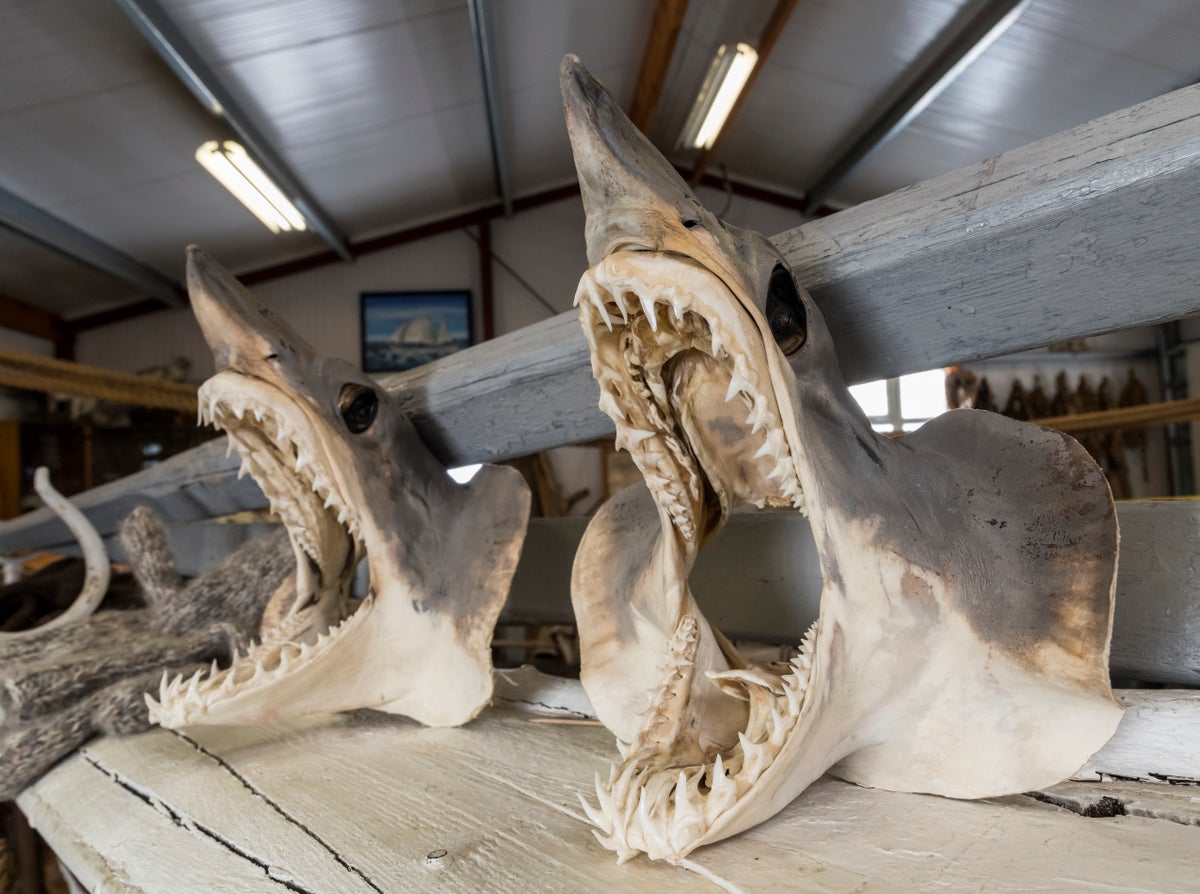
Ocean acidification can corrode and degrade shark teeth, reducing serrations and root structures and threatening foraging efficiency, energy uptake, and elasmobranch fitness.
#greenland-shark
Science
fromwww.scientificamerican.com
2 months ago

Life's evil twins, called mirror cells, could wipe us out if scientists don't stop them

Engineered mirror-image bacteria used to manufacture durable drugs can evade immune detection and cause uncontrollable infections and environmental spread.
Science
fromNature
2 months ago

Daily briefing: How 400-year-old sharks keep their vision sharp

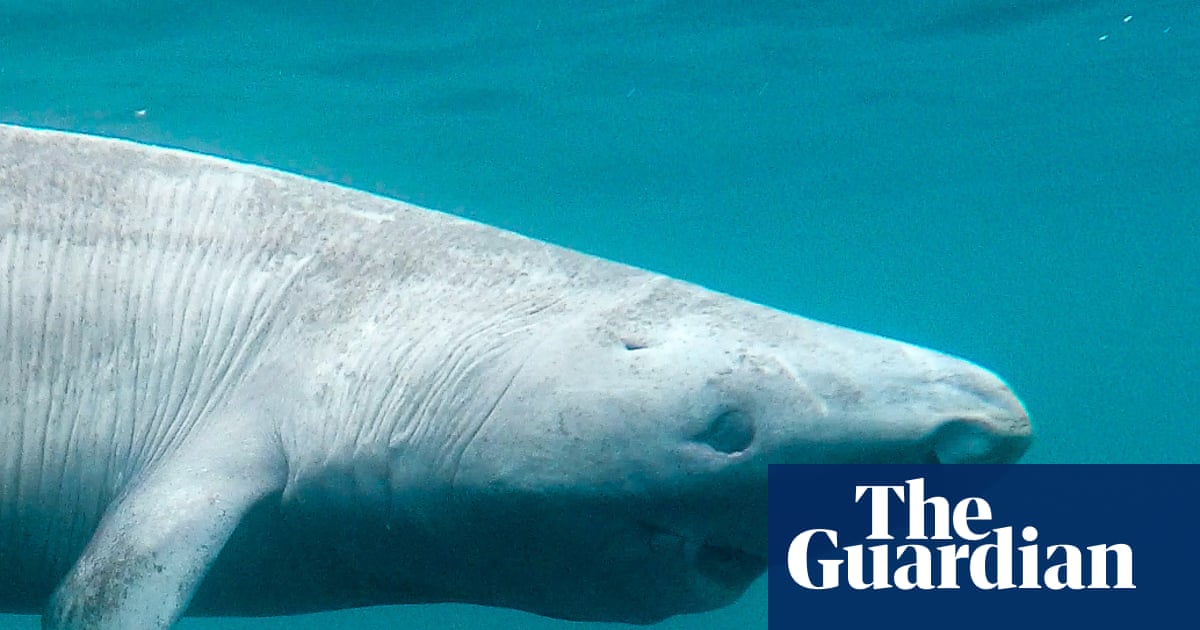
Greenland sharks retain functional vision into extreme old age, offering potential insights into human age-related vision loss.
Science
fromKqed
2 months ago

Hide! 4 Tiny Animals That Go Undercover In Style | KQED

Decorator crabs use seaweed, anemones, and hooked hairs to camouflage, while glasswing butterflies and Australian stick insects employ transparent or twig disguises.
fromKqed
2 months ago

From the Galapagos to the Deep Sea, Cal Academy Scientists Describe 72 New Species | KQED

What we learned was something that hadn't been reported before," Mendales said.
Science
Science
fromwww.nature.com
2 months ago

Four camera-type eyes in the earliest vertebrates from the Cambrian Period

Vertebrate vision evolved via diversification of phototransduction components and eye structures, documented by molecular data and exceptional fossil evidence from Cambrian to mammalian ancestors.
fromKqed
2 months ago

From the Galapagos to the Deep Sea, Cal Academy Scientists Describe 72 New Species | KQED

The lava heron also has a much thicker bill than other closely related herons - an adaptation linked to feeding among sharp volcanic rocks and hard-shelled prey. "What we learned was something that hadn't been reported before," Mendales said. The discovery underscores how much remains unknown, even in iconic places like the Galápagos, said John Dumbacher, the Academy's curator of birds and mammals and Mendales' thesis adviser.
Science
fromwww.latimes.com
2 months ago

California diver documents close encounter with lacy, undulating sea creature far from home

It looked like the silvery blade of a knife. Peering through his goggles, diver Ted Judah had laid eyes on a deep-sea creature rarely encountered by humans. He and wife Linda were diving off McAbee Beach in Monterey County in late December when, near the surface, he spotted the undulating thing. It was some kind of ribbon fish, he wrote in a post on the Facebook group Monterey County Dive Reports. Kevin Lewand solved the mystery.
Science
fromNature
2 months ago

Octopus-inspired 'synthetic skin' changes colour and texture on demand

Bumps or grooves of a range of sizes - from the sub-micrometre scales of visible-light wavelengths up to millimetres - affect how a surface scatters light. This can make a material more or less dull, or change its colour when observed from different angles. Molluscs, such as octopuses and cuttlefish, use tiny muscles embedded in their skin to produce these effects for camouflage or communication.
Science
Science
fromKqed
8 months ago

Beach Day? These 5 Surprising Creatures Are Hanging Out Too | KQED

Sand dollars are flat, spine-covered sea urchins that sift sand for food, breathe through a five-petaled petaloid, and use swallowed magnetite to stay grounded.
Science
fromwww.scientificamerican.com
2 months ago

Meet Baseodiscus the Eldest,' a record-setting worm more than 27 years old

A wild-caught ribbon worm named Baseodiscus the Eldest is estimated to be at least 27 years old, setting a new longevity record for ribbon worms.
fromNature
2 months ago

Daily briefing: The battle over the identity of the first animals

Wooden objects carrying the marks of carving and use could be the oldest wooden tools ever found. Researchers dated the artefacts, found in what is now Greece, to 430,000 years ago - and suggest they might have been made by early Neanderthals or their ancestors, Homo heidelbergensis. A separate study describes 480,000-old flint-knapping tools made from antler and elephant bone, from what is now the United Kingdom.
Science
fromwww.scientificamerican.com
2 months ago

Why Does Life Keep Evolving These Geometric Patterns?

The mirror spider can rapidly shift a patchwork of minuscule reflective plates underneath its abdomen's outer surface, altering the pattern of mirrorlike flashes. This uncommon display comes from common building blocks: Similar tilelike arrangements of plates and soft joints appear throughout the tree of life, from turtle shells to tropical fruit peels. Researchers have now compiled 100 examples of this pattern across animals, plants, microbes and viruses, which they describe in PNAS Nexus.
Science
[ Load more ]