#marina-tabassum
#marina-tabassum
[ follow ]
#architecture #design #interior-design #sustainability #residential-architecture #landscape-integration
fromArchDaily
4 days agoFundacio Mies van der Rohe Presents "Transnational Narratives," a Documentary on Six South Asian Women Architects
The documentary, created by Dr. Igea Troiani, Dr. Mamuna Iqbal, artist and researcher Paula Roush, and filmmaker Rime Tsujino, brings visibility to the experiences of six architects of South Asian origin.
Women in technology
Barcelona
fromArchDaily
5 days agoSANAA, David Chipperfield Architects, and Snhetta Among Five Finalists for Barcelona's New Waterfront Cultural Venue, Liceu Mar
Barcelona selects five finalist teams for the Liceu Mar cultural venue competition at Port Vell, aiming to enhance accessibility and civic engagement.
fromwww.archdaily.com
1 week agoSEOUL FRAME by HE:ARTS / RVMN
K-Beauty continues to grow, with increasing global and domestic interest. In particular, visitors to Korea now engage with everyday beauty experiences such as hair salons, dermatology clinics, and beauty brand pop-ups as key parts of their travel itineraries.
Berlin
Miscellaneous
fromArchDaily
3 weeks agoSetbacks as Courtyards: How Civil Architecture Reimagines the Gulf House in Bahrain
Civil Architecture reinterprets the traditional Gulf courtyard house model for contemporary suburban development by transforming underutilized peripheral spaces into functional gardens that serve both environmental and domestic purposes.
#residential-architecture
Renovation
fromdesignboom | architecture & design magazine
2 weeks agotwo intersecting volumes of black concrete carve mavra house into the mexican landscape
Casa Mavra in Valle de Bravo features two angular black concrete volumes designed by TAC Taller Alberto Calleja, organized as intersecting forms that connect interior spaces with the surrounding landscape through continuous walls and controlled openings.
Renovation
fromdesignboom | architecture & design magazine
2 weeks agotwo intersecting volumes of black concrete carve mavra house into the mexican landscape
Casa Mavra in Valle de Bravo features two angular black concrete volumes designed by TAC Taller Alberto Calleja, organized as intersecting forms that connect interior spaces with the surrounding landscape through continuous walls and controlled openings.
Renovation
fromYanko Design - Modern Industrial Design News
3 days agoThis Tiny House Has 30 Feet of Glass and Feels Nothing Like a Tiny House - Yanko Design
The Shoreline Glass House redefines tiny living with spacious, light-filled design and single-floor layout, offering a unique blend of comfort and openness.
Miscellaneous
fromArchDaily
1 month agoIntestines of a Building: Aziza Chaouni on Architecture's Systems and Resources
Moroccan architect Aziza Chaouni prioritizes hidden building systems, community engagement, and sustainable design rooted in contextual awareness and technical pragmatism across African regions.
fromArchDaily
1 month agoRamand Mixed-Use building / White Cube Atelier
Ramand is, before being a project, a decision—a decision about how a cube can stand on a dual-cornered site without compromising its own geometry and without disregarding the city. The wooden volume is a controlled rotation, neither a formal gesture nor an exaggeration; merely the minimal deviation required for the form to settle into the site.
Miscellaneous
Design
fromYanko Design - Modern Industrial Design News
3 days agoBiomimetic Architecture Reaches New Heights With This Bird-of-Paradise Yoga Space - Yanko Design
Thilina Liyanage's architecture translates animal gestures into functional designs, exemplified by the Rifle Bird Yogashala inspired by the Victoria's riflebird's courtship display.
fromwww.archdaily.com
3 days agoVilla Lyla / SAOTA
Villa Lyla is a private estate that explores proportion, layered forms, and a grounded relationship to its landscape within a tropical setting. The home presents a peaceful retreat on the canal water's edge, balancing formal rigour with a relaxed, climate-conscious approach to living.
Renovation
fromBusiness Matters
2 months agoJameel Observatory Launches Dual-Purpose Climate Shelter in Bangladesh With Mohammed Jameel's Support
Construction has begun on the first Adaptation Fortress in southwest Bangladesh, a climate-resilient shelter designed to protect communities from both cyclones and heatwaves. The Jameel Observatory-Climate Resilience Early Warning System Network announced the initiative, which transforms existing school-based cyclone shelters into multi-purpose structures. The pilot is being built at the Baradal Aftab Uddin collegiate school in Baradal union, Assasuni sub-district, Satkhira district. A second pilot location has been selected at Satbaria high school in Satbaria union, Keshabpur sub-district, Jashore district.
Environment
Renovation
fromArchDaily
2 weeks agoTransforming a Concrete Shell into a Wooden Interior Shaped by the Sea
A Mediterranean harbor house renovation transforms a raw concrete shell into a material-driven interior that echoes maritime atmosphere through spatial organization, natural materials, and carefully controlled views of the surrounding landscape.
Design
fromdesignboom | architecture & design magazine
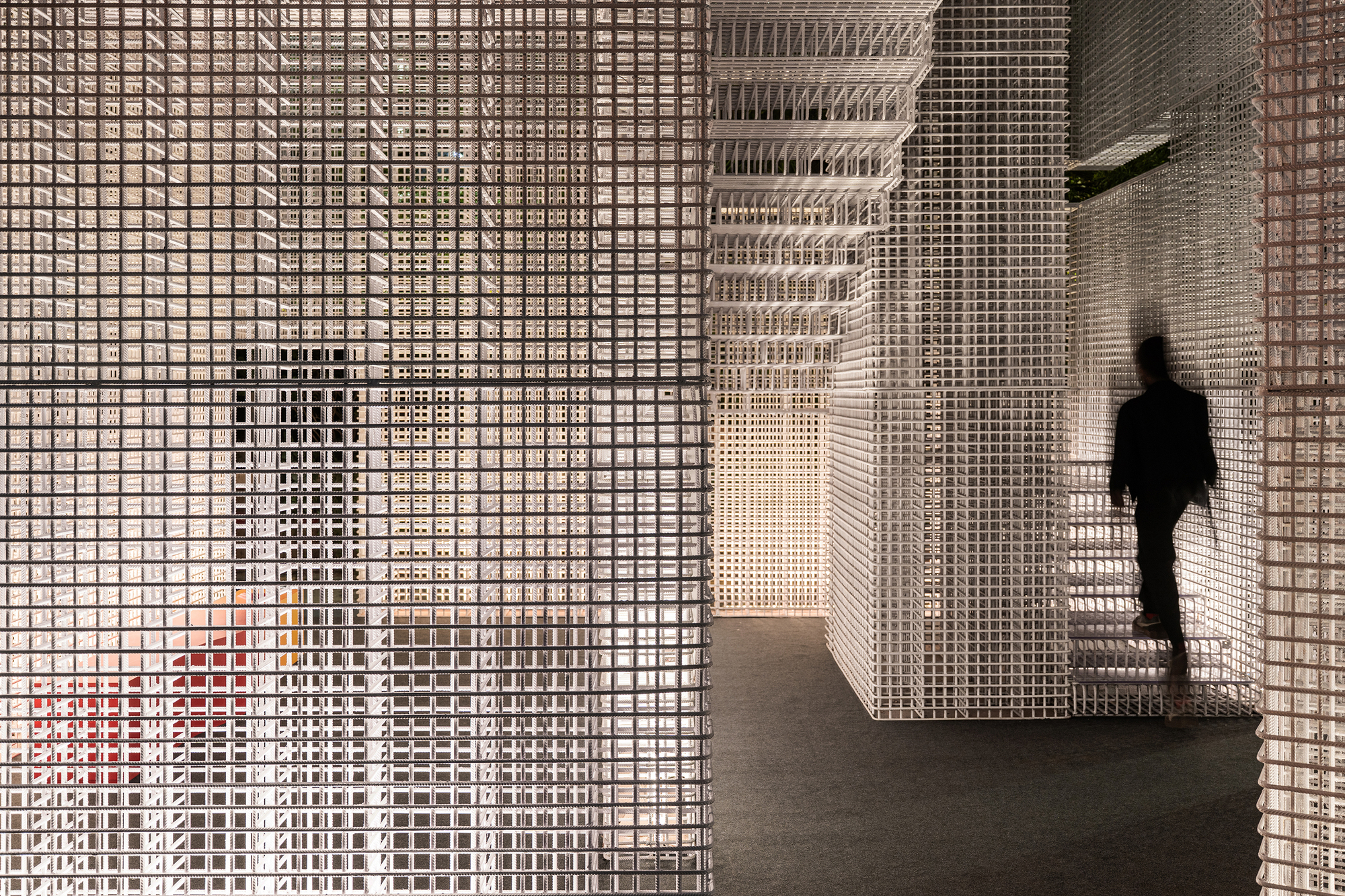
4 weeks agoabin design studio's 'unscripted pavilion' is an ethereal grid in mumbai
The Unscripted Pavilion translates Mumbai's unpredictable urban rhythms into a rotated grid structure with strategic voids that blur boundaries between interior and exterior space.
fromdesignboom | architecture & design magazine
1 month agoexutoire shifts the core of 1990s tube house to form studio-home in hanoi
Emerging in large numbers during Vietnam's construction boom of the 1990s, tube houses are defined by their narrow plots and deep plans, often resulting in dim and stuffy interiors. Exutoire reorganizes the core of the building and relocates the staircase, previously positioned at the center and acting as a spatial barrier, to the back of the plot and removes transverse partitions to open up each level, allowing light and air to travel freely through the depth of the house.
Renovation
fromdesignboom | architecture & design magazine
1 month agobenedetta tagliabue EMBT reshapes century square in shanghai with kaleidoscopic landscape
Century Square has always occupied a strategic position in Shanghai's urban sequence, acting as a hinge between major civic and waterfront destinations. Historically characterized by night lights, shows, and commercial presentations, the site demanded a redesign that could maintain its performative identity while broadening its social and environmental role. The proposal by the team at EMBT retains the capacity of the square for spectacle but shifts its emphasis toward flexibility and daily use.
Renovation
fromArchDaily
2 months agoHouse Macana / Taller Carlos Marin
When we first visited the site, what struck us the most was that after emerging from a narrow alley, an extraordinary view opened up toward one of the slopes of the Tepozteco mountain range. These rock formations are emblematic of the region, and the land ends precisely at the base of this dramatic topography. From the very beginning, one of our main concerns was to ensure that every room-whether for gathering or resting-could enjoy this privileged view.
Design
fromdesignboom | architecture & design magazine
2 months agocurved glass atriums penetrate residence's aluminum roof in bangkok
This elongated entrance sequence establishes a gradual transition from the public urban environment to the private domestic space. Enclosed by stone walls and a timber ceiling, the passage leads into a double-height living area that opens onto the central courtyard, creating immediate visual and spatial continuity across levels. The courtyard functions as the core of the house, mediating environmental performance and spatial organization.
Design
[ Load more ]