#maritime-anthropology
#maritime-anthropology
[ follow ]
#archaeology #marine-archaeology #danish-history #naval-warfare #battle-of-copenhagen #shipwreck #lake-neuchatel

World politics
fromwww.aljazeera.com
3 weeks agoAdvocates push for major probe as US boat strikes in Latin America kill 157
The Inter-American Commission on Human Rights will hold its first hearing on alleged US extrajudicial killings during military strikes against suspected drug-smuggling boats in the Caribbean and eastern Pacific that began in September, with nearly 157 people killed and minimal public information released.
San Francisco
fromLos Angeles Times
23 years agoSan Pedro: Blue-collar soul with ocean views
San Pedro offers affordable oceanside living with dramatic Catalina Island views, rugged bluffs, and diverse neighborhoods ranging from $200,000 to $800,000, appealing to budget-conscious buyers seeking character over polish.
Environment
fromABC7 San Francisco
1 month agoTracking fisherman to track fish: The new technological approach to better understand ocean life
Global Fishing Watch uses AIS transponder data and artificial intelligence to track fishing vessels worldwide, providing unprecedented visibility into global fishing fleet movements and activities.
History
fromBusiness Insider
4 weeks agoWorld War II museum ships suddenly feel less like history after a US submarine sank an Iranian warship
A US Navy submarine's recent sinking of an Iranian warship has revived interest in World War II museum ships, making historical naval combat vessels relevant to contemporary military strategy and public discourse.
fromwww.theguardian.com
1 month agoWays to Traverse a Territory review documenting an ancient and disappearing way of life
Here dwells the indigenous Tzotzil community which has kept a pastoral way of life against the march of time. Apart from the odd forest ranger and passerby, Ruvalcaba's film focuses almost entirely on the Tzotzil women. Together, they tend herds of sheep which they still shear by hand, and use traditional tools for spinning yarns and natural dye for fabrics.
Film


Television
fromwww.theguardian.com
2 months agoMeet the merpeople: Once I put the tail on, my life was changed forever'
Mermaiding has become a global industry requiring trained free-diving performance, bespoke costume-making, formal instruction, international retreats, and career opportunities for professionals and hobbyists.
History
fromMedievalists.net
1 month agoEast Roman Archaeology: Goals and Challenges, with Marica Cassis - Medievalists.net
Archaeology reveals material evidence of daily life, settlement patterns, and economic systems in the East Roman world that textual sources cannot provide, while facing challenges in establishing itself as a distinct field separate from classical and Islamic archaeology.
fromdesignboom | architecture & design magazine
2 months agophotographer captures cargo ships passing by on his ferry ride home
Counting Ships is a photography series by Pierfrancesco Celada that examines proximity, movement, and scale within a maritime landscape. The project captures a busy ferry route connecting an island to one of the most densely populated regions nearby. The crossing takes approximately 25 minutes and passes through one of the world's most active maritime trade corridors, where more than two hundred cargo ships transit daily.
Photography
fromAeon
1 month agoOrcas haven't changed, but our view of the killer whale has | Aeon Essays
'Orcas are psychos,' quipped a close friend recently. He wasn't joking, nor was he ill-informed. In fact, he is probably the world's leading historian of whales and people. He had just watched a BBC Earth clip, narrated by David Attenborough, in which three killer whales separate a male humpback calf from his mother in the waters of Western Australia. The video's closing footage, with two of the orcas escorting the naive youngster to his imminent death, resembles nothing so much as a kidnapping:
Philosophy
fromwww.aljazeera.com
2 months ago'Inevitably difficult'
On September 14, Alejandro Carranza, a 42-year-old fisherman, set out to sea from a remote town in La Guajira, Colombia's northernmost province, bordering Venezuela. It was an ordinary fishing trip, in search of tuna and marlin, said Leonardo Vega, a childhood friend and the president of the fishing association Carranza belonged to. But this time, Carranza never returned.
World news
fromBrooklyn Eagle
2 months agoExhibition opens Friday on alternative visions for the Brooklyn Marine Terminal
RED HOOK - A SPECIAL EXHIBITION - "Brooklyn Marine Terminal: Past, Present, & What's Next for Red Hook?" - will hold its opening Friday night from 6 to 8 p.m. at the Compere Collective, 351 Van Brunt St. in Red Hook. The display, hosted by Resilient Red Hook in collaboration with Pratt Institute's School of Architecture, features student work that explores alternative visions for the BMT, bringing academic insight, community priorities and design innovation together.
New York City
fromwww.theguardian.com
2 months agoMy rookie era: I'm learning to swim in the ocean, braving the waves and marine life
I've wanted to be an ocean swimmer ever since I moved to Sydney. The idea of getting out past the waves and braving the elements excited me. I would tell anyone who would listen: Once I live closer to the beach, I'm going to be out there. Just you wait. I've lived walking distance to the beach for more than a year now. During this time, I've read a lot about ocean swimming: how swimmers overcame challenges or life-altering moments.
Mindfulness
fromwww.scientificamerican.com
1 month agoAncient seafarers helped shape Arctic ecosystems
In the pristine High Arctic sits the Kitsissut island cluster, also known as the Carey Islands, nestled between northwest Greenland and northeast Canada. The surrounding seas are perilous, and traveling there is difficult even with modern boats. But new archaeological evidence suggests ancient humans managed to sail to the islands, too. Early settlers lived on the islands between 4,500 and 2,700 years ago.
Science
fromAeon
2 months agoHow islanders of Oceania built fearsome armour without metal | Aeon Videos
Visually striking and intricately crafted, the traditional armour and weaponry of the Kiribati islands in the Pacific Ocean were built from coconut fibre, human hair, sharks' teeth and porcupine fish. Yet, fearsome and lethal as these objects were, the people of this remote archipelago weren't especially warlike, as British colonists had long assumed, but were instead part of a ritualised style of combat intended to keep violence between clashing groups to a minimum.
Philosophy
Science
fromwww.nature.com
2 months agoAuthor Correction: Hunter-gatherer sea voyages extended to remotest Mediterranean islands
Corrections to regional radiocarbon uncertainties do not meaningfully change conclusions about timing of the Mesolithic–Neolithic transition or maritime voyages in the central Mediterranean.
fromArtnet News
2 months agoNew Research Could Rewrite the Story of One of New York's Earliest Shipwrecks
In 1916, subway construction near Greenwich and Dey Streets in Lower Manhattan unearthed a surprising relic. Some 20 feet underground, workers turned up charred timber; digging further, the contours of an ancient ship came into view-its prow, keel, and ribs. The wreck was later deemed to be the Tyger, a 17th-century vessel that represents a rare archaeological trace of early Dutch exploration in Manhattan.
Arts
fromMail Online
1 month agoArchaeologists fight tides to save the Swash Channel Wreck in Dorset
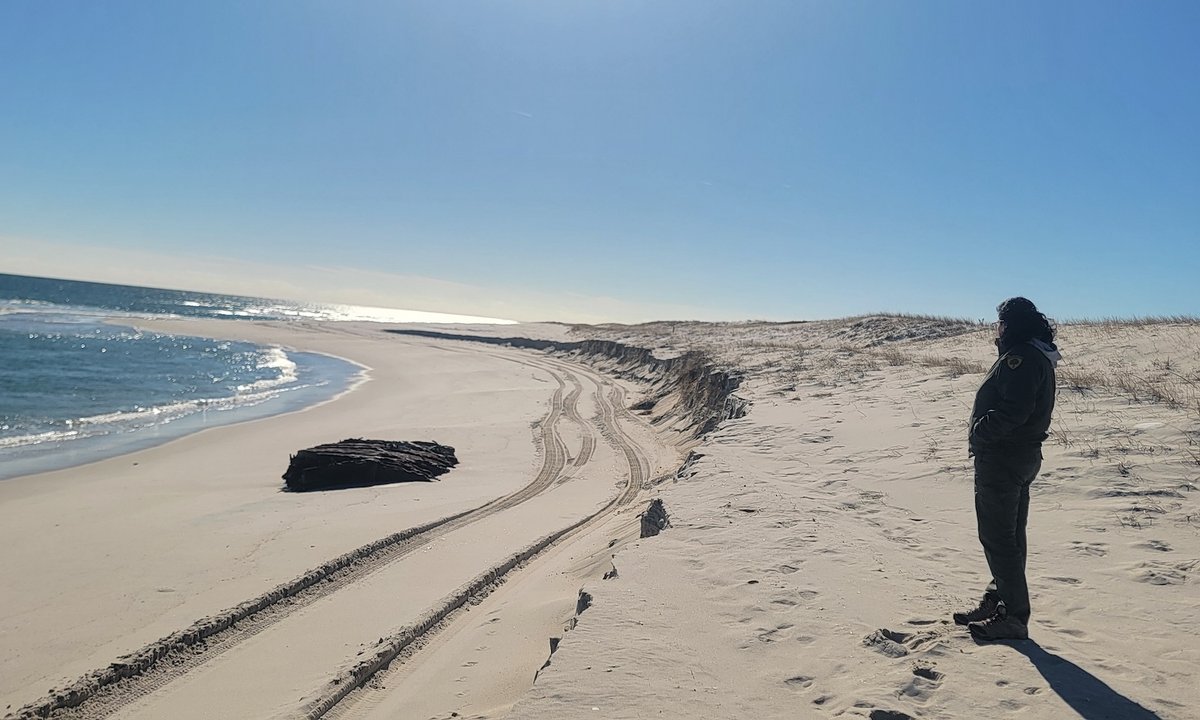
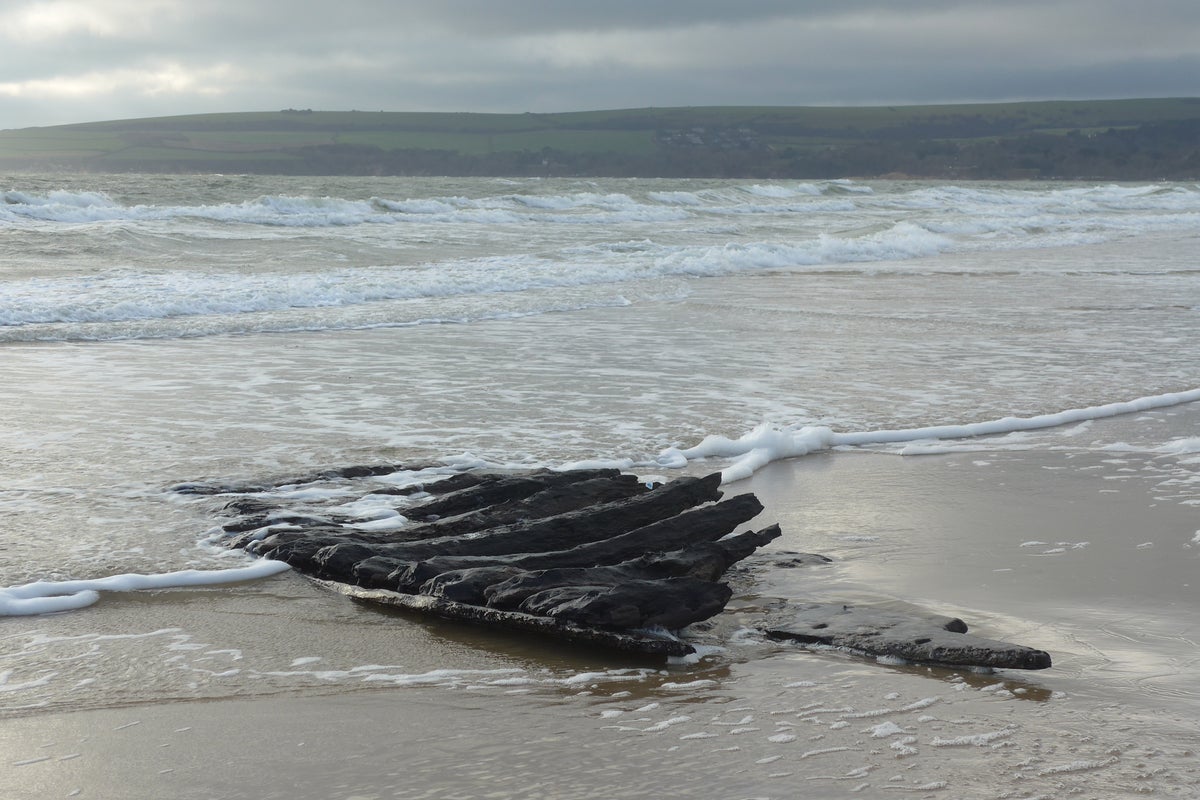
Archaeologists have fought the tides to save a 17th-century shipwreck from a popular nudist beach in Dorset. The remains are believed to be part of the Swash Channel Wreck, a Dutch merchant ship called The Fame of Hoorn that ran aground while approaching Poole Harbour in 1631. The wreck was found on Dorset's Studland Beach at the end of January when Storm Chandra washed away the sand that had kept it hidden for almost 400 years.
History
Arts
fromThe Art Newspaper - International art news and events
2 months agoMexico City exhibition explores dynamic exchange between Americas and Southeast Asia
An exhibition in Mexico City traces centuries-long cultural and economic exchanges linking Mexico, Manila and Southeast Asia through the galleon trade and shared art.
Arts
fromColossal
2 months agoPaintings on Antique Navigational Tools Are a Poetic Nod to Bird Migration by Steeven Salvat
Steeven Salvat creates meticulous hybrid drawings of creatures fused with mechanical elements, using antique maps and navigational objects to explore migration, navigation, and ecological vulnerability.
Science
fromNature
1 month agoDaily briefing: Hunter-gatherers in Europe's 'water world' resisted the switch to farming for millennia
Rhine-Meuse delta populations retained substantial hunter-gatherer ancestry for millennia before steppe-related mixing spurred Bell Beaker expansion and large genetic turnovers.
History
fromSmithsonian Magazine
2 months agoArchaeologists Discovered the 'Holy Grail' of Shipwrecks a Decade Ago. Now, They're Finally Beginning to Unravel the Secrets of the 'San Jose'
A priceless 1708 Spanish galleon, the San José, was discovered in 2015 but remains contested amid political and legal battles over ownership and treasure.
fromSmithsonian Magazine
2 months agoMeet 13 People Who Survived on Deserted Islands, From a Real-Life Robinson Crusoe to a Noblewoman Marooned With Her Lover
Countless books, movies and television shows chronicle the adventures (or misadventures) of people stranded on remote islands. Consider, for example, Daniel Defoe's Robinson Crusoe, the beloved Tom Hanks movie and the classic 1960s sitcom " Gilligan's Island." Now , a new Sam Raimi horror-thriller about a woman (played by Rachel McAdams) stuck with her overbearing boss (Dylan O'Brien) after a plane crash, is set to join the ranks of these survivalist stories.
History
fromThe New Yorker
2 months agoEaster Island and the Allure of "Lost Civilizations"
Finding out what actually happened in the deep past can be a slog, so when ancient history is packaged as mystery-spine-tingling but solvable-it's hard to resist. Who doesn't want to know how a lost civilization got lost, or where it might be hiding? The trouble is that what gets touted as a lost civilization often turns out to have been there all along.
fromSmithsonian Magazine
2 months agoMeet 13 People Who Survived on Deserted Islands, From a Real-Life Robinson Crusoe to a Noblewoman Marooned With Her Lover
Narratives about deserted islands often depict the ingenuity required to build shelter and acquire food and water, as well as the mental fortitude needed to patiently wait for rescue. Many of these story lines are exaggerated and sensationalized for dramatic effect. Still, the challenge of being pitted against nature, secluded from civilization and forced to live with only the barest essentials taps into themes of resilience and adventure that have always fascinated humans.
History
[ Load more ]