#mats-steen
#mats-steen
[ follow ]
#contemporary-art #architecture #ceramics #home-design #sculpture #sustainable-design #interior-design


fromThe Art Newspaper - International art news and events
3 weeks agoGlassblower and porcelain heir Paul Arnhold on the art he loves to collect
Glass demands immediacy. Working at temperatures above 2,000°F leaves little room for overthinking, so the process becomes a kind of live dialogue between material, colour and chance. That same immediacy informs what I'm drawn to as a collector: works that carry a decisive gesture, a tactile presence, and the feeling that they could only exist in one form.
Miscellaneous
fromColossal
3 weeks agoHistoric Architecture Emerges from Stone in Matthew Simmonds Ethereal Sculptures
From unassuming hunks of Carrara marble and limestone, Matthew Simmonds carves realistic, miniature gothic cathedral arches, stairwells, and colonnades. Often based on architectural details of real places, such as cities around Tuscany and Germany's Bamberg Cathedral, the sculptures portray intimate details of corners, vaulted ceilings, arcades, and stairwells that can sometimes be peeked through additional apertures.
Berlin music
Miscellaneous
fromdesignboom | architecture & design magazine
3 weeks agoMARC FORNES / THEVERYMANY's cocooned aluminum pavilion rises in north carolina park
L'Île Folie is a digitally fabricated aluminum pavilion in North Carolina that reinterprets the historic architectural folly as a contemporary public gathering space combining lightweight construction with landscape tradition.
fromTime Out New York
4 weeks agoTwo massive 30-foot sculptures are landing in Manhattan
The sculptures are designed to contrast Manhattan's monumental architecture with imagery drawn from fairy tales, archetypal symbols and dreamlike storytelling. Their polished steel surfaces will reflect the surrounding city while their whimsical forms invite pedestrians to pause-and maybe look up from their phones for a minute.
DC food
#scandinavian-design
Design
fromYanko Design - Modern Industrial Design News
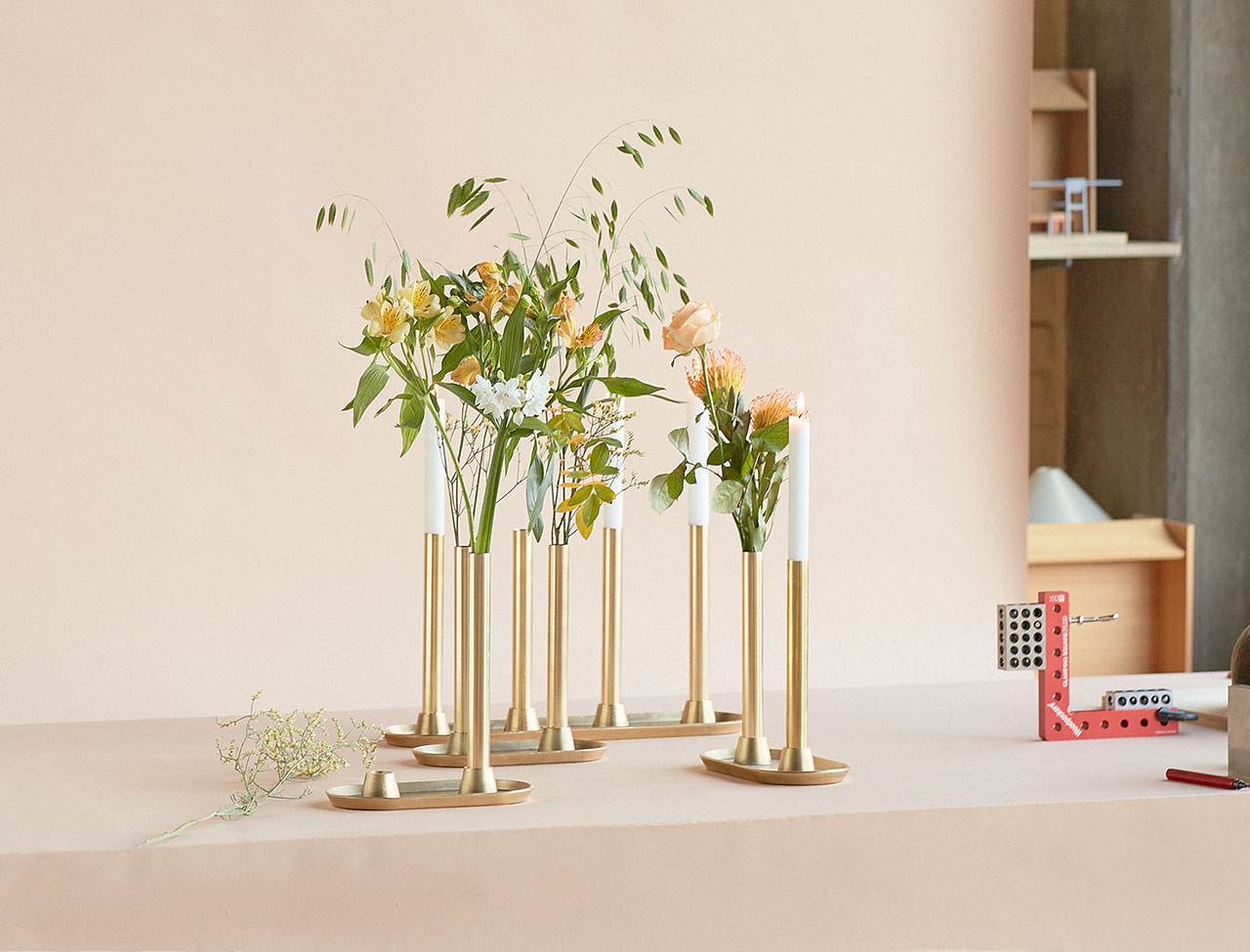
6 days ago5 Scandinavian Product Trends That Will Make Your Home Instantly Feel Like Hygge - Yanko Design
Scandinavian design emphasizes clean lines, natural materials, and functionality, creating a harmonious balance between aesthetics and practicality.
Graphic design
fromBOOOOOOOM!
1 month agoIllustrator Spotlight: Starrenco
Italian illustrator Starrenco creates distorted, imaginative worlds grounded in reality, using drawing as a method of personal investigation to explore inner landscapes and reveal hidden meanings through intuitive creative processes.
#ceramic-sculpture

Arts
fromYanko Design - Modern Industrial Design News
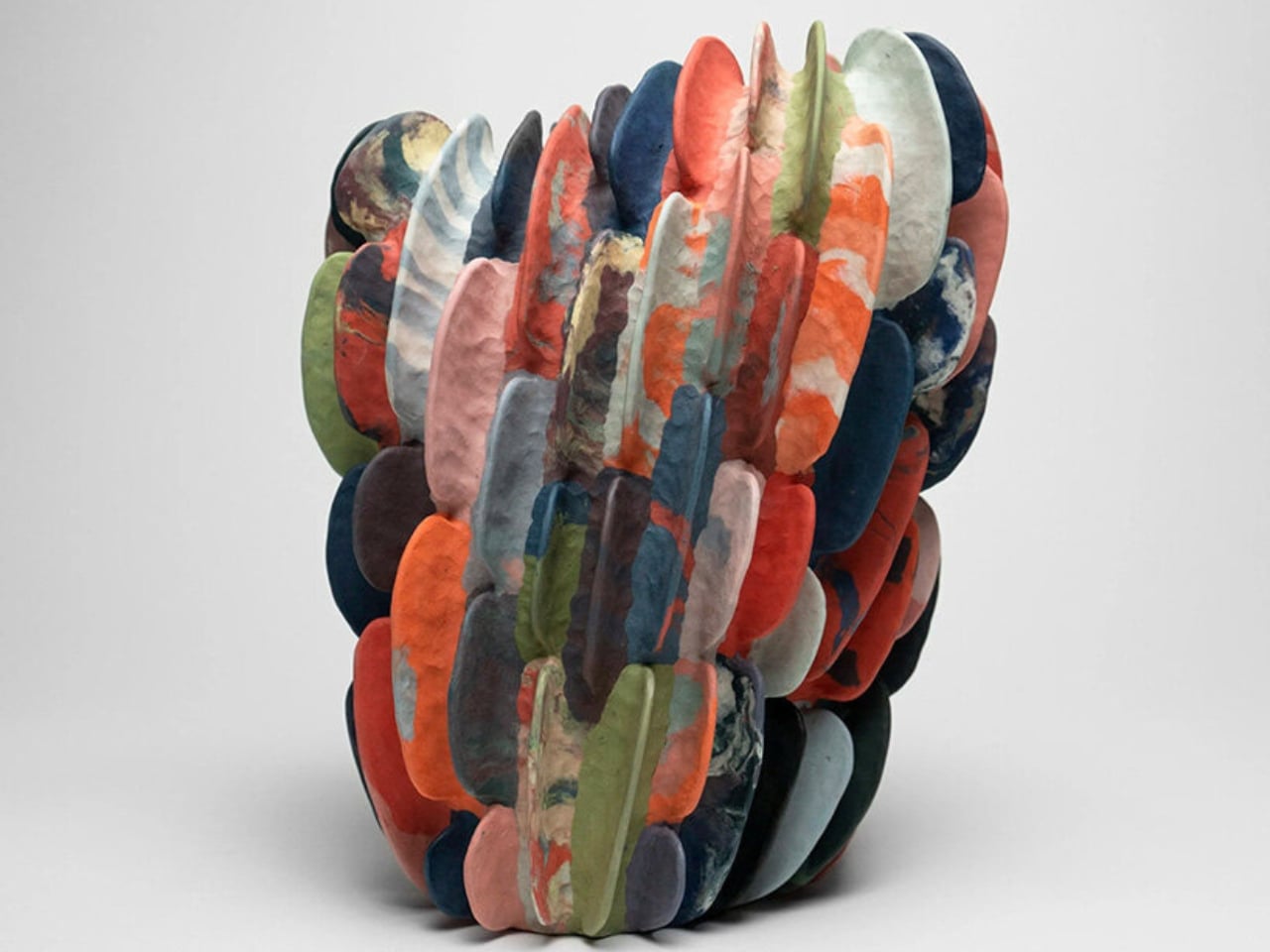
2 weeks agoJanny Baek's Ceramics Look Like They're Still Evolving - Yanko Design
Janny Baek's ceramic sculptures deliberately maintain ambiguity and incompleteness, appearing caught mid-transformation as though unfinished by the kiln, creating visually arresting forms that suggest multiple organic possibilities simultaneously.
Design
fromArchDaily
2 weeks agoSmiljan Radic: Material Explorations Between Ephemerality and Permanence
Chilean architect Smiljan Radić creates buildings that blend ancient monumentality with provisional fragility, combining diverse materials in experimental ways that challenge conventional architectural categorization.
Design
fromYanko Design - Modern Industrial Design News
2 weeks agoBentu Just Built Furniture From Cities That No Longer Exist - Yanko Design
Bentu Design transforms urban demolition rubble into furniture through 3D printing, achieving 85% waste utilization while preserving the physical and cultural memory of demolished communities.
Design
fromdesignboom | architecture & design magazine
3 weeks ago'raw geological poetry': how SolidNature interprets stone into an architecture of emotions
SolidNature transforms natural stone from conventional building material into atmospheric, emotionally expressive design medium through craftsmanship, technology, and artistic collaboration.
Design
fromApartment Therapy
3 weeks agoDesigners Are Done Perfectly "Matching" Their Marble - Here's the New Way to Use Stone
Modern stone design in 2026 prioritizes mixing different stones intentionally with varied finishes and embracing natural patina, replacing the outdated approach of matching all stone surfaces uniformly throughout spaces.
Design
fromdesignboom | architecture & design magazine
3 weeks agopaul&albert turn dutch front doors into sculptural cabinet for citizen participation in assen
Paul&Albert designed a Front Door Cabinet for Assen municipality that combines domestic door architecture with public communication tools, symbolizing the threshold between private and public life.
fromBoard Game Quest
1 month agoSand Art Review
Sand Art is a game by Kory Jordan and published by 25th Century Games for two to four players ages 10 and up. It takes about an hour to play, and has you collecting resources and then coloring in a bottle, making art in a bottle out of sand, in case the name didn't give away the plot. Gameplay Overview: Sand Art has you gathering and mixing sand, which is used to fill your bottle.
Board games
fromdesignboom | architecture & design magazine
4 weeks agosculptural steel ladder imitates the flowing geometries of brass musical instruments
SO KOIZUMI DESIGN has developed Resonique, a ladder that explores the relationship between functional structure and sculptural form. The project draws on the structural logic of ladders while referencing the flowing geometries associated with brass musical instruments. Through this combination, the object shifts from a purely utilitarian tool toward a design piece that engages both function and spatial presence.
Design
fromMedievalists.net
2 months agoMedieval gold ring discovered in Norway - Medievalists.net
A gold ring with a deep-blue, oval setting - decorated with fine spirals of filigree and tiny granulated beads - has been recovered from medieval deposits in Tønsberg, a historic town in southeastern Norway. The ring was found during an excavation in the modern town centre, where archaeologists have been investigating layers of urban life preserved beneath today's streets. The discovery was made within the protected archaeological area known as Tønsberg Medieval Town.
History
Design
fromdesignboom | architecture & design magazine
1 month agoreclaimed corrugated fiberglass panels reform as luminous sculpture by heilig objects
Salvaged corrugated fiberglass panels from an abandoned hut are transformed into a limited-edition light sculpture, preserving fifty years of environmental patina within custom wooden frames.
Design
fromYanko Design - Modern Industrial Design News
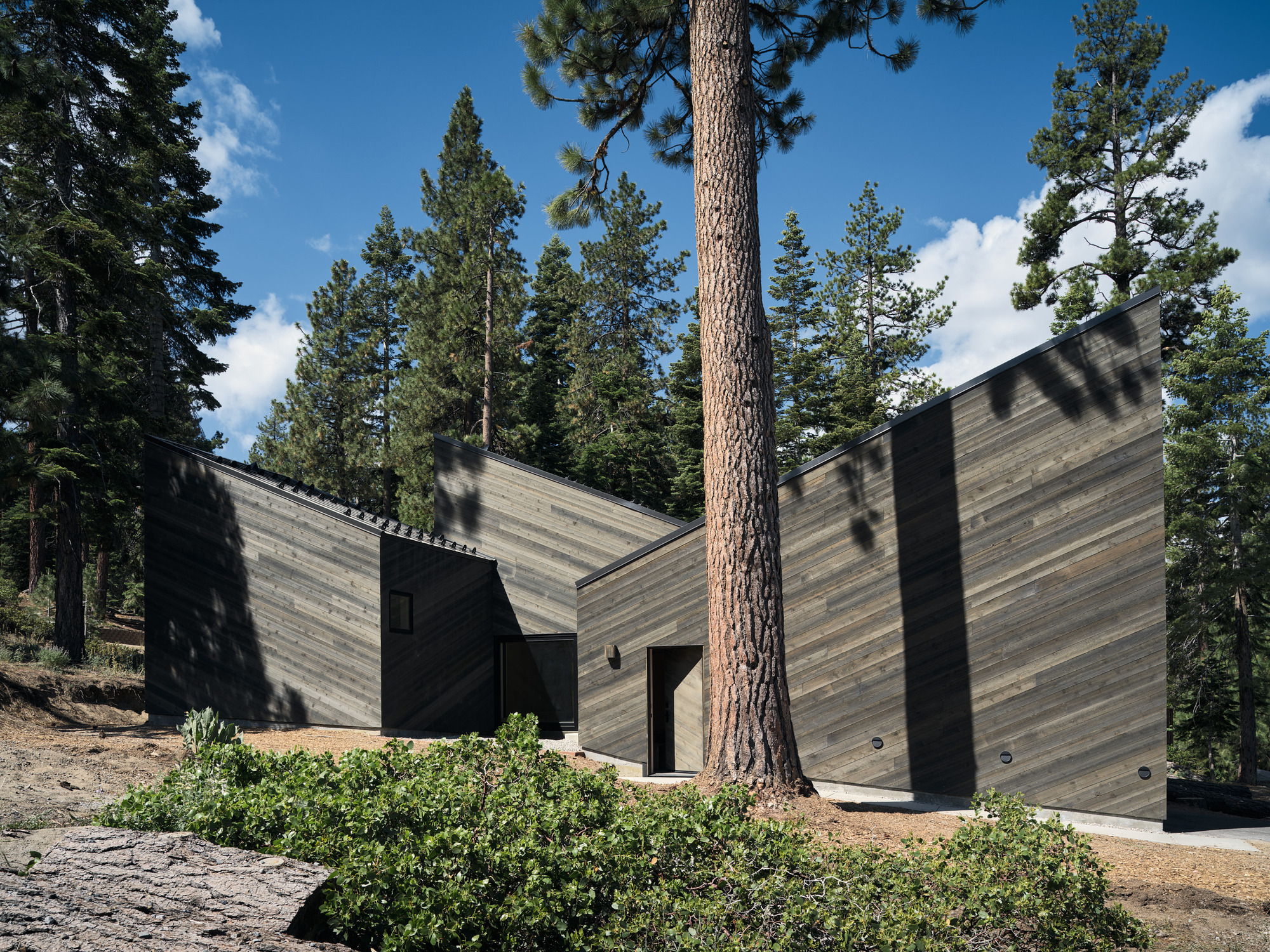
1 month agoThis Dark Timber House Disappears Into a Norwegian Forest - Yanko Design
The Solem Forest House demonstrates restrained architectural design that harmonizes with its forest environment through dark timber cladding and a cross-gabled roof that integrates the second floor within its volume.



fromYanko Design - Modern Industrial Design News
1 month agoThese 'Sandscape' Lamps Turn Reflected Light Into Sculptural Artpieces - Yanko Design
There is a moment at dusk when the boundary between sky and water dissolves. The sun hangs low, the tide softens, and the surface of the sea becomes a trembling mirror, holding light in fragments. Studio Haran's Sandscape Collection seems to trap that exact instant. These sculptural luminaires do not simply resemble waves. They resemble the reflection of something luminous hovering above them, as though the moon or sun has descended and dissolved into ripples.
Design
fromDesign Milk
2 months agoThe Solae Lamp by Cecilie Manz for Fritz Hansen Steps Outside
Dining outside can be quite a beautiful thing - as the sun sets over a delicious meal, everything can feel just right - except, of course, when the night begins to fade. Enter Solae by Cecilie Manz, a portable, directional lamp that merges an ethos in nature with the quality and craftsmanship we've come to know and love from Fritz Hansen. Solae marks Manz's first rechargeable, portable lamp, offering new frameworks for how we might think about objects in the future.
Design
fromArchDaily
2 months agoFrom Industry to the Living Room: Metal Furniture in Interior Architecture
How did a material conceived for bridges, factories, and large-scale structures make its way to the living room bench, the apartment bookshelf, the café table? For centuries, metal was associated with labor, machinery, and monumentality-from the exposed structures of 19th-century World's Fairs to the productive logic of modern industry. Its presence in domestic interiors is not self-evident but rather a cultural achievement: the transformation of an industrial material into an element of everyday, intimate use, in close proximity to the body.
Design
Design
fromdesignboom | architecture & design magazine
2 months agostudent collective builds fireplace shelter from reclaimed materials in northern norway
A reclaimed-material, design-built shelter (24 sqm) in Beiarn supports rest, local collaboration, and material experimentation while reactivating a neglected site.
fromdesignboom | architecture & design magazine
2 months agocontinuous steel rail traces shanghai showroom's sculptural interior, like a freehand drawing
The project is structured around a single continuous hanging rail that extends for nearly 100 meters, serving as both the primary display system and the organizing element of the space. In response to the constraints of the site, the design reconsiders the hanging rail as a spatial device rather than a fixed retail fixture. The rail adapts to existing walls, columns, and building services, bending, rising, and shifting in section as needed to navigate obstacles.
Design
Design
fromdesignboom | architecture & design magazine
1 month agokinetic lighting activates mechanical movement in a sculpture of steel and glass
Kinetic lighting object integrating pulleys, counterweights, glass sphere reflector, and onyx diffuser to produce adjustable directional and diffused illumination via physical interaction.
fromDesign Milk
2 months agoThe Nesting Room: Moooi's Dreamy Debut Into Ceramic Surfaces
Moooi expands its imaginative universe beyond lighting and furniture with the launch of its first-ever ceramic surfaces collection, The Nesting Room. Developed in collaboration with Italian ceramics innovator ABK Group, the new line translates Moooi's signature blend of fantasy, refinement, and multi-sensory storytelling into architectural form. Crafted in full-body porcelain stoneware, each surface transforms walls and floors into serene landscapes of texture, rhythm, and quiet contemplation.
Design
fromYanko Design - Modern Industrial Design News
2 months agoThis Headphone Stand Looks Like a Sculpture Even Without Headphones - Yanko Design
Arco is a headphone stand designed to feel like a finished object, whether or not there is a pair of headphones resting on it. Carved from a single block of wood or stone, it has a smooth arc that gives the headband a gentle resting point and a solid base that reads more like a small piece of furniture than an accessory. When empty, it still looks complete, adding subtle presence to a shelf or desk.
Design
fromdesignboom | architecture & design magazine
2 months agodavid chipperfield updates design for coastal nobel center in stockholm, sweden
The Nobel Center, set to become an open civic institution, will be built along the waterfront between the neighborhoods Södermalm and the Old Town. It will introduce a place for exhibitions, lectures, workshops, and cultural gatherings, with an emphasis on public access. The building forms part of a continuous public route along the water, linking destinations such as Fotografiska and the Stadsmuseet.
Design
fromCurbed
1 month agoWhen the Ashtray Was Everywhere
When was the last time you saw an ashtray filled with stubbed-out Marlboros at a friend's apartment? At a restaurant? For some of us, the answer may very well be "never." Maybe that's the charm of the International Museum of Dinnerware Design's new exhibition on ashtrays - invoking an era before health codes and Mayor Bloomberg. Or reaching back even further, when you might see a Similac-branded ashtray in the office of your OB/GYN.
Design
Design
fromdesignboom | architecture & design magazine
2 months agoatelier yokyok sculpts sphere land installation out of black schist and granite in portugal
A hand-built, five-metre stone sphere in rural Portugal bridges local geology, cultural history, and low-tech construction while providing an inhabitable, nest-like shelter.
Design
fromYanko Design - Modern Industrial Design News
2 months agoThese Steel Chairs and Lamps Look Like Sitting Inside a Pergola - Yanko Design
Foln transforms pergola-like beams and shadow rhythms into slender stainless-steel furniture and lighting that treat shadow as architectural element and shift with viewpoint.
Design
fromdesignboom | architecture & design magazine
2 months agoexpanded curatio installation returns to maison&objet 2026 spotlighting collectible craft
Maison&Objet January 2026 spotlights craftsmanship and contemporary design under 'Past Reveals Future,' featuring an expanded CURATIO installation and immersive scenography.
[ Load more ]