#medication-impairment
#medication-impairment
[ follow ]







from6abc Philadelphia
2 weeks agoScientists say marijuana doesn't ease anxiety or other mental health conditions
We found no evidence any form of cannabis is effective in treating anxiety, depression or post-traumatic stress disorder, which are three of the leading reasons for which cannabis is prescribed. The cannabis medications being administered in these studies were largely oral formulations, such as capsules, sprays or oils. In real life, people typically use smoked cannabis, and there is even less evidence of its effectiveness for mental health.
Cannabis
Medicine
fromwww.theguardian.com
3 weeks agoRestraining and sedating dementia patients routine' in hospitals in England, study finds
Dementia patients in English hospitals routinely experience restraints and non-consensual sedation as embedded ward practices, with staff often unaware these constitute restrictive interventions.
Health
fromSilicon Canals
3 weeks agoI'm 66 and a doctor I'd never met before looked at my chart and said "do you have someone at home" and the way she asked it - clinical, not warm - made me realize the question wasn't about companionship, it was about whether anyone would notice if something happened to me between appointments, and I've been sitting with that distinction ever since - Silicon Canals
Social isolation in retirement creates invisibility where daily routines no longer intersect with others, risking being unnoticed for extended periods.
Public health
fromwww.independent.co.uk
4 weeks agoADHD prescriptions have soared since Covid pandemic, study finds
ADHD stimulant prescriptions have doubled since the pandemic, driven by virtual screening services, social media awareness, and improved access to care, though concerns exist about potential misdiagnosis.
Cannabis
fromwww.theguardian.com
3 weeks agoCannabis is not an effective treatment for common mental health conditions, says review
Cannabis lacks sufficient evidence for treating anxiety, anorexia nervosa, psychotic disorders, PTSD, and opioid use disorder despite widespread patient use for mental health conditions.
Medicine
fromwww.theguardian.com
3 weeks agoThe Guardian view on weight-loss jabs and addiction: there is too much moralising about these remarkable medicines | Editorial
Weight-loss drugs show promise in reducing addiction risk, suggesting they may address shared biological mechanisms between food and drug cravings in the brain.
Social justice
fromPsychology Today
1 month agoWhat if Addiction Isn't the Problem?
Addiction's lack of clear definition undermines regulatory efforts against corporations; reframing addiction as a common human state rather than inherently harmful could better address actual harms and protect children from exploitative design.
#recreational-drugs-and-stroke-risk

Public health
fromwww.independent.co.uk
4 weeks agoRecreational drugs triple the risk of stroke in young people, study finds
Recreational drugs including cannabis, cocaine, and amphetamines significantly increase stroke risk in young people, with amphetamines potentially tripling risk in those under 55.
Medicine
fromwww.theguardian.com
4 weeks agoRecreational drugs can more than double risk of stroke, study suggests
Amphetamine and cocaine use more than double stroke risk, with cannabis increasing risk by 37%, while opioids show no increased stroke risk according to analysis of over 100 million people.
fromSilicon Canals
1 month agoWhat neuroscience reveals about people who lie awake replaying conversations from six hours ago - Silicon Canals
Rumination activates the default mode network (DMN) - the brain's self-referential processing system. This is the neural circuitry that fires when you're thinking about yourself in relation to others: your identity, your social standing, your mistakes. It's the brain asking, over and over, What does this say about me?
Psychology
Mental health
fromScary Mommy
3 weeks agoFDA Drug Official Moves To Hire A Friend Who Touts Unproven Claims About Antidepressants
Nearly 23% of American women take antidepressants, but FDA officials are considering adding unproven pregnancy risk warnings to antidepressant labels despite robust evidence supporting their safety during pregnancy.
Medicine
fromwww.theguardian.com
1 month agoWeight loss drugs may stop people getting addicted to drugs and alcohol, study finds
GLP-1 receptor agonists reduce addiction risk to alcohol, tobacco, cannabis, cocaine, and opioids while decreasing overdose, hospitalization, and mortality rates in people with substance use disorders.
Healthcare
fromwww.npr.org
1 month agoCan't get a prescription renewed? Here's how to cope with prior authorizations
Insurance prior authorization requirements expire even for patients already taking prescribed medications, forcing repeated approval processes and potentially interrupting effective treatments.
fromPsychology Today
2 months ago'It Was Just an Accident'... Until It Wasn't
The movie opens with a brief prologue. A family is driving at night. They hit something on the road, which turns out to be a dog, and the dog dies. The daughter in the back seat is visibly upset. The mother consoles her by saying, "It was just an accident-Dad didn't do it on purpose." Then the title appears, and the main story begins.
Film
Health
fromSilicon Canals
2 months agoDoctors are frantically warning people to STOP doing this one thing before bed - it's linked to early cognitive decline - Silicon Canals
Bedtime smartphone use and late-night screen exposure disrupt sleep and memory consolidation, causing measurable cognitive decline and impaired memory function.
fromwww.wired.com
1 year agoI Tested 20 Over-the-Counter Sleep Aids to Find a Way to Beat My Insomnia
I tested AGZ's chocolate and mint flavors, which come with a frother, and you can blend the powder with water or milk, either warm or cold (although I think it tastes the best with milk, like a frothy hot cocoa). The drink doesn't taste overly sweet and has a nice, rich chocolate taste. The mix is melatonin-free, instead with adaptogens, herbs, and minerals, including magnesium, vitamin B6, L-theanine, ashwagandha, and calming herbs.
Alternative medicine
fromSilicon Canals
1 month agoNeurologists reveal the everyday habit that doubles your dementia risk - Silicon Canals
A groundbreaking study found that adults who sit for 10 or more hours daily face a significantly higher risk of dementia compared to those who sit less. The research, which tracked over 50,000 adults using wearable devices, revealed that the risk increases dramatically after crossing that 10-hour threshold.
Health
fromPsychology Today
1 month agoSmoking Fentanyl, Cannabis, Methamphetamine, or Tobacco
Some experts have mischaracterized smoking fentanyl as "safer" than injecting, seeking to reduce risks among users. Narrowly considered, the statement is accurate, as inhalation avoids needle-sharing, reducing risks for HIV, hepatitis C, bacteremia, abscess formation, and infective endocarditis among users. However, there's no clinical-trial-level evidence (randomized trials with real patients) showing smoking illicit fentanyl is safer than injecting it. It isn't, and that conclusion is unsupported by toxicology, environmental exposure science, or emerging data.
Public health
fromwww.npr.org
2 months agoFor those with addiction, going into and coming out of prison can be a minefield.
The Alaska Department of Corrections does not provide comprehensive access to this life saving medication. "I'm gonna give you a little pinch," Spencer said, sliding the needle into a fold of skin on the patient's belly for the subcutaneous injection. Alaska's not an outlier. Despite the fact that those recently released from incarceration are some of the most vulnerable to dying from drug overdose, addiction experts say that many jails and prisons around the country don't provide medication treatment.
Public health
fromBuzzFeed
1 month agoThis Is The 1 Alzheimer's Symptom You Might Not Expect - Or Worse, Blame Yourself For
It's easy to feel hopeless when someone has Alzheimer's, and to think that small interventions won't make a difference. That's understandable - and thankfully not true. "This symptom can be effectively treated with behavioral interventions as well as medication, which is FDA-approved for the treatment of agitation in Alzheimer's disease," Palekar said. To get to that point, he recommended discussing any agitation-like symptoms with the patient's medical provider.
Medicine
Medicine
fromSilicon Canals
2 months ago8 medications that become dangerous after their expiration date, according to pharmacists - Silicon Canals
Some expired medications can become harmful or ineffective, and certain drugs—like epinephrine and insulin—should never be used after their expiration dates.
fromwww.theguardian.com
1 month agoPsychiatric drugs aren't always the answer | Letter
Yes, there has been a shocking lack of progress in developing transformative psychiatric medicine (We need new drugs for mental ill-health, 5 February), but this may be because in mental health, drugs are not always the answer (see, for example, Richard P Bentall's Doctoring the Mind). Huge progress has been made in the effectiveness of talking therapies for example, free effective treatment for post-traumatic stress disorder (PTSD) is available to all UK army veterans through the charity PTSD Resolution.
Mental health


fromPsychology Today
2 months agoWhen Memory Worries Deserve Attention
Most people will forget a name, misplace their phone, or lose track of a conversation at some point. Usually, those moments pass without much thought. But for many adults, especially as they age, small lapses can trigger a much deeper fear: Is this the beginning of cognitive decline? As a neurologist, I hear this concern often. And as a researcher, I have learned something important: Worry about cognition and cognitive disease are not the same thing.
Mental health

fromPsychology Today
1 month agoAre We Overmedicating Our Children?
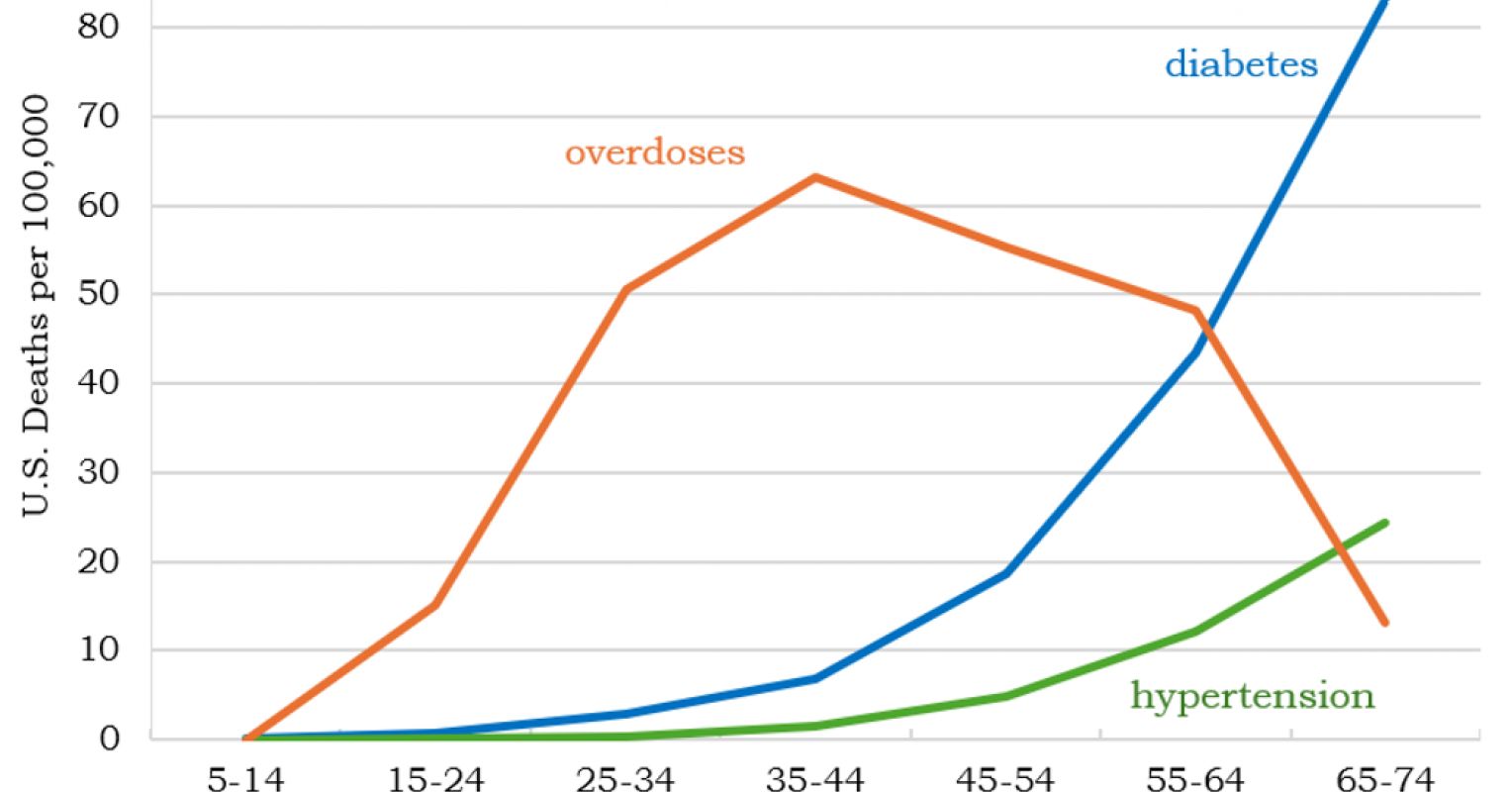
Are we overmedicating our children? My answer is yes. But not for the reason most people assume. The overmedication of children is not a story about reckless doctors or careless parents. It is not an argument against psychiatric medication. I prescribe medications to children and adolescents regularly, and I have seen them reduce suffering and save lives. The real problem lies elsewhere:
Mental health
fromSilicon Canals
1 month agoA brain-based AI test could point to the best antidepressant for you - Silicon Canals
Before treatment began, participants underwent neuroimaging. Instead of relying on a single modality, the researchers fused structural connectivity (how regions are physically wired) with functional connectivity (how regions co-activate at rest). The goal was not to throw every possible feature at a black box, but to learn a constrained pattern-what the authors call structure-function "covariation"-that carries the most predictive signal for outcome. In other words, the model tries to find the smallest set of connections that meaningfully forecasts symptom change.
Mental health
fromPsychology Today
2 months agoTo Medicate or Not To Medicate Your Child or Teenager
Every day, many thousands of parents across the U.S. face the difficult question of whether to place their child or teenager on a psychotropic medication. Receiving a diagnosis of a mental disorder can be scary and confusing, for the youth as well as their parents/caretakers. What is ADHD? Depression? Anxiety? OCD? Bipolar? What are the available treatments? Do we have to use medications to treat the symptoms?
Mental health
fromSilicon Canals
1 month agoWhen to worry about forgetfulness versus when it's just normal aging: a neurologist finally explains clearly - Silicon Canals
You know that moment when you walk into a room and completely forget why you went there? Or when someone you've known for years walks up to you at the grocery store and their name just... vanishes from your brain? Last week, I spent ten minutes searching for my reading glasses while they were sitting on top of my head. My first thought wasn't "oh, silly me." It was "Is this how it starts?"
Medicine
fromPsychology Today
1 month agoWhy Addiction Treatment Keeps Failing
For decades, addiction treatment in the United States has relied on a familiar explanation when people relapse: recovery is hard, addiction is chronic and setbacks are part of the process. That narrative is often delivered with compassion, but it can obscure a more troubling reality. Many treatment failures are not personal shortcomings. They are predictable outcomes of how recovery is currently designed.
Mental health
[ Load more ]