History
fromOpen Culture
3 days agoHow Everything in a Medieval Castle Worked, from Its Moats to Its Dungeons
Medieval castles were complex structures designed for defense, featuring elements like barbicans, moats, and parapets.
The financial accounts kept by the fabrique for Girona Cathedral provide exceptionally detailed records, allowing historians to calculate the total number of workers and the average employed per year.
The Household and Wardrobe Accounts are English records that document the daily needs of the king and his family. This book serves as a guide to these sources, showing how they can be used and what valuable insights they offer into medieval government.
Tropes were additions inserted into established Gregorian chants. They could include new words, new melodies, or a combination of both, expanding the original liturgical piece and sometimes offering additional theological or rhetorical commentary. In many cases, tropes circulated long before they were recorded in writing. Their melodies and texts were transmitted orally for centuries before being preserved in medieval manuscripts, creating a complex web of regional variants across Europe.
Looking to the Middle Ages for answers to the perennial puzzles of life can seem quaint, even artificial, a long reach across centuries marked by violence, hierarchy, and exclusion. And yet medieval culture offers a way of thinking about love that still speaks to the present. If love is most urgently tested in moments of strain and upheaval, then it is in those moments - where care is stressed or obscured - that its meaning comes most clearly into view.
Renais­sance artist Albrecht Dür­er (1471-1528) nev­er saw a rhi­no him­self, but by rely­ing on eye­wit­ness descrip­tions of the one King Manuel I of Por­tu­gal intend­ed as a gift to the Pope, he man­aged to ren­der a fair­ly real­is­tic one, all things con­sid­ered.
Imperial Roman ethnography was a gift the Romans made for themselves, because it embraced concepts with which they could address the great cultural diversity of their world. It was a gift that came from the conquerors, reflecting their supposition of preeminence. At the same time, Roman ethnography was a somewhat less welcome present for the many peoples who found themselves trapped in Rome's vision, needing to find a place within it that made sense to Roman demands.
This open-access book brings together more than thirty essays on languages and the ways they develop, interact, and influence one another. Its main focus is the Middle East, where Hebrew, Arabic, and Aramaic long existed side by side and often overlapped in everyday use, scholarship, and culture. In line with Geoffrey (Khan)'s commitment to the maximally accessible dissemination of research, this Festschrift has been published in both open-access digital editions and affordable printed formats.
In this volume, the authors aim to provide a truly global overview of the 14 century, with each region given approximately the same space. It is obviously impossible to cover every event in every country of the world in a single volume, just as you would not be able to visit every city in every country if you traveled around the world for a year.
In this paper we investigate whether infant and childhood feeding practices influenced the imbalanced adult sex ratio reported in medieval Europe from historical and osteological evidence. First, we examine hypotheses for the observed imbalanced sex ratios in Europe and the evidence presented to support these hypotheses. We then use stable isotope analysis (δ13C and δ15N) of incremental dentine in 64 first molars from adults at three medieval sites (Aulla, Badia Pozzeveri, and Montescudaio) in north-western Tuscany (11th-15th c. CE).
We get started by exploring the origins of the Normans in the county and then duchy of Normandy. We will understand their Norse background and their relationship with the Carolingians. The timeline approach will help us discover all the counts and dukes of Normandy, and what they contributed to their realm. This will set the foundation for the interconnected stories that will lead us to England and the Mediterranean.
This project will focus on the Camaldolese hermits' proposal for achieving what they considered to be the most crucial task in the repair of the church, eliminating Islam and all Muslims. Our study will begin with an examination of the recipient of the Libellus, Giovanni de' Medici, who would become Pope Leo X. Next will be an exploration into the backgrounds of Paolo Giustiniani and Pietro Querini,
Abū Nuwās's poetry is sheer joy: it never fails to delight, surprise, and excite. His diwan, his collected poems, encompasses the principal early Abbasid poetic genres: panegyrics ( madīḥ), renunciant poems ( zuhdiyyāt), lampoons ( hijāʾ), hunting poems ( ṭardiyyāt), wine poems ( khamriyyāt), love poems ( ghazaliyyāt) to males ( mudhakkarāt) and females ( muʾannathāt), and transgressive verse ( mujūn).
Eleanor Janega is one of the most well-known historians of the Middle Ages, widely recognised as the host and co-creator of several history series on HistoryHit TV and the podcast Going Medieval. She is also a prolific writer and public educator, bringing medieval history to a broad audience through her engaging books, articles, and media appearances. With a keen focus on medieval society, gender, and power structures, Janega challenges popular misconceptions and makes the past accessible with wit and scholarly depth.
When universities began to emerge in Europe during the eleventh and twelfth centuries, they soon became important centres of knowledge. Their libraries could hold hundreds of books, and many of the most valuable volumes were kept under close control - sometimes even chained to desks. We have few details about how medieval university libraries operated, but a revealing set of rubric headings survives from the University of Angers in western France.
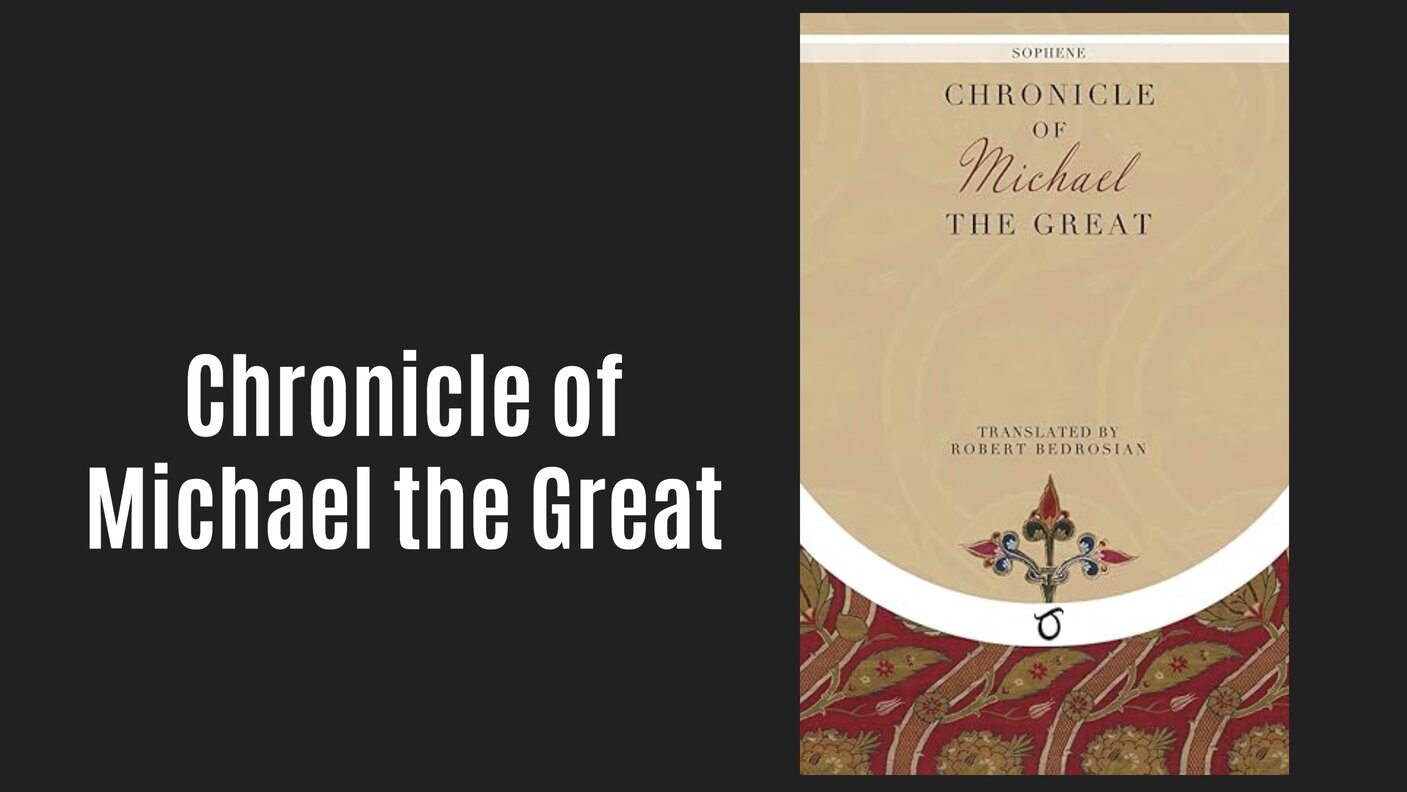
This is a book about a book: the small, cropped, somewhat ragged but brightly illustrated volume now known formally, and rather forbiddingly, as British Library MS Cotton Nero A.x/2. The fame and beauty of its four Middle English poems have given it sobriquets beyond the shelfmark, however, which are more familiar and intimate: it is also the Gawain-Manuscript or, as I will call it, the Pearl-Manuscript.
Explore the history of education in the Middle Ages through the development of schools, curriculums, the growth of universities, and the diverse individuals who were involved in teaching and learning during this 1000 years of history. Class begins on Saturday, January 24th. This six-week course includes live 90-minute sessions with Ryder Patzuk-Russell each week from 12:00 to 1:30 pm EST.