#megahubs-2025
#megahubs-2025
[ follow ]
#remote-work #infrastructure #data-centers #technology #ai #sustainability #ai-infrastructure #digital-nomads

Science
fromSilicon Canals
1 day agoSpaceX, Amazon, and Google want orbital data centers - four engineering barriers reveal who really benefits - Silicon Canals
Orbital data centers will concentrate AI infrastructure power among a few dominant companies, limiting access for smaller competitors and national regulators.






fromComputerWeekly.com
3 days agoData dive: Government 2030 datacentre capacity targets look shaky | Computer Weekly
The UK has about 1.59GW of currently installed datacentre capacity at just under 190 sites. If we add existing capacity to that which is planned to complete by 2030 and which has planning consent, we get 4.9GW.
UK news
SF politics
fromFortune
5 days agoHyperscalers often lack the "aptitude" on power as the political push picks up to expedite grid connections and pipelines | Fortune
Federal efforts to expedite power grid interconnections face challenges due to hyperscalers' communication issues and lack of understanding of processes.
fromFortune
6 days agoPrivate equity is eying Asia's healthcare funding gap as countries get wealthier and older | Fortune
"Asia has more diabetes, cancer and cardiovascular patients than anywhere else in the world," Abrar Mir states, emphasizing the severity of the health crisis in the region.
Public health
fromwww.businessinsider.com
1 week agoThe top places in the US where people are moving to
"Domestic migration patterns continue to redistribute the population from the largest counties to less populous ones. Collectively, the 50 counties with 1 million or more people in 2025 had a net domestic migration loss of 637,634."
California
#ai-infrastructure
Environment
fromFortune
3 days agoData centers are so hot, their 'heat island' effect is raising temperatures up to 6 miles away and impacting 343 million people worldwide, study finds | Fortune
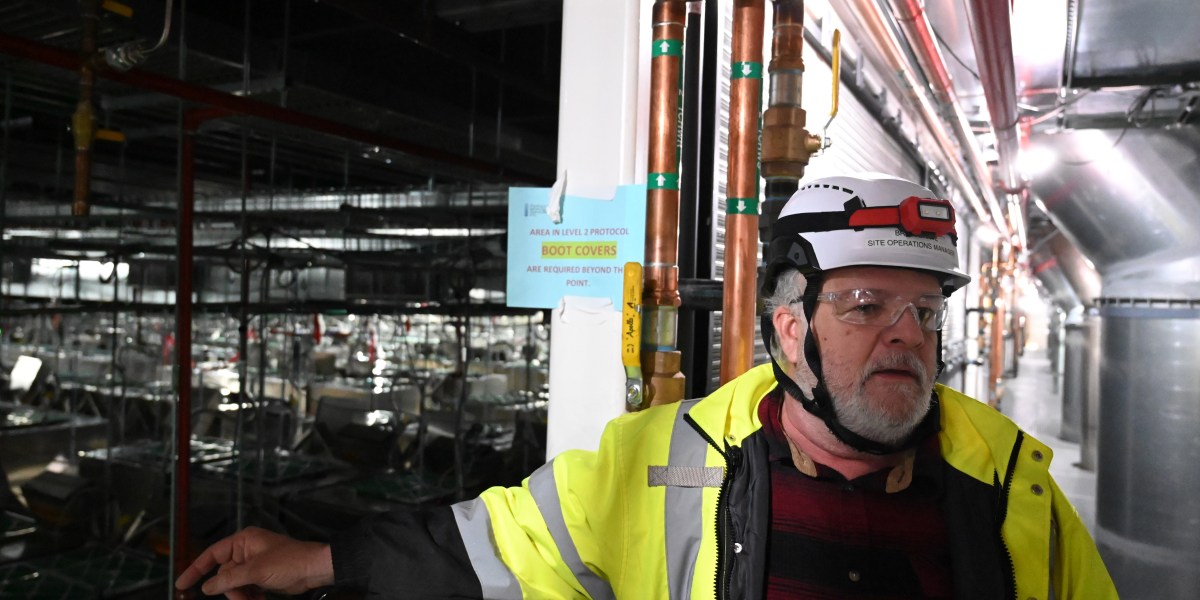
AI infrastructure is creating a 'data heat island effect' that raises local temperatures and impacts millions of people.
Silicon Valley
fromFortune
3 days agoGen Z fled San Francisco for Texas and Florida. Now they're turning 'welcomer cities' into the next big tech towns | Fortune
Younger workers are leaving San Francisco for more affordable 'welcomer cities' like Nashville and Orlando, seeking better work-life balance and job opportunities.
Business intelligence
fromLondon Business News | Londonlovesbusiness.com
6 days agoWhy GIS matters in modern infrastructure and urban planning: Building smarter, future-ready cities - London Business News | Londonlovesbusiness.com
GIS is essential for effective urban planning, enabling data-driven decisions that enhance infrastructure and quality of life in rapidly growing cities.
London
fromLondon Business News | Londonlovesbusiness.com
2 weeks agoBuilding a smarter London: How embedded systems are driving urban innovation - London Business News | Londonlovesbusiness.com
Embedded systems integrated into London's infrastructure enable real-time monitoring and intelligent decision-making, transforming transport, energy, and logistics to reduce costs and emissions.
Real estate
fromInc
2 weeks agoWhy Connectivity Is the New 'Location' in Commercial Real Estate
Digital infrastructure and connectivity now rival or surpass traditional location as the primary factor determining real estate value for business properties, with 96% of U.S. business leaders willing to pay premium prices for reliable connectivity.
fromSustainable Bus
2 weeks agoBUS2BUS 2026 prepares to gather transport leaders in Berlin with 100+ sessions and 120+ speakers - Sustainable Bus
BUS2BUS 2026 is set to bring together transport, technology and industry stakeholders in Berlin on 15-16 April, with a program centred on artificial intelligence, automation and sustainable mobility. The event, held at the Berlin Exhibition Grounds, will feature more than 100 sessions across four stages and involve over 120 speakers from politics, business, research and operations.
Berlin
Startup companies
fromYahoo Life
1 month agoMy city was filling up with digital nomads, so I converted my family home into a business
Hana Nguyen built a coworking business in Da Nang, Vietnam after discovering the concept through a foreign friend, starting in a hotel space before launching her own venture in her family home.
Deliverability
fromLondon Business News | Londonlovesbusiness.com
1 month agoThe quiet infrastructure upgrade smart companies are making - London Business News | Londonlovesbusiness.com
Email infrastructure decisions significantly impact business scalability, with privacy-first providers offering end-to-end encryption and data protection superior to standard free and legacy services.
Alternative transportation
fromSustainable Bus
2 weeks agoWhat we have seen at Mobility Move 2026? - Sustainable Bus
Mobility Move Berlin is a professional gathering for the German public transport industry to discuss challenges and innovations, not a product launch venue, featuring conference sessions and exhibitions with growing international participation.
Miscellaneous
fromTime Out London
1 month agoA futuristic high-speed travel project could link London and Paris in 20 minutes
Engineers in the Netherlands are developing hyperloop technology that could enable travel between London and Paris in 20 minutes at speeds of 600 miles per hour using magnetically suspended pods.
Artificial intelligence
fromArchDaily
1 month agoCompute Isn't Weightless: AI Infrastructure and the Architecture of the City
AI development is reshaping urban infrastructure and spatial planning in the Greater Bay Area through government-led initiatives that translate computational needs into physical zones, data centers, and specialized districts.
New York City
fromInc
1 month ago140 Cities in Maine, L.A.'s Olympic Committee, and NYC: The Urban Tool That's About to Change Everything
MIT researchers created the first complete pedestrian activity model for New York City, revealing movement patterns and crash vulnerabilities, applicable to any U.S. city and enabling better infrastructure funding allocation.
fromArchDaily
3 weeks agoMobility Justice: Urban Equity in an Era of Innovation
Every city contains two transportation systems. One is the visible network of roads, rail lines, sidewalks, and bus routes mapped in planning documents. The other is the invisible geography of privilege and exclusion embedded within it: the neighborhoods that received highways instead of parks, the communities whose bus routes were cut, the sidewalks that abruptly end at the edge of a district.
Alternative transportation
Artificial intelligence
fromTechzine Global
1 month agoMaking sense of 6G: what will the 'agentic telco' look like?
6G networks will integrate AI across all layers to enable autonomous, physical AI applications like self-driving cars and robotic systems, with multiple industry players collaborating on open standards by 2030.
Travel
fromBusiness Matters
1 month agoTowering over the competition: which companies are driving 2026's tourism hotspots?
Transformative hospitality and construction projects are driving a 2026 global tourism resurgence, reshaping destinations through eco-luxury, infrastructure expansion, and cultural preservation.
fromForbes
1 month agoTransit-Oriented Housing On Track For Continued Growth
Once a nice-to-have niche urban design concept, TOD has become an essential part of many urban neighborhoods. It has helped address the shortage of housing by enabling the development of higher-density residential communities near transit stations. It has helped revitalize countless once-deteriorating or static urban enclaves near transit hubs by activating sidewalks near the developments. And it has spurred walking and transit use, enabling residents of TODs to reduce or eliminate automobile dependency.
Real estate
Alternative transportation
fromArchDaily
1 month agoRural Transportation Hubs: Infrastructure Design, Access, and Regional Mobility
Rural transportation hubs are vital national infrastructure anchors that require distinct architectural and operational models reflecting dispersed populations and freight-dominant needs, not urban replicas.
fromArchDaily
1 month agoMoving Capitals Across Global Contexts: From Strategic Planning to Environmental Necessity
Across history, the relocation of capital cities has often been associated with moments of political rupture, regime change, or symbolic nation-building. From Brasília to Islamabad, new capitals were frequently conceived as instruments of centralized power, territorial control, or ideological projection. In recent decades, however, a different set of drivers has begun to shape these decisions. Rather than security or representation alone, contemporary capital relocations are increasingly tied to structural pressures such as demographic concentration, infrastructural saturation, environmental risk, and long-term resource management.
World news
fromSocial Media Explorer
2 months ago10 Last Mile Technology Trends Transforming Urban Logistics in 2025 - Social Media Explorer
Urban logistics is entering a new era where practical technology drives meaningful results. Today, more than 55% of people live in cities, and urbanization is expected to rise to 68% by 2050, placing intense pressure on delivery networks to keep up with growing demand. U.S. e-commerce is projected to reach $1.1 trillion in sales by 2026, heightening expectations for faster and more reliable last-mile service.
E-Commerce
Environment
fromLondon Business News | Londonlovesbusiness.com
1 month agoBuilding a liveable capital by 2040 - the infrastructure, talent and sustainability trade-offs - London Business News | Londonlovesbusiness.com
Liveability depends on functioning infrastructure, a thriving talent ecosystem, and sustainable resilience, achieved through deliberate, transparent trade-offs focused on long-term outcomes.
Artificial intelligence
fromComputerWeekly.com
1 month agoLumen targets AI bottlenecks with cloud gateway and metro expansion | Computer Weekly
Lumen launched a Multi-Cloud Gateway and upgraded metro datacentre connectivity to centralise multicloud routing, simplify hybrid data movement, and support AI and modern workloads.
fromAxios
2 months agoExclusive: Inside Google's push to sell AI to cities
Between the lines: This isn't benevolence. It's customer acquisition. Mayors don't just buy "AI." They buy cloud, data modernization, cybersecurity, services, and long-term support - the tech stack underneath any serious deployment. In return, cities get tools that could fix long-standing challenges, Cris Turner, vice president of government affairs at Google told Axios last June when it first released its playbook.
Artificial intelligence
Digital life
fromLondon Business News | Londonlovesbusiness.com
1 month agoHow technology is changing travel trends in 2026 - London Business News | Londonlovesbusiness.com
Travel in 2026 prioritizes both destination and transit, with technology enabling ride-sharing, AI booking, mobile navigation, and electric vehicles for greener, smarter journeys.
[ Load more ]