#megalithic-symbols

[ follow ]
fromMail Online
5 days ago

Mystery of 'second Sphinx' deepens as new footage reveals hidden clues

The footage captured by Trevor Grassi shows dozens of square shafts carved into bedrock, many extending deep underground but primarily filled with sand, raising new questions about what may lie beneath the surface.
OMG science
Design
fromArchDaily
5 days ago

Cities of the Dead: 10 Projects Exploring Burial Architecture

Cemeteries reflect cultural attitudes towards death, embodying social and political significance through their design and organization.
fromCN Traveller
1 week ago

7 wonders of Greece for 2026

The Rio-Antirrio Bridge, with its triangular sections resembling giant sails, is the world's longest multi-span cable-stayed bridge, spanning 2,880 meters across the Rion Strait. Completed in 2004, it transformed travel between the Peloponnese and mainland Greece, reducing ferry crossing times significantly. The views from the bridge are breathtaking, offering glimpses of the indigo waters and majestic mountain ranges.
Europe news
Science
fromNature
1 week ago

Daily briefing: Tiny bones from Neanderthal fetus point to downfall of the species

A genetic bottleneck contributed to the Neanderthals' extinction, while AI-generated X-rays challenge radiologists' ability to discern real from fake.
#ancient-egypt
#mass-grave
OMG science
fromFuturism
1 week ago

Why Is Everyone Losing Their Minds Over This Little Old Mars Pyramid?

A pyramid-like structure on Mars has sparked conspiracy theories, but scientists attribute its shape to natural geological processes.
London politics
fromwww.theguardian.com
2 weeks ago

Stonehenge tunnel plan officially scrapped after years of protests

The UK Department for Transport has officially cancelled a controversial tunnel project under Stonehenge after spending £179.2 million on planning, citing exceptional circumstances and revoking the development consent order.
Alternative medicine
fromArs Technica
2 weeks ago

Never mind Band-Aids, Neanderthals had antiseptic birch tar

Neanderthals likely used birch tar for medicinal purposes, including treating infections and insect bites, beyond its known use as a weapon adhesive.
Roam Research
fromArs Technica
2 weeks ago

Study pinpoints when bow and arrow came to North America

North Americans adopted the bow and arrow about 1,400 years ago, replacing the atlatl and dart, with rapid adoption in the south and gradual replacement in the north.
fromThe Local France
2 weeks ago

Mysterious ancient skeletons discovered sitting upright in France

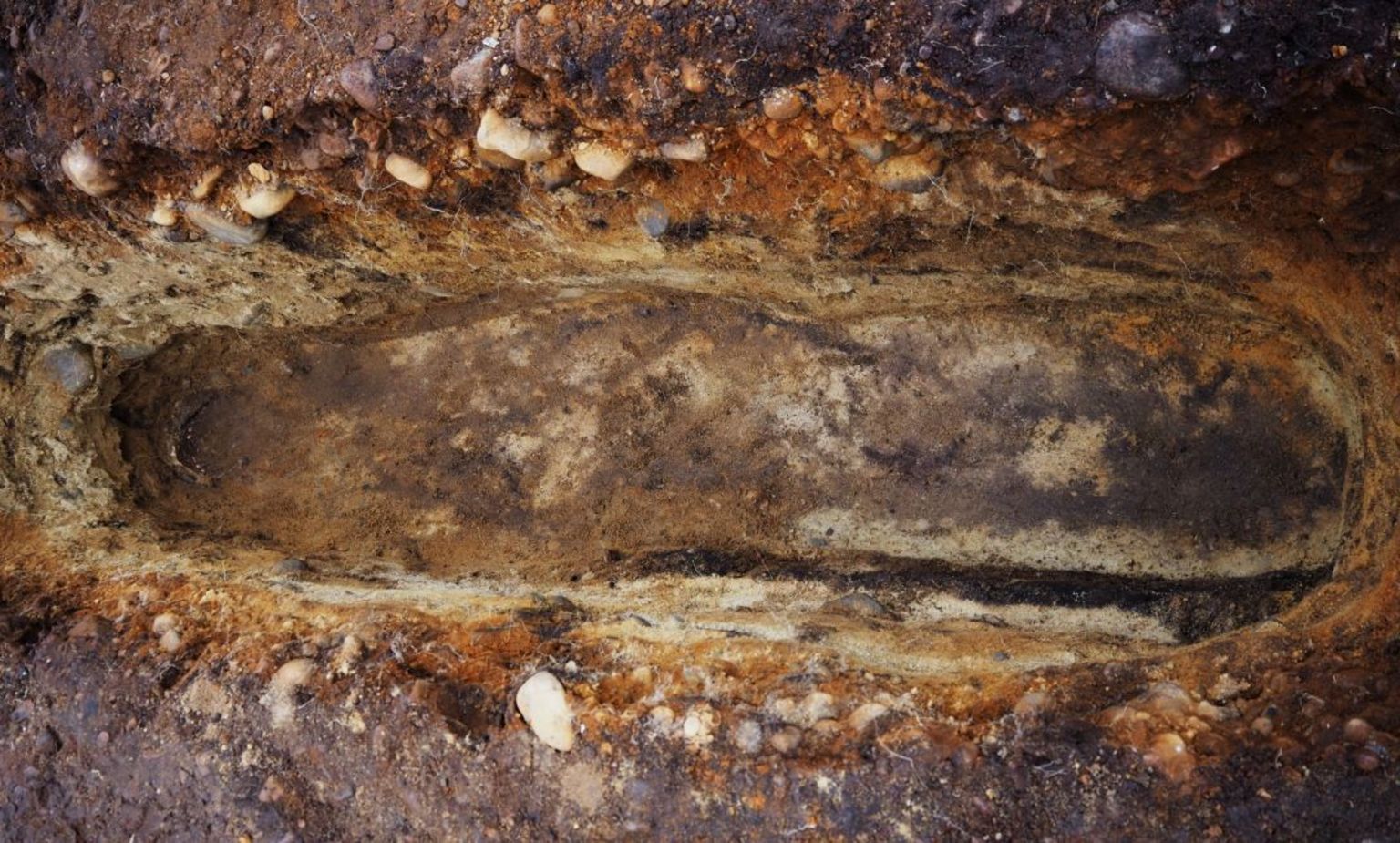
Similar to four others unearthed nearby earlier this month, it is sitting upright at the bottom of a one-metre-wide pit. The skeleton's hands are resting in its lap. Like the others, its back is against the eastern wall, its face directed westward.
France news
fromwww.thehistoryblog.com
3 days ago

Neolithic axe found in Lake Constance

The axe was the most important find in the group and would have been highly valued in the Neolithic community. Experiments with fiddle bows have found that it takes more than a day of work to manufacture an axe like this one.
History
Arts
fromHarvard Gazette
2 weeks ago

Is this art Celtic? It's complicated. - Harvard Gazette

The Harvard Art Museums' exhibition showcases the diverse history and contributions of Celtic art across various time periods.
fromwww.theguardian.com
2 weeks ago

Ancient skeleton discovered sitting upright in France

Five tombs of Gauls buried in a seated position have been discovered in central Dijon. Similar to four others unearthed nearby earlier this month, it is sitting upright at the bottom of a one-metre-wide pit. The skeleton's hands are resting in its lap. Like the others, its back is against the eastern wall, its gaze directed westward.
France news
London food
fromIndependent
3 weeks ago

An Irish Goodbye... from Cairo: 'You'd be surprised how often you visit the pyramids when you actually live here'

A creative director from Northern Ireland relocated to Cairo in 2024 after experiencing an immediate emotional connection to the city's unique energy during a visit.
#mesopotamia
Agriculture
fromArs Technica
1 month ago

Re-creating the complex cuisine of prehistoric Europeans

Hunter-gatherer-fishers across Eastern Europe combined specific regional foods into distinct preparations, mixing fish with berries, legumes, grasses, and vegetables rather than relying on fish alone.
#roman-archaeology
Books
fromNature
1 month ago

Brain mysteries and Bronze Age diplomacy: Books in brief

Lionel Penrose's mid-twentieth century research connected genetic abnormalities to hand creases, establishing the hand as a significant diagnostic tool across multiple medical disciplines.
History
fromMedievalists.net
2 weeks ago

Two Medieval Men Found Buried in Prehistoric Site - Medievalists.net

Medieval men were buried in the Menga dolmen, a Neolithic monument in Spain, over 4,000 years after its construction, demonstrating the site's enduring symbolic importance across millennia.
fromMail Online
1 month ago

Mysterious triangle in Nevada desert fuels lost civilization theories

The formation closely matches the outline of the Buffalo Valley Intermediate Field, an emergency triangular airfield built in the 1930s to 1940s along early aviation routes. In Nevada and other Western US deserts, triangular airfields were common in the 1930s and 1940s, serving early aviation needs such as mail routes and emergency landings.
OMG science
fromwww.thehistoryblog.com
3 weeks ago

Mosaics from early Christian churches found in Albania

Berat is a UNESCO World Heritage Site because of its unique historic downtown characterized by 18th and 19th century Ottoman structures and urban design, but human presence in the area goes back to the 4th/3rd millennium B.C. and there is evidence of an urban settlement in Berat defined by defensive walls dating to the 7th-6th century B.C.
History
fromwww.thehistoryblog.com
3 weeks ago

Samnite burials of children with bronze warrior belts found

The excavation ultimately unearthed 34 burials, 15 of them belonging to children between two and ten years old when they died. The graves are clustered in groups, probably reflecting family nuclei. Most the grave types are earthen pits covered with roof tiles angled against each other.
History
History
fromWorld History Encyclopedia
3 weeks ago

What Defines a Civilization?

Civilization requires a writing system, government, food surplus, labor division, and urbanization, with Mesopotamia recognized as the birthplace of civilization due to its early city construction around 5400 BCE.
#rock-art
fromwww.thehistoryblog.com
3 weeks ago

Ritual site at summit of rock formation identified

The two socketed axes were discovered last year by a metal detectorist who recognized that their careful positioning could not have been a natural process. He reported the find to the Westphalia-Lippe Regional Association (LWL). The subsequent excavation of the find site revealed a far more complex depositional context. Beneath the axes is a pit carved into the rock.
History
UK news
fromMail Online
1 month ago

Britain's 'oldest Northener' was a little girl dubbed the Ossick Lass

Remains from 11,000 years ago found in Cumbria belong to a female child aged about 2.5–3.5 years, the oldest human discovery in Northern England.
fromOpen Culture
1 month ago

Seven Wonders of the Ancient World: From the Walls of Babylon to the Sewers of Rome

Seven were the strings of the lyre (unless there happened to be eight or nine), seven were the gates of Thebes, and seven were the "wandering stars" in the night sky (if you count the sun and moon). The identity of the wonders was less important than the length of their list, and indeed, additions and changes were proposed since the beginning.
History
Travel
fromCN Traveller
2 months ago

7 wonders of the UK for 2026

The UK contains lesser-known, remarkable natural and historic sites that reward visitors who explore beyond popular destinations.
US politics
fromEmptywheel
2 months ago

Third Cave's a Charm

Republicans will block expiration of Bush tax cuts; Democrats could see a $3.6 trillion tax increase in 2012 if Obama does not act.
Business
fromFast Company
2 months ago

Navigating the ghosts of cultures past

Organizational culture constantly changes; leaders must discern which legacy cultural elements to retain and which to remove while balancing enduring beliefs with adaptive practices.
#ancient-mesopotamia
#archaeology
fromNature
2 months ago
Science

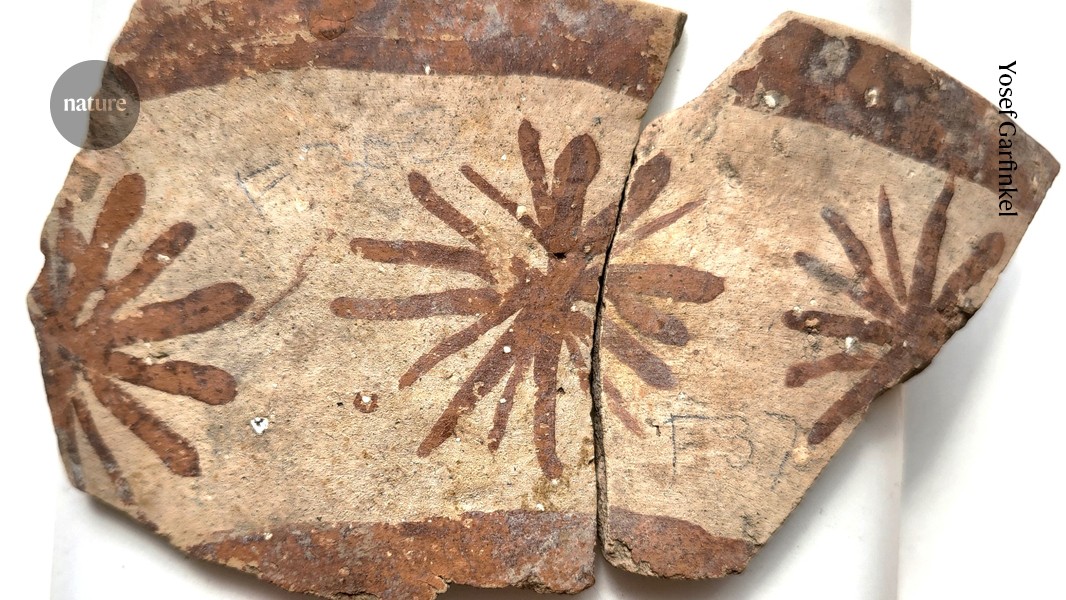
Daily briefing: Symbols on ancient pottery could be earliest evidence of mathematics

fromNature
2 months ago
Science

Daily briefing: Symbols on ancient pottery could be earliest evidence of mathematics

fromMail Online
2 months ago

Long-lost Egyptian scroll fuels debate over real-life biblical giants

An ancient Egyptian papyrus held by the British Museum has been cited as possible evidence supporting some of the Bible's most controversial claims about giants. The 3,300-year-old document, known as Anastasi I, has been in the museum's collection since 1839 and has recently resurfaced on the Associates for Biblical Research, renewing interest in its possible links to biblical accounts. The papyrus describes encounters with the Shosu people, said to stand 'four cubits or five cubits' tall, up to eight feet in height.
Books
History
fromMail Online
1 month ago

The first non-binary person? Stone Age woman was buried like a MAN

Stone Age societies in Hungary practiced flexible gender roles, with some individuals buried according to non-traditional gender norms, indicating tolerance for complex identities 7,000 years ago.
#great-pyramid
fromOpen Culture
1 month ago
History

Were the Egyptian Pyramids Not Built Up, But Carved Down?: A Bold New Theory Explains Their Construction

fromOpen Culture
1 month ago
History

Were the Egyptian Pyramids Not Built Up, But Carved Down?: A Bold New Theory Explains Their Construction

fromwww.scientificamerican.com
2 months ago

Humans Made Poisoned Arrowheads Thousands of Years Earlier Than Previously Thought

Researchers have found traces of what appears to be plant-derived poison on tiny stone arrowheads from South Africa dated to 60,000 years ago. The finding pushes back the origin of this revolutionary hunting technology by tens of thousands of years. Scientists have long been fascinated by the development of poisoned hunting weapons. For one thing, they would have seriously leveled up our ancestors' foraging game.
Science
History
fromOpen Culture
1 month ago

Behold the First Realistic Depiction of the Human Face (Circa 25,000 BCE)

The Venus of Brassempouy, a 25,000-year-old mammoth ivory carving, represents the earliest realistic human face depiction and marks the dawn of beauty in human culture.
fromBig Think
2 months ago

7,000-year-old underwater wall raises questions about ancient engineering - and lost-city legends

Nine meters (30 feet) beneath the waves, they found it: a vast, man-made stone wall, averaging 20 meters (66 feet) wide and two meters (6.6 feet) tall. The structure consists of some 60 massive granite monoliths, set directly onto the bedrock in pairs at regular intervals. Smaller slabs and packing stones fill in the gaps, locking the whole into a single, deliberate construction. With an estimated total mass of around 3,300 tons, this is the largest underwater structure ever discovered in France.
France news
History
fromWorld History Encyclopedia
1 month ago

12 Great Cities of Ancient Mesopotamia: The Rise and Fall of the Earliest Cities in the World

Twelve major Mesopotamian cities including Nineveh, Uruk, Babylon, and Ur became legendary through Greek writings and yielded significant archaeological discoveries, each connected to a patron deity whose prestige determined the city's fate.
Arts
fromHyperallergic
1 month ago

Did the British Museum Remove Palestine From Its Displays?

The British Museum amended some Middle East gallery labels to use ancient regional terms like 'Canaan' while continuing to use 'Palestine' in many displays.
#poisoned-arrows
Science
fromwww.nature.com
2 months ago

Author Correction: Hunter-gatherer sea voyages extended to remotest Mediterranean islands

Corrections to regional radiocarbon uncertainties do not meaningfully change conclusions about timing of the Mesolithic–Neolithic transition or maritime voyages in the central Mediterranean.
fromNature
2 months ago

Oldest known poison arrows show Stone Age humans' technological talents

Making poisoned arrows is about as hard as following a "complex cooking recipe", says study co-author Marlize Lombard, an archaeologist at the University of Johannesburg in South Africa. "You have to add to it the danger of the poison, and planning to work with it without getting poisoned yourself, then you have to hunt and track the prey animal under difficult and dangerous conditions sometimes for a day or two."
Science
Arts
fromianVisits
2 months ago

A crumbling head and every English word: the Mithraeum's latest puzzling artwork

Mark Manders' exhibition above the London Mithraeum pairs a striking monumental head with enigmatic language-focused works that resist clear interpretation.
Science
fromNature
1 month ago

Daily briefing: Hunter-gatherers in Europe's 'water world' resisted the switch to farming for millennia

Rhine-Meuse delta populations retained substantial hunter-gatherer ancestry for millennia before steppe-related mixing spurred Bell Beaker expansion and large genetic turnovers.
fromMail Online
1 month ago

Mysterious symbols spanning the globe hint at a lost civilization

His investigation began after identifying recurring giant T-shapes, three-level indents, and step pyramids carved into ancient stones worldwide. 'These specific symbols that are built in different size proportions, and the symbols are found in ancient stones around the world, are not supposed to exist; no cultures are supposed to have any cross-platform,' LaCroix explained. The symbols appear in locations ranging from Turkey's Van region to South America and Cambodia.
History
fromMail Online
2 months ago

Mystery of Egypt's pyramids deepens as hidden megastructure revealed

More than 200 scans from multiple satellites, including Italy's Cosmo-SkyMed and the US-based Capella Space, showed uniform results suggesting massive pillars about 65 feet in diameter wrapped in spirals and plunging nearly 4,000 feet deep. Those pillars appear to end in 260-foot cubic chambers beneath all three pyramids and the Sphinx, which Biondi described as 'huge chambers' measuring roughly 260 feet in length and width.
History
History
fromMail Online
2 months ago

Father of alien archaeology says pyramids not built by human hands

Erich von Däniken claimed extraterrestrials aided ancient civilizations in building pyramids, but archaeological evidence attributes pyramid construction to organized human labor.
fromwww.thehistoryblog.com
1 month ago

Rare Mithraic altars found in Scotland go on display for the first time

Two exceptionally rare and beautifully carved Mithraic altars found in Inveresk, East Lothian, Scotland, are going on display for the first time. They are not just the only Roman altars ever found in Scotland, but are among the finest examples of Roman sculpture in Roman Britain. They are also uniquely early in date, having been made in 140s A.D. during Antoninus Pius' reoccupation of southern Scotland, whereas most other archaeological materials related to the worship of Mithras in Britannia date to the 3rd century.
History
fromwww.thehistoryblog.com
2 months ago

Bronze Age tombs with luxury imported goods found in Cyprus

Two 14th-century BCE chamber tombs in Larnaca contained locally made and widely imported luxury goods, demonstrating extensive long-distance trade networks.
fromWorld History Encyclopedia
2 months ago

Festivals in Ancient Mesopotamia: Courting the Goodwill of the Gods

as the gods were understood as the true monarchs and the king as simply their steward. In order to maintain his authority, the king needed to court the goodwill of the gods, and although they made their approval clear through military victories, bountiful harvests, and prosperous trade, events such as the Akitu festival provided an annual opportunity for the divine to continue its relationship with the ruling house or withdraw its favor.
History
History
fromwww.thehistoryblog.com
2 months ago

Sealed bronze medieval reliquary found in Turkey

An intact sealed bronze reliquary cross from 9th–11th century Lystra was found containing shroud-like textile and designed to be worn as a pendant.
History
fromWorld History Encyclopedia
2 months ago

Mesopotamian Art and Architecture: The Birth of Art and Architecture in the Ancient World

Mesopotamian art and architecture began over 7,000 years ago, evolving from northern sites into Sumerian innovations and sustained through multiple ancient Mesopotamian periods.
#ancient-mathematics
History
fromwww.theguardian.com
1 month ago

Apocalypse no: how almost everything we thought we knew about the Maya is wrong

Classic Maya lowlands likely supported up to 16 million people during AD 600–900, implying unprecedented population density, complex agriculture, and advanced urban organization.
History
fromTime Out London
1 month ago

A new 'Cleopatra' immersive experience in London will be all about Ancient Egypt

Cleopatra: The Experience opens at Immerse LDN as a 3,000 square metre, nine-gallery immersive exhibition tracing the late Ptolemaic dynasty with artefacts, AR, VR and staged environments.
History
fromWorld History Encyclopedia
2 months ago

Empress of the Nile: The Daredevil Archaeologist Who Saved Egypt's Ancient Temples from Destruction

Christiane Desroches-Noblecourt, a pioneering Egyptologist, rescued and preserved Egypt's ancient temples through scholarship, advocacy, and decisive cultural stewardship.
[ Load more ]