#military-command-structure
#military-command-structure
[ follow ]



World news
fromLondon Business News | Londonlovesbusiness.com
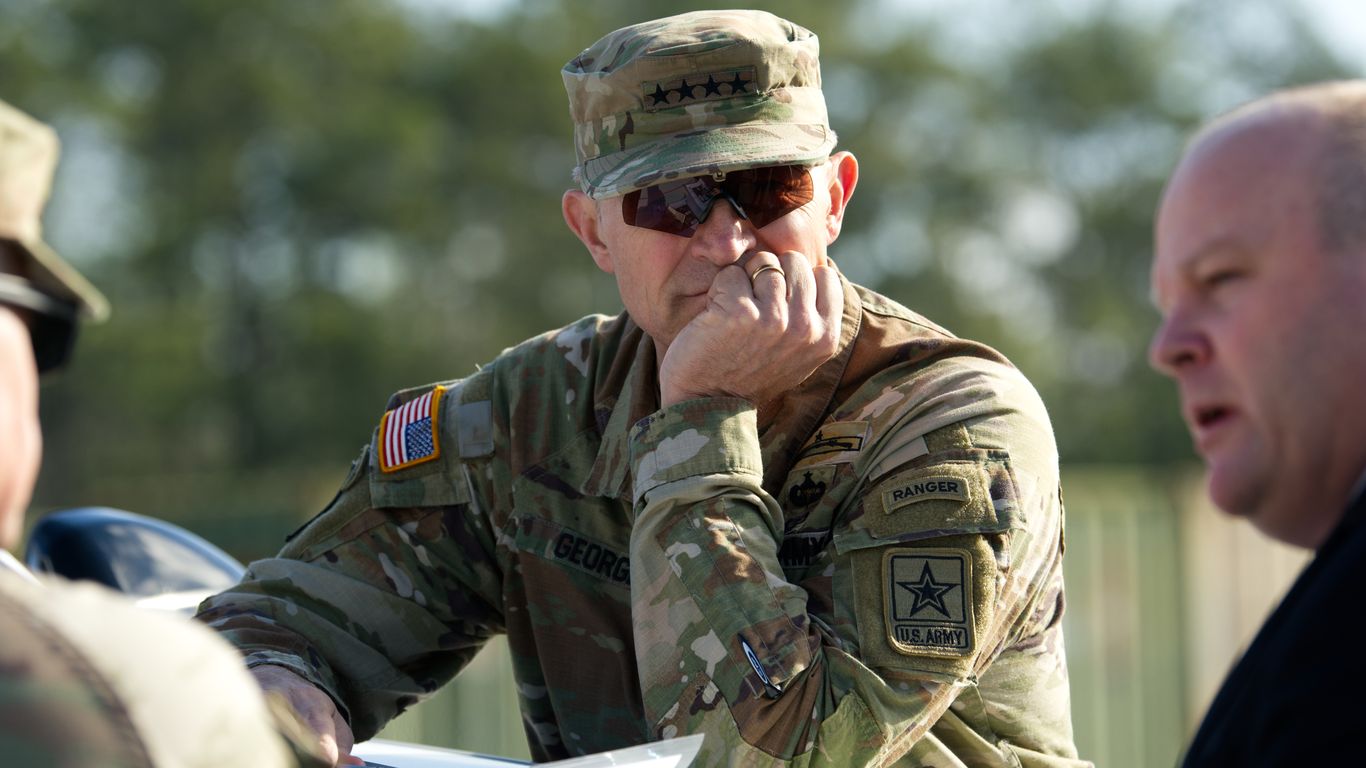
2 days agoPentagon confirms fighter jet shot down over Iran as rescue mission underway - London Business News | Londonlovesbusiness.com
An F-15E Strike Eagle was shot down over Iran, initiating a combat search and rescue operation for its two crew members.
World politics
fromLondon Business News | Londonlovesbusiness.com
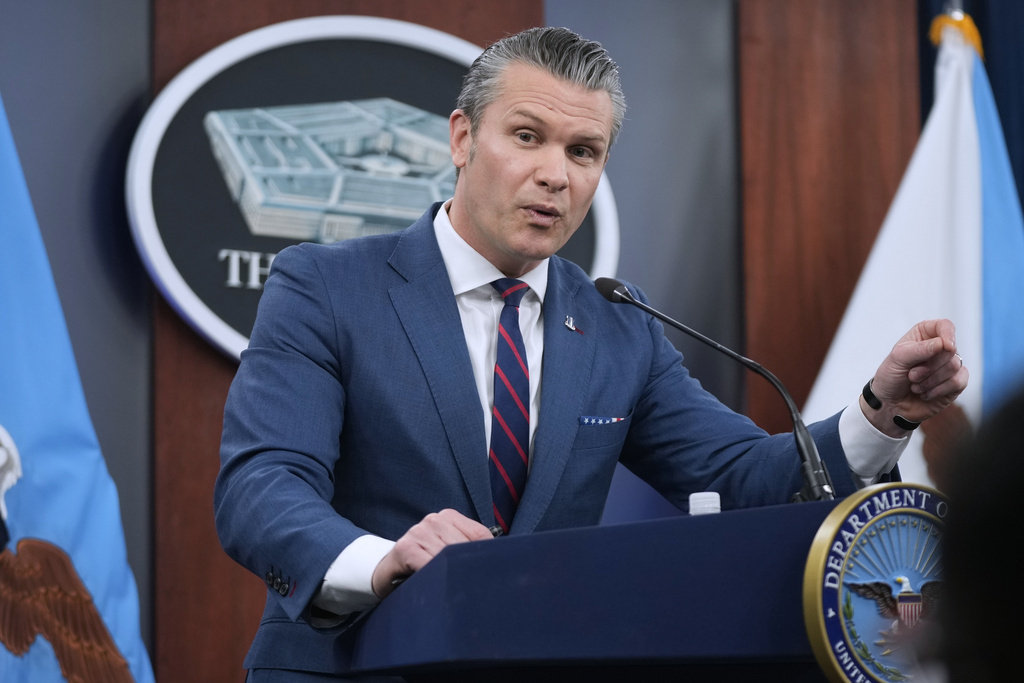
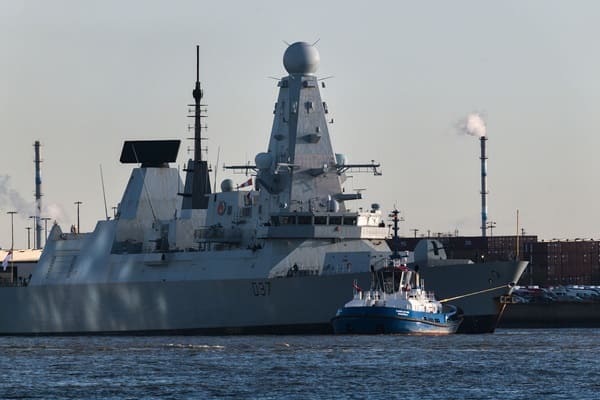
5 days agoPentagon criticises UK's 'big, bad Royal Navy' for 'refusing to get involved with Iran' - London Business News | Londonlovesbusiness.com
The US Secretary of War criticizes the UK for not deploying naval resources to the Strait of Hormuz amid rising tensions.




#us-military


World news
fromLondon Business News | Londonlovesbusiness.com
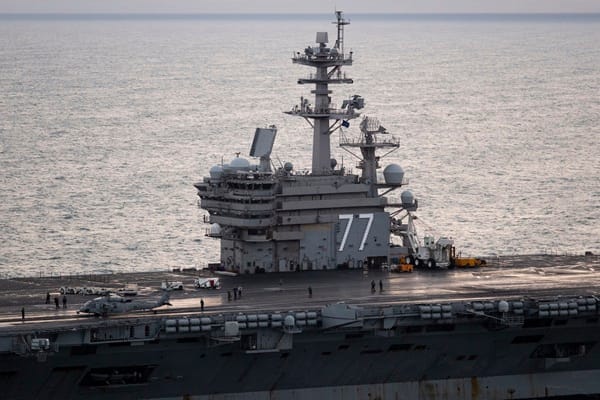
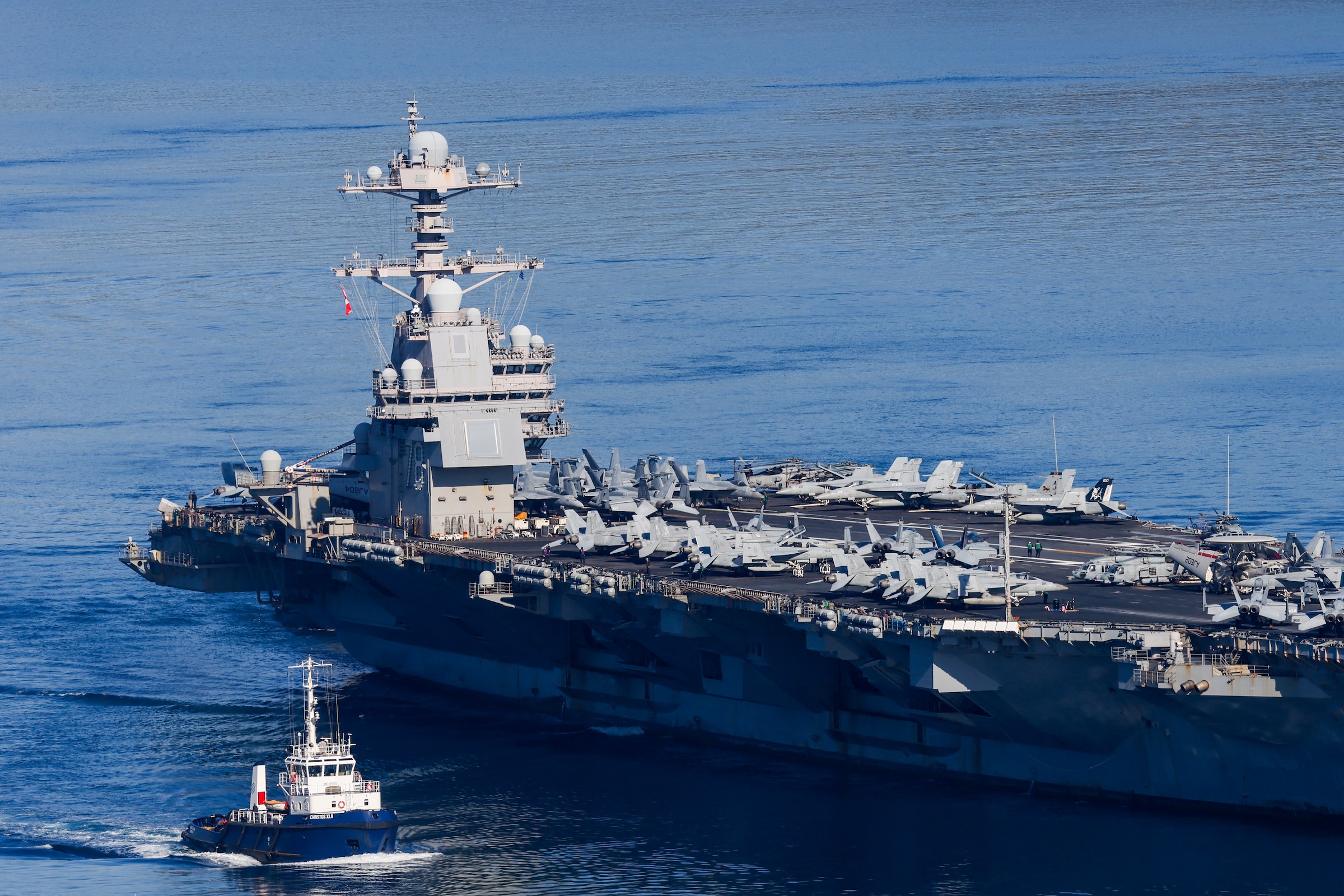
4 days agoUS deploys third aircraft carrier strike group to Middle East - London Business News | Londonlovesbusiness.com
The U.S. is deploying an additional aircraft carrier strike group to the Middle East, increasing military presence amid rising tensions with Iran.
fromwww.theguardian.com
1 week agoThe delusion of easy victory from the air may have seduced the US into another war
Giulio Douhet proposed a revolution in warfare, stating that victory would come from large-scale aerial bombardments targeting civilians and infrastructure rather than just combatants.
Right-wing politics
Europe politics
fromenglish.elpais.com
2 weeks agoJens Stoltenberg, former NATO secretary general: I am certain that the members of the Alliance will remain united to protect one another'
Jens Stoltenberg is a significant Norwegian politician, having served multiple terms and played a key role in NATO during critical global events.
fromemptywheel
3 weeks agoGreat Tactics Mean Nothing if You Have No Strategy - emptywheel
The conduct of War is, therefore, the formation and conduct of the fighting. If this fighting was a single act, there would be no necessity for any further subdivision, but the fight is composed of a greater or less number of single acts, complete in themselves, which we call combats, as we have shown in the first chapter of the first book, and which form new units.
US politics

Intellectual property law
fromwww.theguardian.com
4 weeks agoWhat does the US military's feud with Anthropic mean for AI used in war?
Anthropic's refusal to allow Claude AI for domestic mass surveillance and autonomous weapons has triggered a Pentagon supply chain risk designation, highlighting tensions between tech company safety values and military demands.
Russo-Ukrainian War
fromBusiness Insider
3 weeks agoTop US general says American troops have been sinking Iranian warships, including a submarine, with the ATACMS ballistic missile
US forces used ATACMS ballistic missiles to sink Iranian warships and submarines during Operation Epic Fury, rendering Iran's navy combat ineffective within 13 days.
Right-wing politics
fromThe American Conservative
3 weeks agoIs It Still the Department of 'War' or Not?
The Trump administration renamed the Department of Defense to Department of War and subsequently engaged in military conflict with Iran while Republican Congress members avoided formally acknowledging it as war.
Higher education
fromFortune
1 month agoPentagon chief blocks officers from Ivy League schools and other top universities, including partners on AI and space | Fortune
Defense Secretary Pete Hegseth eliminated military officer professional education programs at Ivy League and elite universities, replacing them with alternative institutions aligned with his strategic vision.
fromThe Washington Post
1 month agoArmy unit's moves trigger speculation as U.S. plots next steps in Iran war
The 82nd Airborne Division at Fort Bragg in North Carolina includes a brigade combat team of about 4,000 to 5,000 soldiers ready to deploy on 18 hours notice for missions as varied as seizing airfields and other critical infrastructure, reinforcing U.S. embassies and enabling emergency evacuations.
US politics
fromwww.aljazeera.com
3 weeks agoHow corporations have collaborated with US military over the decades
Our war fighters are leveraging a variety of advanced AI tools. These systems help us sift through vast amounts of data in seconds so our leaders can cut through the noise and make smarter decisions faster than the enemy can react. Humans will always make final decisions on what to shoot and what not to shoot and when to shoot, but advanced AI tools can turn processes that used to take hours and sometimes even days into seconds.
Artificial intelligence
World politics
fromBusiness Insider
1 month agoThe war with Iran is more evidence that winning the fights you can't see is critical in modern combat
US military operations increasingly rely on space and cyber forces to disrupt enemy capabilities before kinetic strikes, making non-kinetic warfare critical to modern combat effectiveness.
fromenglish.elpais.com
1 month agoDoes the United States have enough munition for a prolonged war?
We've got no shortage of munitions. Our stockpiles of defensive and offensive weapons allow us to sustain this campaign as long as we need. Iran is hoping that we cannot sustain this, which is a really bad miscalculation.
US politics
World politics
fromLondon Business News | Londonlovesbusiness.com
1 month agoFormer NATO commander fears the world is living through the outbreak of WWIII - London Business News | Londonlovesbusiness.com
Former NATO deputy commander warns current geopolitics represents the most perilous moment in his lifetime, with escalating Middle East tensions risking uncontrolled conflict involving nuclear-armed powers.
US politics
fromFortune
1 month agoPentagon officially defines Anthropic as 'supply chain risk' | Fortune
The Trump administration designated Anthropic as a supply chain risk, forcing government contractors to stop using Claude AI due to national security concerns over surveillance and autonomous weapons capabilities.
fromBusiness Insider
4 weeks agoPentagon official details the 'holy cow' moments that sparked rift with Anthropic
I was giving these scenarios, these Golden Dome scenarios, and so on. And he's like, 'Just call me if you need another exception.' And I'm like, 'But what if the balloon's going up at that moment and it's like a decisive action we have to take? I'm not going to call you to do something. It's not rational.'
US politics
Artificial intelligence
fromAxios
1 month agoPentagon flexes military muscle with new weapons in Iran
U.S. military deployed advanced weapons systems including AI tools, precision missiles, F-35 fighters, and submarines in recent operations, marking significant combat milestones and technological achievements.
US politics
fromNextgov.com
1 month agoPrivate sector, former military leaders urge Congress intervene in Pentagon-Anthropic dispute
A coalition of 35 professionals urged Congress to investigate the Pentagon's conflict with Anthropic over AI safety guardrails, blacklisting, and concerns about autonomous weapons and domestic surveillance.
fromThe New Yorker
1 month agoThe End of Limits on a President's Wars
In no part of the constitution is more wisdom to be found than in the clause which confides the question of war or peace to the legislature, and not to the executive department. Madison, the primary author of the Constitution, emphasized that vesting war powers in Congress rather than the President represented a crucial safeguard against concentrated executive authority and the potential for individual flaws in judgment affecting national security decisions.
US politics
World news
fromLondon Business News | Londonlovesbusiness.com
3 weeks agoRoyal Navy aircraft carrier may need allies to protect it - London Business News | Londonlovesbusiness.com
HMS Prince of Wales has been placed on five-day deployment alert for potential Middle East operations amid escalating regional tensions, though the Royal Navy faces challenges assembling a full carrier strike group without allied support.
US politics
fromwww.mediaite.com
1 month agoTop Trump Pentagon Official Says He's Not The Right Person' to Ask If the US Is At War
The Trump administration uses inconsistent terminology regarding military action against Iran, with officials avoiding formal war declarations while the president and Defense Secretary describe operations as war.
fromInfoWorld
2 months agoStop treating force multiplication as a side gig. Make it intentional
Lead without authority. You may not have direct reports, yet you shape architecture, quality and the roadmap. Your leverage comes from artifacts, reviews and clear standards, not from title.I started by publishing a lightweight architecture template and a rollout checklist that the team could copy. That reduced ambiguity during design and cut review cycles by nearly 30 percent
DevOps
from24/7 Wall St.
2 months agoThe U.S. Military's Most Expensive Weapons to Maintain
For some weapons, the hardest fight wasn't against the enemy, in fact it was more so against wear and time. Advanced technology has delivered decisive advantages but in some cases has imposed relentless upkeep on crews and logistics chains. Here, 24/7 Wall St. is taking a closer look at how these systems became a maintenance nightmare for the U.S. Military.
US news
fromwww.dw.com
2 months agoGermany news: Reservist union head wants troops in Greenland
Guten morgen from Bonn, where the snow and ice from the weekend have given way to cloudy skies and rain. In this blog, we will bring you the latest news from and about Germany, including calls from the head of the country's Armed Forces reservist association for European and German troops to be deployed to Greenland to ward off threats of annexation from the US and President Donald Trump.
Germany news
fromThe American Conservative
2 months agoCommander-in-Tired
Though the 83-year-old (who will turn 84 in two weeks) is rarely spotted in the Capitol these days, his vocal opposition to President Donald Trump on a myriad of issues is louder and more present than ever when deemed useful for the motivated liberal press. For instance, McConnell was quoted far and wide last month after he criticized Trump's desire to acquire Greenland, a move the Kentuckian suggested would "incinerate" the threadbare alliance that remains between the United States and NATO.
Right-wing politics
fromwww.aljazeera.com
2 months agoUS military moves Navy, Air Force assets to the Middle East: What to know
Trump said on Thursday that a US armada is heading towards the Gulf region with Iran being its focus. US officials said an aircraft carrier strike group and other assets are to arrive in the Middle East in the coming days. We're watching Iran. We have a big force going towards Iran, Trump said. And maybe we won't have to use it. We have a lot of ships going that direction.
World politics
US politics
fromwww.mediaite.com
2 months agoEx-Pentagon Chief On CNN Slams Trump Admin Disguising Military Plane as Civilian Aircraft In Attack
U.S. used a military aircraft disguised as a civilian plane to strike an alleged drug-smuggling boat near Venezuela, killing 11 people and prompting legal questions.
fromBusiness Insider
2 months agoThe 25 largest militaries in the world, ranked by active troops
Active-duty force size is a tally of a country's uniformed troops: airmen, soldiers, sailors, special operators, and Marines. Armies, in particular, depend on size to gain and occupy ground. Militaries can also be a tool of domestic repression, a focus that undercuts its capabilities against an external foe. North Korea, for example, is one of the world's most repressive states, led by a dictator who has repeatedly threatened neighboring South Korea.
World news
fromThe Atlantic
2 months agoWhatever This Is, It Is Not Strategy
But logistical consistency, like coherence and gravitas, does not characterize the new NDS. It is a document that supposedly nests within the National Security Strategy, explaining at greater length the implications of overall policy for the armed forces. The 2026 version does not do that. Rather, it restates some of the basic priorities of the Trump administration but for the most part confines itself to flattery of the president, insults, and bombast.
US politics
fromBusiness Insider
2 months agoChina's military has a leadership problem, and it's serious
China's drive to modernize its military to rival the US armed forces is running parallel with an aggressive purge of its senior leaders. The People's Liberation Army has been repeatedly shaken by a massive anti-corruption campaign led by Chinese leader Xi Jinping. Now, the military leadership is under renewed scrutiny after one of China's most senior generals was placed under investigation.
World news
fromBusiness Insider
2 months agoMany future military officers come from Scouting. A Pentagon split could put those ties at risk.
Secretary of Defense Pete Hegseth is reportedly considering severing ties with Scouting America, which could mean a consequential break with an organization that has long been closely associated with military service and leadership development. Public data from two prominentmilitary schools, West Point and the Naval Academy, shows that Scouting is common among future officers - more than one in ten cadets and about 10% of midshipmen in recent years have a Scouting background.
US politics
US politics
fromThe Cipher Brief
1 month agoConfidence, Interoperability, and the Limits of U.S. Decision Systems
The United States lacks decision-shaping architecture to reliably produce calibrated strategic judgment, causing institutional overconfidence and vulnerability in cognitive and Gray Zone conflicts.

US politics
fromNextgov.com
2 months agoThe revolutionary new weapon in the Pentagon's pocket - and why it matters now more than ever
Transforming Pentagon acquisition processes to remove administrative burdens will enable U.S. companies to deliver cutting-edge military capabilities faster, producing a decisive battlefield advantage.
[ Load more ]