#multimedia-history
#multimedia-history
[ follow ]
Roam Research
fromdesignboom | architecture & design magazine
3 days agoradio time machine AI audio system recreates past sounds for cognitive health in elderly care
AI-powered Radio Time Machine enhances well-being in elderly care by generating nostalgic audio content to stimulate memories and communication.
#art

Arts
fromIrish Independent
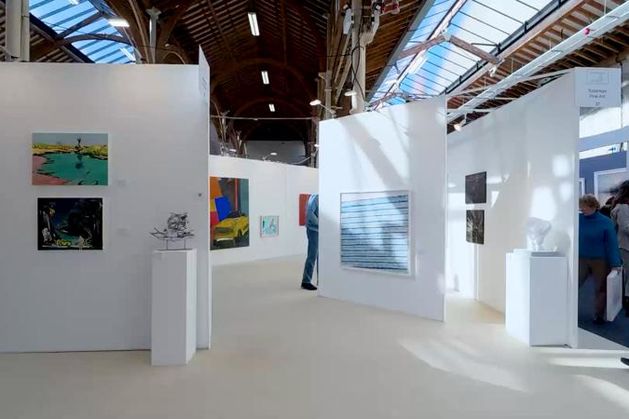
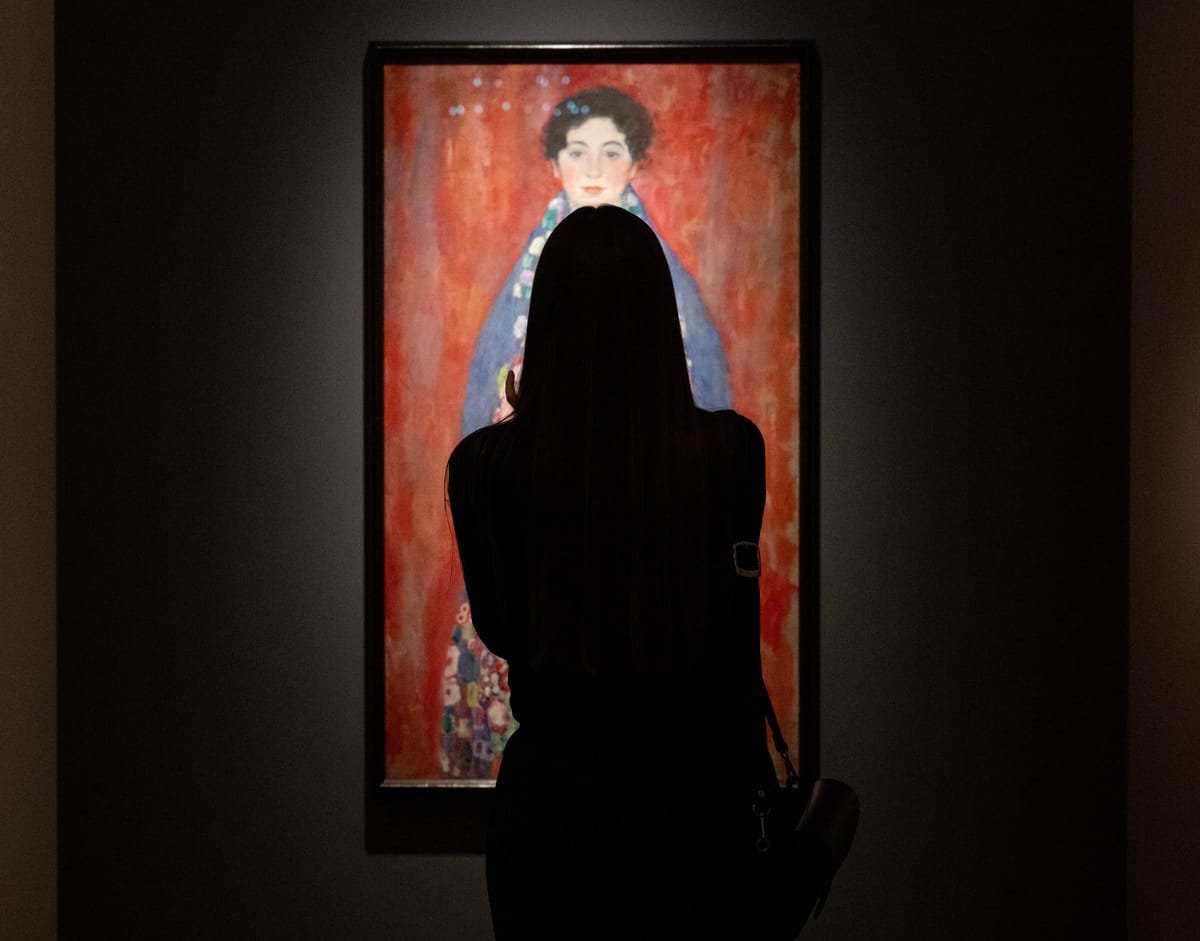
5 days ago'You have to step in and experience it' - artists on the rise of AI-generated art and the 'essential' gallery visit
Miriam Fitzgerald Juskova's exhibit combines paper quilling with mathematics, showcasing intricate art that engages viewers and emphasizes the value of handmade creations.
Media industry
fromElectronic Frontier Foundation
2 weeks agoBlocking the Internet Archive Won't Stop AI, But It Will Erase the Web's Historical Record
Major newspapers are blocking the Internet Archive from preserving their websites, threatening decades of historical records that journalists and researchers depend on.
Media industry
fromArs Technica
2 weeks agoNew "vibe coded" AI translation tool splits the video game preservation community
Gaming Alexandria faced backlash for using AI-assisted machine translations of historical gaming documents, with critics arguing the inaccurate translations damage credibility, while supporters contend AI tools are necessary to make hundreds of thousands of untranslated pages searchable.
fromWIRED
3 weeks agoThis Digital Picture Frame Wants to Bring People Closer to a Holographic Future
Upload any picture or video, and Musubi uses artificial intelligence to extract the most important part and hover it in space as a 3D image within the frame. That could be a video of a child's first steps or a snapshot of a birthday party. The image will be displayed in 3D form, viewable in all its holographic glory across nearly 170 degrees.
Gadgets
fromArchDaily
1 month agoArchiving the Technosphere: How Museum Architecture Mediates Human-Made Systems
The contemporary technology museum has emerged as a performative participant in the systems it seeks to document. The architecture of these institutions has become increasingly fluid and bold, often mirroring the velocity and complexity of the systems it houses. They operate as mediators between the human, the ecological, and the technological realms, transforming from encyclopedic warehouses into active educational engines.
Science
fromwww.npr.org
1 month agoThe first appearance of a robot on film has made its way to the Library of Congress
The inquiry was like thousands of others. Somebody had potentially cool films they thought might interest the Library of Congress. But it was brand new for Jason Evans Groth... In September, he stepped outside the National Audio-Visual Conservation Center in Culpeper, Virginia, to meet Bill and Mary McFarland, who had driven from Michigan with about 40 strips of celluloid that had once belonged to Bill's great-grandfather.
Independent films

fromThe Art Newspaper - International art news and events
1 week agoComment | Museums must be the leaders in a moral revolution
Bregman claims, 'Today the whole of Europe risks turning into one big Venice, a beautiful open-air museum. A great destination for Chinese and American tourists. A place to admire what was once the centre of the world.' This statement encapsulates the concern that Europe is losing its cultural significance.
Arts
fromBig Think
1 month agoFrom myth to machine: The technological evolution of storytelling
I wanted to write a book about how the smartphone changed the world, but the more I researched, the clearer it became that phones were actually the latest step in this evolution of storytelling technology that stretches all the way back to prehistoric times.
Books
Graphic design
fromItsnicethat
3 weeks agoLydia Chodosh probes design rules through archiving and cataloguing
Designer Lydia Chodosh interrogates how knowledge is acquired and transmitted through language, archival systems, and interdisciplinary design practice informed by literature, publishing, and visual communication.
Arts
fromMedium
4 weeks agoAI in Museums: How the Cleveland Museum of Art Built AI-Powered Experiences That Actually Work
Cleveland Museum of Art demonstrates decade-long, thoughtful AI implementation focused on accessibility and discovery rather than novelty, prioritizing meaningful visitor engagement over flashy technology.
fromFrenchly
1 month agoThe Best Art Apps for Exploring France - Frenchly
CultureClic is one of the most comprehensive French art apps available. Designed as a mobile-first discovery tool, it maps out more than 1,350 museums across France and highlights hundreds of geolocated artworks, photographs, and historical engravings. The app is particularly strong in Paris but also features content in cities like Bordeaux, Lyon, Marseille, and Avignon. What sets CultureClic apart is its use of augmented reality, allowing users to visualize artworks and historical documents in context.
France news
fromdesignboom | architecture & design magazine
1 month agoautonomous robotic installation writes and erases history in real time
The robot repeatedly inscribes text and images onto the glass surface using a marker, then removes them with a sponge. This cyclical action renders visible the process through which present events transition into recorded history, emphasizing the instability and revisability of historical narratives.
History
Arts
fromHyperallergic
2 weeks agoMeet the Woman Who Made Museums More Accessible
Lorena Bradford, the National Gallery of Art's first head of Accessible Programs, transformed museum accessibility by creating intentional programs for disabled visitors, including ASL tours, memory loss programs, and medical student training initiatives.
Miscellaneous
fromThe Art Newspaper - International art news and events
1 month agoComment | Art is more than its original context
Understanding art's original context enriches appreciation, yet modern viewing conditions and lost contexts require adapting how we engage with artworks across different settings and time periods.
Podcast
fromFast Company
1 month agoThe surge of video podcasts raises an awkward question for the industry: Why do we still call them 'podcasts'?
The definition of 'podcast' has expanded from asynchronous talk radio to any episodic audio or video content with people speaking, making the original term increasingly obsolete as consumption shifts toward video-based formats.
Graphic design
fromdesignboom | architecture & design magazine
1 month agoCIFRA builds an evolving archive for digital art beyond the limits of exhibition
CIFRA is a digital platform preserving and presenting new media art through curation, streaming, and educational programming while supporting artists without fees.


fromBuzzFeed
1 month ago50 Historical Photos That Are So Shocking, They're Changing My Perception Of The Entire World
I recently gained a new obsession, and I'm ready to share it with the world: finding and analyzing rare vintage images. A picture speaks a thousand words, and these photographs tell us more about history than a textbook chapter ever could. So even if you think history is boring, I'm well-equipped to change your mind, and give you some delicious food for your brain to chew on today.
History

Arts
fromColossal
1 month agoThe Met Introduces High-Definition 3D Scans of Dozens of Art Historical Objects
The Metropolitan Museum of Art and other institutions now offer 3D digital models of artworks, enabling detailed examination of textures, materials, and hidden details impossible to see in person or through standard digital images.
fromHyperallergic
1 month agoExplore The Met's Collection in 3D From Your Couch
Some of the 3D scans were done in collaboration with Japan's national broadcaster NHK. A voluptuous Neolithic marble, a model Nayarit home from ancient Mesoamerica, Claude Monet's 1891 painting "Haystacks (Effect of Snow and Sun)" - these are among the items in the Metropolitan Museum of Art's collection that are now available to the public as high-quality 3D scans.
Arts
fromPoynter
2 months agoThis moment will be defined by what we choose to record - Poynter
When unmarked, masked federal agents grabbed an international student and forced her into an SUV on a public street in the spring of 2025, the United States entered into a new era of federal policing. At first, it was alarming - a move more commonly associated with authoritarian dictatorships than a democratically elected government with checks and balances. Now that this tactic, and others like it, have become routine, it is no longer enough to react in alarm.
US politics
LGBT
fromThe Art Newspaper - International art news and events
1 month agoThe US struggles with history, Stephen Friedman Gallery closes, Tudor Heart pendant acquired by the British Museum-podcast
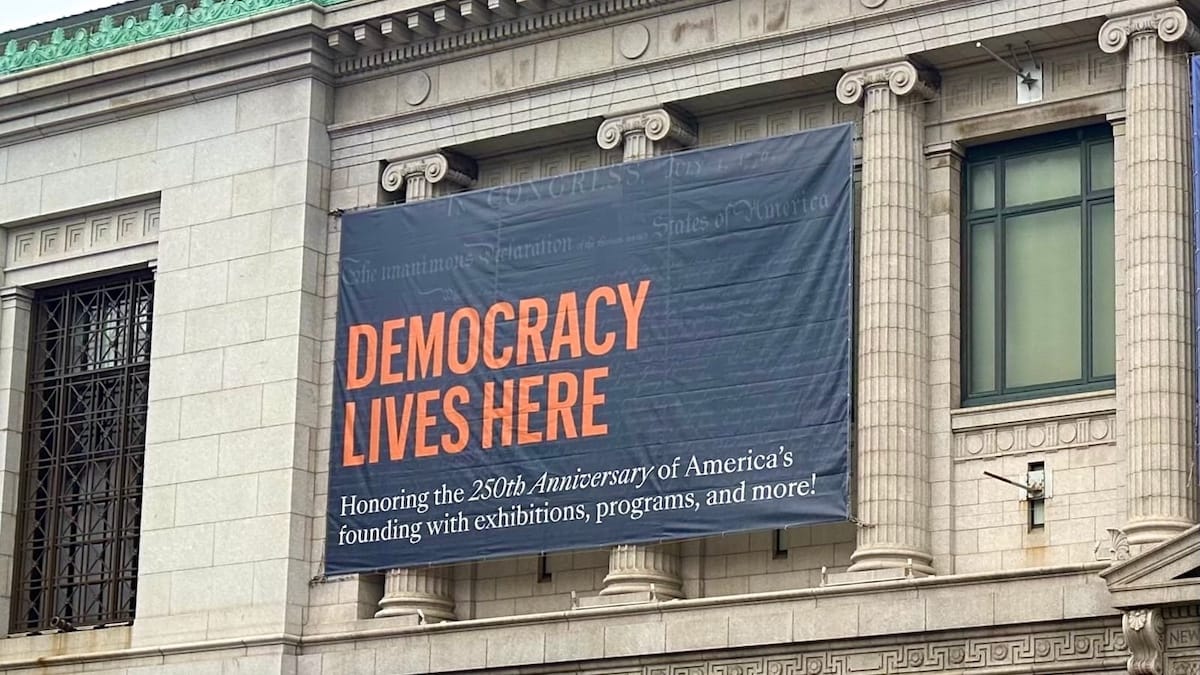
Cultural divisions and contested historical representation surface before the US 250th, amid art-market upheavals and the British Museum's acquisition of the Tudor Heart.
fromColossal
1 month agoRadioposter Launches Paper-fi: Analog Books with Synchronized Soundtracks
Radioposter has built what it calls Paper-fi: physical books with synchronized audio soundtracks that follow readers in real time as they turn each page. No chips embedded in the paper, no QR codes to scan. The system uses patented computer vision and other modes through a smartphone or smart glasses to track your place in the book and play the corresponding audio.
Arts
Music
fromKALTBLUT Magazine
1 month agoChoosing the Artificial Over the Real in Dash Hammerstein's "Noise Machine" - KALTBLUT Magazine
Dash Hammerstein blends Americana songwriting and filmmaking to create intimate, melody-driven songs and film scores that mix folk-pop sensibility with subtle production flourishes.
LGBT
fromLGBTQ Nation
1 month agoThe surprising way a professor & her students are preserving centuries of LGBTQ+ history - LGBTQ Nation
UC Berkeley professor Juana María Rodríguez teaches a Wikipedia course that preserves and expands LGBTQ+ history by creating and editing niche entries to counter contributor bias.
fromDigiday
2 months agoWTF is liquid content?
Publishers' adoption of generative AI is reducing the friction between content and format, making it easier for the same story to appear as shorter summaries, audio, or video, often in real time. To some publishers, a text article may soon be more of a vehicle for original reporting, not a final product. That information could become no longer available strictly in a static piece of content, but transformed into different shapes and formats, based on a reader's signals and preferences.
Media industry
Arts
fromThe Art Newspaper - International art news and events
2 months agoMuseum wall texts are an art in their own right-but will they survive the digital age?
Museums should balance providing contextual wall text and inviting wordless, personal interpretation to make art accessible and meaningful to diverse visitors.
fromThe Art Newspaper - International art news and events
2 months agoIn the age of AI, can art expertise be digitised?
Recently, AI decided that a painting long thought to be a copy of Caravaggio's The Lute Player is actually by the master, while another version of the same subject, previously thought to be authentic, is not. Both conclusions were disputed by the former Metropolitan Museum of Art curator Keith Christiansen. A similar debate erupted in March 2025 when AI declared that portions of The Bath of Diana, also long believed to be a copy, could have been painted by Peter Paul Rubens.
Arts
fromHyperallergic
1 month agoThe Sticky Politics of Wall Texts
In 2024, I made a vow to never base my art criticism on wall labels. My decision came after reading reactions to that year's Whitney Biennial. "If every label in 'Even Better Than the Real Thing,' the 81st installment of the Whitney Biennial, were peeled off the walls and tossed into the Hudson, what would happen?" asked Jackson Arn in the New Yorker. (He went on to suggest that the overall show would have been much better.)
Arts
fromFast Company
2 months agoA play with no actors on stage? That's the bet behind the world's first play in mixed reality
When a stranger smiles at you, you smile back. That is why, when Sir Ian McKellen ( The Lord of the Rings, X-Men, Amadeus) walked on the stage in front of me, looked me straight in the eye, and smiled at me, I smiled back. It was the polite thing to do. It was also completely unnecessary, because McKellen was not actually on the stage in front of me. He smiled at me through a pair of special glasses.
Arts
fromdesignboom | architecture & design magazine
2 months agopixel virtual gardens and robotic installations animate miguel chevalier's solo digital art show
Digital by Nature: The Art of Miguel Chevalier at Kunsthalle München presents the artist's largest solo exhibition in Europe to date, curated by Franziska Stöhr. The exhibition surveys Miguel Chevalier's practice from the early 1980s to the present, tracing his sustained engagement with digital technologies as both tools and subjects of artistic inquiry. Born in 1959 in Mexico City and based in Paris, Chevalier has worked with computers as a creative medium for more than four decades.
Arts
[ Load more ]