#municipal-signage
#municipal-signage
[ follow ]
#architecture #urban-planning #sustainability #community-engagement #design #new-york-city #urban-design #san-jose
fromInvestigative Post
20 hours agoInvestigative Post event on reforming Buffalo and NY government.
John Kaehny has written and successfully lobbied for the passage of state and New York City laws related to government transparency and accountability, including the first open data law in the world in 2012.
NYC politics



fromSan Jose Inside
1 day agoCounty and Partners Celebrate Completion of Unique Affordable Housing Project
"To address housing affordability in our community, we need all types of affordable housing options, including affordable ownership opportunities that allow individuals and families an opportunity to build equity alongside housing stability," said Santa Clara County Supervisor Betty Duong.
East Bay real estate
Business intelligence
fromLondon Business News | Londonlovesbusiness.com
5 days agoWhy GIS matters in modern infrastructure and urban planning: Building smarter, future-ready cities - London Business News | Londonlovesbusiness.com
GIS is essential for effective urban planning, enabling data-driven decisions that enhance infrastructure and quality of life in rapidly growing cities.
fromFast Company
4 days agoHow Paris redesigned itself to be a city of bikes-not cars
"This project is symbolic of what we've done over the last 12 years, reshaping the streets and the city," Christophe Najovski, the city's deputy mayor in charge of green spaces, stated during the opening ceremony.
Paris food
fromwww.theguardian.com
4 days agoEvery child wants to find joy': the scheme designing playground equipment for disaster zones
Meininger, who grew up in Germany but now lives in London, likes making things. So when he saw how much his young sons enjoyed the jungle gym and play forts at the local park, he made an indoor treehouse for them.
Parenting
Barcelona
fromArchDaily
5 days agoSANAA, David Chipperfield Architects, and Snhetta Among Five Finalists for Barcelona's New Waterfront Cultural Venue, Liceu Mar
Barcelona selects five finalist teams for the Liceu Mar cultural venue competition at Port Vell, aiming to enhance accessibility and civic engagement.
fromArchDaily
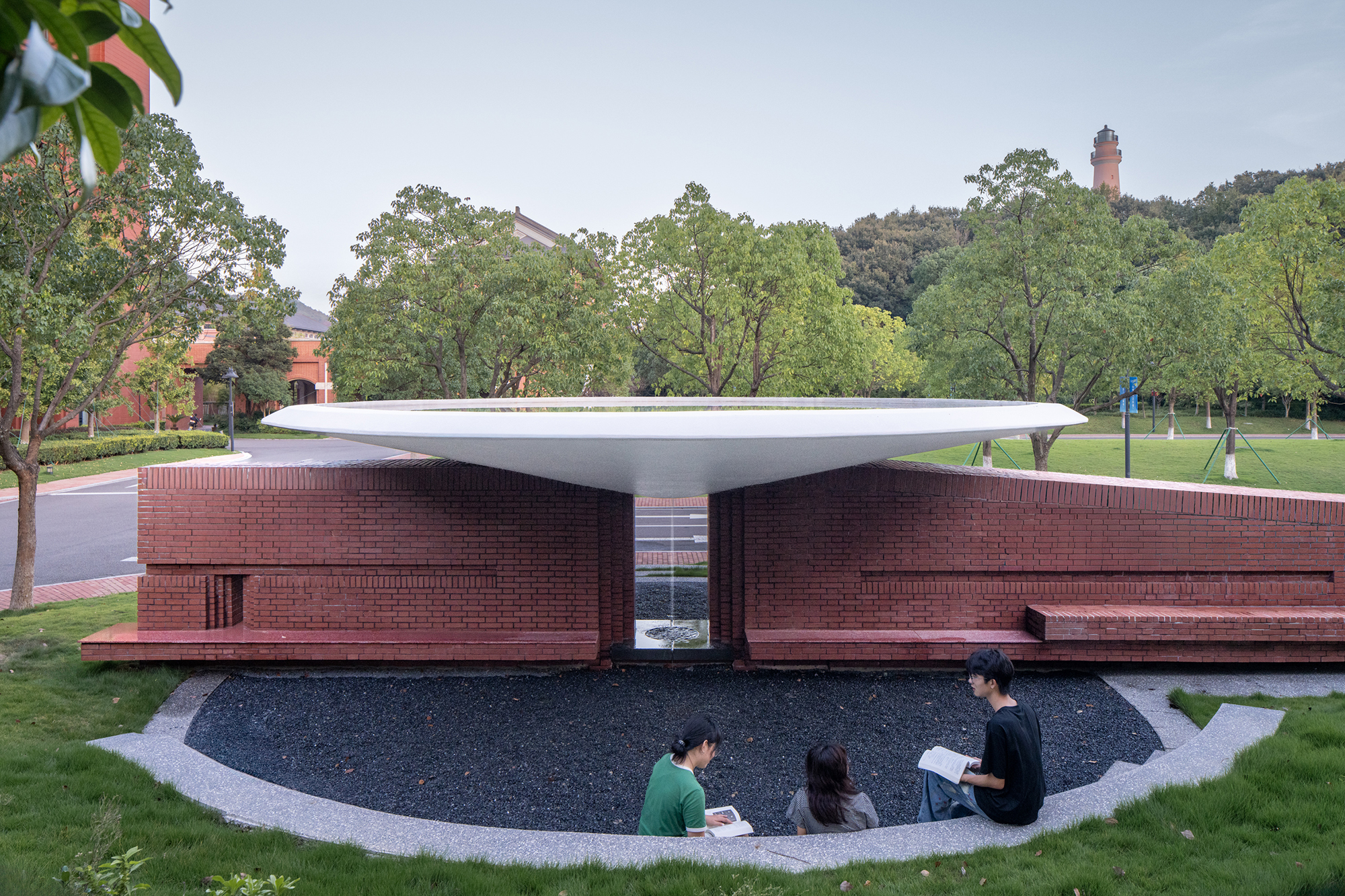
3 days agoThe Illusion of Lightness: Designing Civic Voids for Public Life
The original intent of pilotis was to create a sense of lightness that would allow circulation and light to flow beneath a structure, but contemporary requirements render thin columns insufficient for large-scale civic projects.
Renovation


Boston
fromBoston.com
3 weeks agoAfter prior uproar over removal, new mayor to restore Italian flag road lines to Newton
Newton will restore the red, white, and green Italian flag striping on Adams Street in Nonantum after its controversial removal, with the new design incorporating federal safety requirements.
fromStreetsblog New York City
5 days agoTo Save Lives - And The Theater - Let's Ban Cars From Broadway - Streetsblog New York City
In that small 30-block zone last year, there were 486 reported crashes, injuring 76 cyclists, 108 pedestrians (one fatally) and 67 motorists, according to city stats. That's more than a crash every day, injuring more than 250 people.
London politics
Design
fromdesignboom | architecture & design magazine
2 days agoreversible cultural pavilion activates public space in frankfurt 2026
Spain's pavilion for World Design Capital 2026 emphasizes reversible cultural infrastructure and sustainable design through innovative materials and construction methods.
Mission District
fromStreetsblog
1 week agoSFMTA Rips Out Yellow Guerrilla Plastic Posts at 4th and Channel. Installs White Plastic Posts Instead - Streetsblog San Francisco
SFMTA replaced activist-installed safety posts with their own, implementing a separated bike lane after a tragic incident involving a child.
fromBrownstoner
3 weeks agoGetting NYC Event Permits Is a Mess of Red Tape
It's like, 'Ok, where? Who do we call? What do you mean?' said Batan, of the Queensboro Dance Festival, which puts on free dance performances, parties, and classes 30 to 40 times each summer. Batan compares the city's complex permitting process - which features an alphabet-soup array of agencies and offices that set guidelines for everything from block parties and street festivals to the use of stages, tents, and speakers - to 'avoiding a bunch of trap doors.'
NYC music
fromwww.bbc.com
1 week agoCampaigners celebrate after new town plans dropped
Campaigner Aysha Hawcutt stated that residents were 'not anti-homes', but believed the Adlington plan was 'the wrong proposal in the wrong place'. She expressed pride in the community's resilience against the development threats.
London politics
fromArchDaily
3 weeks agoDesigning the Sensory City: Architecture, Light Pollution, and Urban Noise
For most of human history, night arrived as a planetary certainty. Darkness spread across landscapes, and the sky revealed thousands of stars. Today, that sky is disappearing. Artificial light spills upward from cities, scattering through the atmosphere and turning night into a permanent haze. Research mapping global sky brightness shows that more than 80 percent of humanity now lives under light-polluted skies, and the Milky Way has vanished from view for over a third of the world's population.
Environment
Alternative transportation
fromFast Company
3 weeks agoTraffic safety improvements frequently die by popular vote. It's time to stop that
Vision Zero, a Swedish road safety philosophy, proves traffic deaths are preventable through proper street design, enforcement, and awareness, yet Americans resist safety improvements due to normalized traffic violence.
Design
fromdesignboom | architecture & design magazine
4 days agoartwork uses floating fabric corridor and bodily movement to visualize climate change
Ryo Yamada's Perception Corridor is an immersive installation in Edinburgh that explores perception and environmental awareness through a 40-meter fabric corridor.
fromBusiness Matters
1 month agoThe impact of road signs on economic development
When routes are well organized, there are clear directional signs, and speed limits become reasonable. The early installation of warning signs allows transport companies to plan deliveries more accurately and avoid delays. For businesses, time is money. When a truck carrying goods does not spend hours detouring due to an unclear traffic scheme or stuck in traffic where it could have been avoided thanks to competent traffic management, fuel costs, driver wages, and vehicle maintenance costs are reduced.
Alternative transportation
New York City
fromNew York Daily News
1 month agoWhat future for dining sheds?: Return our streets to their real purpose for vehicles
Permanent outdoor dining sheds in curbside parking lanes create operational problems for snow removal and street cleaning while providing unfair competitive advantages to some restaurants over others.
fromArchDaily
2 weeks agoSpaces That Feel Back: How Buildings Respond to Human Behavior
Decades of research in environmental psychology and building science reveal that indoor conditions can profoundly affect human health and behavior. Lighting influences circadian rhythms and sleep patterns. Air quality impacts cognitive performance and respiratory health. Temperature and acoustics shape comfort and concentration.
Renovation
fromFast Company
1 month agoWhy urban planners should strive for 'the photo album standard'
My family had Slide Show Night when I was growing up. Not every Saturday, but a whole bunch of Saturdays. Either my sister or I would be in charge of setting up the projector, the screen, and loading the carousel. During the show, there'd be a few landscapes or skylines taken during vacations, but almost all the shots were up close. Like most dads, mine wasn't a professional photographer, but he did a good job of capturing memory triggers: faces, gestures, and decorations.
Photography
fromwww.dw.com
2 months agoThe city that swapped parking for green space
Though they're individually tiny, parking spots quietly play a dominant role in shaping urban landscapes. Most US cities dedicate at least 25% of their developable land to them. Some, even more. That land usage doesn't only determine the way a city looks. It also means covering large swathes of urban areas in heat-absorbing asphalt, which contributes to making summers hotter and heightens the risk of flooding since it prevents drainage during storms and heavy rainfall.
Miscellaneous
fromArchDaily
1 month agoHealth, Habitat, and Civic Infrastructure: Designing the City as a National Park
Cities around the world share a common goal: to become healthier and greener, supported by civic infrastructure that restores ecosystems and strengthens public life. The question is how to reach this. Global climate targets, local building codes, and municipal standards increasingly guide designers and planners toward better choices. Still, many cities struggle to translate these frameworks into everyday, street-level comfort and long-term ecological protection.
Environment
fromArchDaily
2 months agoDesigning Streets Through the Lens of Care
Jane Jacobs was also one of the voices that challenged this predominantly rationalist logic, arguing that truly vibrant streets are those capable of sustaining the diversity of everyday life, its informal exchanges, and the forms of care and natural surveillance that emerge from them. What these authors share is a fundamental insight: streets are not merely infrastructures for circulation, but social ecosystems, shaped by the relationships, uses, and encounters that take place within them.
Design
[ Load more ]