#nature-and-sound
#nature-and-sound
[ follow ]
#biodiversity #climate-change #animal-behavior #birdwatching #nature #architecture #sustainability #design

fromMail Online
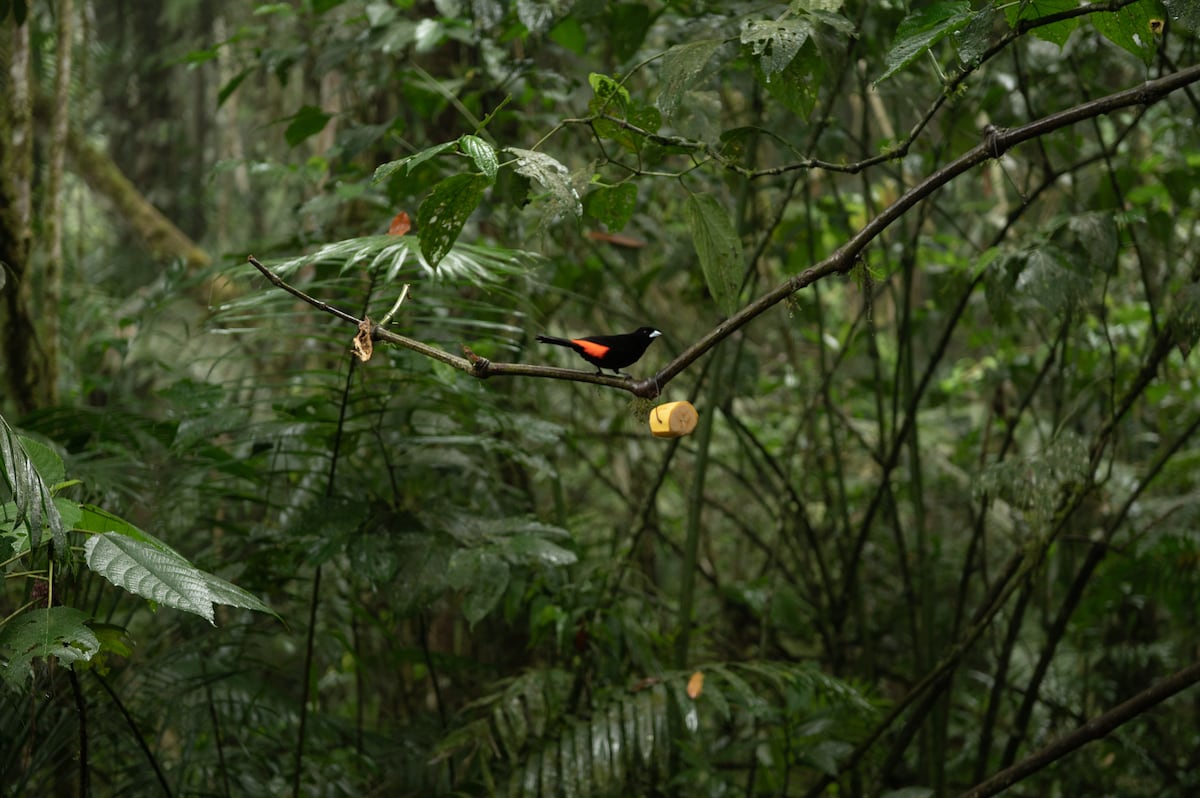
4 days agoBritain has just 20 years to save its wildlife, experts warn
'Our results show that the next 20 years are critical,' lead author Dr Rob Cooke told the Daily Mail. 'By around 2050, we reach a point where the choices we make on emissions and land use will largely determine whether Britain moves towards a much more degraded or a much more nature‑positive future.'
Environment
fromWIRED
5 days agoMeet the Man Making Music With His Brain Implant
Galen Buckwalter, a 69-year-old research psychologist and quadriplegic, participated in a brain implant study to contribute to science that aids those with paralysis. The six chips in his brain decode movement intention, allowing him to operate a computer and feel sensations in his fingers again.
Music production
fromTheregister
6 days agoBees and hummingbirds get trace alcohol from nectar
A study by researchers at the University of California Berkeley has found that ethanol is surprisingly common in floral nectar, the sugary fuel that keeps pollinators alive. Yeast feeding on those sugars produces trace amounts of alcohol, and in this study, it showed up in 26 of the 29 plant species sampled.
Beer
Design
fromdesignboom | architecture & design magazine
4 days agoartwork uses floating fabric corridor and bodily movement to visualize climate change
Ryo Yamada's Perception Corridor is an immersive installation in Edinburgh that explores perception and environmental awareness through a 40-meter fabric corridor.
OMG science
fromFortune
2 weeks agoThe ocean was once 10 times quieter. A 1949 whale recording proves it | Fortune
Researchers discovered the oldest known humpback whale song recording from 1949, predating scientific documentation of whale song by nearly 20 years and providing insights into whale communication in a quieter ocean.
Podcast
fromDiscover the Best Podcasts | Discover Pods
2 weeks agoFind Your Podcasts to Fall Asleep to in 2026
Podcasts offer an effective alternative to commercial sleep products, with indie creators providing genuinely engaging content that helps people fall asleep without relying on expensive industry solutions.
Mindfulness
fromPsychology Today
2 weeks agoYour Brain Needs the Outdoors More Than You Think
Human brains evolved outdoors and require natural environments to function optimally; modern indoor lifestyles cause mental fatigue that nature exposure restores through soft fascination and circadian rhythm regulation.
fromwww.theguardian.com
2 weeks agoSmall changes in how we garden can make a big difference to birds | Letter
Around a third of UK gardeners use pesticides, and our studies found that house sparrow numbers, for example, were nearly 40% lower in gardens where the pesticide metaldehyde was used. By reducing pesticide use, you can actively encourage birds back into your outdoor spaces, as they rely on invertebrates such as slugs and snails as natural prey.
Pets
Mental health
fromwww.theguardian.com
3 weeks agoIt has changed my life': How a dose of nature is treating mental illness
Dose of Nature prescribes outdoor time as mental health treatment, achieving 64% recovery rates compared to NHS talking therapies' 50%, with nature exposure providing serotonin boosts and immune system benefits through phytoncides.
fromHyperallergic
4 weeks agoOlafur Eliasson: A symphony of disappearing sounds for the Great Salt Lake
The electronic musical composition draws on field recordings of local wildlife and environmental phenomena, sourced from archival materials along with new recordings made specifically for the installation. By transporting the sounds of the lake's ecosystem into an urban park setting, Eliasson foregrounds the fragile interdependence between human and more-than-human life, rendering audible what is increasingly at risk of vanishing.
Arts
fromHigh Country News
1 month agoCoyotes and cougars and rats, oh my! - High Country News
An unnamed tourist saw it and told Aidan Moore, who works for Alcatraz City Cruises. Moore told SFGATE that he was initially skeptical, but the guest's iPhone footage left little room for doubt. The video shows, not a sea lion or an otter, but an actual Canis latrans, doggedly dogpaddling, then clambering out of the water, noticeably shaky and struggling to settle tired paws on the craggy rocks.
California
fromArchDaily
3 weeks agoDesigning the Sensory City: Architecture, Light Pollution, and Urban Noise
For most of human history, night arrived as a planetary certainty. Darkness spread across landscapes, and the sky revealed thousands of stars. Today, that sky is disappearing. Artificial light spills upward from cities, scattering through the atmosphere and turning night into a permanent haze. Research mapping global sky brightness shows that more than 80 percent of humanity now lives under light-polluted skies, and the Milky Way has vanished from view for over a third of the world's population.
Environment
fromFast Company
4 weeks agoThese sounds could soothe your restless brain
I'm very sensitive to sound, so the smallest noises can be distracting. Silence is sometimes loud for me. After the diagnosis, Sussman's parents switched him to a school that specialized in helping students with learning differences. His mom also started playing brown noise to help him relax or fall asleep, after she read that low-frequency (lo-fi), deep rumbling sounds-like heavy machinery or strong rainfall-can soothe those with ADHD.
Music production
fromwww.scientificamerican.com
4 weeks agoThe surprising science behind why daylight saving time is good for wildlife
Animals' risk of becoming roadkill depends on several factors, including how many vehicles are on the road, how many animals are on the road, and how animals and human drivers behave, explains Tom Langen, a professor of biology at Clarkson University, who studies animal-vehicle collisions. DST can minimize these collisions, however.
Pets
Music
fromSilicon Canals
1 month ago8 neighborhood sounds from summer evenings that transport boomers back to childhood instantly - Silicon Canals
Familiar summer-evening sounds—sprinklers, ice cream truck melodies and neighborhood noises—evoke strong, transportive childhood nostalgia for people raised in mid-20th-century suburbs.
Public health
fromSilicon Canals
1 month agoThe pollutant you can't see: why constant background noise is becoming a medical issue - Silicon Canals
Chronic urban environmental noise is a measurable health hazard linked to sleep disruption, increased cardiovascular and metabolic risk, and cognitive and mood impairment.
fromwww.theguardian.com
1 month agoFeeling chirpy: how listening to birdsong can boost your wellbeing
Previous research has shown that people feel better in bird-rich environments, but Christoph Randler, from the University of Tubingen, and colleagues wanted to see if that warm fuzzy feeling translated into measurable physiological changes. They rigged up a park with loudspeakers playing the songs of rare birds and measured the blood pressure, heart rate and cortisol levels (a marker of stress) of volunteers before and after taking a 30-minute walk through the park.
Mental health
fromNature
1 month agoWhat my cave stay taught me about sensors
To capture the biological impact of this extreme environment, I used a comprehensive suite of sensors and biomarker analyses. I wore a wireless electroencephalograph (EEG) system to monitor brain activity, sleep stages and neural signatures of stress and adaptation; the Oura Ring to continuously track sleep patterns, heart-rate variability and circadian-rhythm shifts; and the glucose monitor to follow metabolic responses in real time.
Wearables
San Francisco
fromFortune
2 months agoMountain lion saunters through San Francisco's posh Pacific Heights neighborhood before capture | Fortune
A 77-pound male mountain lion wandered through Pacific Heights in San Francisco and was tranquilized, captured, examined, and prepared for release after testing.
Arts
fromYanko Design - Modern Industrial Design News
2 months agoAn Artist Carved His Dead Oak Into Records That Play Bird Songs - Yanko Design
A diseased 65-year-old oak was transformed into playable wooden records and a sound sculpture that preserves migratory bird songs and honors the tree's character.
fromDesign Milk
2 months agoA Sea Ranch Home Tuned to Light, Sound, and the Senses
Ross partnered with architect and designer Suchi Reddy to reimagine the interiors, continuing a creative dialogue that has unfolded over more than a decade. Their shared interest lies in neuroaesthetics - the study of how environments affect emotional and physical well-being - and Standing Wave becomes a built expression of that. Rather than adding architectural flourish, the transformation focused inward: the existing floors and ceilings were preserved while walls were repositioned, rooms resized, and sightlines recalibrated to boost views of the ocean, rocks, and sky.
Remodel
fromYOGMAY
2 months agoSound Healing for the Anxious Mind | A Nada Yoga School guide
In a world that never stops talking, your mind can often feel like an overcrowded room. If you are struggling with anxiety, you know that the "noise" isn't just external; it's a persistent, jagged frequency within your own body. Perhaps you've tried traditional meditation only to find that the silence is too loud, or your racing thoughts simply won't be still.
Yoga
fromwww.kaltblut-magazine.com
2 months agoTerrain
The body is a shifting landscape transformed by surfaces and sensations. Each look captures a different tactile world: the heat of blood, the cool weight of metal, the yielding drift of water. The result is a sculptural study of how the elements carve, shield, and release the self. The materials we embody become the emotions we carry, and the body becomes a materialised exhibition of our emotions, from the pulse of Blood to the discipline of Metal to the surrender of Water.
Fashion & style
fromwww.theguardian.com
2 months agoFrom scorpions to peacocks: the species thriving in London's hidden microclimates
London is the only place in the UK where you can find scorpions, snakes, turtles, seals, peacocks, falcons all in one city and not London zoo. Step outside and you will encounter a patchwork of writhing, buzzing, bubbling urban microclimates. Sam Davenport, the director of nature recovery at the London Wildlife Trust, emphasises the sheer variation in habitats that you find in UK cities, which creates an amazing mosaic of wildlife.
London
fromPsychology Today
1 month agoMusic and the Brain: Love in the Key of Everyday Life
Wooden spoons as microphones, siblings spinning in socks across the floor, a mother laughing as Whitney Houston's "I Wanna Dance With Somebody" fills the room for the third time in a row-this is love. Long before children understand romance, they learn connection this way, through synchronized movement, shared joy, and the safety of familiar songs. Research on rhythm and social bonding suggests that moving in time together can regulate the nervous system and strengthen feelings of connection.
Music
fromwww.scientificamerican.com
2 months agoBat accelerator' unlocks new clues to how these animals navigate
Bats are impressive navigators. Like so many mini submarines equipped with sonar, they deftly navigate dark forests and caves by listening for the echoes of their own calls. But how bats can tell which echo to follow while flitting around in a sea of overlapping and competing signals pinging off the myriad surfaces in their environments has been a mysteryuntil now.
Science
fromInverse
2 months agoDo Sounds Really Help Us To Sleep?
When we say that someone has "slept soundly," what do we mean? Basically, we mean that someone slept well, but the sound part is interesting, since in the 21st century, there's a whole subset of our culture obsessed with using soundscapes, music, and sleep stories to either fall asleep more easily, or, in a more dubious claim, to promote better sleep.
Mindfulness
[ Load more ]