#nature-defenders
#nature-defenders
[ follow ]
#climate-change #environmental-justice #environmental-protection #sustainability #biodiversity #conservation


fromHigh Country News
4 days agoForest Service overhaul sows confusion, concern - High Country News
"Nobody is asking for this. None of the farm groups want this. No one in conservation wants this. Nobody." Robert Bonnie, former Forest Service undersecretary, highlights widespread opposition to the reorganization.
Washington DC
fromHigh Country News
4 days agoLetters to the Editor, April 2026 - High Country News
The fact that the Burns Paiute and Bannock Shoshone tribes are still battling our government and politicians for protection of the sagebrush steppe habitat and our native sage grouse isn't spiritually uplifting.
Social justice
fromHigh Country News
4 days agoHow HCN is helping fill a growing need for local news - High Country News
More than a third of the nation's local newspapers have folded in the last 20 years, with the Western U.S. being especially hard-hit, including significant losses in Utah and New Mexico.
Media industry

Environment
fromwww.theguardian.com
2 days agoIf they pollute our rivers, what will become of us?': the town divided between hope and fear in Brazil's Amazon oil rush
Oiapoque, Brazil, is poised for development through oil production, raising concerns about environmental impacts and Indigenous rights amid a global energy transition.
#endangered-species-act
SF politics
fromFortune
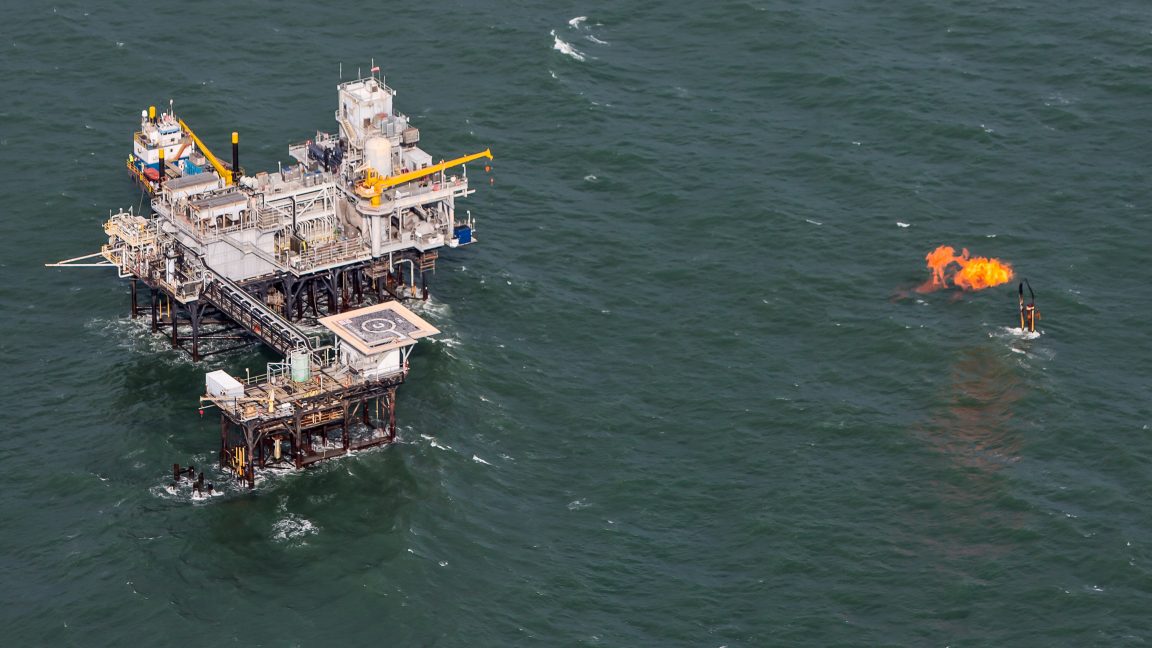
5 days agoWashington's 'God Squad' assembles to debate the fate of a rare endangered whale and drilling in the Gulf of Mexico | Fortune
A U.S. panel is considering exempting Gulf oil drilling from the Endangered Species Act, raising concerns for marine life and a rare whale species.
fromNextgov.com
5 days agoCitizen Science Month 2026 is about more than just stargazing
Citizen Science Month is built around a goal of 2.5 million 'Acts of Science,' tying the annual event to America's 250th birthday through a simple but powerful idea: lots of small contributions can add up to something really meaningful.
OMG science
Media industry
fromNonprofit Quarterly | Civic News. Empowering Nonprofits. Advancing Justice.
5 days agoPolitics in an Attention Economy | Nonprofit Quarterly | Civic News. Empowering Nonprofits. Advancing Justice.
Candidates must be cultural figures to succeed in today's American politics, navigating an attention economy shaped by algorithms.
fromOpen Culture
2 weeks agoIn Her Final Reflections, Jane Goodall Issues a Warning: "Without Hope, We Fall Into Apathy"
Somebody sent to this world to try to give people hope in dark times, because without hope, we fall into apathy and do nothing, and in the dark times that we are living in now, if people don't have hope, we're doomed. How can we bring little children into this dark world we've created and let them be surrounded by people who've given up?
Writing
fromMail Online
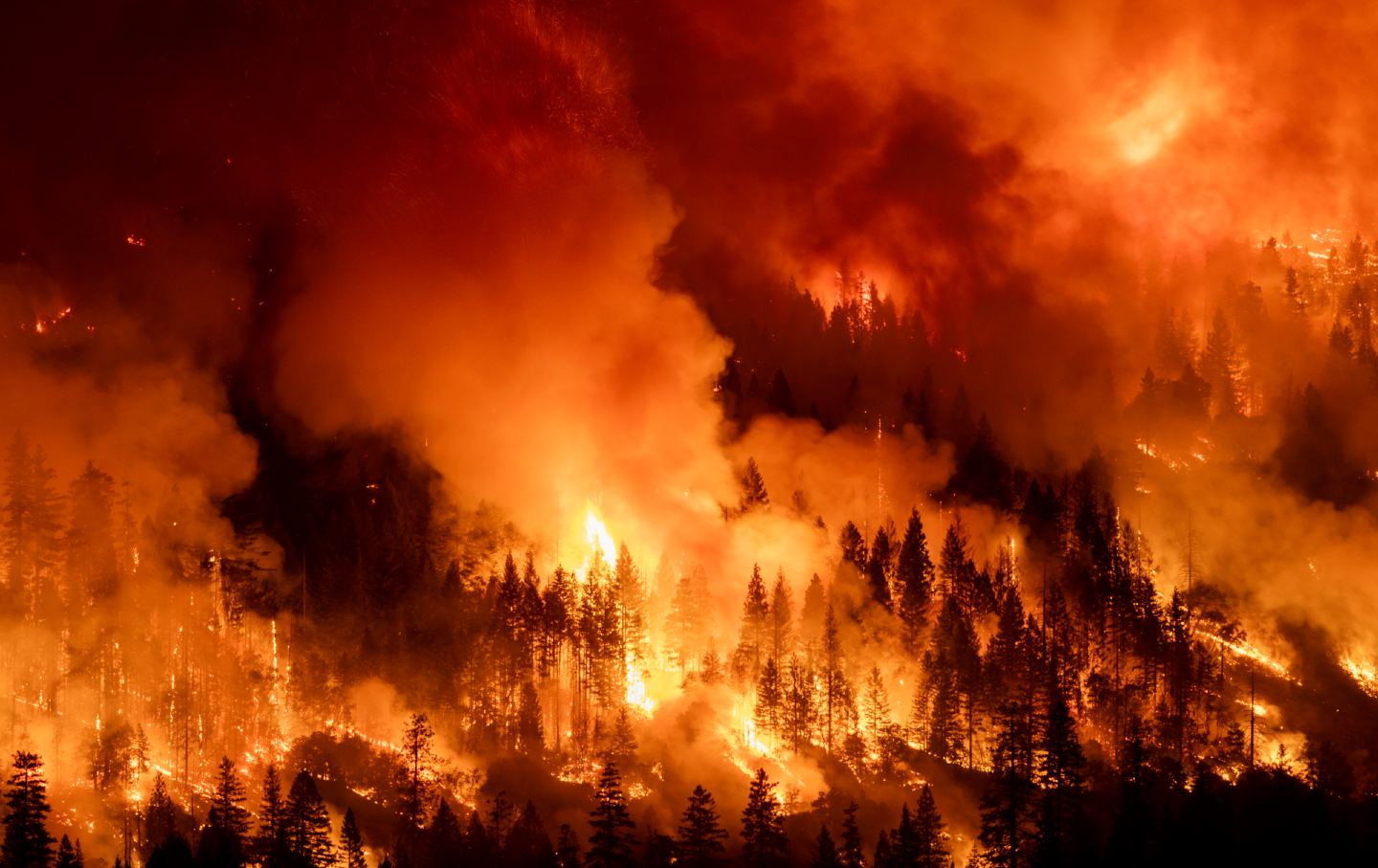
5 days agoBritain has just 20 years to save its wildlife, experts warn
'Our results show that the next 20 years are critical,' lead author Dr Rob Cooke told the Daily Mail. 'By around 2050, we reach a point where the choices we make on emissions and land use will largely determine whether Britain moves towards a much more degraded or a much more nature‑positive future.'
Environment
Non-profit organizations
fromwww.theguardian.com
2 weeks agoWe cannot replace USAID, but we can do big things': conservation plots a future without American money
Liberia's eco-guard program, funded by USAID, faces collapse after the Trump administration dismantled the agency, threatening forest conservation and wildlife protection in one of Africa's most biodiverse regions.
fromwww.bbc.com
1 week agoCampaigners celebrate after new town plans dropped
Campaigner Aysha Hawcutt stated that residents were 'not anti-homes', but believed the Adlington plan was 'the wrong proposal in the wrong place'. She expressed pride in the community's resilience against the development threats.
London politics


fromThe Nation
3 weeks agoA World on Fire Needs More Climate Reporting-Not Less
Covering Climate Now was formed in 2019 in response to the climate silence that then prevailed in much of the press, especially in the United States. Over the years that followed, hundreds of newsrooms joined our effort, and press coverage of the story began to reflect the scale of the crisis. Newsrooms beefed up their climate reporting teams; they confronted misinformation that sought to play down the problem; they thought creatively about how to find the climate connection on every beat.
Environment
fromNonprofit Quarterly | Civic News. Empowering Nonprofits. Advancing Justice.
2 months agoEnvironmental Advocates Confront Trump's Fossil Fuel Agenda | Nonprofit Quarterly | Civic News. Empowering Nonprofits. Advancing Justice.
But to environmental advocates, the announcement sounded less like relief and more like a bill for working people, one that would result in higher fuel costs, increased pollution, and a slower path to clean energy. Critics warn that the decision represents a blow to the energy transition and a significant setback in the fight against climate change overall.
US politics
fromMindful
1 month agoCan Compassion Save the Planet?
When British author Karen Armstrong won the TED prize in 2008, she used the money to convene a group of religious thinkers from a wide range of faiths to craft an updated version of the Golden Rule for the 21st century. What emerged was the Charter for Compassion, which calls on people around the world "to work tirelessly to alleviate the suffering of our fellow creatures, to dethrone ourselves from the center of our world and put another there, and to honor the inviolable sanctity of every single human being, treating everybody, without exception, with absolute justice, equity and respect."
Philosophy
World news
fromwww.theguardian.com
2 months agoIndia arrests environmental campaigners for activities against the national interest'
Indian authorities raided environmental activist Harjeet Singh's home over alleged foreign-funded advocacy for the Fossil Fuel Non-Proliferation Treaty that may threaten national interests.


Environment
fromwww.theguardian.com
1 month agoAustralian wildlife in harm's way' with volunteers left to pick up the pieces' amid climate crisis, fires and floods
Labor is urged to establish national wildlife protection standards for disaster response, with advocates warning biodiversity risks could become irreversible without coordinated government-funded rescue and rehabilitation services.
fromPsychology Today
2 months agoHow Can We Change the World?
There's a myth in our society that real change requires force, strength, and domination. We celebrate athletes, CEOs, and politicians who crush their opponents. But history tells a different story. Lasting social change has often been triggered by humble people whose weapons were passion, principle, and an unwavering commitment to justice and the truth - not the truth we see on TV or read in print media, but rather the truth that we feel deep inside ourselves.
Social justice
Environment
fromwww.mercurynews.com
1 month agoOpinion: AI is destroying our planet. We must act to check its growth and save ourselves.
AI's environmental impact is severe, with 2025 freshwater consumption exceeding global bottled water use and projected energy demands by 2034 matching India's entire consumption, requiring immediate action.
fromHigh Country News
1 month agoIt's time to rethink how we care for our public lands and waters - High Country News
Wildlife populations are in decline. Recreation sites are crowded and often underfunded. Wildfires are larger, more destructive and harder to control. Climate change is reshaping natural systems, from ocean fisheries to mountain snowpacks, faster than institutions can respond. At the same time, communities are being asked to host new energy projects, transmission lines and mineral development - often without clear processes, adequate resources or trust that decisions are being made in the public interest.
Environment
fromwww.theguardian.com
1 month agoThey pushed so many lies about recycling': the fight to stop big oil pumping billions more into plastics
Then she read an article in this newspaper, just over eight years ago, and discovered that fossil fuel companies had ploughed more than $180bn (130bn) into plastic plants in the US since 2010. It was a kick in the teeth, says Gardiner. You're telling me that while I am beating myself up because I forgot to bring my water bottle, all these huge oil companies are pouring billions She looks appalled. It was just such a shock.
Environment
fromAxios
2 months agoWhat to know about the world's great climate collapse
There's no hand-waving about how 'We want to cooperate on climate,' " oil historian and S&P Global vice chairman Dan Yergin said in an interview. "It's, 'We're slamming the door on that issue.' " "We've gone from over-indexing it to zero-indexing it.
Environment
fromThe Nation
2 months agoClimate Hushers Need to Get Real
"Let's be realistic." That's the advice coming from a growing number of voices in climate circles in the United States. In October, billionaire Bill Gates argued that a global temperature rise of 2 degrees Celsius is unavoidable and not a " super bad outcome"-a view unlikely to be shared by the millions of people whose homes would be destroyed by the resulting killer storms and rising seas.
Environment
fromwww.dw.com
2 months agoThe business of saving nature
The world spends 30 times more money destroying nature than protecting it. That's according to a new report from the United Nations Environment Programme (UNEP) that exposes a massive gulf between so-called "harmful investments" and financing that promotes nature preservation. The global environment agency's latest "State of Finance for Nature" (SNF) report is calling to phase out the US$7.3 trillion (6.2 trillion) in global investments that damage nature including into high-emissions energy infrastructure and manufacturing, for example.
Environment
fromwww.theguardian.com
2 months agoThe Guardian view on risks from biodiversity collapse: warnings must be heeded before it's too late | Editorial
Originally due to be published in the autumn, the review appears to have had some sections removed. An earlier version is reported to have included warnings about the risks of eco-terrorism and the growing likelihood of war between China, India and Pakistan due to competition over a shrinking water supply from the Himalayas.
Environment
Environment
fromSocial Media Explorer
1 month agoEntorno Law and the Role of Public Interest Law in Protecting Communities and the Environment - Social Media Explorer
Public interest law ensures accountability and enforces environmental and consumer protections to safeguard public health, community welfare, and natural resources while promoting sustainability and fairness.
fromItsnicethat
2 months agoWhat do children have to say about climate change? This collaborative poster series investigates
The physical nature of the project was inspiring and fun for everyone and also contained within it a kind of message. If we are going to change the direction of our climate we are going to have to do it for real too - in the real world, by doing real stuff.
Environment
[ Load more ]