#nervous-system-physiology
#nervous-system-physiology
[ follow ]
Mental health
fromPsychology Today
3 weeks agoWhen Even a Neuroscientist Feels Overwhelmed
Modern crises create a 'Traumademic' where overlapping global and personal stressors trigger emotional hijacking, causing the ancient feeling brain to override rational thinking through constantly activated alarm systems.
fromNews Center
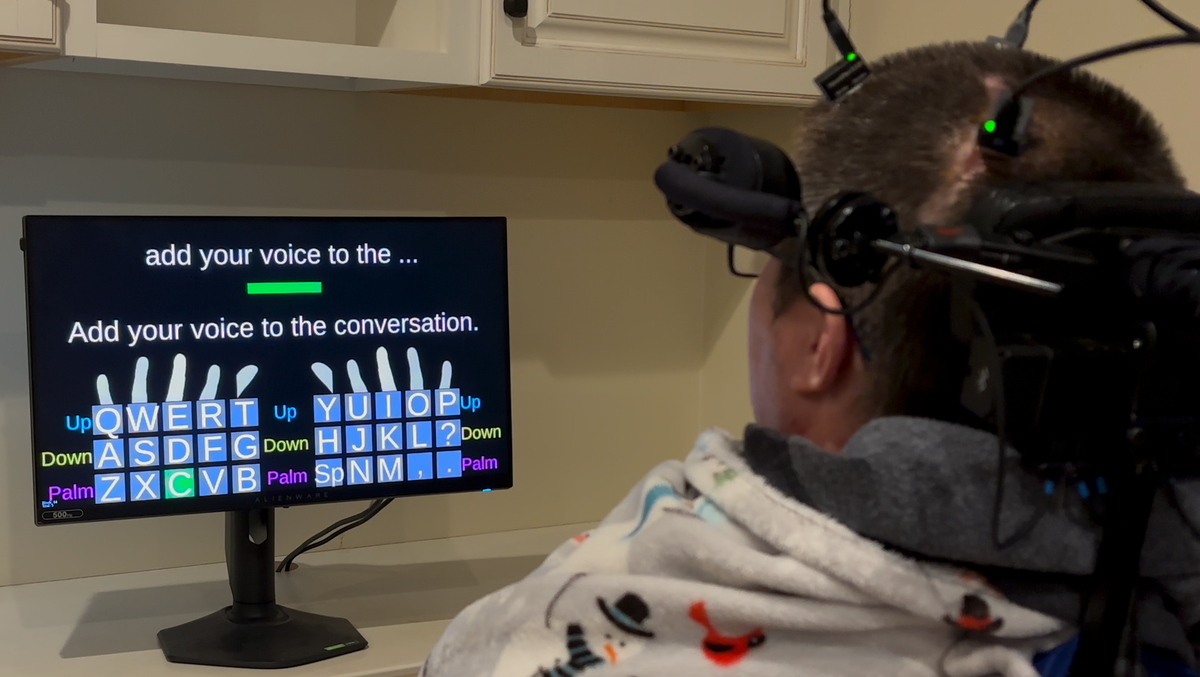
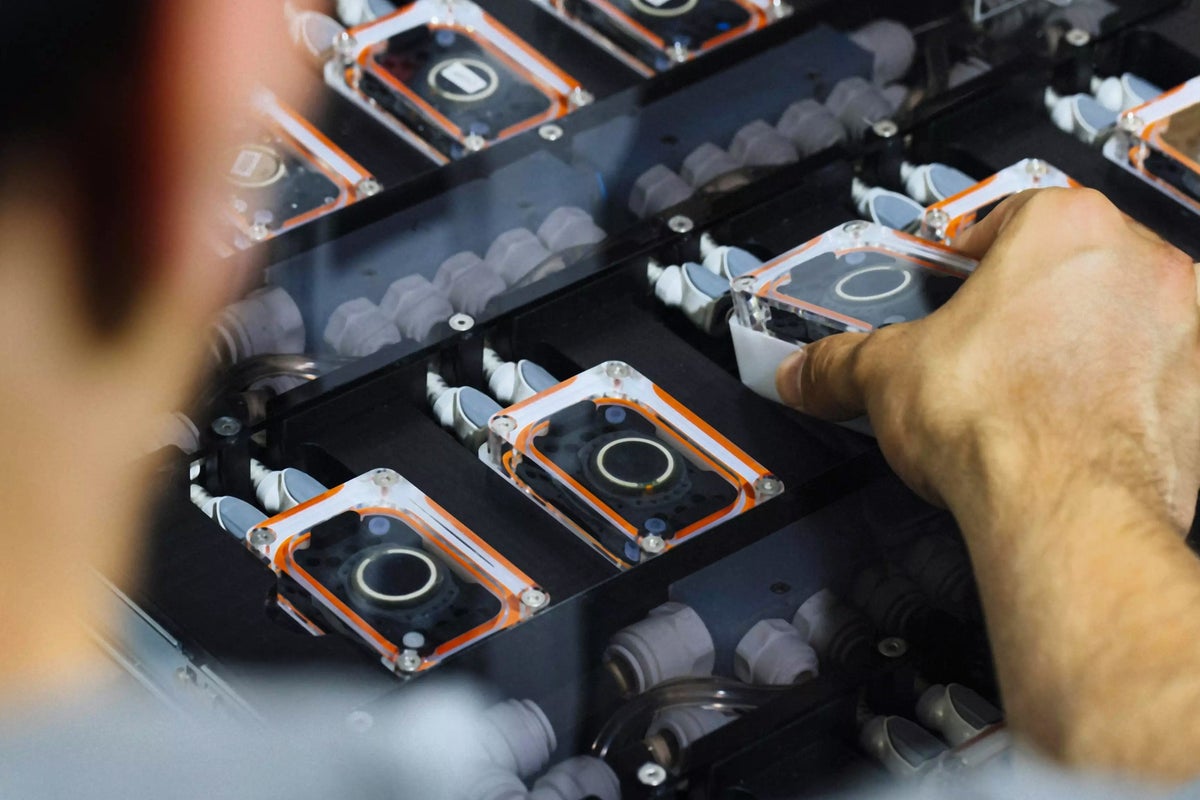
3 weeks agoCalcium Signaling Channels Regulate Neuroinflammation and Motivation - News Center
This could open up some interesting possibilities for therapeutic interventions for depression-like behaviors or maladaptive changes in motivational behaviors down the road where microglia are known to play a really important role.
Science
Miscellaneous
fromNature
1 month agoVectorized instructive signals in cortical dendrites - Nature
Learning involves synaptic strength changes, but how the brain solves credit assignment—determining which synapses to modify for improved performance—remains unknown, unlike artificial neural networks using backpropagation.
fromMail Online
3 weeks agoIncredible map reveals how the brain processes different emotions
They created an artificial 'mental map', with pleasantness along one axis and bodily reactions along the other, and charted how the brain responded while watching clips from films. The results revealed clear groupings in the way that our brains represent emotion - with guilt, anger and disgust in one corner and happiness, satisfaction and pride in the other.
Science
Psychology
fromSilicon Canals
1 month agoPsychology says the people who remember exact dates, what someone was wearing, and the precise words used during painful moments aren't holding grudges. Their memory encoded the detail because their nervous system classified that moment as a survival event - Silicon Canals
Emotionally significant events create vivid 'flashbulb memories' through amygdala activation and stress hormones, prioritizing survival-relevant information over mundane details.
fromFast Company
1 month agoOur brains are wired to ignore information. Here are neuroscience-backed tips for communicating memorably
The human brain is engineered to ignore most of what it sees and hears, according to the neuroscientists I interviewed for the audio original Viral Voices. If that's the case, how are you supposed to make a memorable impression? The empowering news is that if you understand how the brain works, what it discards, and what it pays attention to, you'll be far more persuasive than you've ever imagined. Persuasive people have influence in their personal and professional lives.
Philosophy
Psychology
fromSilicon Canals
1 month agoWhat neuroscience reveals about people who cry easily and why it signals a nervous system that processes the world more deeply, not more weakly - Silicon Canals
Frequent crying reflects heightened sensory processing sensitivity and deeper cognitive processing, not emotional fragility or malfunction.
fromFast Company
17 years agoTalking About Nerve!
I received an email recently that claims Wal-Mart senior management has been calling mandatory meetings for the company's employees in which the employees are told they "cannot" vote for the Obama-Biden ticket "or any other employee-friendly, union-friendly candidates for political office". It's not an urban legend, according to the sources I checked. This makes me so angry I just boil. When it comes to the Constitution, I am a rabid supporter.
fromSilicon Canals
1 month agoWhat neuroscience reveals about people who replay conversations in their head for hours after they happen - Silicon Canals
Neuroscientists have a name for the brain network that fires up when you're not focused on an external task: the default mode network, or DMN. It's the constellation of regions - the medial prefrontal cortex, posterior cingulate cortex, and angular gyrus among them - that hums to life when you daydream, reflect on yourself, or think about other people's mental states.
Psychology
Education
fromScience of Running
1 month agoTraining the Brain and Body: A discussion on the dynamics of physiology and neurology.
Effective coaching balances physiological and neurological understanding, values being 'good enough', emphasizes flexibility over rigid optimization, and tailors approaches to diverse athlete types.

fromPsychology Today
2 months agoAI-Decoded Brain Signals May Help Paralyzed Regain Movement
Artificial intelligence (AI) machine learning is making a difference in assistive technology to help restore movement for the paralyzed. A new study in the American Institute of Physics journal APL Bioengineering shows how AI has the potential to restore lower-limb functions in those with severe spinal cord injuries (SCIs) by identifying patterns in brain signals captured noninvasively via electroencephalography (EEG).
Artificial intelligence
Science
fromNews Center
1 month agoLiving 'Mini Brains' Meet Next-Generation Bioelectronics - News Center
Scientists developed a soft 3D electronic mesh that wraps around human neural organoids, enabling comprehensive mapping and manipulation of neural activity across entire miniature brain structures for the first time.
Medicine
fromenglish.elpais.com
1 month agoDiscovery of brain network that links body and mind could open the door to better Parkinson's treatments
Altered activity in the somatocognitive action network (SCAN) connects deep brain regions and cortical areas, linking motor, attention, perception, and action-planning deficits in Parkinson's.
fromFast Company
1 month agoHow hesitation is a fundamental brain feature, according to neuroscientists
At the Winter Olympics, skiers, bobsledders, speedskaters, and many other athletes all have to master one critical moment: when to start. That split second is paramount during competition because when everyone is strong and skilled, a moment of hesitation can separate gold from silver. A competitor who hesitates too much will be left behind -but moving too early will get them disqualified.
Science
fromPsychology Today
1 month agoAre Frontal Lobe Breakups Real?
There are lots of reasons why relationships fall apart; all kinds of incompatibilities can doom romance. Some are trivial, but occasionally there might be something more profound at the root of an estrangement. Recently, the concept of the "frontal lobe breakup" appeared in popular culture. The idea is that the final stage of development in the executive regions of the brain-the frontal lobes-changes someone's perspective about their relationship. The onset of advanced cognitive skills in one partner creates a gap in maturity too big to bridge.
Psychology
fromNature
1 month agoDaily briefing: Tumours use neurons as hotline to the brain
Tumours lure and then hijack nearby sensory neurons to boost their own growth. The cancer cells use these neurons to send a signal to the brain that subdues the activity of immune cells around the tumour, which allows it to grow unchecked. When researchers deactivated these neurons in mice with lung cancer, they saw "a huge, dramatic reduction" in tumour growth - more than 50% - says cancer immunologist and study co-author Chengcheng Jin.
Science
fromBig Think
2 months agoComputational model discovers new types of neurons hidden in decade-old dataset
There was a group of neurons that predicted the wrong answer, yet they kept getting stronger as the model learned. So we went back to the original macaque data, and the same signal was there, hiding in plain sight. It wasn't a quirk of the model - the monkeys' brains were doing it too. Even as their performance improved, both the real and simulated brains maintained a reserve of neurons that continued to predict the incorrect answer.
Science
Science
fromwww.nature.com
2 months agoPyramidal neurons proportionately alter cortical interneuron subtypes
Pyramidal neurons regulate survival and differentiation of specific cortical interneuron subtypes, aligning interneuron abundance with pyramidal partner prevalence via activity-dependent and ligand-mediated mechanisms.
Science
fromwww.nature.com
2 months agoEditorial Expression of Concern: En passant neurotrophic action of an intermediate axonal target in the developing mammalian CNS
Figures 5a and 5b exhibit unexpected background similarities; illustrative panels show the same explant at 24h and 52h; original data are unavailable, so interpret results cautiously.
Science
fromHarvard Gazette
2 months agoWant to speed brain research? It's all in how you look at it. - Harvard Gazette
SmartEM uses machine learning to guide common single-beam scanning electron microscopes in real time, increasing scanning speed sevenfold and democratizing high-resolution connectomics.
[ Load more ]