#new-york-times-business-model
#new-york-times-business-model
[ follow ]
#social-media #advertising #content-creation #meta #bot-detection #javascript #cookies #creator-economy
#meta
Tech industry
fromwww.npr.org
1 day agoWhat's next for Meta in the wake of trial losses and layoffs?
Meta faces significant challenges with legal rulings and a shift in focus from the Metaverse to artificial intelligence.


fromwww.theguardian.com
16 hours agoSix great reads: the OnlyFans legacy, stolen cargo and Meta's creepy' glasses
Leonid Radvinsky's death leaves a void in the leadership of OnlyFans, a platform that has transformed the adult content landscape. His secretive management style and the controversies surrounding the site have raised questions about its future direction and stability.
Photography
#publishers
Media industry
fromDigiday
3 days agoDigiday+ Research: How Dow Jones, Forbes, The Guardian and other publisher revenue streams are shifting in 2026
Publishers are diversifying revenue streams amid economic challenges, focusing on ads, events, and subscriptions, with events gaining prominence since 2025.
Privacy technologies
fromWashingtonian - The website that Washington lives by.
3 weeks agoThe Washington Post Is Using Reader Data To Set Subscription Prices. How Does That Work? - Washingtonian
The Washington Post uses algorithmic pricing based on personal data to set subscription rates differently for individual users.
fromThe New Yorker
1 month agoThe Media Merger You Should Actually Care About
During the first Trump Administration, Sinclair, a company that owns almost two hundred local TV stations across the United States, and is known for its conservative bent, instructed its news anchors to recite a near-identical script on air. The sharing of bias and false news has become all too common on social media, and more alarming, some media outlets publish these same fake stories without checking facts first.
US politics
#programmatic-advertising
Marketing tech
fromExchangewire
2 weeks agoWhy Publishers Need Independent AI/ML Infrastructure for Yield Optimisation
Publishers lack real-time machine learning infrastructure for yield optimization despite its proven value on the buy-side, creating a neutrality problem where exchanges optimize for transaction volume rather than publisher revenue.
fromThe Motley Fool
1 month agoWarren Buffett's Berkshire Hathaway Bought Shares of The New York Times. Should You? | The Motley Fool
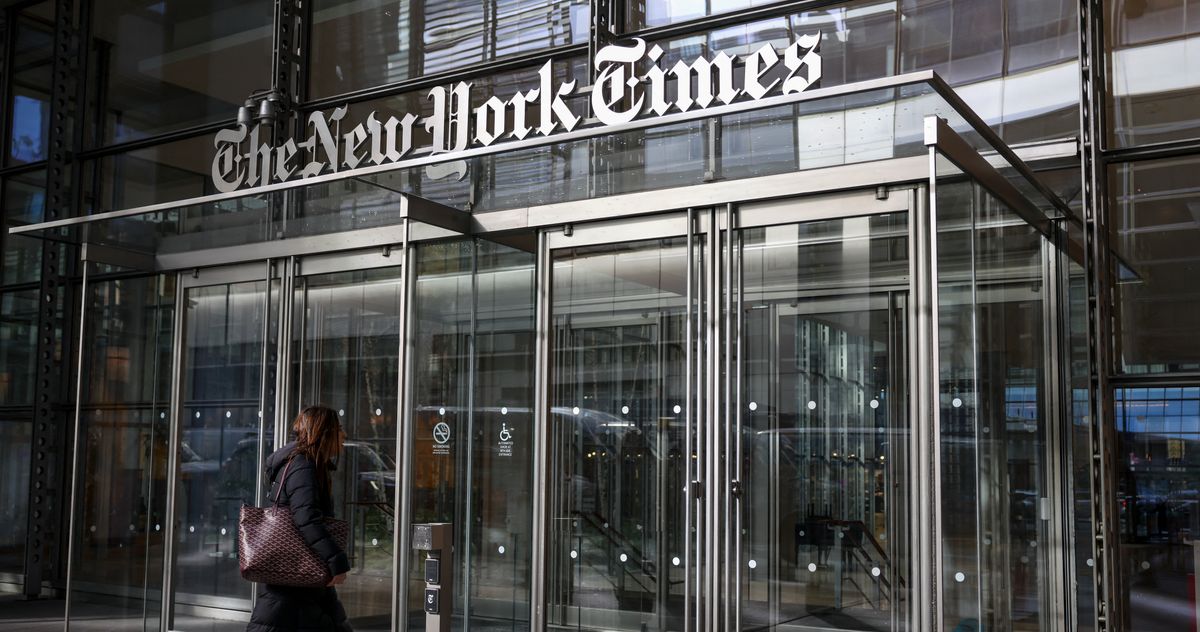
While the position is small for Berkshire, accounting for only about 0.1% of its overall portfolio, it's meaningful for The New York Times. After buying nearly 5.1 million shares of The New York Times Co. during the quarter, the stake is now valued at more than $350 million, representing approximately a 3% stake in the company, which commands a market capitalization of more than $12 billion.
Business

Media industry
fromwww.amny.com
2 weeks agoThe New York Times Company prints Schneps Media newspapers, keeping print alive in the digital age
Schneps Media operates a thriving print publishing business with over 100 publications, demonstrating that print journalism remains vital and relevant in contemporary American media.
Media industry
fromFast Company
2 weeks agoTraffic is dying as a media metric. What comes next is more important
AI is significantly reducing traffic to major tech media sites, but publishers with strong brands and loyal audiences are adapting through paywalls and diversified strategies rather than facing business decline.
Media industry
fromDigiday
2 weeks agoMedia Briefing: What to expect at the Digiday Publishing Summit, March 2026 edition
Publishing executives gather at Digiday's summit to address media industry challenges including AI licensing transparency, zero-click strategies, and creator engagement for younger audiences.
Media industry
fromwww.mediaite.com
2 weeks agoONE SHEET: Betting Markets Threaten Journalists, Big DC Media Bet, CBS Ratings Dip
Gamblers on prediction markets threatened a journalist to alter reporting on an Iranian missile strike to win their bets, raising concerns about press freedom and platform integrity.
fromwww.mediaite.com
2 weeks agoThe New York Times Hires Editor Who Reportedly Covered Up His Pal's Child Porn Scandal
Shachtman, then serving as the top editor at the publication, reportedly instructed Siegel not to turn in a story with the words child pornography in it; and then took advantage of Siegel leaving work to tend to her dying mother by going back on an agreement to note that the FBI raid pertained to possible criminal behavior outside the scope of Meek's work in her article, according to an NPR investigation.
Media industry
Media industry
fromNew York Post
3 weeks agoEmbattled BuzzFeed warns end could be near as it faces major cash crunch
BuzzFeed flagged going concern doubts and suspended 2026 forecasts while evaluating strategic options, with stock declining 7% as the company faces severe cash constraints and advertising revenue challenges.
Media industry
fromDigiday
3 weeks agoMedia Briefing: In the AI era, subscribers are the real prize - and the Telegraph proves it
Axel Springer's Telegraph acquisition values subscriber bases and newsroom quality over page views, positioning the publisher to withstand AI disruption through direct reader loyalty.
fromDigiday
3 weeks agoFrom rented audiences to engaged communities: Why participation is the new moat for publishers
Social platforms promised reach, scale and frictionless distribution. In exchange, publishers ceded control of audience relationships, data and, ultimately, trust. Today, that bargain is not working. Social media is imperfect. Feeds are flooded with bots, synthetic engagement, misinformation and bad actors operating under inconsistent or nonexistent moderation standards.
Media industry
Media industry
fromNieman Lab
1 month agoIs The New York Times a games company? A familiar debate continues
The New York Times shifted from news-only subscriptions to bundled offerings combining news with Wordle, Cooking, The Athletic, and other products, making bundle subscribers now exceed news-only subscribers.
Media industry
fromNieman Lab
1 month agoNew York Times runs in-house ad asking listeners to "support any news organization dedicated to original reporting"
New York Times publisher A.G. Sulzberger released his first-ever advertisement encouraging people to support any news organization dedicated to original reporting, not just the Times, to address the shrinking news industry.
fromwww.zacks.com
2 months agoHow The New York Times' Digital Bundle Strategy Is Winning Subscribers
The New York Times Company's (NYT - Free Report) digital bundle strategy has proved effective in attracting and retaining subscribers. In the third quarter of 2025, the company added about 460,000 net digital-only subscribers, bringing total subscribers to 12.33 million. This growth was driven by bundle and multiproduct additions, as well as other single-product offerings. Bundle and multiproduct subscribers reached 6.27 million at the end of the quarter, representing 51% of the total subscriber base.
Media industry
fromDigiday
1 month agoIn Graphic Detail: Subscriptions are rising at big news publishers - even as traffic shrinks
Rather than undercutting prices to chase growth, many are leaning into higher-value positioning and introductory offers designed to convert (and keep) paying readers. Digiday's third annual Subscription Index found that publishers increased subscription prices by 5 percent year over year in 2025, based on a cohort of 14 publishers. (Bloomberg increased its annual subscription pricing by an eye-opening 33 percent year over year, up from $299 annually in 2024 to $399 in 2025).
Media industry
[ Load more ]