#noguchi-sunken-garden
#noguchi-sunken-garden
[ follow ]


Washington DC
fromThe Art Newspaper - International art news and events
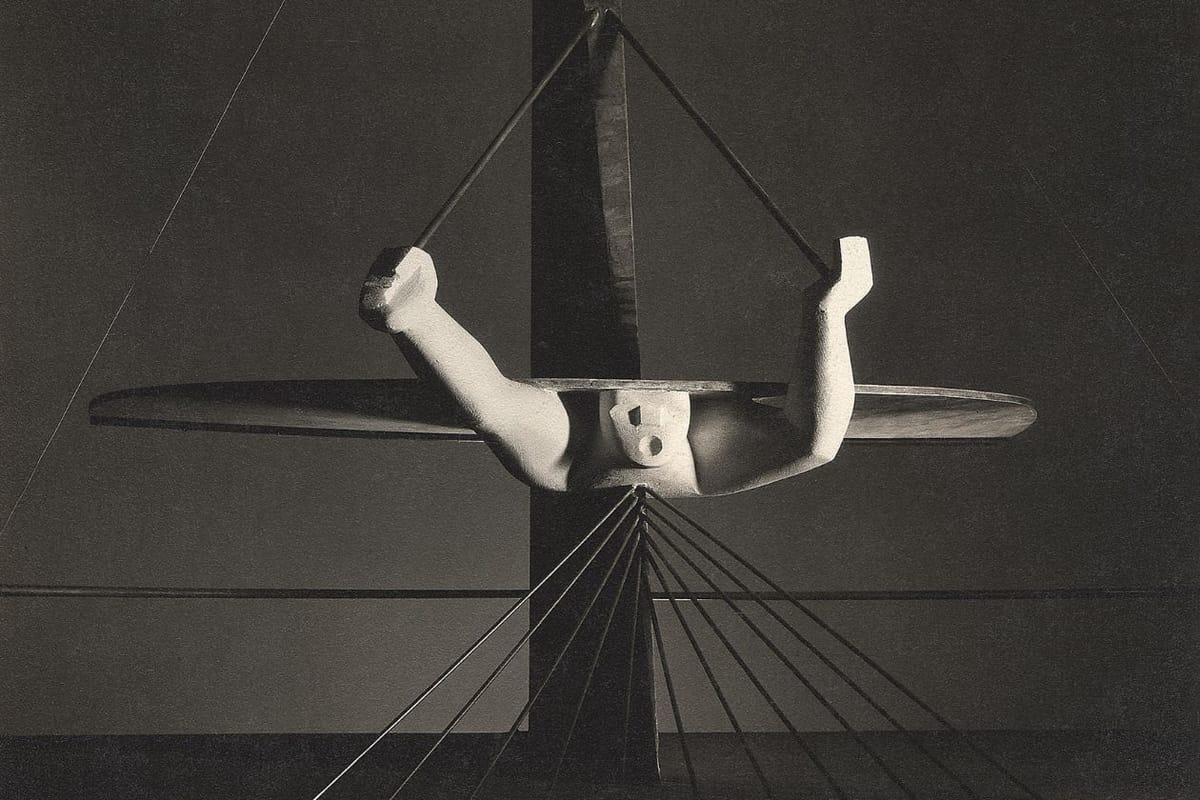
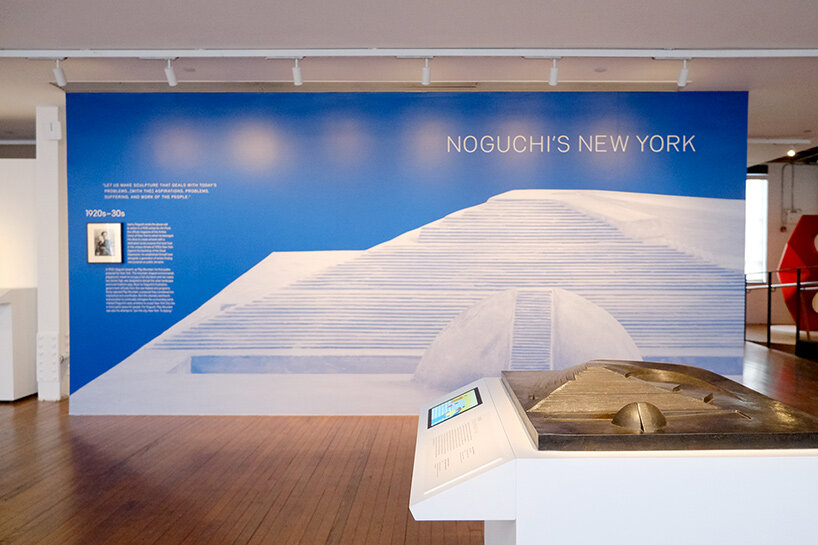
1 week agoHirshhorn Museum's revamped sculpture garden will feature new acquisitions by Mark Grotjahn, Lauren Halsey and more
The Hirshhorn Museum's sculpture garden will reopen with eight new works by various artists, enhancing the cultural landscape of Washington, DC.


Miscellaneous
fromdesignboom | architecture & design magazine
3 weeks agoMARC FORNES / THEVERYMANY's cocooned aluminum pavilion rises in north carolina park
L'Île Folie is a digitally fabricated aluminum pavilion in North Carolina that reinterprets the historic architectural folly as a contemporary public gathering space combining lightweight construction with landscape tradition.
SF music
fromFuncheap
4 weeks agoShakuhachi Concert inside Japanese Tea Garden (Golden Gate Park)
Shakuhachi master Masayuki Koga performs traditional Japanese music at Golden Gate Park's Japanese Tea Garden Pagoda on March 7th, emphasizing spiritual connection and authentic listening beyond analytical control.
fromTime Out New York
4 weeks agoTwo massive 30-foot sculptures are landing in Manhattan
The sculptures are designed to contrast Manhattan's monumental architecture with imagery drawn from fairy tales, archetypal symbols and dreamlike storytelling. Their polished steel surfaces will reflect the surrounding city while their whimsical forms invite pedestrians to pause-and maybe look up from their phones for a minute.
DC food
Design
fromYanko Design - Modern Industrial Design News
1 week agoThis walkable steel sculpture turns geometric chaos into an experience - Yanko Design
Five Fragmented Cubes is an interactive sculpture designed for immersion, challenging traditional viewing by inviting people to enter and explore its structure.
LA real estate
fromLos Angeles Times
9 years agoHome of the Day: A million-dollar treehouse in Silver Lake
A 1948 Spanish-style Silver Lake treehouse property priced at $1.7 million features panoramic city views, a gourmet kitchen, wine storage, smart-home technology, and outdoor living spaces including a pool and fireplace.
Renovation
fromYanko Design - Modern Industrial Design News
2 weeks agoMichael Jantzen's Garden Retreat Has 30 Panels to Rearrange by Hand - Yanko Design
Michael Jantzen's Interactive Garden Pavilion features 30 independently pivoting panels that users can adjust to control light, shade, and privacy, making the structure's appearance and function variable rather than fixed.
SOMA, SF
fromKqed
1 month agoThe Eccentric Personalities Behind Sunnyside Conservatory, a 120-Year-Old Garden in San Francisco | KQED
San Francisco's Sunnyside Conservatory is a lesser-known Victorian glass building in a residential neighborhood that houses rare plants and functions as a hidden botanical gem.
Design
fromdesignboom | architecture & design magazine
3 weeks ago'raw geological poetry': how SolidNature interprets stone into an architecture of emotions
SolidNature transforms natural stone from conventional building material into atmospheric, emotionally expressive design medium through craftsmanship, technology, and artistic collaboration.
Renovation
fromDesign Milk
3 weeks agoA North Vancouver Residence and Pool House Connected by Landscape
Two combined North Vancouver lots create a unified landscape where a main residence, pool house, and greenhouse function as integrated moments within continuous terrain rather than separate structures.
fromYanko Design - Modern Industrial Design News
3 weeks agoThis Planter Fits the One Balcony Spot Every Other Pot Ignores - Yanko Design
The Eckling is designed specifically for balcony corners, addressing a gap that rectangular window boxes and round hanging pots have never managed to fill. Most railing planters sit along a straight stretch of rail, so corners get skipped entirely. An L-shaped recess cut into the base of the hemispherical bowl allows it to rest squarely on two railing legs at a corner junction, no extra hardware required.
Design
Renovation
fromYanko Design - Modern Industrial Design News
4 weeks agoA Forgotten Modernist's Sonoma Masterpiece Finally Gets the Restoration It Deserved - Yanko Design
A 14-acre Sonoma County estate designed by architect J. Lamont Langworthy exemplifies California Modernism through site-sensitive design that integrates architecture organically with its natural environment.
fromArchDaily
3 weeks agoFloating Pavilion / Studio RE+N
A slender white form hovers above the fields on minimal supports, as if a thin wing had just been lifted by the wind. "Floating" describes both a structural condition - a thin roof suspended above the ground - and a quality of time in this place, where mist drifts, light shifts, and one pauses briefly on the mountain, as in a fleeting moment of respite.
Design
fromArchitectural Digest
1 month agoOn a Storied Parcel in Silver Lake, a Bold New House Rises Within a Historic Garden
It once belonged to Julian Eltinge, a vaudeville performer who usually played women-so convincingly that audiences were often shocked when he revealed himself to be a man. Starring in musical comedies like The Fascinating Widow, The Crinoline Girl, and Cousin Lucy (all title roles written for him), Eltinge went on to become one of the highest paid movie stars of the 1920s. One prominent critic cleverly dubbed him "ambisexstrous."
Real estate
fromwww.archdaily.com
1 month agoSunset Shelter / Bon Studio
Architecture that celebrates the natural transition between day and night, using light and shadow to create a dynamic play of contrasts. The filled spaces, with their defined functions, are complemented by the emptiness of the courtyards, which act as visual and sensory ventilators.
Renovation
fromDesign Milk
4 weeks agoThe Fountain Celebrates Craft, Connection, and Lime Green
To drink, to bathe, to swim, water has been integral to every society, at every point in our relatively short history here on earth. We connect, drink, and extend ourselves over water, a lifegiving force whose polarity explains much of human behavior. Fostering this sense of community is vital to our health and happiness as well.
Design
fromYanko Design - Modern Industrial Design News
4 weeks agoThis 12-Foot Mirrored Cone Turns Desert Sand Into Living Art - Yanko Design
The setup is deceptively simple. A circular concrete ring, complete with a landing pad and three descending steps, defines the play area. Inside that ring is a field of refined sand. Rising from the center is a tall cone wrapped entirely in polished mirrored steel. Solar panels sit on top, charging batteries during the day so the whole thing lights up at night. No Wi-Fi. No app. No QR code.
Design
fromThe Nation
1 month agoHow to Build a Moon Garden When the News Is All Horror
To see where the moon melts over the garden,or where the bats flit, or where the air sweetens with pollen and moth-frenzy, I recommend a night walk to discern the perfect patch for it. Under this glow, we could all use a distraction-dig with a silver shovel and choose colors that swoon and moan under our satellite: dusty pinks, baby blue, lavender, white, and butter yellow gems unfurl at dusk until dawn.
Environment
fromdesignboom | architecture & design magazine
2 months agoreflective red sphere suspends from century-old tree in gregory orekhov's land art installation
The red sphere, originally associated with the ritual of celebration and the expectation of magic, is stripped of its function and returned to the landscape as a heavy, vulnerable form without foundation. Suspended by a hemp rope from a bare century-old tree, the object exists between ground and space; neither in fall nor at rest, but in a prolonged state of uncertainty.
Arts
Design
fromdesignboom | architecture & design magazine
1 month agovilla sensorium reimagines japan's mountain forests as living architectural landscape
Villa Sensorium integrates architecture into Yakushima's primeval forest by using water as an organizing element and mimicking natural mountain ridge forms to create inhabitable topography.
fromDesign Milk
2 months agoA Sea Ranch Home Tuned to Light, Sound, and the Senses
Ross partnered with architect and designer Suchi Reddy to reimagine the interiors, continuing a creative dialogue that has unfolded over more than a decade. Their shared interest lies in neuroaesthetics - the study of how environments affect emotional and physical well-being - and Standing Wave becomes a built expression of that. Rather than adding architectural flourish, the transformation focused inward: the existing floors and ceilings were preserved while walls were repositioned, rooms resized, and sightlines recalibrated to boost views of the ocean, rocks, and sky.
Remodel
fromKqed
1 month ago'Temporary' Public Art Seeks Another Six Month Extension From SF
The six-month extension must be approved by the Visual Arts Committee, the full Arts Commission and then Recreation and Parks. Both the Feb. 18 Visual Arts Committee meeting and the full Arts Commission meeting on March 2 will provide opportunities for public comment on the proposal. A spokesperson confirmed that Recreation and Parks does not incur any costs from the installation of R-Evolution. In a presentation created by Building 180 and the Big Art Loop for next week's meeting, R-Evolution is framed as a convenient placeholder until Embarcadero Plaza and Sue Bierman Park renovations begin. Recreation and Parks currently lists that project's construction start date as "TBD."
Arts
Design
fromYanko Design - Modern Industrial Design News
1 month ago5 Reasons Modern Treehouses Just Became the Ultimate Luxury Escape - Yanko Design
Contemporary treehouses function as serious architectural expressions of biophilic design, where trees actively collaborate with built structures to create integrated human-nature systems rather than imposing form on landscapes.
fromTime Out New York
2 months agoUnion Square's first-ever evening art installation lights up the plaza
Sure, those festive holiday lightshave officially burnt out, but that doesn't mean things have to be dark and dreary this winter: the Union Square Partnership (USP) is graciously adding some light and liveliness to the darkest time of the year with its new interactive art installation, "Patterned Behavior" by MASARY Studios, on view every evening (dusk to 10pm) from now through Tuesday, February 17.
Arts
fromColossal
2 months agoLuftwerk Transforms Paint and Aluminum into Radiant Explorations of Sunlight
Topped with a roof shaped like a crabshell, Le Corbusier's Chapelle Notre-Dame-du-Haut is a sanctuary amid the French mountainside. The 1955 construction rests atop a hill in Ronchamp, standing unobstructed by the otherwise forested inclines. As the sun rises and falls, light filters in through the mélange of rectangular windows tinted to cast streams of color around the space. The stained glass apertures of Le Corbusier's modernist chapel are a clear reference point for Luftwerk's "Open Frame."
Arts
fromYanko Design - Modern Industrial Design News
1 month agoIf Sci-fi Gardening met MC Escher: Meet The Holocene House's Floating Jungle Canopy - Yanko Design
The pool doesn't sit beside the house. It doesn't occupy the backyard. It runs straight through the middle of the living space, dark-tiled and creek-like, with stepping stones crossing it at the entry. This is the organizing principle of Holocene House: water as hallway, water as climate control, water as the thing everything else revolves around.
Design
Design
fromdesignboom | architecture & design magazine
2 months agoovoid landscape tower by gad hovers above chongqing mingyue lake in china
A slender, moon-inspired viewing tower on a Chongqing lakeshore provides a staged ascent delivering panoramic views and landmark presence within the forested park.
fromYanko Design - Modern Industrial Design News
1 month agoThis Japanese House Hides From the Street, Opens to the Sea - Yanko Design
Sometimes the best architecture knows when to turn away. UK studio Denizen Works just completed their first project in Japan, and it does exactly that. The House in Onomichi presents an almost entirely blank facade to the street, creating what founder Murray Kerr calls an "enigmatic quality." But this isn't architecture being rude. It's architecture understanding that privacy can be the ultimate luxury.
Design
[ Load more ]