#oak-frame
#oak-frame
[ follow ]
#tiny-house
Renovation
fromYanko Design - Modern Industrial Design News
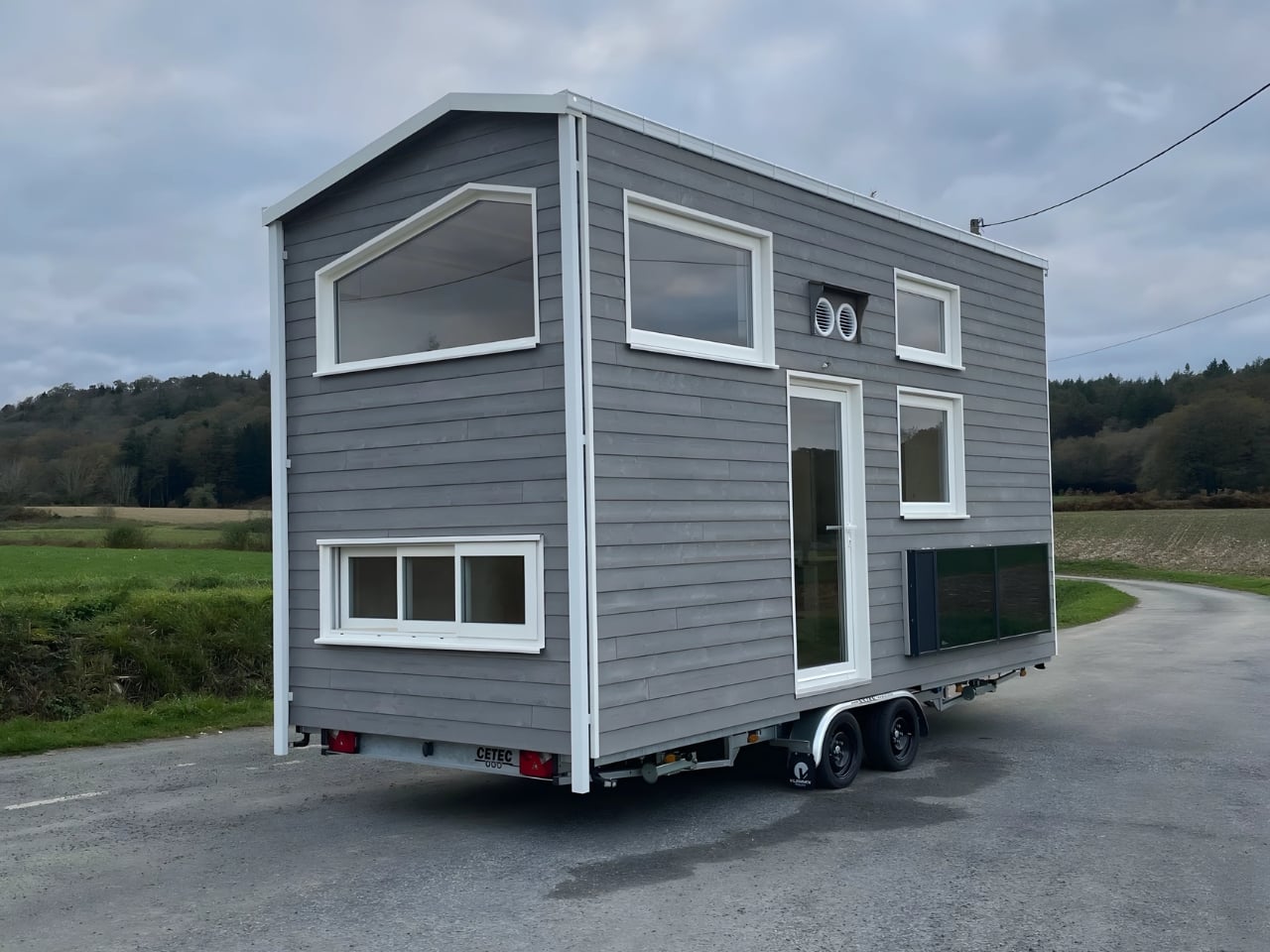
5 days agoThis Tiny House Has 30 Feet of Glass and Feels Nothing Like a Tiny House - Yanko Design
The Shoreline Glass House redefines tiny living with spacious, light-filled design and single-floor layout, offering a unique blend of comfort and openness.
Renovation
fromYanko Design - Modern Industrial Design News
2 hours agoHow Architects Turned a Postwar London Terrace Into an Open-Plan Home Without Touching the Facade - Yanko Design
Islington houses are redesigned to create open, continuous spaces while maintaining the original facade and architectural integrity.


#architecture



Renovation
fromdesignboom | architecture & design magazine
5 days agoarthur casas adapts speculative structure into wood-lined coastal house in brazil
Arthur Casas transforms an unfinished structure into Bravíssima House, integrating it with the landscape and enhancing family living through design and materials.
Renovation
fromdesignboom | architecture & design magazine
5 days agoarthur casas adapts speculative structure into wood-lined coastal house in brazil
Arthur Casas transforms an unfinished structure into Bravíssima House, integrating it with the landscape and enhancing family living through design and materials.
fromianVisits
3 weeks agoThat dressing gown? It's wood. Inside London's strangest materials exhibition
This is just one item in a display that looks at how wood can be turned into all sorts of things that don't look or feel like wood at all. It's all because wood is a renewable resource and could be a viable replacement for plastics and other oil-based materials.
London
#furniture-design
Arts
fromArchDaily
1 month agoBuildFest Introduces "Acts of Construction," a Three-Year Exploration of Timber Installations
Bethel Woods launches BuildFest, a three-year initiative featuring large-scale timber installations and multimedia experiences on the historic 1969 Woodstock festival grounds, organized sequentially around construction, choreography, and performance themes.
Design
fromYanko Design - Modern Industrial Design News
5 days agoBiomimetic Architecture Reaches New Heights With This Bird-of-Paradise Yoga Space - Yanko Design
Thilina Liyanage's architecture translates animal gestures into functional designs, exemplified by the Rifle Bird Yogashala inspired by the Victoria's riflebird's courtship display.
fromYanko Design - Modern Industrial Design News
1 month agoThis Charity Hanger Was Made From Paper-Thin Wood Sheets - Yanko Design
Most coat hangers exist somewhere between purely functional and aggressively boring. They're the things we grab without thinking, the wire creatures that multiply mysteriously in closets, or the bulky wooden ones that restaurants seem to breed. But every so often, a design comes along that makes you stop and reconsider something as mundane as a place to hang your jacket.
Graphic design
Environment
fromwww.theguardian.com
1 month agoWe can learn from the old': how architects are returning to the earth to build homes for the future
Unstabilised rammed earth provides a low-carbon, locally sourced building method with thermal mass, moisture control and potential for circular construction.
Renovation
fromArchDaily
2 weeks agoTransforming a Concrete Shell into a Wooden Interior Shaped by the Sea
A Mediterranean harbor house renovation transforms a raw concrete shell into a material-driven interior that echoes maritime atmosphere through spatial organization, natural materials, and carefully controlled views of the surrounding landscape.
fromdesignboom | architecture & design magazine
2 weeks agovernacular bridge craftsmanship informs micro-museum set within bamboo grove in china
Baqiao bridges, including the nearby Shisanba Bridge, typically appear in areas where the difference between river level and embankment is relatively small. Their upstream piers are shaped like tapered spindles with slightly raised tips, creating a distinctive structural profile. Stone slabs span between the piers, forming a bridge deck assembled through interlocking construction methods.
Design
fromwww.archdaily.com
1 month agoLakeshore Barn House / NORM Architects
Jonas Bjerre-Poulsen + 19 Category: Barn, Houses, Adaptive Reuse More SpecsLess Specs Jonas Bjerre-Poulsen Text description provided by the architects. Set close to a small harbour, Lakeshore Barn House is shaped by restraint and clarity, drawing from the familiar silhouette of rural barns to sit naturally within the small lakeside village. The simple cross- shaped layout establishes a central axis that opens uninterrupted views through the house in both directions, strengthening the connection between landscape and interior.
Remodel
fromArchDaily
3 weeks agoBuilding with Earth: Traditional Knowledge in Contemporary Architecture
Rather than representing a simple return to the past, this renewed interest reflects a broader reconsideration of how architecture engages with materials, local resources, and environmental conditions.
Renovation
#historic-preservation
Renovation
fromdesignboom | architecture & design magazine
3 weeks agoYYAA rebuilds the eastern half of a prewar rowhouse in japan
YYAA renovated the eastern half of a pre-WWII Japanese rowhouse in Yagi-cho, preserving historic fabric while adapting it for contemporary use and addressing structural deterioration.

Renovation
fromdesignboom | architecture & design magazine
3 weeks agoYYAA rebuilds the eastern half of a prewar rowhouse in japan
YYAA renovated the eastern half of a pre-WWII Japanese rowhouse in Yagi-cho, preserving historic fabric while adapting it for contemporary use and addressing structural deterioration.
#sustainable-architecture
Design
fromwww.archdaily.com
3 weeks agoSelf-Sustaining Farmhouse / Manoj Patel Design Studio
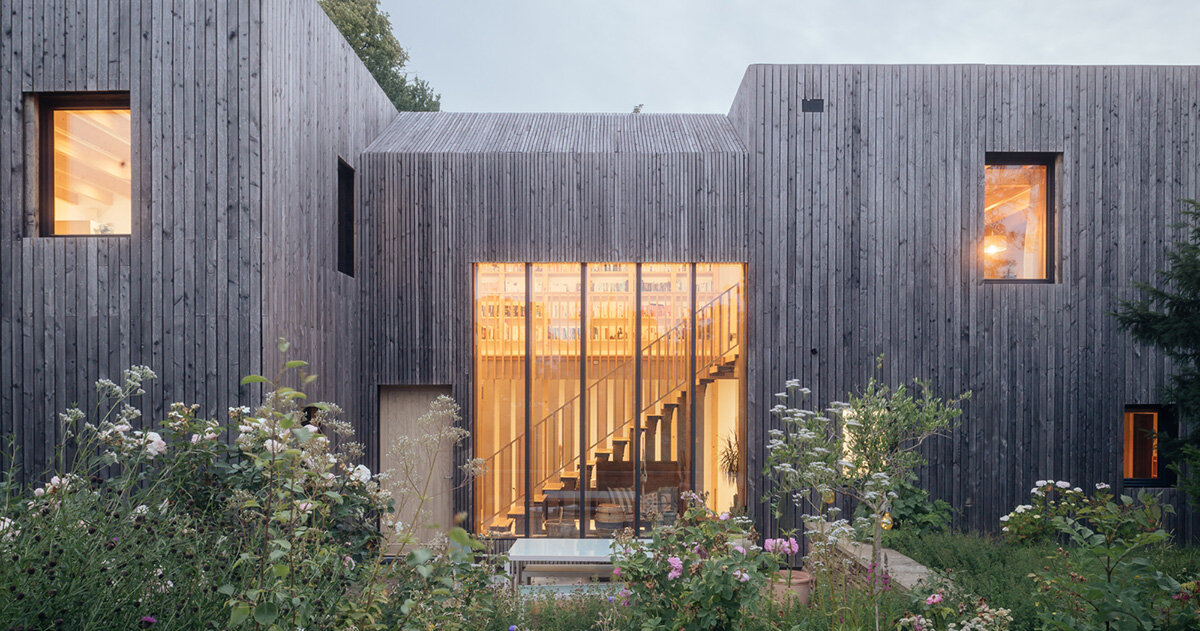
A sustainable farmhouse retreat on Vadodara's outskirts integrates ecological design principles through innovative material use and spatial openness, transforming construction efficiency into expressive architecture.
Design
fromwww.archdaily.com
3 weeks agoSelf-Sustaining Farmhouse / Manoj Patel Design Studio
A sustainable farmhouse retreat on Vadodara's outskirts integrates ecological design principles through innovative material use and spatial openness, transforming construction efficiency into expressive architecture.
fromwww.archdaily.com
3 weeks agoWood House / JAK Architecture
What began as a modest brief for a young and growing family soon evolved into a considered renovation that reimagines an existing Barwon Heads home. The original house had endured several unsympathetic alterations over the years, leaving it disjointed and built to a poor standard.
Renovation
fromBusiness Matters
2 months agoWhy Thermally Modified Timber Has Moved Into the Construction Mainstream
Thermal modification is not a new invention, but its relevance has increased as expectations around performance, sustainability, and predictability have tightened. Developers, architects, and contractors are no longer just asking whether timber looks good or performs well initially. They want to know how it behaves after ten, twenty, or thirty years, and how much risk it introduces into a project once the scaffolding is gone.
Remodel
Design
fromdesignboom | architecture & design magazine
1 month agoGRRIZ shapes reversible timber structure along the arc of the setting sun in italian mountains
Palcosole is a reversible timber stage in Italy's Apennine hills designed with a 30-degree canopy that tracks the sun's arc, using geometric principles and dry assembly for complete removal without environmental impact.
Design
fromYanko Design - Modern Industrial Design News
1 month ago5 Reasons Modern Treehouses Just Became the Ultimate Luxury Escape - Yanko Design
Contemporary treehouses function as serious architectural expressions of biophilic design, where trees actively collaborate with built structures to create integrated human-nature systems rather than imposing form on landscapes.


fromRemodelista
2 months agoExpert Advice: DIY Building Lessons from Artist Sean Spellman
When Sean Spellman opened Dawnlands in Westerly, Rhode Island, last year, it was more than just a new address on the map. Conceived as an art gallery and gathering place, Dawnlands was built entirely by Sean and his family-no contractors, no designers, no outside help. Each board and bench was made with intention, using local pine and sensibility shaped by Japanese, Scandinavian, and coastal Californian influences.
Renovation
fromYanko Design - Modern Industrial Design News
2 months agoThis Oak Sideboard Has Doors You Can't Stop Touching - Yanko Design
You know that feeling when you run your fingers across something and the texture makes you stop in your tracks? That's exactly the vibe British furniture maker Nick James is going for with his sideboard featuring sculpted doors. And honestly, it's the kind of piece that makes you rethink what furniture can be. At first glance, it looks like a solid oak sideboard. Clean lines, classic proportions, nothing too flashy.
Design
Design
fromdesignboom | architecture & design magazine
2 months agodesigner cara campos recycles worn bicycle frames to craft minimalist furniture
Furniture pieces reuse discarded bicycle frames, preserving structural geometry, visible welds, and surface wear to create chairs, tables, and lamps with minimal new material.
Design
fromdesignboom | architecture & design magazine
1 month agocedar-clad 'staggered cabin' by mork-ulnes steps down a forested slope above lake tahoe
Four staggered cedar volumes step along a forested Tahoe slope, creating compact shed-roofed cabins that preserve boulders and trees and form sheltered outdoor courts.
fromArchDaily
2 months agoFrom Industry to the Living Room: Metal Furniture in Interior Architecture
How did a material conceived for bridges, factories, and large-scale structures make its way to the living room bench, the apartment bookshelf, the café table? For centuries, metal was associated with labor, machinery, and monumentality-from the exposed structures of 19th-century World's Fairs to the productive logic of modern industry. Its presence in domestic interiors is not self-evident but rather a cultural achievement: the transformation of an industrial material into an element of everyday, intimate use, in close proximity to the body.
Design
[ Load more ]