#online-memorials
#online-memorials
[ follow ]
#grief #bereavement #community-support #mental-health #memory #family #caregiving #trauma #friendship #education


London music
fromIndependent
2 weeks agoCiaran Cannon on his daughter who was stillborn: 'She would be 23 now. I often wonder what she would look like? And how would her presence have changed the rest of us?'
Ciarán Cannon reflects on his political career and embraces his passion for music amidst a toxic public life.
fromComputerWeekly.com
2 weeks agoQuestions raised about Instagram memorialisation in Noah Donohoe inquest | Computer Weekly
The immediate impact of it was that even Noah's mother was not able to access material from his Instagram. We had to go through a process with the court to get the material, said barrister Peter Coll KC, representing the coroner.
Privacy professionals
#grief-processing
Arts
fromwww.theguardian.com
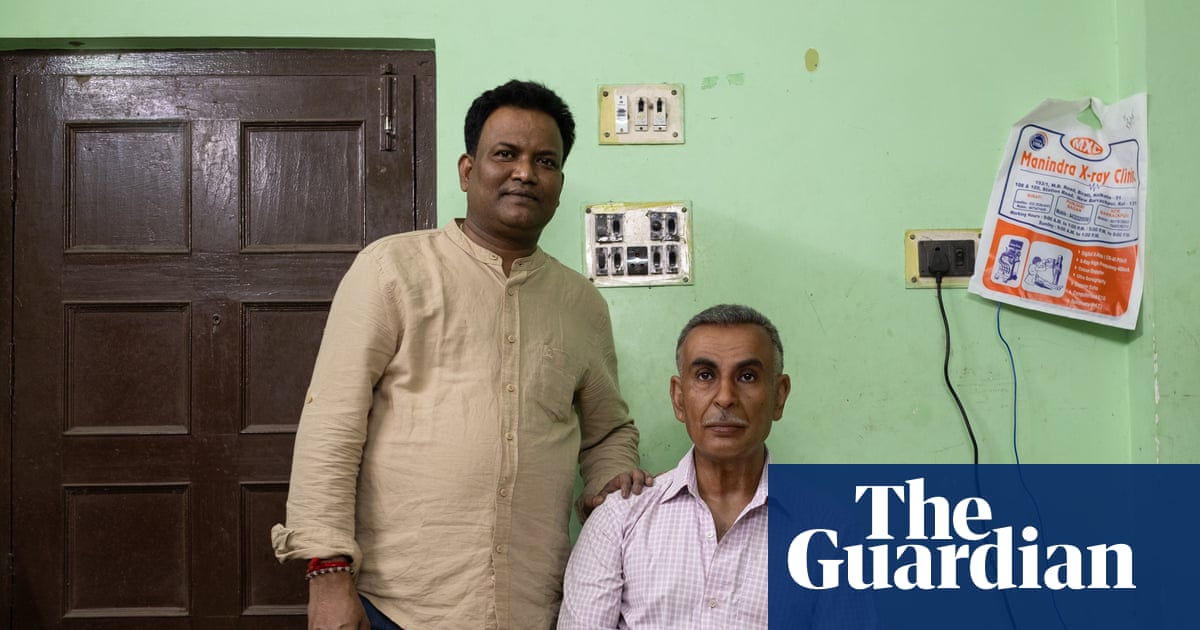
2 weeks agoAlmost human': life-size replicas of the dead help mend broken hearts in India
A Kolkata workshop creates lifesize replicas of deceased loved ones using clay, fiberglass, and silicon, helping families process grief by keeping realistic figures of the dead in their homes.
fromIrish Independent
1 week agoMother who lost family in Buncrana pier tragedy ten years ago thanks community as hundreds attend memorial walk
"I need to honour them in the best way and in every way that I can. Everybody is here supporting Rioghnach-Ann too and she knows her brothers are living on in a really good way in their memory."
Fundraising
fromSilicon Canals
3 weeks agoI'm 44 and I haven't cried since my father's funeral three years ago - not because I've healed but because somewhere between the eulogy and the drive home my body decided that was the last time and I've been waiting ever since for the next wave to come and it just won't and the numbness is worse than the grief ever was - Silicon Canals
Dr. Bessel van der Kolk writes in 'The Body Keeps the Score' that trauma doesn't just live in our minds - it reshapes how our bodies respond to emotion. Sometimes, when we experience significant loss, our nervous system essentially decides that feeling is too dangerous and shuts down the whole operation.
Mental health
fromwww.cbc.ca
4 weeks agoToronto family stung by cemetery theft warns others to be careful with family heirlooms | CBC News
I was actually shocked. Mori said it felt like a total violation of my parents. The niche is sacred. On Nov. 17, 2025, the same day the Mori family reported the missing items from Highland Memory Gardens in North York, Halton police held a news conference detailing a string of thefts at eight cemeteries across the Toronto, Halton and Niagara region.
Canada news
Public health
fromwww.theguardian.com
4 weeks agoA death scholar on why we need to stop being naive about dying: I always hear, Can't you just put me into a nice meadow?'
Australia will experience peak death around 2040 as baby boomers age, doubling annual death rates and straining healthcare systems, while end-of-life control and autonomy become increasingly valued among those with resources.
fromFortune
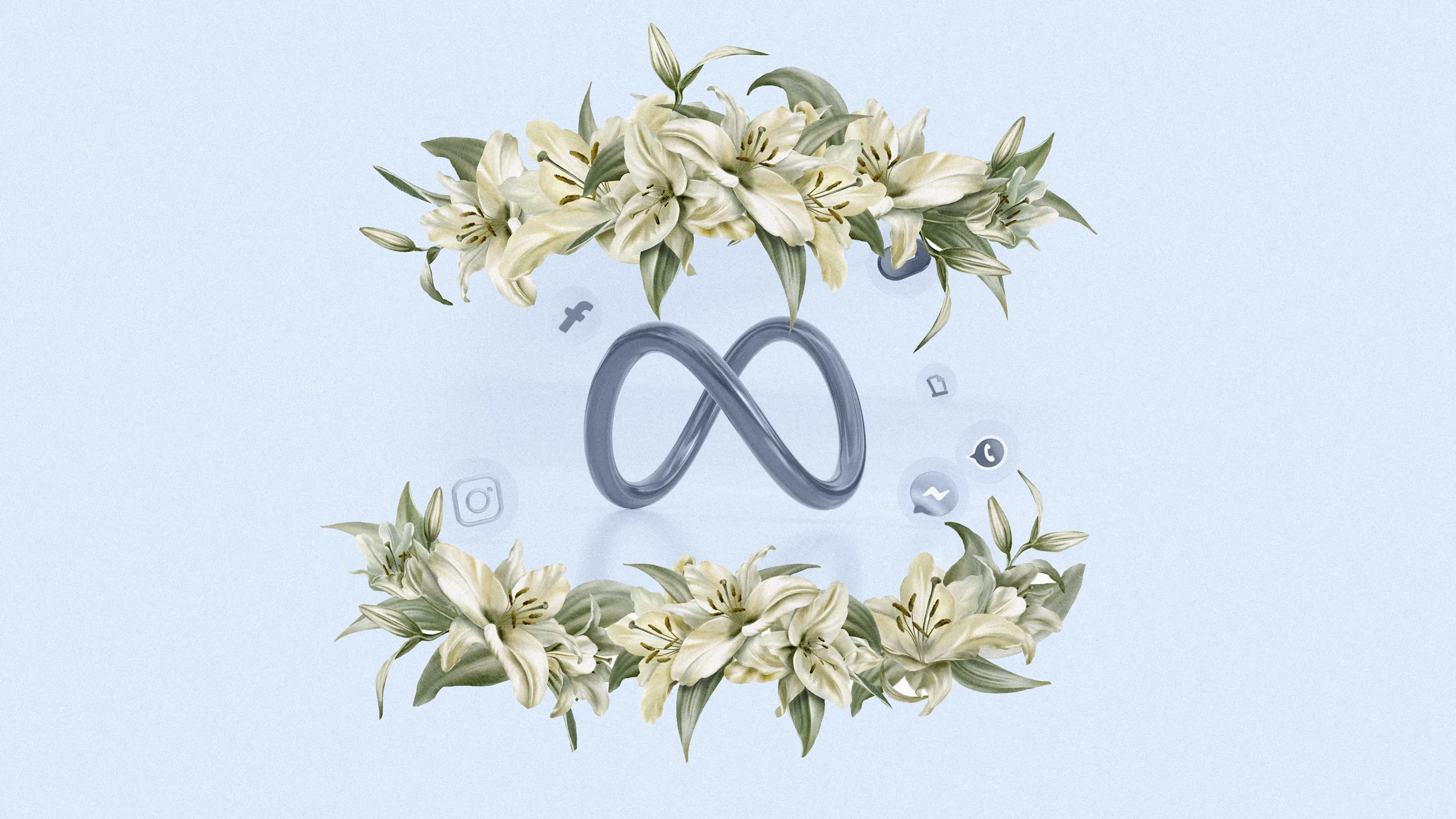
1 month agoWant to live forever? Meta patented an AI model that would keep your profile active after you die | Fortune
Meta was recently granted a patent in Dec, 2025 that would essentially allow the social media platform to post on a dormant user's behalf-whether they took a break from social media or long after they've passed away. The patent, first filed in 2023, describes a large language model that "simulates" a user's social media activity, using a user's comments, likes, or content to respond to other users and also references technology that would simulate video or audio calls with users.
Privacy technologies
Social justice
fromIrish Independent
1 month ago'I am marching for 20-year-old me whose life was taken from them'
Rape and gender-based violence survivors are organizing International Women's Day marches to demand stronger legal protections against disclosure of counselling notes in sexual offence trials.
Parenting
fromBusiness Insider
1 month agoI was the primary caregiver for my mother until she died. The responsibilities didn't end with her death.
Caregiving extends beyond a person's lifetime through managing their memory, finances, and legacy with the same dignity and respect shown during their life.
fromBusiness Insider
1 month agoI used to think living at home as an adult meant going backward. Losing my dad made me realize I was wrong.
Living with family as an adult is often framed as a "failure to launch," but navigating grief at home with my mom and younger sister helped me rethink growth. Living at home in my 20s wasn't easy at first, but after my dad died, living together became a lifeline that transformed my understanding of what adulthood truly means.
Relationships
fromemptywheel
2 months agoHow Do You Want Your Family to Remember You? - emptywheel
The Stasi, the secret police, were legendary for their data files. Their work was based on instilling fear, and they induced stunningly amazing numbers of East Germans into informing on their neighbors. Something along the lines of 1 in 6 East Germans were informants, whether out of fear or out of approval of what the East German government was doing.
US politics
fromEmptywheel
2 months agoHow Do You Want Your Family to Remember You?
The Stasi, the secret police, were legendary for their data files. Their work was based on instilling fear, and they induced stunningly amazing numbers of East Germans into informing on their neighbors. Something along the lines of 1 in 6 East Germans were informants, whether out of fear or out of approval of what the East German government was doing.
E-Commerce
fromBuzzFeed
1 month ago12 Grandparent Memory Books And Journals To Chronicle Family Histories
BuzzFeed Shopping provides service-focused product recommendations prioritizing readers, vetting products, fact-checking claims, exposing fake deals, and offering authentic, inclusive choices across price points.




fromFast Company
2 months agoI turned to AI while my mother was dying
When my mom was dying, hospice came daily and stayed for about ninety minutes. They answered questions, checked what needed to be checked, and did what good professionals do: They made a brutal situation feel slightly less impossible. And then they left. Ninety minutes go fast when you are watching your mother decline. The rest of the day stretches out in a way that does not feel like time so much as exposure. Every sound becomes a data point.
Healthcare
fromDeconstructing Yourself
1 month agoStay with the Grief
Today I saw images of students leaving their school with their hands raised in the air, hours after cowering in fear and terror in barricaded classrooms. Nine dead and twenty-seven wounded in the tiny Rocky Mountain town of Tumbler Ridge. The mayor, Darryl Krakowka, said, "I have lived here for 18 years. I probably know every one of the victims." And this in Canada, which often seems to us Americans like a bastion of sanity and normalcy in comparison with our madness.
Mindfulness
fromAdvocate.com
1 month agoBecca Good attends memorial for wife Renee, offers statement: 'Renee always showed up'
Minneapolis has shown me that even in the middle of grief and fear, people still show up for each other. For that, I want to say thank you. Thank you to this incredible community for showing up again and again - organizing food and rides, making sure our kids get to school, checking in on neighbors, and standing together in the cold. I am so proud to call Minneapolis my home.
US politics
fromPsychology Today
1 month agoSpotlighting Caregiver's Day for Familes That Experienced Parental Death
February 20 is National Caregivers Day, celebrating caregivers everywhere, whether they are friends, professional caregivers, or family members, for the hard physical and emotional work they do that often goes unseen. Caregivers also include surviving parents trying to navigate their grief after the death of their spouse, while also supporting children who are trying to navigate their grief from the death of their parent.
Mental health
fromTODAY.com
2 months agoAfter Waiting Years To Pack Up Her Late Daughter's Room an Unexpected Gift Emerged
Donna Cochran had boxed up nearly every room in her Atlanta, Georgia, home - except one. The space belonged to her late daughter, Ansley, and it remained exactly as it had the day Ansley left it, with journals, jewelry and drawers filled with the cozy clothes she loved to wear. Ansley died in 2018 at 21, after a 19-year battle with neuroblastoma, a rare childhood cancer. What Cochran could not yet bring herself to dismantle was not a bedroom, but a life.
Fundraising
fromPsychology Today
2 months agoWhy the Grief Ripples So Deeply When an Advocate Dies
'They're dead.' In disbelief, my response was unfiltered. 'What?' Followed by the F word. A wave of emotion rushed through me. My chest tightened. My body went cold. I could not immediately find the words to offer condolences, not because I did not feel them deeply, but because inside, my many parts were experiencing a collective shock. When you live with dissociative identity disorder (DID), news like this does not land in one place. It ricochets across all parts within.
Mental health
fromPsychology Today
2 months agoYour Life's Work Preserved: Why Collectors Are Going Virtual
The traditional museum experience, pausing in front of an object, and absorbing its history visually or by reading its description, has long shaped how collectors and others relate to cultural treasures. Yet, over the last few decades, digital technology has quietly rewritten many of those rules, changing not only how collections are exhibited but also how they are documented, preserved, and even inherited.
Arts
Miscellaneous
fromIrish Independent
2 months ago'He will always be remembered,' family of Oisin Reddin (12) say as they publish death notice
A child, Oisín Reddin, died of asphyxiation; his father, suspected of killing him, was later found dead after prior mental-health detentions and child-welfare contact.

fromSlate Magazine
2 months agoOvercoming Grief Through Ritual
When we think of rituals, we tend to think of face masks and wellness trends. But there are actually ways to use rituals to help heal grief and deal with stressful times. On this episode, Lucy Lopez, Elizabeth Newcamp, and Zak Rosen are joined by ritual expert Betty Ray to talk about creative ways to help children process grief and big emotions, how to use ritual to create safety and expression, and much more.
Mental health
[ Load more ]