#paestum
#paestum
[ follow ]



:max_bytes(150000):strip_icc()/TAL-header-aventine-hill-terrace-rome-ROMEHIDDENGEMS0126-642afc06aef6450098a63077ff43df8f.jpg)

fromArchitectural Digest
1 week agoIn an Ancient Italian Town, This 592-Square-Foot Home is Spread Across Six Levels
"It was in really bad shape, but I sensed its potential," he says. When his future client, a Swiss teacher who fell in love with the Italian Riviera, walked into his office, even she was skeptical. "Many people were," he continues. "It was an abandoned and damp property, but I convinced her. Now she's happy."
Renovation

:max_bytes(150000):strip_icc()/TAL-rhodes-old-town-RHODESGR0124-1453db92296f45a6a1add11c976d8fd9.jpg)
Film
fromwww.theguardian.com
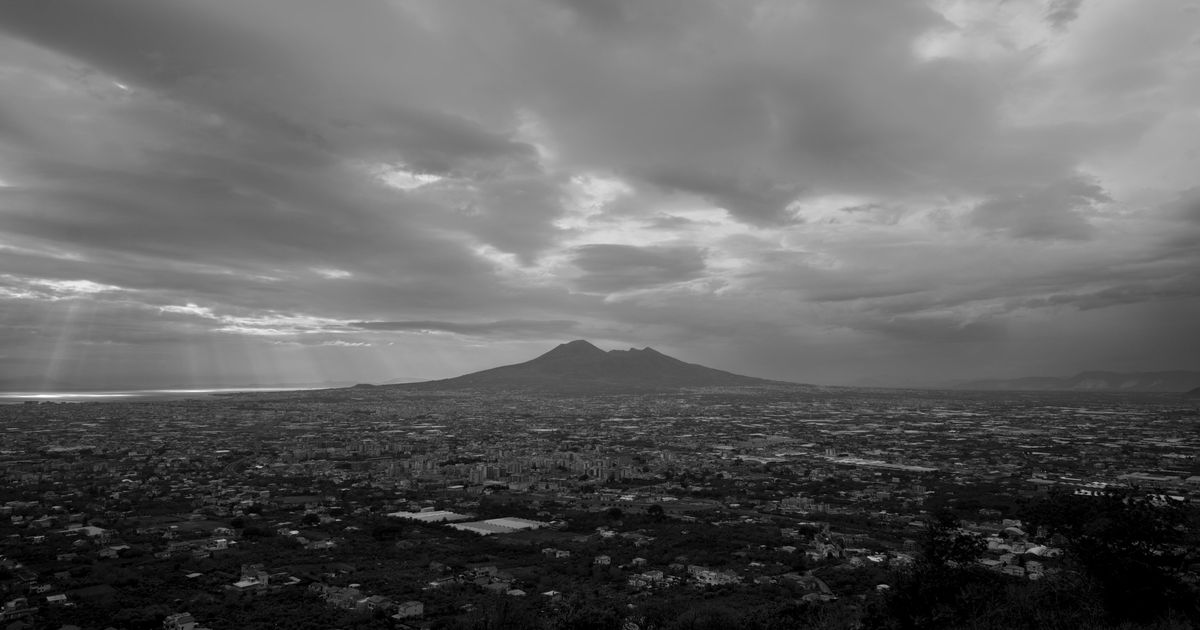
1 week agoWas that an earthquake?' Italy's great psycho-geographer tackles the Vesuvius-haunted Naples tourists seldom see
Gianfranco Rosi's latest film, Pompeii: Below the Clouds, offers a unique perspective on Naples, contrasting its beauty with its underlying complexities.


fromArchDaily
2 weeks agoStefano Boeri Interiors Restores Southern Ambulatory Areas of the Colosseum in Rome
The intervention 'restored the perception of the monument's original scale and pavement level,' while enabling visitors to approach the structure more directly and understand the sequence of the ambulatory and its arches. This recalibration of levels, based on archaeological findings and geometric studies, also enabled the reorganization of the stormwater drainage system, integrating surface slopes and transitions into the paving design while maintaining coherence with the monument's historical configuration.
Renovation
SOMA, SF
fromDeep House London
3 weeks agoNew 4,000-capacity festival to debut at ancient greek temple in Sicily with Francesco Del Garda, Oshana, Onur Ozer, Quest and more | News | Deep House London
Aura Festival debuts May 1-2, 2026 in Sicily's Parco Archeologico di Segesta, featuring underground electronic music artists in a historic archaeological setting with daytime programming.

Higher education
fromHarvard Gazette
3 weeks agoLike seeing art of Roman chapels in technicolor for first time - Harvard Gazette
Students learned centuries-old stucco sculpting techniques through hands-on practice, gaining deeper understanding of Renaissance and Baroque artists' material choices and creative processes.
Arts
fromArtnet News
2 weeks agoLost Parthenon Piece Unearthed From Lord Elgin's Shipwreck | Artnet News
Greek underwater archaeologists recovered a small Parthenon marble fragment off Kythira island, likely from the temple's ornamental crown, during an excavation of Lord Elgin's sunken ship from 1802.

#family-travel
Berlin
fromCN Traveller
1 month ago11 Family-Friendly Hotels in Rome Offering Gladiator Schools, Free Gelato, Teen Spas, and More
Rome offers world-class family-friendly hotels and abundant child-centered activities, making it an ideal destination where children are prioritized rather than accommodated as an afterthought.

Travel
fromBusiness Insider
1 month agoI've traveled to Italy annually for the past 15 years. I always skip Capri for this neighboring island instead.
Ischia offers comparable attractions to Capri—beaches, castles, shopping, and gardens—with significantly fewer tourists and lower prices, making it a superior alternative for Italian island travel.
fromwww.thehistoryblog.com
3 weeks agoSamnite burials of children with bronze warrior belts found
The excavation ultimately unearthed 34 burials, 15 of them belonging to children between two and ten years old when they died. The graves are clustered in groups, probably reflecting family nuclei. Most the grave types are earthen pits covered with roof tiles angled against each other.
History
Berlin food
fromBusiness Insider
4 weeks agoI've traveled to all 20 regions in Italy - but I'll always return to this one in the south
Basilicata, a sparsely populated southern Italian region between Puglia and Calabria, offers beautiful beaches, dramatic landscapes, and authentic local cuisine with significantly fewer crowds than other Italian destinations.
Travel
fromTravel + Leisure
1 month agoHow to Plan the Perfect Trip to Athens, Greece-According to Travel Experts Like Rick Steves
Athens offers world-class historical sites, distinctive architecture, vibrant nightlife, excellent dining, and local shopping experiences that make it an exceptional travel destination.
fromArchitectural Digest
1 month agoPalmarola Island Is the Secret Italian Paradise You've Never Heard Of
Among the Pontine Islands, Palmarola emerges as an unspoiled, scenically unique land. You'll find no big luxury resorts, loud clubs, or lines of restaurants. There aren't even any paved roads, or an established electrical grid-and there's certainly limited telephone coverage, so forget working from home. However, the lack of modern amenities means less traffic and crowds.
Travel
fromOpen Culture
4 weeks agoRoman Statues Weren't White; They Were Once Painted in Vivid, Bright Colors
One tenet of classical idealism is the idea that Roman and Greek statuary embodied an ideal of pure whiteness-a misconception modern sculptors perpetuated for hundreds of years by making busts and statues in polished white marble. But the truth is that both Greek statues and their Roman counterparts were originally brightly painted in riotous color.
History
fromOpen Culture
1 month agoSeven Wonders of the Ancient World: From the Walls of Babylon to the Sewers of Rome
Seven were the strings of the lyre (unless there happened to be eight or nine), seven were the gates of Thebes, and seven were the "wandering stars" in the night sky (if you count the sun and moon). The identity of the wonders was less important than the length of their list, and indeed, additions and changes were proposed since the beginning.
History
fromArchDaily
1 month agoNaples Architecture City Guide: 15 Projects of History, Density, and Continuity
Set on the edge of the Mediterranean and shaped by centuries of continuous occupation, Naples is a city where architecture is inseparable from time. Layers of Greek foundations, Roman infrastructures, medieval churches, Baroque palaces, and Modern interventions coexist within a dense and compact urban fabric. Naples reveals itself as an accumulation of structures, adaptations, and reuse, where buildings are rarely isolated objects and more often part of a larger spatial, social, and historical system.
Miscellaneous


History
fromwww.thehistoryblog.com
1 month agoColossal offering uncovered at Templo Mayor
Archaeologists discovered massive ceremonial offerings at Mexico City's Templo Mayor containing 83 ancient Mezcala greenstone figurines, marine elements, and monumental sculptures deposited during Moctezuma Ilhuicamina's reign between 1440-1469.
History
fromOpen Culture
1 month agoRome in 1890 Captured in Color Photographs: The Colosseum, Forum, Trevi Fountain & More
English gentlemen completed their education through the Grand Tour of Europe, primarily Italy, which profoundly influenced Romantic poets like Byron and shaped their artistic vision of classical civilization in ruins.


fromwww.thehistoryblog.com
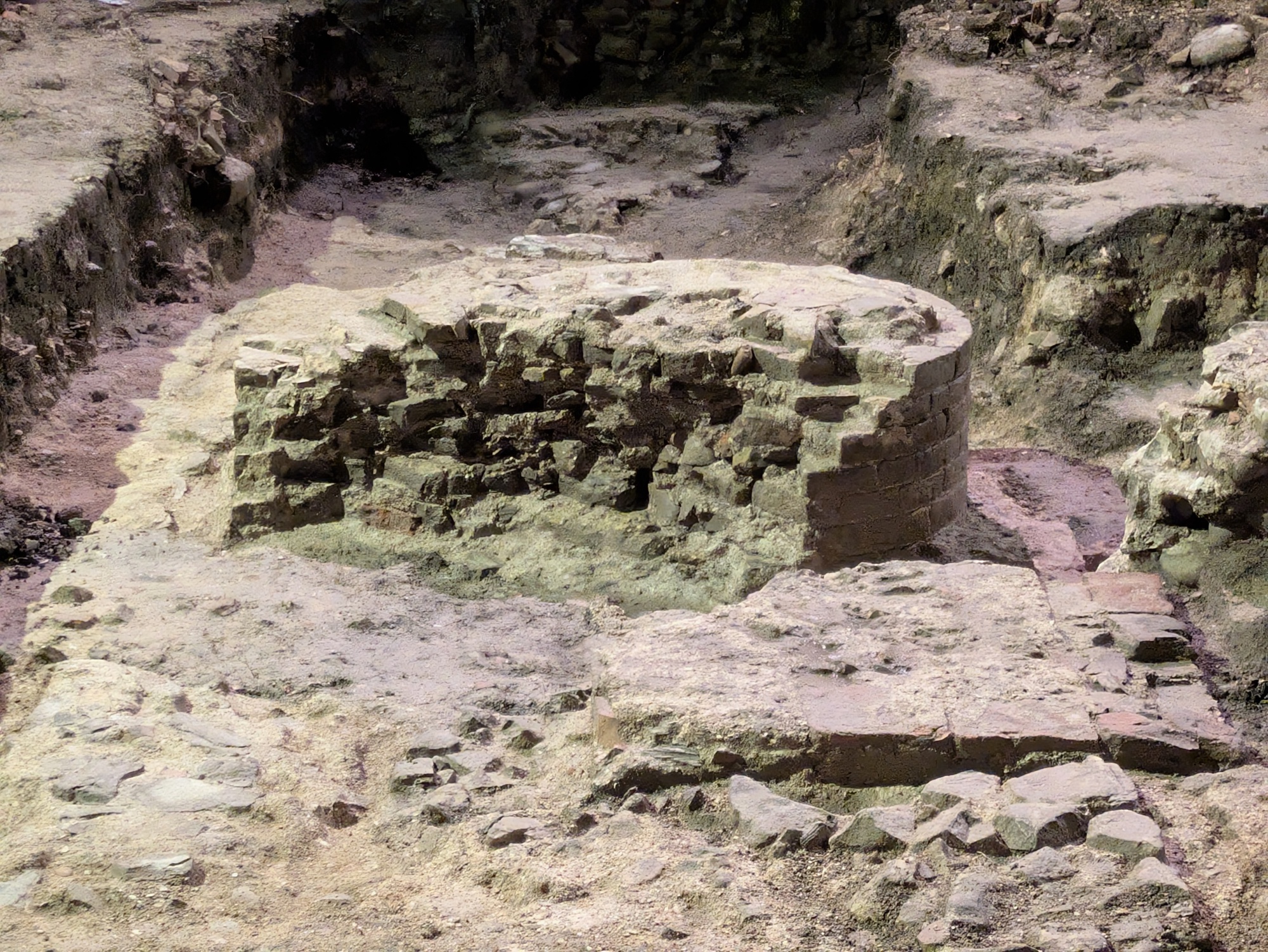
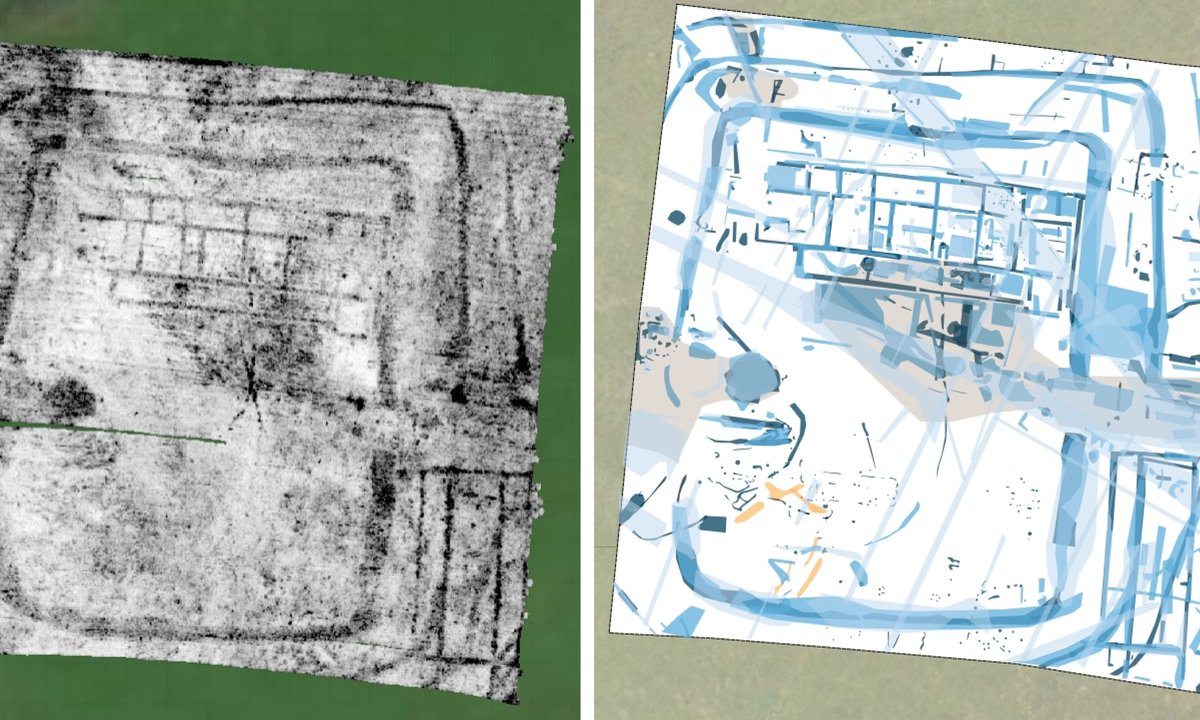
1 month agoCenturion's tombstone reused in someone else's grave
Both of the cyst graves feature funerary markers reused as building material. One of them contains the partially preserved tombstone of Legio I Italica centurion Gaius Valerius Verecundus was engraved with a wreath of which only traces remain and an inscription that describes him as having been heavily pressed by fate.
History
History
fromwww.thehistoryblog.com
1 month agoEtruscan urn's polychromy restored after 1966 Florence flood
The Bottarone Urn, a 425-380 B.C. Etruscan alabaster cinerary urn depicting a married couple, was restored to its original vivid polychromy after 60 years of mud damage from Florence's 1966 Arno River flood, revealing Egyptian blue pigment for the first time.
History
fromMedievalists.net
1 month agoEast Roman Archaeology: Goals and Challenges, with Marica Cassis - Medievalists.net
Archaeology reveals material evidence of daily life, settlement patterns, and economic systems in the East Roman world that textual sources cannot provide, while facing challenges in establishing itself as a distinct field separate from classical and Islamic archaeology.
Miscellaneous
fromwww.theguardian.com
1 month agoItaly's famous Lovers' Arch collapses into the sea on Valentine's Day
The iconic Lovers' Arch in Sant'Andrea, Melendugno collapsed on Valentine's Day after storm surges and intense rainfall, reflecting severe coastal erosion linked to stronger medicanes.
fromConde Nast Traveler
2 months agoA Guide to Viking's 'Ancient Mediterranean Treasures' Cruise, On and Off the Ship
Onboard/Offboard is a series that explores the can't-miss highlights of our favorite cruises-from the shore excursions to book to the spa treatments too relaxing to pass up. A new ship sometimes needs time to work out the kinks, but at this point-more than 100 vessels later- Viking has the routine down pat. In early November, I boarded the Viking Vesta, the line's 12th ocean vessel, in Istanbul, a few months into service.
Travel
History
fromIndependent
1 month agoBill Linnane: My son visited Pompeii on a school trip - but the only thing he learned about the ancient world was how to use a landline
Pliny the Younger witnessed the 79 AD eruption of Mount Vesuvius at age 17 and wrote detailed eyewitness letters that define Plinian eruptions.
fromCN Traveller
2 months agoForget Capri: this under-the-radar Italian island has the most stylish hotels to book for summer
What sets this isolated rock apart from the competition? It's a question of substance and that ghastly overused word, "authenticity." Capri will always be the pretty one - the view from the Via Krupp and the Faraglioni as seen from La Fontalina are starlet gold - and the island of Procida took recent fame as Europe's 2022 culture capital. Still,
Travel
fromwww.thehistoryblog.com
1 month agoGreat hall from 4th c. bishop's palace complex found in Ostia
The remains of a monumental hall belonging to a 4th-century episcopal palace have been discovered at Ostia Antica, Rome's ancient port town. The base of the structure is eight by 20 meters (ca. 26 by 65 feet) and the walls were an estimated eight meters high. This is an extraordinarily large space, and it was richly decorated with mosaic floors and marble panels.
History
fromwww.thehistoryblog.com
2 months agoLate Antique necropolis with deliberately broken pottery found in France
Adjacent to the masonry house is a burial ground in use from the 4th century through the first half of the 6th century. Approximately 60 individual inhumation burials have been unearthed, arranged in rows that are increasingly dense with graves as they approach the dwelling. The deceased were buried in cysts formed by reused tegulae (large clay roof tiles) or by rubble walls that supported wooden planks. They were placed in the graves in supine position facing west, north or south.
History
fromwww.thehistoryblog.com
2 months agoMonumental Republican tombs found in Rome suburb
An monumental early Republican-era funerary complex has been discovered in a suburb of Rome. The excavation of the Via di Pietralata east of Rome also uncovered a stretch of an ancient road, a small cult building and two monumental basins dating back to the 3rd and 2nd centuries B.C. Remains from this early in the Republican era are scarce in the Eternal City, which make these finds very archaeologically significant.
History


fromwww.thehistoryblog.com
1 month agoBronze Neptune from Lyon arrives in Rome
The Neptune of Lyon, one of the largest and most important bronze statues from Roman Gaul, has arrived in Rome for a one-time guest starring appearance at the Giovanni Barracco Museum of Ancient Sculpture. The statue is in the permanent collection of the Lugdunum Musee et Theatres Romains in Lyon, and is being loaned to the sculpture museum as part of an extraordinary exchange of ancient works between the two cities.
History
fromwww.thehistoryblog.com
1 month agoRare Mithraic altars found in Scotland go on display for the first time
Two exceptionally rare and beautifully carved Mithraic altars found in Inveresk, East Lothian, Scotland, are going on display for the first time. They are not just the only Roman altars ever found in Scotland, but are among the finest examples of Roman sculpture in Roman Britain. They are also uniquely early in date, having been made in 140s A.D. during Antoninus Pius' reoccupation of southern Scotland, whereas most other archaeological materials related to the worship of Mithras in Britannia date to the 3rd century.
fromwww.thehistoryblog.com
2 months agoByzantine-era monastic compound unearthed in Upper Egypt
The foundations of several buildings made of mudbrick were unearthed, evidence of a self-sustaining residential community that sheds new light on early Christian monastic life in the region. Details of the architectural remains point to a well-planned complex. Mohamed Abdel-Badei, head of the Ancient Egyptian Antiquities Sector, said the mission uncovered rectangular mudbrick buildings oriented west to east, with dimensions ranging from about 8 by 7 metres to 14 by 8 metres.
History
History
fromWorld History Encyclopedia
2 months agoEmpress of the Nile: The Daredevil Archaeologist Who Saved Egypt's Ancient Temples from Destruction
Christiane Desroches-Noblecourt, a pioneering Egyptologist, rescued and preserved Egypt's ancient temples through scholarship, advocacy, and decisive cultural stewardship.
fromMail Online
1 month agoThe bone that proves Hannibal really DID cross the Alps with elephants
While the bone was worn and poorly preserved, archaeologists managed to identify its origin by comparing it with modern elephant and mammoth bones. Despite there not being enough DNA to confirm the exact species, the researchers were able to carbon date a tiny sample of the bone. This places the elephant's death between the late fourth and early third centuries BC - right in the middle of the Second Punic War.
History
[ Load more ]