Books
fromThe Atlantic
1 day agoUnconventional Novels About Conventional People
Aging revolutionaries and conformists share parallel narratives of disillusionment and the loss of youthful dreams in recent literature.
Whether it's a slept-on post-punk album from the '80s, a new sci-fi novel, or a cult classic horror movie, we're always finding new obsessions here at The Verge - and we want to share those obsessions with you. Sometimes that might be a new release, but often it's going to be something a little older, something not necessarily plastered all over TikTok or sitting at the top of the charts on Spotify.
Tracking a river through a cedar forest in Ecuador, Robert Macfarlane comes to a 30ft-high waterfall and, below it, a wide pool. It's irresistible: he plunges in. The water under the falls is turbulent, a thousand little fists punching his shoulders. He's exhilarated. No one could mistake this for a dying river, sluggish or polluted. But that thought sparks others: Is this thing I'm in really alive? By whose standards?
When you've written 23 books, it's a little frustrating to be known not even for a book, but for something that happened to a book in 1989—when that was my fifth published book and this is my 23rd. Can we please talk about books? I keep trying to say.
"Race Against Time: A Reporter Reopens the Unsolved Murder Cases of the Civil Rights Era" quickly became one of my favorite nonfiction books written by a journalist. I appreciated how he showed the grueling, day-to-day work local journalism requires, and how many layers of people fought him in revealing the despicable work of the Ku Klux Klan.
It's my mom's favorite country, and the house we share is full of treasures from her travels there, from peacock fans and silk scarves, to jewelry boxes carved from mango wood. I grew up in the UK, hearing spellbinding tales of painted elephants and mirrored palaces, and India soon occupied a special place in my imagination. Having got to 42 without making it to the promised land, this summer my chances of going there felt slimmer than ever.
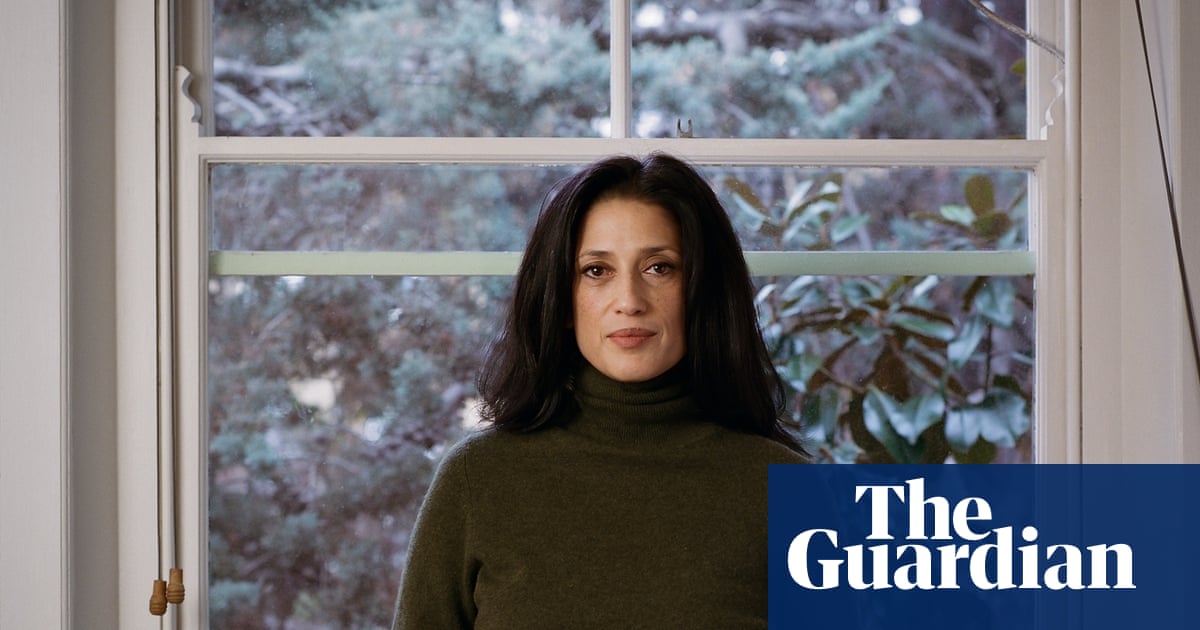
She moved before the pandemic, when gentrification with its huge skyscrapers and condominiums forced her out of Dumbo, Brooklyn. Between the kitchen and the upstairs room, in one corner of which lie part of the 5,000 pages of notes she took while writing it, Desai finished The Loneliness of Sonia and Sunny, the monumental, 19thcenturystyle novel she has spent nearly two decades on.
I think there's a deep loneliness to her life that cohabiting with her brother kept at bay-and, now that he's gone, she is forced to face it. As more of Kim's letters are delivered, Helen becomes invested in the narrative they form, as if she were piecing together a puzzle, one that, in some ways, echoes her own past. Kim's family is Muslim, from Pakistan.
The ghost of a previous lover is always a challenge, particularly if you (mistakenly) believe that she's actually dead. This is the unenviable situation for Lily, the protagonist of O'Farrell's second novel, who is swept off her feet by dashing architect Marcus and in short order moves in with him. Lily takes his assurances that her predecessor Sinead is no longer with us to mark a more permanent absence;
Sounding amused, publisher Pramod Kapoor recalls the reaction of the Indian cricketing legend Bishen Singh Bedi when he learned Kapoor was printing 3,000 copies of his autobiography. Only 3,000? he protested. I fill stadiums with 50-60,000 people coming to see me play and you think that's all my book is going to sell? Kapoor, the founder of Roli Books, explains that Bedi's legions of admirers were unlikely to translate into book buyers. That was in 2021.
Out of the many hundreds of titles that our organization carefully considered this year, these singular and striking finalists rose to the top, NBCC President Adam Dalva said in a statement Tuesday. They interrogate the lives we lead, broaden our creative and social horizons, move us, and continually surprise us. Especially in this difficult time, every one of these writers and translators deserves to be celebrated - and to be widely read.
Subsequently, runaway children turned the valley into a fortress, surviving on food they could catch or grow, with occasional forays into the towns below. Riley has heard the rumours, but it is only when she sees a green-clad boy or is it a girl? hovering outside her bedroom window offering directions on how to find Nowhere that she realises this might be her chance to escape and save her little brother from their sadistic guardian.
Liadan Ní Chuinn was born in Northern Ireland in 1998, the year the Good Friday Agreement ended the Troubles, the decades of violence stemming from England's occupation of Ireland. Other recent fiction about the Troubles-the novels and Trespasses , the TV show Derry Girls (all excellent)-is set firmly in the last century, relegating the violence to history. Ní Chuinn's work does the opposite: Their new book of short stories, Every One Still Her e, is set in contemporary Northern Ireland.
It was once commonly understood that fiction was in the wisdom business, that it offered not only aesthetic pleasure but also moral improvement. This function of literature was not tough to spot. One of the first English novels was Samuel Richardson's 1740 work, Pamela: Or, Virtue Rewarded-a title not meant ironically. Through the 19th century, many authors turned directly to the reader with philosophical and social (if sometimes ironic) commentary: "It is a truth universally acknowledged"; "It was the best of times"; "All happy families are alike." For readers not up to the challenge of full George Eliot novels, her enterprising publisher compiled a volume of Eliot's many Wise, Witty, and Tender Sayings, in order to more broadly distribute "a morality as pure as it is impassioned."
The first books I became obsessed with were Enid Blyton's boarding school stories Malory Towers and St Clare's. When I was eight, I'd hide them under my pillow and read by the hallway light when I was supposed to be asleep. My favourite book growing up Roald Dahl's Matilda. I felt woefully misunderstood by the world and longed to be adopted by a very pretty teacher with only cardboard for furniture. I spent a lot of time trying to make a pen move by concentration alone. Sometimes I still try.