#peer-tutoring
#peer-tutoring
[ follow ]
#higher-education #ai-in-education #mental-health #child-development #parenting #education #personal-growth
fromFast Company
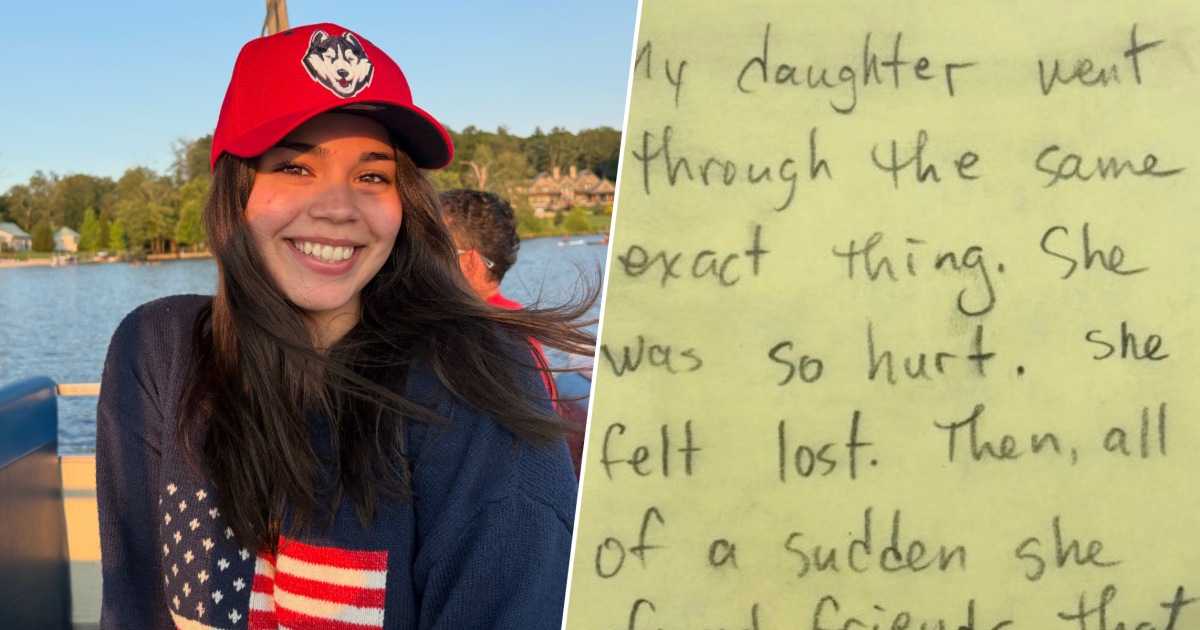
1 day agoWhat to do after a life-defining mistake
The only thing worse than making a mistake is keeping it bottled up inside. Learning from the mistakes of others could help you embark on the healing journey of sharing and working through a mistake of your own, with someone you trust.
Books



Higher education
fromInside Higher Ed | Higher Education News, Events and Jobs
1 day agoCommunity College 4-Year Degrees Let Prior Learning Count
Community colleges provide adult learners with affordable pathways to education, but transferability of credits for prior learning remains a significant challenge.
Philosophy
fromWarpweftandway
2 weeks agoTwo Collaborative Learning () Events This Week
The 四海为学 Collaborative Learning Project hosts two free public events: Louise Edwards discussing childhood and gender in China on March 19, and Peter Hershock exploring AI and agency from a Buddhist perspective on March 20.
Online learning
fromeLearning Industry
1 week agoInterpersonal Learning Explained For Instructional Designers: Definition, Characteristics, And Workplace Applications
Interpersonal learning is essential for modern organizations, emphasizing collaboration and knowledge sharing through interaction among individuals.
Miscellaneous
fromPsychology Today
1 month agoKids Today: Thoughts From Research, Practice, and the Classroom
Each generation faces unique challenges; today's youth deserve recognition for their perspectives rather than dismissal, as evidenced by clinical research, therapeutic practice, and educational settings.
Education
fromInside Higher Ed | Higher Education News, Events and Jobs
2 weeks agoStudents Build Belonging Through Service
Neumann University mobilized nearly 1,000 students, alumni, and faculty to complete 60,000 volunteer hours during its 60th anniversary, addressing community needs while strengthening institutional belonging.
Online learning
fromeLearning Industry
2 weeks agoBarriers To Learning: Types, Causes And How To Overcome Them
Barriers to learning are internal or external factors preventing learners from engaging with, understanding, or applying knowledge, affecting learning outcomes across educational and workplace contexts.
Higher education
fromInside Higher Ed | Higher Education News, Events and Jobs
3 weeks agoHolistic Support Boosts Community College Outcomes
One Million Degrees' holistic support model significantly increases degree completion and earnings for community college students, with participants earning over $14,000 more annually seven years after enrollment.
Online learning
fromeLearning Industry
3 weeks agoWhy Your Tutoring Business Needs Tutor Management Software In 2026
Tutor management software is essential for scaling tutoring businesses beyond manual spreadsheet-based operations, enabling efficient coordination of tutors, students, payments, and performance tracking.
Higher education
fromInside Higher Ed | Higher Education News, Events and Jobs
3 weeks agoNew Book Points Way Forward for Higher Education
Place-based learning rooted in community and shared purpose offers an alternative to transactional higher education models that have failed multiple generations of students.
Online learning
fromeLearning Industry
3 weeks agoFrom Tick-Box Training To Transformative Learning: Designing Experiences That Stick
Meaningful learning requires emotional engagement and practical application rather than checkbox completion, creating lasting behavioral change that transforms how people work together.
Higher education
fromPsychology Today
4 weeks agoTeachers Are the Architects of Human Potential
Schools in 50 years will likely shift from knowledge transmission to developing human potential, with teachers as facilitators fostering creativity, resilience, and adaptive thinking rather than standardized achievement.
fromInside Higher Ed | Higher Education News, Events and Jobs
1 month agoCoaching Works-if Colleges Invest in Quality
Whether it's executive coaching or life coaching, people understand the concept and know that there is value to it in higher ed. However, what's been missing is this foundational research that really explains why coaching works in this context and how you can then leverage it to have the most impact on student success. What does a coach need to know, and at what skill level do they need to operate in order to have the impact on students that we want to see?
Higher education
fromeLearning Industry
1 month agoCollective Learning In Education: Designing Learning Systems That Think Beyond The Individual
Collective learning is how a group or system creates, improves, and keeps knowledge. This knowledge lasts beyond any one person or cohort. That is the most practical collective learning definition, because it shifts the focus away from individuals and toward the learning system itself.
Online learning
fromInside Higher Ed | Higher Education News, Events and Jobs
1 month agoThe Case for Centers for Teaching and Learning (opinion)
This is a striking decision at a moment when public confidence in higher education is eroding. It is also puzzling because rigorous research and evaluation have demonstrated, over and over, the value of the work of centers for teaching and learning, including positive impacts on student learning outcomes, institutional effectiveness and faculty development.
Higher education
Higher education
fromInside Higher Ed | Higher Education News, Events and Jobs
1 month agoWriting Accountability Groups Bring Many Benefits (opinion)
Writing accountability groups are low-cost, high-impact interventions that address structural barriers to faculty scholarly writing through protected time, peer accountability, and mentorship.
Mental health
fromInside Higher Ed | Higher Education News, Events and Jobs
2 months agoStudents Trust Mental Health Services-but Few Use Them
Most college students trust campus counseling but largely avoid using on-campus mental health services due to stigma, accessibility limits, and preference for off-campus care.
fromInside Higher Ed | Higher Education News, Events and Jobs
1 month agoHow Dual Enrollment/Early College Has Changed (opinion)
This idea was based on the parallel between the pluck and elan that are characteristic of both the early-college students I worked with and that of America's hardest-working founding father. Five years after I wrote the book, I had the opportunity to revisit the field for a revised edition, making it appropriate to ask, after Thomas Jefferson's song in the second act of Hamilton, "What'd I Miss": How has early college/dual enrollment changed over the past half decade?
Higher education
fromeLearning Industry
1 month agoAdaptive Learning Platforms: Hype, Reality, And When They Actually Make Sense
When we look more closely at how and why organizations actually invest in these systems, we can see that the popularity of adaptive learning has far less to do with pedagogical ambition and far more to do with operational pressure. Understanding this gap between how adaptive learning is marketed and how it is used in practice is critical for organizations trying to decide whether it is the right approach for their learning needs.
Online learning
Higher education
fromInside Higher Ed | Higher Education News, Events and Jobs
1 month agoHelping faculty build channels to audiences that matter
Higher-education communicators should enable faculty to publish directly via platforms like Substack and LinkedIn newsletters to expand reach, engagement, and institutional narratives.
Higher education
fromInside Higher Ed | Higher Education News, Events and Jobs
1 month agoUVA Brings Advising Into the Classroom
UVA Arts and Sciences created advising fellows—full-time advisers who teach first-year seminars—to ensure consistent, accessible, and more intentional pre-major advising for all students.
fromInside Higher Ed | Higher Education News, Events and Jobs
2 months agoIncreased Sense of Belonging Boosts Student Graduation Rates
The survey measured belonging by asking students to rate their agreement with the statement "I feel that I am a part of [school]" on a five-point scale, where 1 means strongly disagree and 5 means strongly agree. Students who rated their sense of belonging in their second year one step higher on the five-point scale than they did in their first year-such as moving from neutral to agree-were 3.4 percentage points more likely to graduate within four years.
Higher education
Higher education
fromInside Higher Ed | Higher Education News, Events and Jobs
1 month agoThe Collective Impact of Higher Ed Is Its Best Story
An HBCU museum exhibit shows that colleges can demonstrate impact through cultural storytelling, community programs, and preserved artifacts instead of costly mass-media advertising.
fromInside Higher Ed | Higher Education News, Events and Jobs
2 months agoPilot Program Supports Rural, Bilingual Students
The program introduces Cali, a "human-centered" AI tool designed to enhance-not replace-human support. Cali can converse in more than 140 languages and help students complete the Free Application for Federal Student Aid and the California Dream Act Application (CADAA). The tool is expected to reduce errors on the forms and help students stay on track toward enrollment and graduation.
Higher education
[ Load more ]