UX design
fromMedium
7 hours agoYou're not supposed to get it right
Design challenges for UX writers can be intimidating due to the pressure of making quick, impactful decisions and the emphasis on visual elements.
Anna Holmes defines 'hype aversion' as a reflex against being told what to like, suggesting that popularity can create pressure rather than signal quality. This feeling can lead to a deliberate choice to resist mainstream culture.
The convenience of sourcing online is fraught with more pitfalls than most of us want to admit. Try finding adequate photos of a vintage piece's condition-close-ups of the fabric, video of damaged areas, any images of a piece's rear or underside!
For decades in SAAS, products reduced ambiguity. Users supplied constrained inputs, and the system handled the output. It's never been Minority Report cinematic, but it was predictable. By providing predictable environments for manipulating data, users learned by moving things, adjusting variables - and the outcome emerged through interaction.
Today's marketers operate in an environment shaped by algorithms that surface signals in real time, showing us what resonates, what converts and where attention is moving. Data is no longer a support function. It is the foundation of modern marketing.
Your junior designer spins up a prototype in Lovable before lunch. Your PM shows you a "working" MVP built entirely with Cursor within a day. And your CEO forwards you a LinkedIn post about how AI will replace 80% of UI work by 2026. And it seems like anyone can now make an app to solve a specific problem. Has the graphical interface really died, as Jakob Nielsen provocatively suggests?
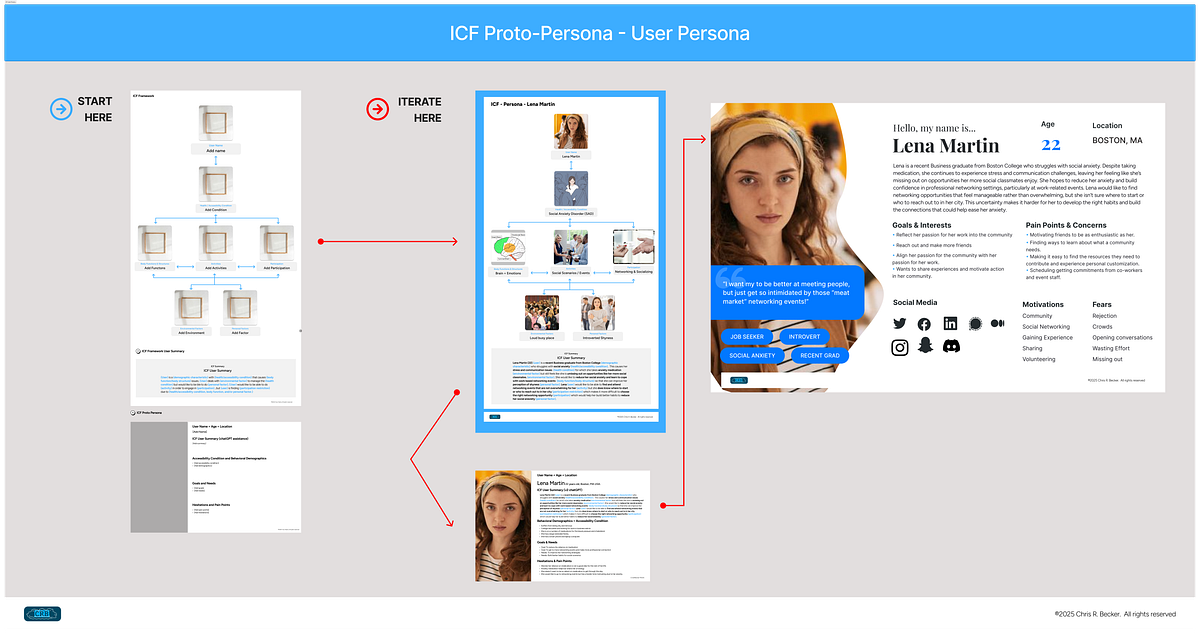
My role was straightforward: write queries (prompts and tasks) that would train AI agents to engage meaningfully with users. But as a UXer, one question immediately stood out - who are these users? Without a clear understanding of who the agent is interacting with, it's nearly impossible to create realistic queries that reflect how people engage with an agent. That's when I discovered a glitch in the task flow.
My role was straightforward: write queries (prompts and tasks) that would train AI agents to engage meaningfully with users. But as a UXer, one question immediately stood out - who are these users? Without a clear understanding of who the agent is interacting with, it's nearly impossible to create realistic queries that reflect how people engage with an agent. That's when I discovered a glitch in the task flow. There were no defined user archetypes guiding the query creation process. Team members were essentially reverse-engineering the work: you think of a task, write a query to help the agent execute it, and cross your fingers that it aligns with the needs of a hypothetical "ideal" user - one who might not even exist.