#political-origins
#political-origins
[ follow ]
#france #far-right #french-politics #authoritarianism #france-politics #french-revolution #political-violence
#adam-smith
Philosophy
fromwww.theguardian.com
3 weeks agoThe Guardian view on Adam Smith: he deserves rescuing from the free-market myth | Editorial
Adam Smith's economic philosophy has been oversimplified by free-market advocates who misrepresent his nuanced views on self-interest, morality, and the role of institutions in generating wealth.
History
fromSmithsonian Magazine
3 days agoThe Spirited Revolutionary Who Led the Fight for Independence in Corsica Also Inspired America's Colonial Rabble-rousers
Pasquale Paoli led Corsica to independence, inspiring American revolutionaries with his innovative constitution and vision for self-governance.



fromWorld History Encyclopedia
2 weeks agoJean-Paul Marat: Prophet of Terror
Baker, an experienced historian on Early Modern Europe and J.E. Wallace Sterling Professor in Humanities at Stanford University, aims to 'make sense of those 'sublime words of the prophet-Marat,' the radical journalist and martyred deputy who notorious calls for blood gave voice to some of the most frightful impulses of the French Revolution.'
History
fromemptywheel
3 weeks agoMixing The Mixed Constitution - emptywheel
Burke's was a broadside that not only excoriated the social upheavals effected by the French revolutionaries and (by extension) commended by Marx, but the continual economic and social instability prized by modern liberal economic philosophy and practice. Against a new class of elites-mainly, an alliance between ideological progressive theorists and a rising financial oligarchy-Burke urged protection of the stability, tradition, and social continuities vital for the flourishing of ordinary people.
Left-wing politics
fromenglish.elpais.com
2 weeks agoLea Ypi, writer: The two major problems of the 21st century are capitalism and the nation-state'
In her latest book, Indignity, Ypi blends archival material with a fictionalized account of her grandmother's childhood in Thessaloniki and her arrival in Albania, exploring themes of memory and dignity.
Philosophy
Law
fromAbove the Law
1 month agoJustice Gorsuch: Originalism Requires We Recall That The Founders Knew How To F-ing Party - Above the Law
Justice Gorsuch argues that founding-era 'habitual drunkard' laws cannot justify modern firearm restrictions for drug users, citing evidence that Founders consumed far more alcohol than modern standards would classify as habitual use.
#french-politics
France politics
fromwww.theguardian.com
1 month agoFrance may soon have a far-right president and Europe is already scrambling to limit their power | Paul Taylor
European governments are accelerating strategic agreements with France, including nuclear deterrence arrangements, to protect against potential far-right leadership changes in 2027.
France politics
fromwww.theguardian.com
3 weeks agoIt would be an earthquake for France': is Marseille about to vote in the far-right?
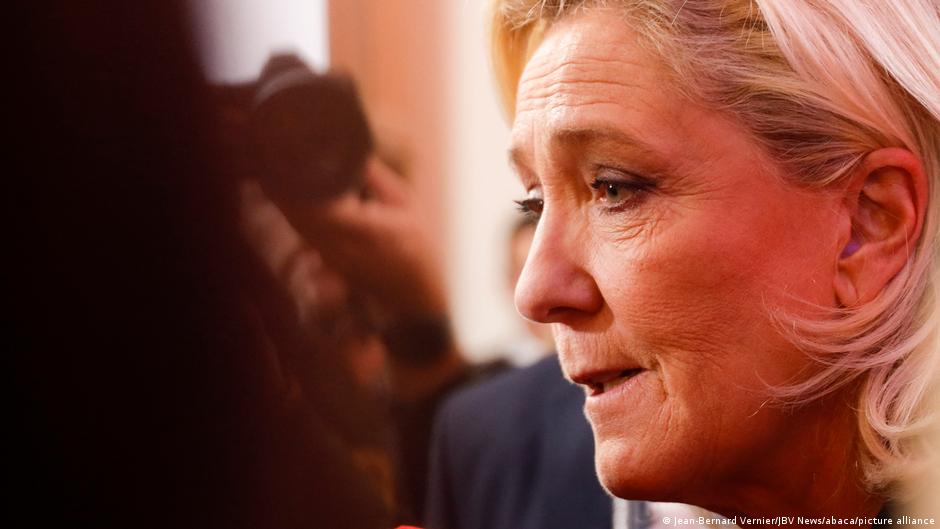
Marseille voters, including traditional conservatives, are shifting toward Marine Le Pen's far-right National Rally due to concerns about crime and security ahead of France's local elections.
France politics
fromwww.theguardian.com
1 month agoFrance may soon have a far-right president and Europe is already scrambling to limit their power | Paul Taylor
European governments are accelerating strategic agreements with France, including nuclear deterrence arrangements, to protect against potential far-right leadership changes in 2027.

fromwww.theguardian.com
2 weeks agoThe Guardian view on the legacy of Jurgen Habermas: philosophical sustenance for illiberal times | Editorial
The Theory of Communicative Action, his 1980s magnum opus, was not (to put it mildly) as accessible as some of his newspaper opinion pieces. But its central idea—that our nature as linguistic beings puts reason and the search for consensus at the core of who we are—remains an antidote both to intellectual relativism and Trumpian realism, which elevates national or individual self-interest above all other sources of human motivation.
Philosophy
Law
fromAbove the Law
1 month agoStanding Up And Cheering For American-ish Principles - Above the Law
Trump's State of the Union challenge to Democrats about protecting American citizens over illegal aliens was a rhetorical trap that oversimplified complex policy issues requiring nuanced discussion rather than simple yes-or-no responses.
France news
fromThe Local France
1 month agoREVEALED: What makes the French proud?
French people take greatest pride in their history of ideas, particularly the Declaration of the Rights of Man and the Citizen and the French Revolution's democratic legacy, rather than physical heritage or cultural stereotypes.
Europe politics
fromwww.dw.com
1 month agoFrance resists as MAGA tries to get its grip on politics
The Trump administration's 2025 National Security Strategy endorses European far-right parties as beneficial while warning of 'civilizational erasure' from migration, and US State Department officials have allegedly interfered in French judicial proceedings regarding Marine Le Pen's trial.
World politics
fromwww.theguardian.com
1 month agoAutocracy is rising in the west. But the global south proves it's not inevitable | Kenneth Roth
Autocrats face growing internal pressure from their populations, while democracy remains valued globally despite Western challenges from far-right movements and disaffected voters.
fromenglish.elpais.com
2 months agoIt is easier to overthrow a tyrant than to govern a leaderless country
Any lingering doubts about the true motives behind the 2003 invasion of Iraq were dispelled when looters were ransacking Baghdad, carrying off millennia-old artifacts from the Iraqi capital's archaeological museum, while U.S. troops fortified the Ministry of Oilthe only government building left untouched and from which not a single document emerged. The disastrous and illegal invasion, spearheaded by the United States with military support from the United Kingdom
World news
Philosophy
fromThe Conversation
1 month agoFar-right 'gangster morality' and the search for meaning: why you should read Camus
Albert Camus' existential and moral philosophy addressing nihilism, absurdity, and totalitarianism remains relevant to contemporary issues of alienation, anxiety, and authoritarian movements.
fromwww.theguardian.com
2 months agoAmerica feels like a country on the brink of an authoritarian takeover | Francine Prose
When we talk about our inability to pay attention, to concentrate, we often mean and blame our phones. It's easy, it's meant to be easy. One flick of our index finger transports us from disaster to disaster, from crisis to crisis, from maddening lie to maddening lie. Each new unauthorized attack and threatened invasion grabs the headlines, until something else takes its place, and meanwhile the government's attempts to terrorize and silence the people of our country continue.
US politics

fromNature
2 months ago'Greed is the iron cage of our times' - why nationalism is here to stay
Collating data from the World Bank and other sources in innovative ways, he argues that globalization in the late twentieth and early twenty-first century was accompanied by then-unprecedented growth of income in both previously poor populations (notably in China) and people at the top of the world's income distribution (especially those in the West). By contrast, relative shares of world income stagnated or were thought to have declined for wealthy nations' middle and working classes, including in the United States.
World news
fromemptywheel
2 months agoRegime Change By Patrick Deneen - emptywheel
The readings in my last series led me to see the genuine hatred conservatives have for what they call variously liberal hegemony, liberal ideology, left-wing ideology, and other names. David Brooks, newly ensconced at Yale and The Atlantic, is just sure it was liberals who caused Trump's wins, with their snotty "knowledge", and "refined tastes". I mocked this nonsense, but apparently Brooks was serious about the super bad feelings his people have about such things.
Right-wing politics
fromwww.theguardian.com
1 month agoPopulism': we used to know what it meant. Now the defining word of our era has lost its meaning | Oliver Eagleton
Populism may well have been the defining word of the previous decade: a shorthand for the insurgent parties that came to prominence in the 2010s, challenging the dominance of the liberal centre. But no sooner had it become the main rubric for discussing both the far left and far right than commentators began to question its validity: worrying that it was too vague, or too pejorative, or fuelling the forces to which it referred.
World politics
History
fromenglish.elpais.com
2 months agoThe French Revolution that brewed amid gossip, pamphlets and popular ditties
The French Revolution remade society, advancing liberty, equality, citizenship, sovereignty, and modern institutions while uprooting ancien régime structures and inspiring contemporary political change.
France politics
fromThe Local France
1 month agoFrench hard-left firebrand sparks row with 'antisemitic' Epstein jibe
Jean-Luc Melenchon faced antisemitism accusations after mocking the pronunciation of 'Epstein' at a Lyon rally, prompting widespread political condemnation and calls from left-wing politicians to distance themselves from the LFI leader.
US politics
fromwww.theguardian.com
2 months agoAmerica has reached a tipping point on fascism and on opposition to it | Robert Reich
Recent events in Minneapolis and federal actions have driven lifelong Republicans away, exposing lies and accelerating a slide toward a repressive, fascist police state.

Philosophy
fromApaonline
2 months agoIn the Midst of a Crisis: Relational Liberalism and the Contemporary Challenges to Democratic Legitimacy
Contemporary democracies face a legitimacy crisis driven by widespread erosion of trust, causing representation breakdowns, unchecked power, and extreme asymmetries in wealth, status, and influence.


fromAeon
2 months agoWhy Hume is better at explaining modern capitalism than Marx | Aeon Essays
Left-leaning regions of the United States and elsewhere in the world among the richest? When Japan and South Korea sought to become economic powerhouses in the later 20th century, they adopted Leftist policies such as strong public education, universal healthcare and increased gender equality - if countries seeking to compete in capitalist arenas adopt broadly Leftist policies, then how do we explain why Leftists are always talking about overthrowing capitalism?
Philosophy
fromPsychology Today
1 month agoA Better Grammar for Political Debates
I am using the word pragmatism in a specific sense. I am not speaking about being pragmatic as a political tactic; deciding what issues should be given priority and what battles to choose, or a willingness to compromise, or a recognition that there are limits to what can be accomplished at any time. I am writing now about pragmatism in a meaning closer to its philosophical origin in the writings of William James-that truth is not found in abstract principles or beliefs,
Philosophy
fromLGBTQ Nation
2 months agoWhy the right wants to ban Plato: It's part of their war on being human - LGBTQ Nation
Texas A&M University last week banned a philosophy professor from teaching about Plato's Symposium because it's too gay, and, while obviously philosophy classes should be allowed to teach about Plato and state lawmakers and administrators shouldn't be interfering in curricula... they are right that the specific texts that they banned are pretty gay. If the legislators' and administrators' goal is to make LGBTQ+ people feel more isolated and alone as a way of getting them to conform and pretend to be cisgender and heterosexual,
Philosophy
[ Load more ]