#polyurethane-design
#polyurethane-design
[ follow ]
#sustainability #sustainable-design #interior-design #furniture-design #home-improvement #architecture


.jpg)
Alternative transportation
fromSustainable Bus
4 days agoNew certified Ultrafabrics collections target durability and compliance in passenger transport interiors - Sustainable Bus
Ultrafabrics launches new certified collections for passenger transport, combining durability, aesthetics, and sustainability in high-performance upholstery fabrics.


OMG science
fromYanko Design - Modern Industrial Design News
1 week agoResearchers turned Sawdust Waste and Watermelon Seeds into Recyclable Fire-resistant Panels - Yanko Design
Sawdust can be transformed into a strong, fire-retardant composite material using struvite and an enzyme from watermelon seeds.
#architecture


Renovation
fromdesignboom | architecture & design magazine
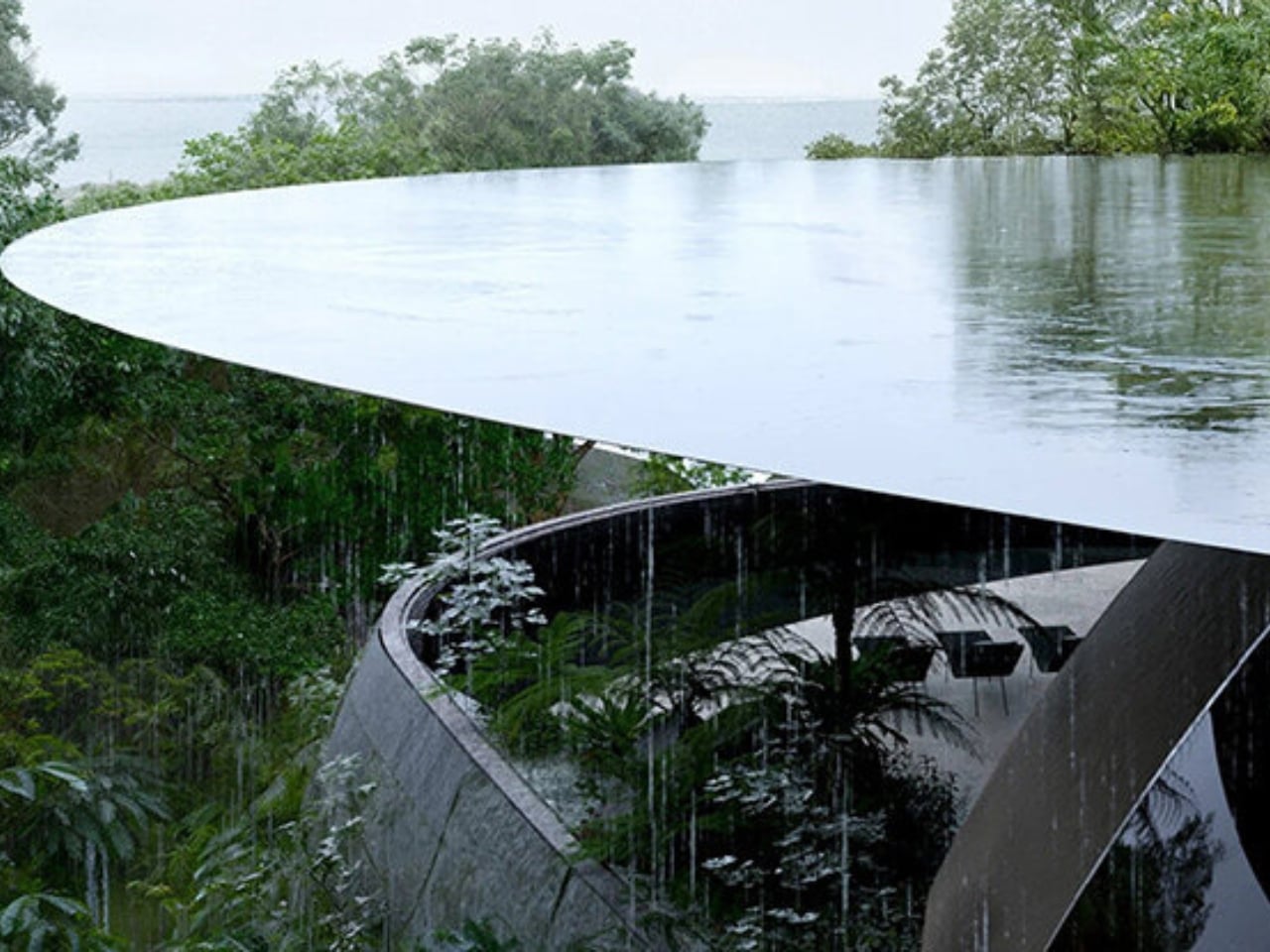
1 week agoWORKac turns floodplain constraints into model for resilient domestic living in rhode island
WORKac's Riverhouse merges climate resilience with architectural clarity, utilizing floodplain constraints to create a compact, elevated, and expressive design.
fromBusiness Matters
2 weeks agoHow to Select the Right Industrial Adhesive for Manufacturing
Industrial adhesives play a key role in modern assembly because they help manufacturers create secure connections while maintaining efficient production. When used correctly, they can improve product quality, support cleaner assembly, and contribute to more consistent manufacturing outcomes.
Angular
UX design
fromYanko Design - Modern Industrial Design News
2 weeks agoThis Concept Shoe Looks Like a Sports Car Melted Onto Your Foot - Yanko Design
An Alfa Romeo-inspired concept shoe treats automotive design as structural principle rather than surface decoration, featuring a seamless white upper and sculptural red midsole with panel-gap detailing.
fromArchDaily
1 week agoDesigning for Obsolescence in an Age of Perpetual Upgrades
In the nineteenth century, entire railway networks became obsolete almost overnight, not due to physical deterioration, but because of changes in the technical standards that supported them. The expansion of railroads across Europe and North America adopted different track gauges, and as a dominant standard gradually emerged, these infrastructures became incompatible with one another.
Renovation
fromwww.architecturaldigest.com
2 weeks agoNon-Toxic Paint 101: A Designer-Approved Guide
Even long after the tell-tale odor of new paint has vanished, traditional paint can off-gas for months, releasing volatile organic compounds (VOCs) that have been linked to organ and nervous system damage, cancer, and infertility.
Remodel
fromAcquire
3 weeks agoAcquire | Humanscale's newest design might just be the ultimate lounge chair
Originally conceived by designer Niels Diffrient over twenty years ago, the Diffrient Lounge is not just for relaxation, it also happens to be a great spot to work in. Ok, so you might not think of a lounge chair as something you would use in your work from home setup, but with its integrated work surface and ergonomic design, you won't want to work anywhere else.
UX design
Renovation
fromArchDaily
2 weeks agoTransforming a Concrete Shell into a Wooden Interior Shaped by the Sea
A Mediterranean harbor house renovation transforms a raw concrete shell into a material-driven interior that echoes maritime atmosphere through spatial organization, natural materials, and carefully controlled views of the surrounding landscape.
fromArs Technica
1 month agoThe physics of squeaking sneakers
Tuning frictional behavior on the fly has been a long-standing engineering dream. This new insight into how surface geometry governs slip pulses paves the way for tunable frictional metamaterials that can transition from low-friction to high-grip states on demand.
Science
fromWIRED
1 month agoOn Running Is Finally Ramping Up Production of Its 'Hyper-Foam' Spray-On Shoes
Specifically, the company is focusing on the production of its newest, weirdest shoe-a giant soled laceless running shoe with a single-piece toe box made of "hyper-foam" plastics sprayed on by robot arms. The plastics are 40 percent biofoam, and the shoe is made of just eight pieces; On says its minimalist approach saves on the shoe's carbon footprint.
Running
fromBusiness Matters
2 weeks ago6 Business Use Cases For Perforated Metal
Perforated metal has long been valued for its strength, versatility, and clean visual appeal. Created by punching patterns of holes into metal sheets, it offers a practical balance between airflow, light control, and structural support. Across industries such as architecture, construction, mining, and interior design, perforated metal has become a go-to material for projects that require both function and style.
Design
Remodel
fromYanko Design - Modern Industrial Design News
3 weeks agoThis Circular Shelf Solved the Rental Damage Problem in 30 Seconds - Yanko Design
The TAB is a non-permanent, circular aluminum shelf that clamps onto vertical panels without drilling, offering flexible storage that can be easily repositioned or removed.
fromFuturism
1 month agoThe Economics of 3D Printed Homes Are Surprisingly Horrible
According to the outlet SlashGear, the neighborhood encompasses five 1,000-square-foot houses just north of Sacramento. Each domicile is produced by a hulking concrete printer worth about $1.5 million, which took about 24 days to spit out the first house. In the future, 4Dify expects the whole process to take about 10 days, but that isn't what's astonishing about the Yuba County neighborhood - it's the price tag.
Real estate
Design
fromApartment Therapy
3 weeks agoDesigners Are Done Perfectly "Matching" Their Marble - Here's the New Way to Use Stone
Modern stone design in 2026 prioritizes mixing different stones intentionally with varied finishes and embracing natural patina, replacing the outdated approach of matching all stone surfaces uniformly throughout spaces.
fromLos Angeles Times
35 years agoStress-Skin Paneling Makes Airtight House
Stress-skin panel construction is probably the most energy-efficient and cost-effective building method available today. With super-high insulation levels and airtightness, a stress-skin panel house should have extremely low heating and cooling costs. A reduction of 50% on utility bills as compared to a typically constructed house is reasonable.
Remodel
Design
fromYanko Design - Modern Industrial Design News
3 weeks agoThis Brutalist Lounge Chair Is 3D-Printed From Recycled Water Bottles - Yanko Design
Nako Baev's THE OBJECT 01 is a 3D-printed lounge chair from recycled PETG that functions as an architectural statement piece, prioritizing honest material expression and structural minimalism over conventional comfort or decoration.
Food & drink
fromTasting Table
1 month agoIt's Time To Ditch Plastic Food Storage Kitchenware And Invest In Silicone - Here's Why - Tasting Table
Food-grade silicone storage containers are safer and more heat-resistant than many plastics, non-reactive, BPA-free, dishwasher/microwave/oven-safe, and less likely to release harmful chemicals.
Renovation
fromLos Angeles Times
1 month agoCan fire-resistant homes be sexy? 'You be the judge,' says this Palisades architect
A Pacific Palisades architect designed a fire-resistant home with steel framing, foot-thick exterior walls, automated shutters, and advanced water and foam suppression systems after losing his previous home to wildfire.
Apple
fromYanko Design - Modern Industrial Design News
2 months agoSteel Is Dead: 5 Titanium Products That Just Replaced It in 2026 - Yanko Design
Titanium's strength-to-weight, corrosion resistance, and recyclability enable thinner, durable, premium-feeling products while supporting sustainable, long-lasting design.
fromFast Company
1 month agoThese designers made a sustainable new building material from corn
This corn-based construction material was made by Manufactura, a Mexican sustainable materials company, and it imagines a second life for waste from the most widely produced grain in the world. The project started as an invitation by chef Jorge Armando, the founder of catering brand Taco Kween Berlin, to find ways he could reintegrate waste generated by his taqueria into architecture. A team led by designer Dinorah Schulte created corncretl during a residency last year in Massa Lombarda, Italy.
Science
Design
fromArchDaily
3 weeks agoFacing the Age of Robots? Material Innovation in Architectural Structures
Robotic technology in construction extends beyond automation and cost reduction to fundamentally reshape architectural design, material experimentation, and construction methodologies through collaborative human-robot workflows.
Design
fromYanko Design - Modern Industrial Design News
4 weeks agoMIT Finally Built the House Your Great-Grandkids Will Inherit - Yanko Design
MIT's Heirloom House project uses nine modular concrete components engineered to last 1,000 years, assembled through gravity and friction rather than permanent fasteners.
fromBig Think
2 months agoHow "tribology" became a new industrial science
the automation of heavy machinery enabled plants to operate continuously, increasing productivity and revenue. The downside was that any small hiccup was acutely felt, cascading through the production line. At first, it was assumed that inadequate lubrication of factory equipment was causing parts to seize up or break apart. And so, the Lubrication and Wear Group of the Institution of Mechanical Engineers, along with the Iron
Science
fromwww.housingwire.com
1 month agoThis paint may alter how builders fight mold and moisture damage
This is the one and only paint that's on the market that's designed to actually absorb moisture. If you take Lilypad paint and apply it to the wall, the film will actually absorb excess humidity as it starts filling the room, and then, when it dries, it resets itself by slowly letting it back into the space. So it's regulating humidity, Dr. Stein said.
Remodel
fromArchDaily
2 months agoCircular Composites: Designing for a Sustainable Future
One of the earliest large-scale examples of composite materials can be found in the Great Wall of China, where stone, clay bricks, and organic fibers such as reeds and willow branches were blended to create a resilient and lasting structure. These early techniques reveal a timeless intuition: distinct materials, when combined thoughtfully, produce properties unattainable by any single element.
Environment
fromdesignboom | architecture & design magazine
1 month agocan desert sand with plant-based materials be used to build houses and roads?
Researchers at the Norwegian University of Science and Technology and the University of Tokyo have made a prototype of botanical cement made of desert sand and plant-based additives in hopes that it can be used to build houses and roads. Once mixed, the team adds tiny pieces of wood together and presses them all with heat to produce the cement.
Science
fromFast Company
1 month agoThis paint acts like a dehumidifier for your walls
It looks like ordinary paint, but a new coating called Lilypad Paint has a hidden ability to pull moisture out of the air. It works like a dehumidifier, without the energy use. If it's on the wall in your bathroom, it can suck water vapor out of the air after you've taken a shower. The paint holds the humidity in nano-size pores, and then slowly releases it as humidity levels fall in the room.
Science
fromTasting Table
2 months agoThe Eco-Friendly Countertop Material That's Surprisingly Durable - Tasting Table
It's likely that you've encountered recycled glass countertops without realizing it. They're far from the hippie-style broken-glass mosaic art of yesteryear, instead presenting as sleek, highly polished, professional slabs with intriguing bits of confetti-style color trapped inside. That's the recovered glass bits set into a binding material such as resin, cement, or concrete, and then smoothly polished so that the composite surface feels like stone.
Remodel
fromDesign Milk
2 months agoThis Office Fuses Scandinavian Design and Acoustic Performance
Diverse zones allow employees to shift from heads-down work to group sessions with ease. An area for guests, which contains a plant-filled bookshelf, is reminiscent of a living room. The social sector at the heart of the workplace includes a casual dining section and bar. Glass blocks let sunlight filter in and complement the tile backsplash. There's even a room dedicated to deep relaxation, complete with cosmic motifs and a recliner.
Remodel
Design
fromdesignboom | architecture & design magazine
1 month agoone-mold uno stool brings flexibility and color into any interior space
UNO Stool is a single-piece, injection-molded stool eliminating hardware and connectors to create durable, low-maintenance, reconfigurable seating through quantity, color, and arrangement.
fromDefector
1 month agoMake It Nice: Curtains, Linens, And How To Figure Out What You Like | Defector
My husband and I just upgraded our apartment here in Germany to one with much more space. The downsides of this is we have hard marble floors and a tall-ceilinged living room (oh woe is us!). It's very echo-y and looks directly into our neighbors across the street. The windows have external shutters, so light-blocking isn't needed, but we'd love to get
Design
Design
fromdesignboom | architecture & design magazine
2 months agowearable collection repurposes leftover leather powder as translucent composite material
OBRO converts leather manufacturing offcuts into semi-transparent PVC composite by embedding finely ground leather powder to create visually layered, tactile, durable sheets.
fromArchDaily
2 months agoFrom Industry to the Living Room: Metal Furniture in Interior Architecture
How did a material conceived for bridges, factories, and large-scale structures make its way to the living room bench, the apartment bookshelf, the café table? For centuries, metal was associated with labor, machinery, and monumentality-from the exposed structures of 19th-century World's Fairs to the productive logic of modern industry. Its presence in domestic interiors is not self-evident but rather a cultural achievement: the transformation of an industrial material into an element of everyday, intimate use, in close proximity to the body.
Design
Design
fromwww.archdaily.com
2 months agoFrom Material Intelligence to Circularity: Lessons from Architecture in 2025
Architects prioritize material innovation in 2025—agricultural waste, recycled plastics, and living materials—balancing tradition, circularity, and material intelligence for resilient, low-carbon construction.
fromApartment Therapy
2 months agoMy West Elm Slope Leather Chairs Are Still Perfect After 9 Years
There are plenty of reasons the Slope Leather Dining Chair is a bestseller at West Elm. Not only is it beautiful and comfortable (a must), but it's also extremely sturdy, thanks to the angled structure of the base. Because it doesn't have armrests, it can squeeze easily into small spaces, or make larger spaces feel airy and less cluttered. Our "dining room" is a small nook between the living room and kitchen, and we were able to squeeze all six of our Slope Dining chairs into the space, with plenty of elbow room.
Design
fromdesignboom | architecture & design magazine
1 month agorecontextualizing human hair waste as potential raw material for design
This research-based design project by Laura Oliveira investigates discarded as a potential raw material for sustainable design applications. Human hair is produced continuously and in large quantities through everyday grooming practices, yet it is almost always treated as waste once separated from the body and typically disposed of in landfills. Despite its material properties, strength, flexibility, and durability as a keratin-based protein fiber, its remains uncommon within design and research contexts.
Design
Design
fromYanko Design - Modern Industrial Design News
2 months agoStudents Just Built a Pavilion That Robots Can Rebuild Forever - Yanko Design
A modular timber pavilion assembled with reversible joinery and robotic precision demonstrates waste-free, reusable construction through adaptable components and disassembly-friendly design.
Design
fromYanko Design - Modern Industrial Design News
1 month ago5 Product Designs That Brought the Moon Indoors: They're All Stunning - Yanko Design
Moon-inspired design uses restraint, tactile textures, and timeless geometry to create grounded, emotionally enduring, and quietly structured products.
[ Load more ]